年轻的巨人
导读
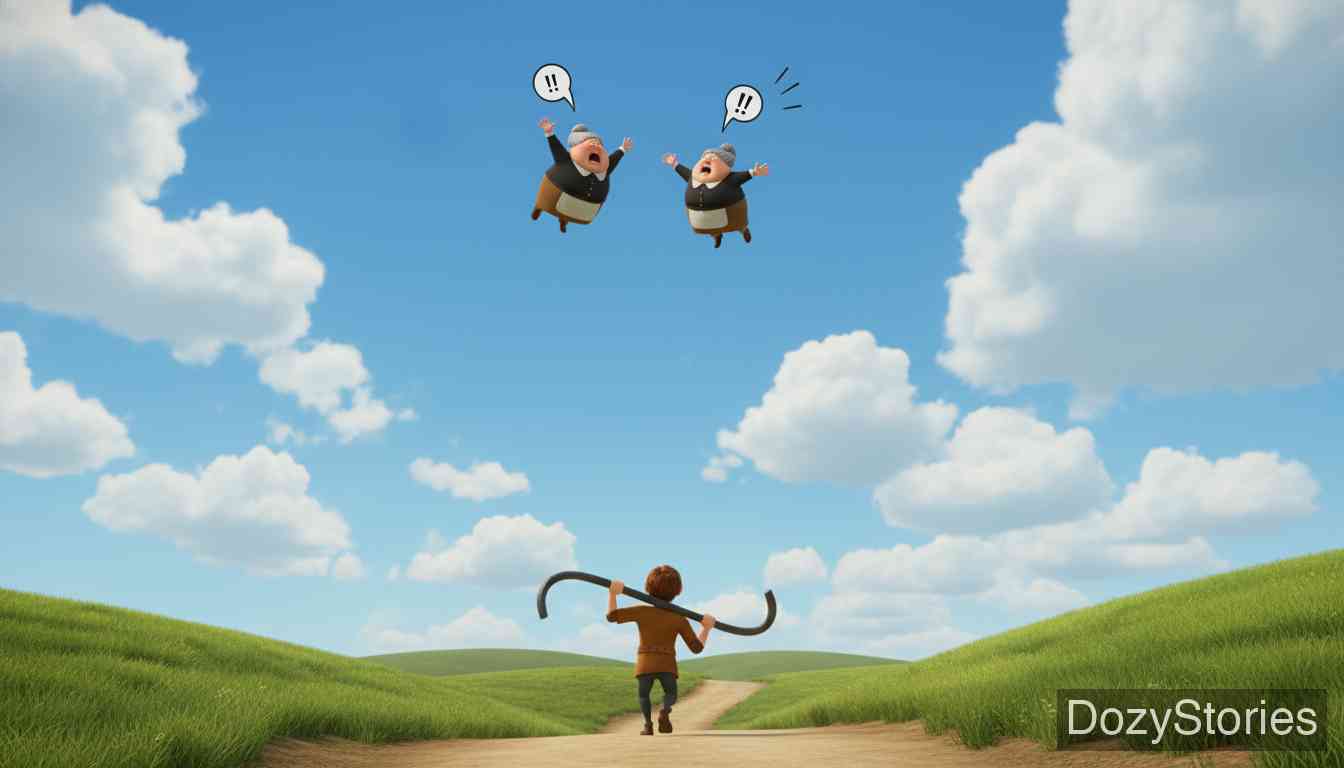
这则“大力士”故事在欧洲流传已久,民俗学家把它编为 ATU 650A“壮汉汉斯”类型。把它改成中国寓言体,是因为它的骨子里本就藏着中国民间最看重的两样东西:一是“一言既出,驷马难追”的信义,二是“善有善报、恶有恶报”的天理。年轻的巨人不要金银,只收“几脚”当工钱——这看似滑稽,其实是一把量人心的尺子:守信的人受得住,贪心的人受不了。中国古代也有力大无穷的传说:项羽“力能扛鼎”,鲁智深倒拔垂杨柳;但古人从不单夸力气,总要把力气和道义放在一起讲,这则格林故事正与这个传统暗暗相合。读的时候,不妨让孩子留心:巨人从头到尾没有欺负过一个好人,他的拳头只落在贪心人身上;再和孩子聊聊,为什么故事结尾让那对贪心的夫妇悬在半空——不是力气把他们送上天的,是失信。
《年轻的巨人》词汇精讲
本故事精选 12 个重点词汇,附中英释义与原文例句,帮助孩子扩展英语词汇量。
Long steps taken when walking fast.
大步;阔步。
But the giant's long legs covered the ground in two strides.
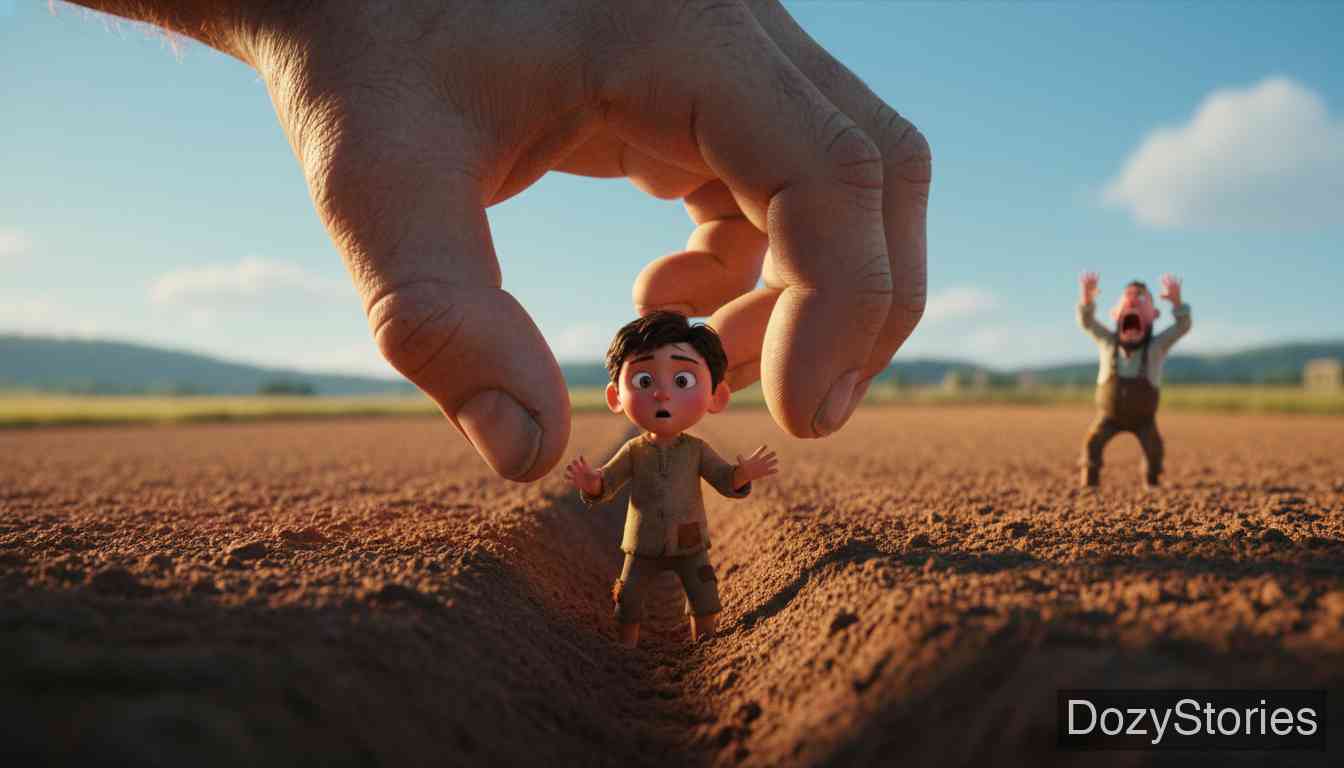
谁知话音未落,巨人已站在垄沟里。
Too surprised or afraid to speak.
说不出话的;哑口无言的。
The poor father stood speechless with fear.
父亲吓呆了,站在那里,好半天出不了声。
Pulled or lifted something heavy with great effort.
(用力)举起,拽起。
The boy heaved the strongest oak in the wood out of the ground, and the trunk split in two.
孩子抓住林中最粗壮的橡树,轻轻一拽,连树干都裂成了两半。
The way you hold something tightly with your hand.
紧握;握力。
His grip was so strong that the share sank deep into the earth.
年轻人一只手按住犁把——手劲太大,犁铧一下子扎进土里老深。
Broke up and leveled ploughed soil with a spiked frame.
(用耙)耙地。
Then he ploughed all two acres alone, and after that he harrowed the whole field with two harrows at once.
他一个人犁完了两亩地,又套上两张耙,把整块地细细耙了一遍。
Very frightening or ugly to look at.
可怕的;吓人的。
When his mother saw him, she cried out, “What a frightful giant! Go away! You are not our son!”
母亲在院里见了,惊叫起来:“好个吓人的大个子!走开走开,你不是我们的儿子!”
Broke something suddenly with a sharp sound.
(咔嚓一声)折断。
The young man snapped it in half like a dry twig.
年轻人往膝上一搁——咔嚓一声,像折豆秸一样断成两截。
A person who hates spending money and keeps everything for himself.
吝啬鬼;守财奴。
The miser was delighted, for he would save a lot of money.
吝啬鬼听了正中下怀——这样能省下多少工钱!
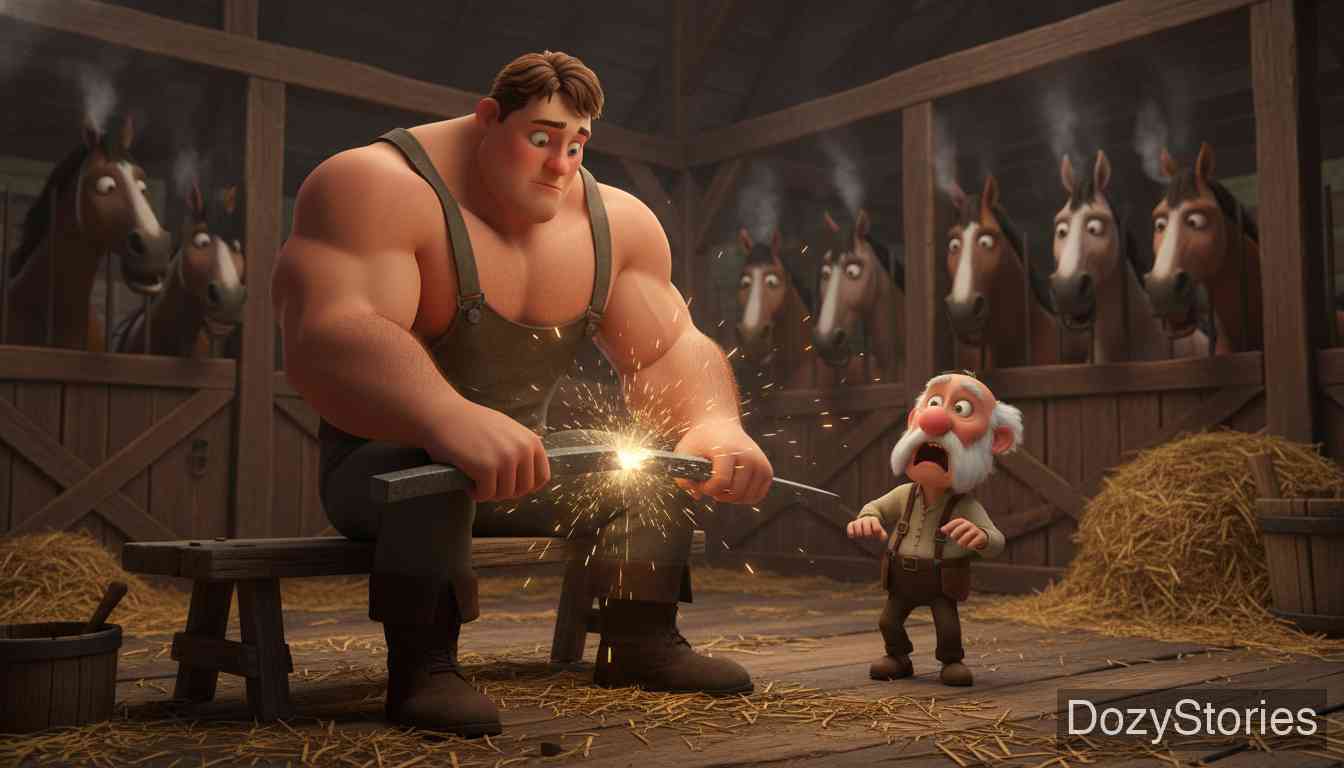
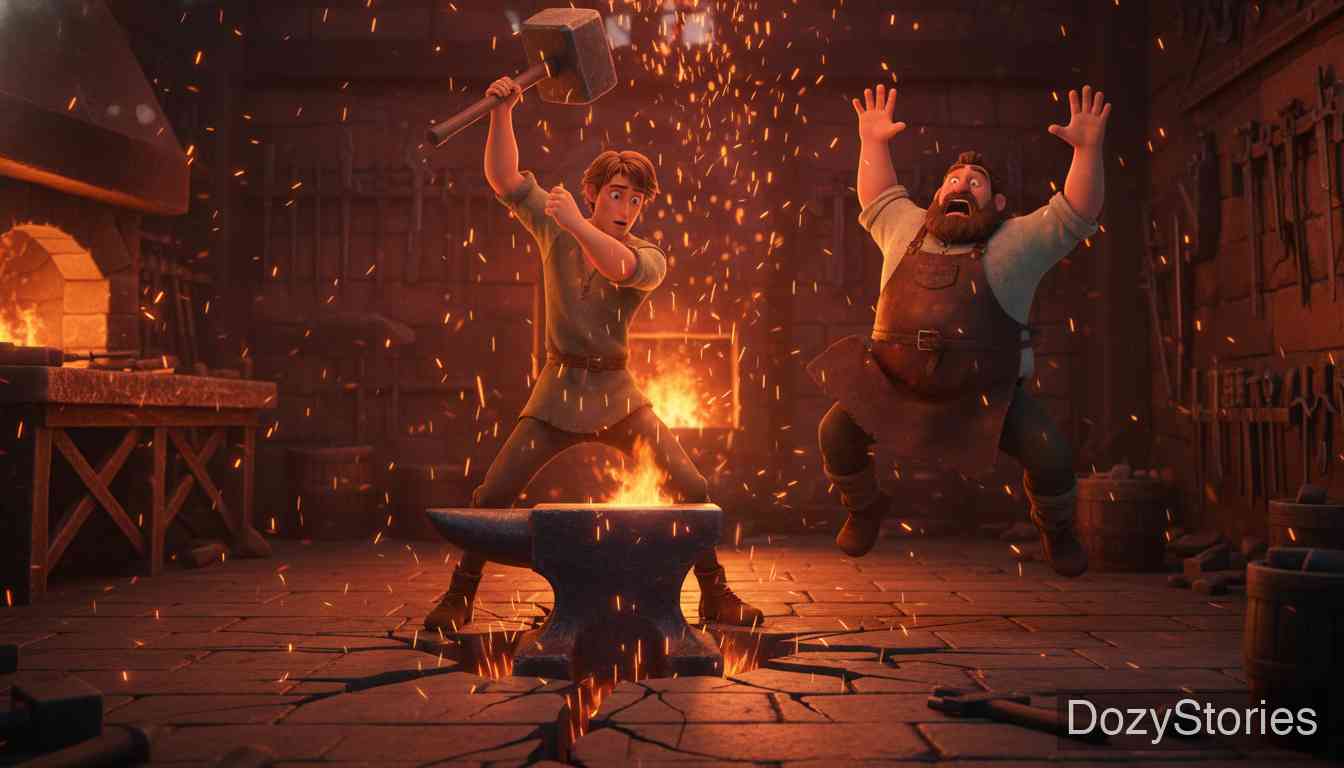
The heavy iron block on which a smith hammers hot metal.
铁砧。
The hot iron flew apart, and the anvil sank so deep into the ground that no one could pull it out.
师傅刚夹出烧红的铁条,年轻人头一锤下去,铁条四下飞散,铁砧直陷进地里,再也拔不出来。
A man who manages a farm or estate for its owner.
庄头;田庄管事。
He asked the bailiff whether he needed a head-servant.
走了好些日子,他来到一座小田庄,问庄头要不要长工头。
A pile of things built to block a road or path.
路障;障碍物。
On the way he piled trees and brushwood across the ravine and made a barricade that no horse could pass.
路过一道峡谷,他停下马车,搬来树木柴枝,垒起一道高障,任什么马也过不去。
Pulled or dragged something heavy with effort.
(用力)拖,拉。
Then he unhitched his own horses, laid them on top of the cart, and hauled the whole load over the barricade with his bare hands.
他卸下自己的马,把马放到车顶上,两手抓住车辕,连车带马一起拖过了障子。
延伸阅读与亲子共读
故事寓意
真正的强大,不在力气大小,而在说话算话、不欺弱小;贪心算计别人的人,终会自食其果。
教育价值
孩子能从这则寓言里明白:力量要用在正道上,守信比力气更可贵;贪心算计别人的人终会自食其果。夸张幽默的情节,也让“言而有信”四个字在孩子心里留下深刻的印象。
家长共读提示
读完后可以问问孩子:巨人力气这么大,为什么从不欺负好人,只收拾贪心的雇主?再和孩子聊聊“答应别人的事就要做到”,把故事里的道理带到日常生活中。
和孩子聊一聊
- 小不点被巨人喂养了六年,长成了大力士。你觉得一个人的本事,是天生的多,还是练出来的多?
- 巨人不要工钱,只要“三脚”。你觉得他为什么定下这样奇怪的规矩?
- 铁匠和庄头都想占便宜,最后都被踢上了天。他们落到这个下场,是自找的吗?
- 巨人力气这么大,却从不欺负好人。你觉得是什么让他守住这一点?
- 如果有一天你也有天大的力气,你会用它做什么?又会给自己立下什么规矩?