三片蛇叶
导读
这则故事出自格林童话,说的是三片能起死回生的蛇叶。我们把它改写成寓言体,是想用讲古人的口吻,把“恩怨”二字说给孩子听。中国民间早有“农夫与蛇”的告诫:善心救活一条冻僵的蛇,蛇醒转来却反咬恩人一口。有意思的是,在这则西方故事里,蛇叶救的是人,忘恩负义的却也是人——救命的奇物,偏偏用来照见人心的冷暖。格林原版对背叛毫不留情:负心之人与同谋被送上一条漏水的船,沉入大海。今天读来虽觉残酷,寓言却本就是把善恶的道理摆在明处:滴水之恩,当涌泉相报;恩将仇报者,终食其果。陪读时不妨提醒孩子:救人性命的是三片叶子,可让人真正活过来的,是那份赤诚的心意。




《三片蛇叶》词汇精讲
本故事精选 12 个重点词汇,附中英释义与原文例句,帮助孩子扩展英语词汇量。
Very strong and powerful.
强大的;威力无比的。
At that time, a mighty king was at war.
那时,一个大国的国王正在打仗。
Very strong and violent.
激烈的;凶猛的。
The fight was fierce.
两军相遇,一场恶战。
A serious promise that you make to yourself or to someone else.
誓言;誓约。
When she lay dead, the young man remembered his vow, and the thought of being buried alive chilled his heart.
年轻人想起自己许下的誓言,一想到要活着躺进坟墓,心里阵阵发寒。
A stone room where a dead person is buried.
坟墓;墓室。
On the day of the burial, he was led into the royal tomb with the coffin, and the stone door was shut behind him.
下葬那天,他与棺材一同被送进王家墓室,石门在身后关上,落了闩。
To die or suffer from not having enough food.
挨饿;饿死。
When the food ran out, he would starve.
这些东西吃尽,他就要活活饿死。
A deep feeling of sadness.
悲伤;哀愁。
So he sat in pain and sorrow, eating a little bread and drinking a little wine each day, watching death creep closer.
他满心悲伤地坐着,每天只吃一小口面包,只喝一小口酒,眼睁睁看着死亡一天天逼近。
Moved a little; began to move after being still.
(stir 的过去式)动了动;微微移动。
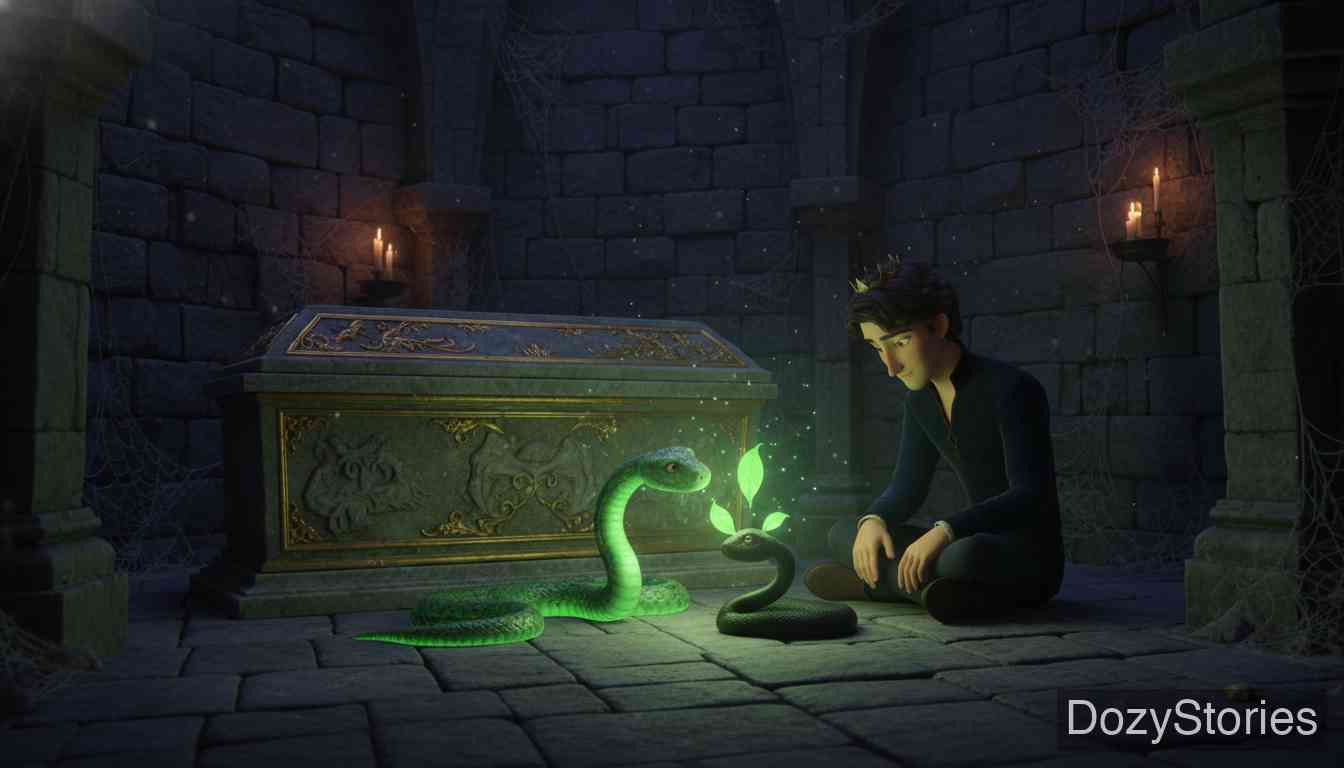
The snake stirred and came back to life.
蛇动了动,竟活了过来。
To open a door or gate by sliding back the bar that locks it.
拔开门闩;打开(门)。
They knocked and shouted, the guards heard them, and the old king came down to unbolt the door.
他们敲门大喊,守卫听见,报与国王。国王亲自下来开了门。
Great love and loyalty towards someone.
深情;忠贞。
On the voyage, she forgot his kindness and his life-saving devotion, and she took a wicked fancy to the ship's captain.
在船上,她把丈夫的深情厚义、救命之恩全抛在脑后,反倒对船长动了歪心思。
Very bad or evil.
邪恶的;恶毒的。
"I cannot believe she is so wicked, but the truth will come out."
“我不信她会这般歹毒,不过真相自会大白。”
Kindness shown to someone who has done wrong.
宽恕;仁慈。
She fell to her knees and begged for mercy.
她扑通跪下,苦苦哀求饶命。
The state of not being thankful for kindness you have received.
忘恩负义。
And to this day, the tale reminds us that ingratitude is repaid with sorrow, while loyalty wins its reward.
从此以后,人们说起这故事,都要叹一句:忘恩负义,终食其果;忠义之人,自有善报。
延伸阅读与亲子共读
故事寓意
受人之恩,当思图报;恩将仇报者,终将自食其果。忠义之心,纵使一时无人知晓,也自有善报。
教育价值
让孩子体会“滴水之恩,当涌泉相报”的分量,学会感恩与识人;在善恶有报的结局中,理解诚信与忠义的可贵。
家长共读提示
故事含陪葬、背叛与沉船惩罚等沉重情节,建议陪读,把话题引向“感恩”与“识人”。可以问孩子:如果有人救了你,你该怎样回报?也可以让孩子想一想,忠仆为什么始终把叶子带在身上。
和孩子聊一聊
- 公主立下“先死同葬”的誓言,还说“他若真心爱我,我死后他活着还有什么意思”。你觉得这是痴情,还是在为难人?
- 蛇用叶子救活了同伴,人却恩将仇报。这故事里,救人的和害人的,哪个更让你意外?为什么?
- 忠心的仆人两次救主,从不离身地带着那三片叶子。如果你身边也有这样忠义的人,你会怎样待他,才不算辜负?
- 老国王没有急着定罪,而是让真相自己浮出水面。你遇到过差点冤枉好人的事吗?后来是怎样弄清楚的?
- 故事结尾,负心人和船长被送上漏水的船。你觉得这样的惩罚重不重?如果你来定夺,会怎样处置?