玻璃瓶中的妖怪
导读
这篇《玻璃瓶中的妖怪》是格林童话里少见的“智斗”故事:不靠力气,不靠咒语,全靠一个学生的沉着与巧思。我们把它改写成中国寓言体,正是看中了它骨子里的“寓言味”——情节短、人物分明,一句“激将法”收妖,与《一千零一夜》里渔夫把魔鬼骗回铜瓶的桥段如出一辙,可见天下聪明人的法子都是相通的。这个故事还藏着中国民间最看重的两样东西:一是“以智取胜”,强敌当前不硬拼,先想清楚再出手;二是“知恩图报”,学生得了横财,头一件事是加倍赔邻居、供养老父,而不是挥霍。读给孩子听时,可以请他留意:妖怪越强大,越要用巧劲;宝贝越神奇,越要配一颗好心。格林原版里父亲那句“满脑子书本把戏、不会砍柴”的挖苦,正是给孩子的一个好问题——读书到底有没有用?故事结尾自会给出答案。

《玻璃瓶中的妖怪》词汇精讲
本故事精选 12 个重点词汇,附中英释义与原文例句,帮助孩子扩展英语词汇量。
A person whose job is cutting down trees.
樵夫;以砍树为生的人。
Long ago, a poor woodcutter lived in a mountain village.
从前,山里住着一位穷樵夫。
The education you get at school.
上学读书;学业。
Child, this money is for your schooling.
孩子,爹只有你一个亲人。这点血汗钱你拿去读书,学一门本事。
To breathe out slowly and loudly, often when sad or tired.
叹气;叹息。
The old man sighed, "Child, I have nothing more to give you. Times are hard, and I earn just enough for our daily bread."
父亲叹气道:“孩子,爹再也拿不出钱供你了。眼下日子艰难,我挣的只够咱爷俩糊口。”
A large strong tree that grows acorns.
橡树。
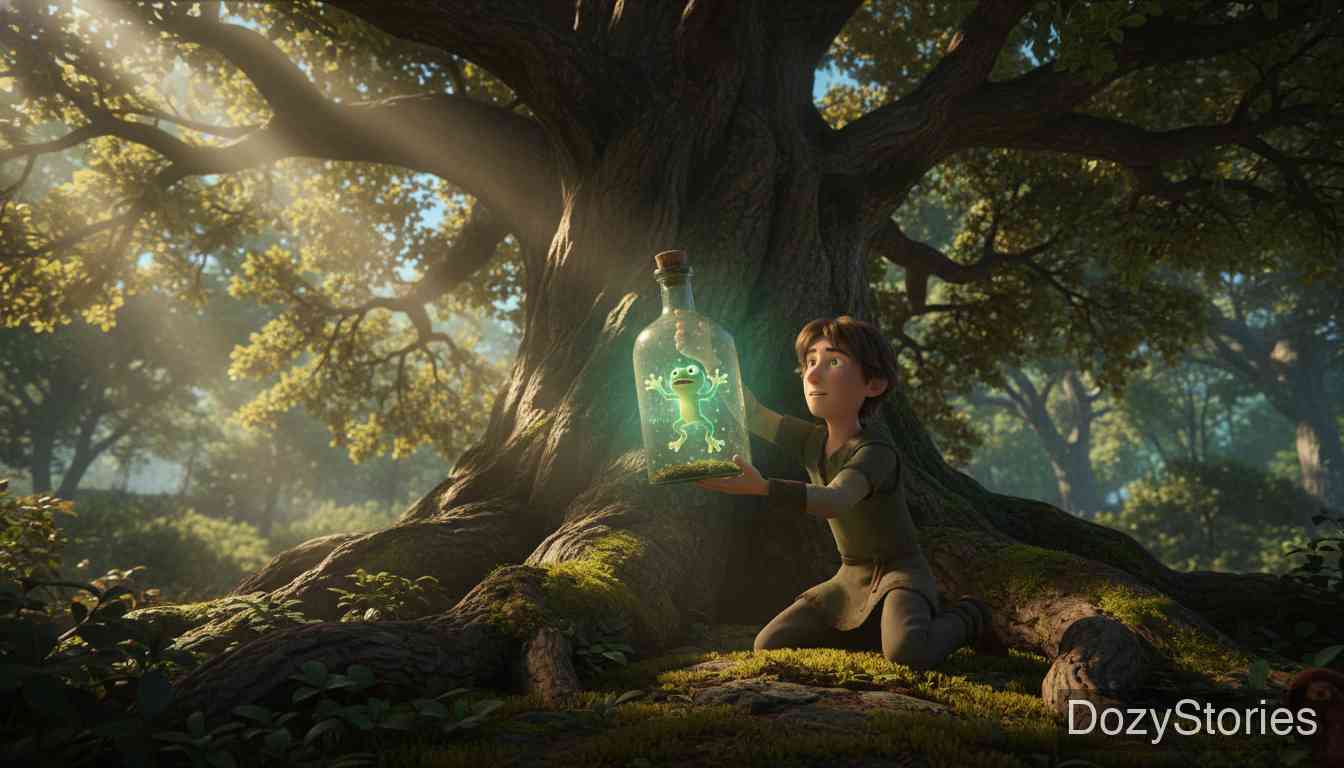
He walked along, looking up at the branches, until he came to an old oak tree.
他边走边抬头张望,不知不觉走到一棵老橡树下。
The stopper that closes the neck of a bottle.
瓶塞;软木塞。
He pulled out the cork at once.
学生心想:这有什么难?随手就拔下了瓶塞。
Very angry or wild; ready to attack.
凶猛的;凶狠的。
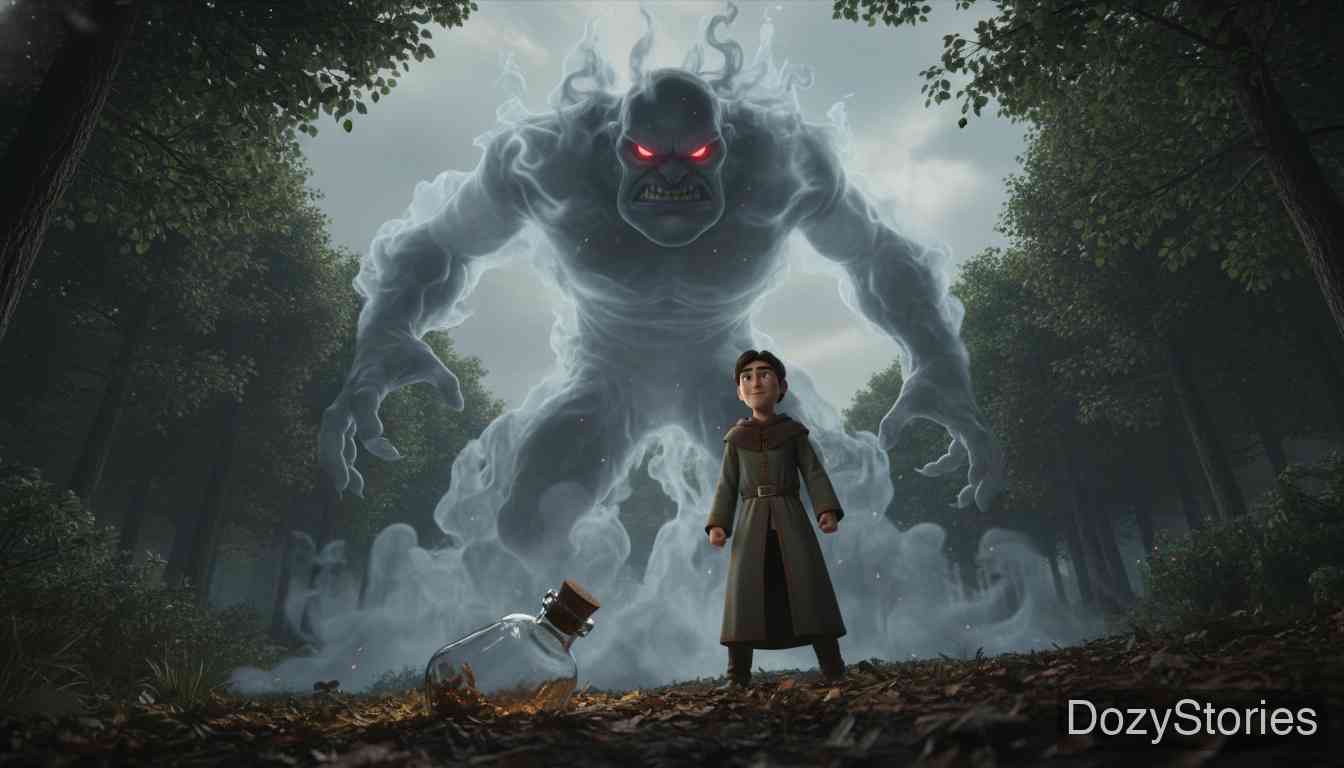
Soon a fierce giant stood before the student, almost as tall as the oak tree.
转眼间,一个凶恶的巨人站在面前,高得快要顶着树梢。
Something you get for doing something good or for helping someone.
报偿;报酬;奖赏。
Do you know what reward you get for letting me out?
你可知道,放我出来该得什么报偿?
Very strong and powerful.
威力巨大的;强大的。
I am the mighty Mercurius!
我是威名赫赫的墨丘利!
To press something so that it fits into a small space.
挤;塞;勉强挤进。
If you can squeeze back in, I will believe you, and you may do what you like with me.
你要是能再钻回瓶里去,我就信你,随你处置。
Making you feel sad or sorry for someone.
可怜的;令人同情的。
The student was about to leave when a pitiful voice came from the bottle.
学生拍拍手要走,瓶子里又传来可怜巴巴的喊声。
A long deep cut.
深长的口子;划痕。
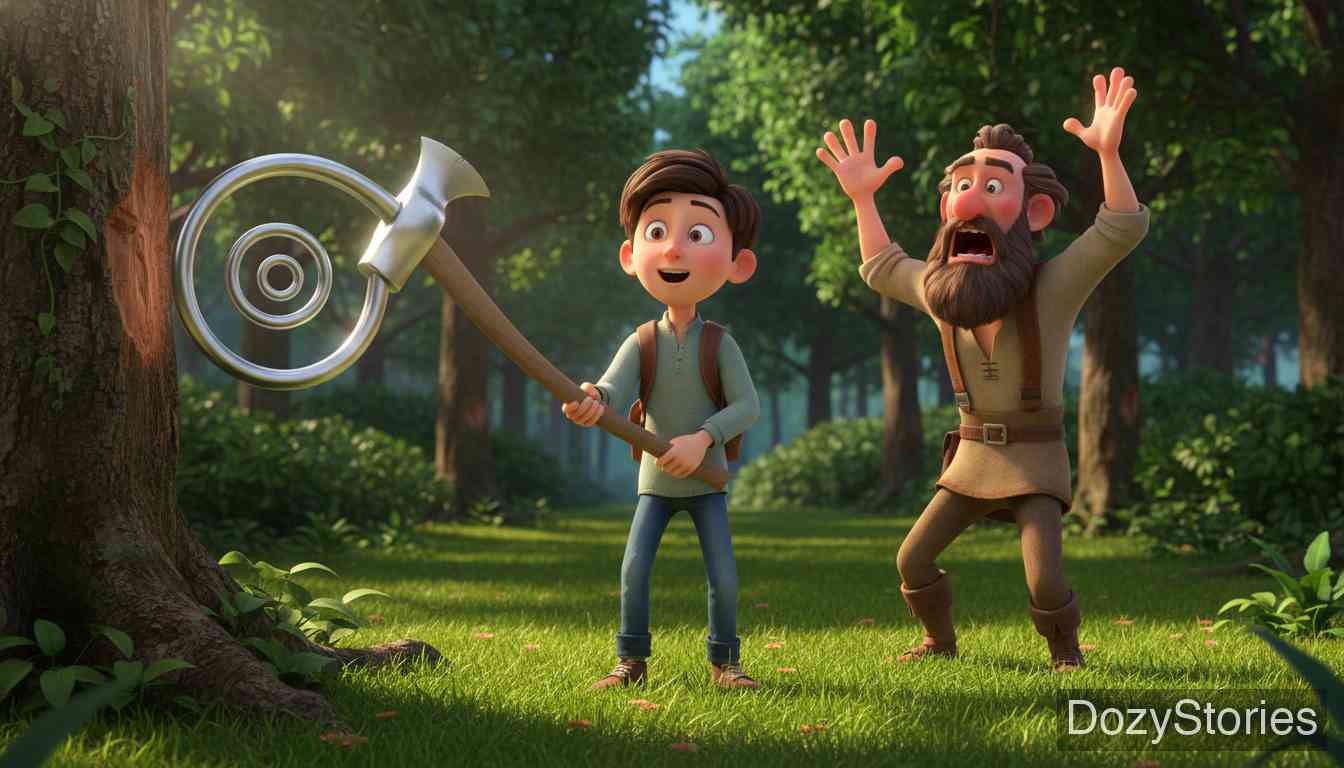
He went to a tree and cut a gash in the bark with his axe.
他走到一棵树前,用斧子在树皮上砍了一道口子。
A person who makes or sells things made of gold or silver.
金匠;打造金银器的人。
The student took the axe into town and found a goldsmith.
学生拿着斧子进了城,找到金匠。
延伸阅读与亲子共读
故事寓意
以智取胜,胜过以力相拼;宝物虽奇,善用方能成福。贪心求多的人常常两手空空,而知足知恩的人,福气自来。
教育价值
让孩子明白:遇事要先动脑筋、临危不乱,靠智慧胜过靠蛮力;得了好处更要知恩图报,这样福气才会长久。
家长共读提示
读完可以问孩子:妖怪第一次想害人,学生为什么还肯放它第二次?再把学生的“激将法”与《一千零一夜》里渔夫骗魔鬼回瓶的故事对照着讲;最后问问孩子:如果一夜之间有了花不完的钱,第一件事会做什么?
和孩子聊一聊
- 妖怪扬言要拧断学生的脖子,学生没有硬拼,而是用激将法把它骗回瓶子。你觉得他最聪明的地方在哪里?
- 第一次放出妖怪差点送命,学生却决定第二次放它出来。这是勇敢还是冒险?如果是你,你敢不敢再放一次?
- 父亲起初嘲笑儿子“只会读书、不会砍柴”。到故事结尾,读书到底有没有用?
- 学生有了花不完的钱,第一件事是加倍赔邻居、让父亲安享晚年。这说明他是个怎样的人?换了你,会怎么做?
- 那块神布一端能治伤、一端能点铁成银。如果你得到它,会先用来做什么?为什么?