教父
导读
这则《教父》本是格林童话里最不讲道理的一篇:通篇没有整齐的教训,只有噩梦一般的画面一层层堆上来——打架的扫帚和铁锹、成堆的断指、自己煎自己的鱼,直到锁孔里露出一对长角。我们把它改写成中国寓言体,正是看重它「点到为止」的劲道。寓言最忌把话说尽,而这篇从头到尾都不点破教父究竟是谁,「魔鬼」二字始终不出口,留白处恰恰最有余味。这也正合中国人的避讳传统:对不敢直呼其名的角色,民间只称「教父」「那位」,绝不叫破真名,仿佛一叫破,祸事就来了。共读时,不妨把它当成一场「信任游戏」:孩子每上一级楼梯,都多一分不安,直到那根长角出现,一切不言自明。真正值得记住的,不是吓人的画面,而是那个转身就跑的穷人——他教会孩子一句话:感觉不对,脚就要快。


《教父》词汇精讲
本故事精选 12 个重点词汇,附中英释义与原文例句,帮助孩子扩展英语词汇量。
A man who promises to help care for a child and is like a second father to it.
教父;为孩子行洗礼并照看他的男人。
He had asked almost everyone in the land to be their godfather.
十里八乡的人,几乎都被他请去当过教父。
To make a sick person well again.
治愈;医好。
"With it you can heal the sick. But first you must see where Death is standing. If he stands at the head of the bed, give the sick one a sip, and he will get well. If he stands at the foot of the bed, no power on earth can save him."
「有了它,你能治好百病。」
A very small drink of liquid.
一小口;啜饮。
If he stands at the head of the bed, give the sick one a sip, and he will get well.
他若站在病人头边,喂病人喝一口,病人便好。
To reach more and more people or places.
传开;蔓延;扩散。
In a few years, his name spread far and wide, and he grew rich.
不出几年,他名声远扬,银子也攒下了不少。
The flat floor at the top of a flight of stairs.
楼梯平台;楼梯口。
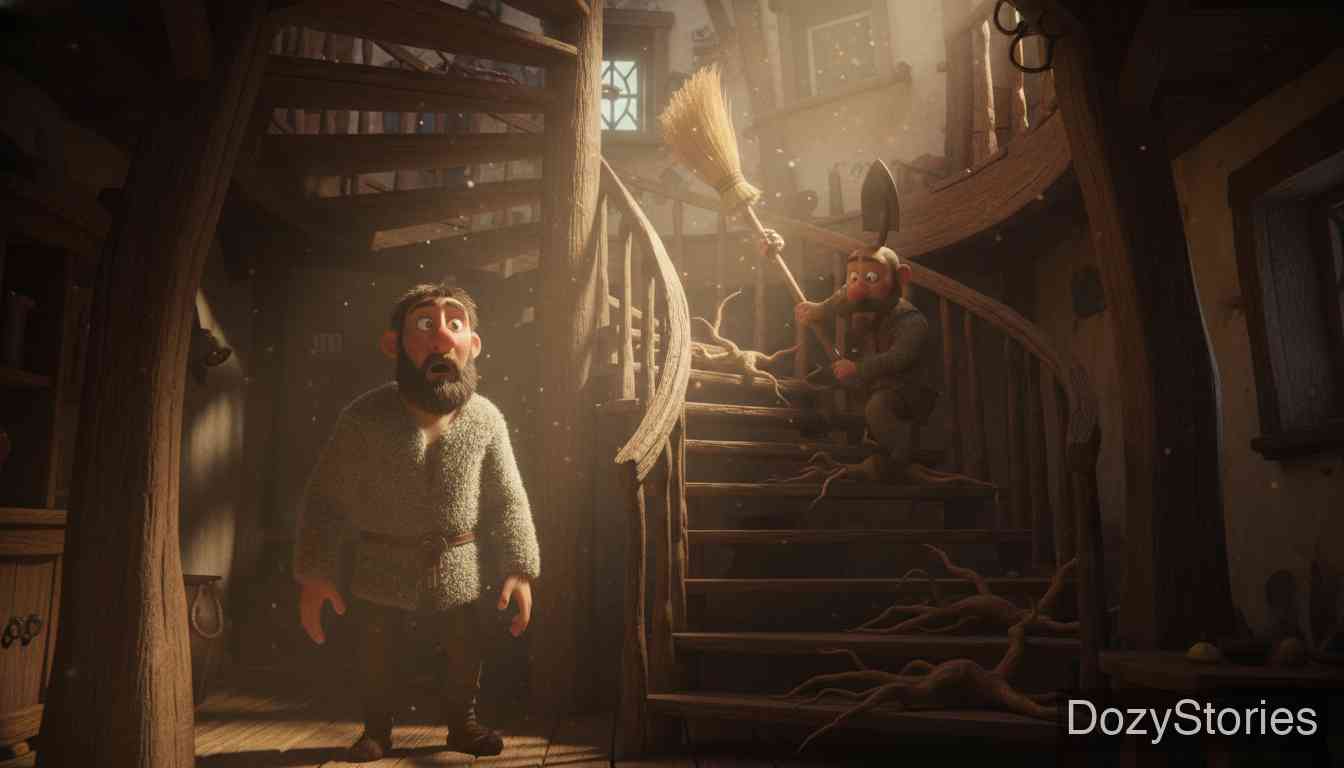
On the first landing, a broom and a shovel were fighting.
头一层楼梯口,一把扫帚和一把铁锹正扭作一团,打得不可开交。
A tool with a long handle and a wide blade, used for moving earth or coal.
铁锹;铲子。
On the first landing, a broom and a shovel were fighting.
头一层楼梯口,一把扫帚和一把铁锹正扭作一团,打得不可开交。
Making a long soft sound, like water on hot metal.
发出嘶嘶声。
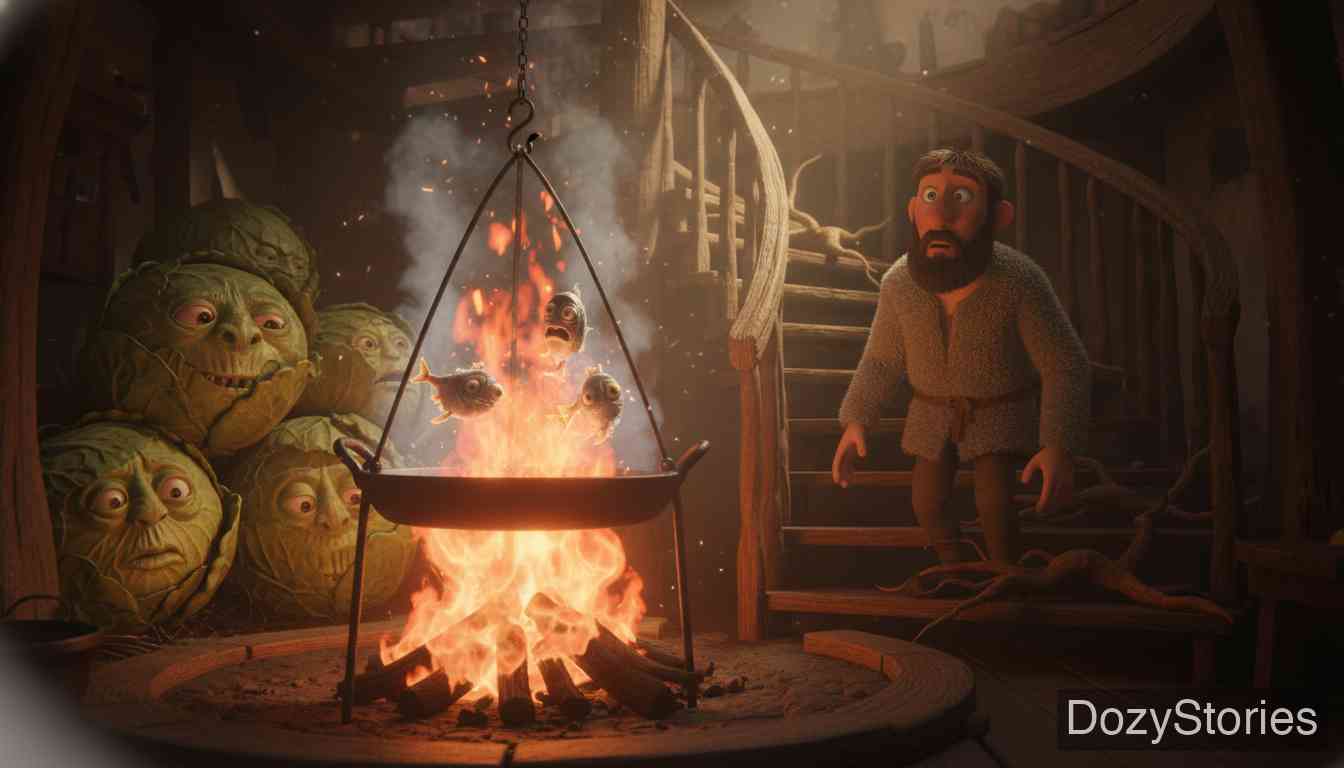
Fish were frying inside, hissing and turning over all by themselves.
几条鱼正在锅里煎得嘶嘶响,自己翻身,自己熟。
The small hole in a door that a key fits into.
锁孔;钥匙孔。
He put his eye to the keyhole.
他凑到锁孔前张望。
The hard pointed things that grow on the heads of some animals.
角;犄角。
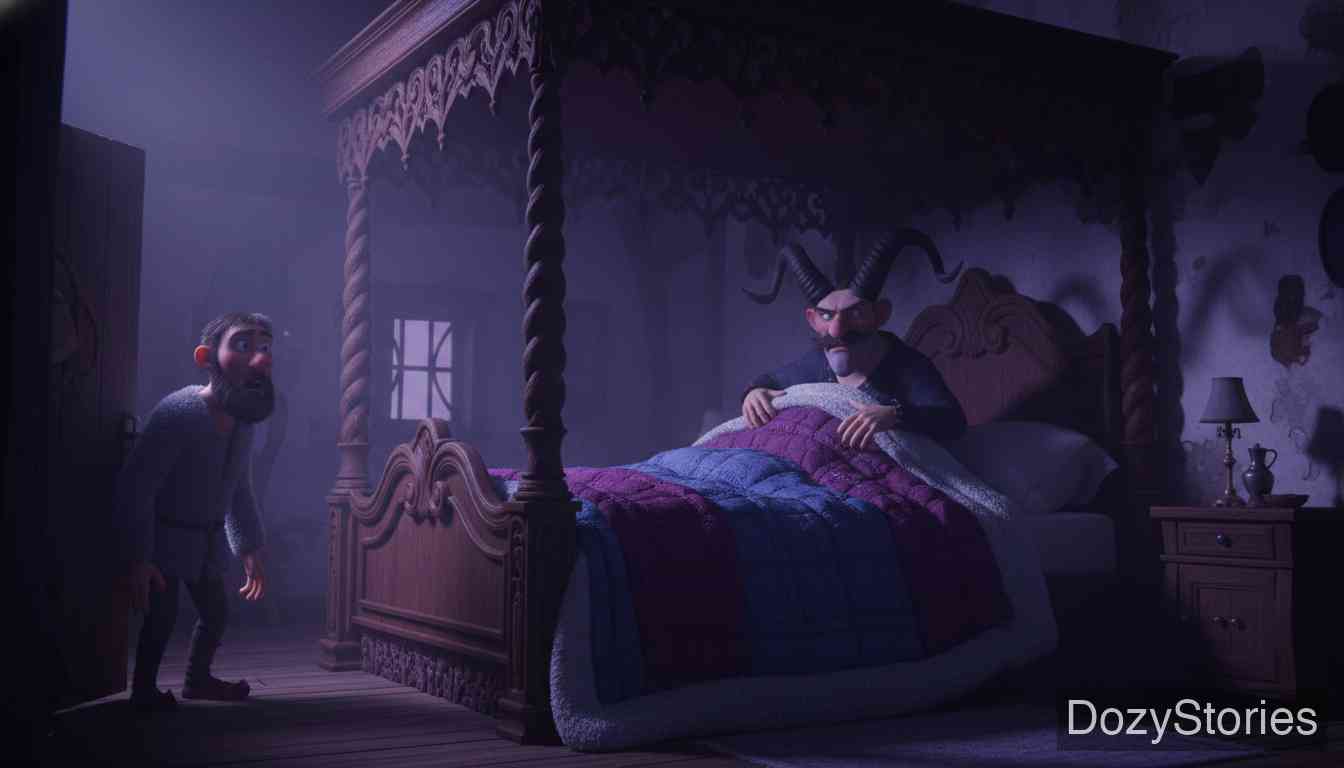
There sat his godfather — and on his head grew a pair of long horns!
屋里坐着的正是教父,头上竟长着一对长长的角!
Took something quickly with the hand.
一把抓起;夺过。
The godfather snatched up the blanket and hid under it.
教父慌忙扯过被子,把自己蒙了个严严实实。
Silly; not wise.
愚蠢的;糊涂的。
"How foolish you are," said the godfather from under the blanket.
「你这人好不明白,」教父在被子里说。
Shook because of fear or cold.
(因害怕或寒冷而)发抖,打寒战。
The man shuddered, turned around, and ran out of the house as fast as he could, and he never came back.
穷人打了个寒战,转身就跑,一口气逃出了那宅子,从此再也没登过那宅子的门。
延伸阅读与亲子共读
故事寓意
眼睛看见的怪事,别让几句巧话糊弄过去;心里觉得不对劲的时候,脚下就该快些走——有时候,转身离开就是最聪明的选择。
教育价值
孩子能学会「眼见为实」的分寸:别人的解释未必可信,自己的观察值得尊重;也能认识「直觉」——心里那声「不对劲」,往往是保护自己的第一道防线。
家长共读提示
共读时先别急着讲道理,让孩子一层一层「闯关」,猜猜教父的家里还会出现什么。读完可以问:教父为什么把每样可怕的东西都说成寻常物?孩子若说「他在骗人」,正好顺势点出「相信自己的判断」。孩子害怕时,可以告诉他:教父始终没有真正伤害任何人,穷人跑得快,正是聪明之举。
和孩子聊一聊
- 穷人凭一个梦就决定请陌生人做教父。你觉得「梦里的主意」可不可靠?如果是你,会照着做吗?
- 教父把断指说成菜根、把死人头说成卷心菜。他为什么句句都要这样解释?听完他的解释,你是更放心,还是更害怕?
- 故事始终没说教父就是魔鬼,只让他长了一对角。不把话说破,是不是反而更吓人?为什么?
- 穷人只有看到死神站在病人头边才能救活病人。假如你也有这种「能看出结局」的本事,你愿意要吗?
- 穷人最后一句话不多说就跑了。你觉得他跑得对不对?生活里有没有「赶紧离开比问清楚更重要」的时候?