The Young Giant
Introduction
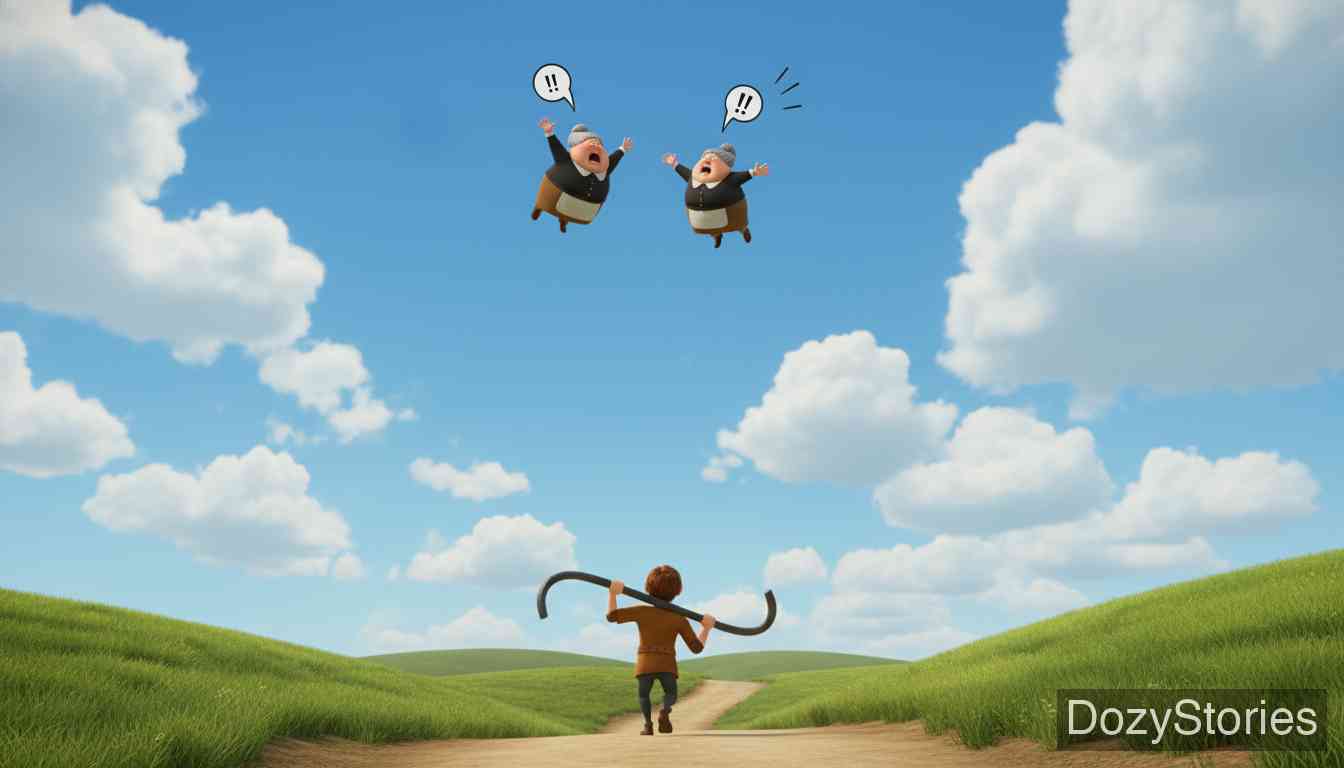
This strongman tale has been told across Europe for centuries, and folklorists file it under tale type ATU 650A, “Strong Hans.” Why retell it as a fable? Because at its heart it already carries two virtues that Chinese folk wisdom holds dear: the value of a promise — “a word once spoken cannot be chased back even by four horses” — and the belief that greed and cruelty bring their own punishment. The young giant asks for no gold, only for “a few kicks” as wages. That odd request is really a test of character: honest masters can face it, while greedy ones tremble. China, too, has its tales of mighty men — the hero Xiang Yu, who could lift a bronze tripod, and the monk Lu Zhishen, who tore a willow from the ground — yet the old stories never praise strength alone; they always pair great power with a sense of right and wrong. This Grimm tale speaks the same language. One note for curious readers: in the Brothers Grimm's own collection this story keeps its rough peasant humor — no prince, no princess, no softening. The hero outwits a stingy smith and a cheating bailiff the way a village hero should. As you read, point out that the giant never harms a good person; his blows fall only on the greedy. Then ask your child why the cheating couple end up floating in the sky — it is not their weight that lifts them, but their broken word.
Vocabulary from "The Young Giant"
12 key words from this story with definitions and original context sentences for language learners.
Long steps taken when walking fast.
大步;阔步。
But the giant's long legs covered the ground in two strides.
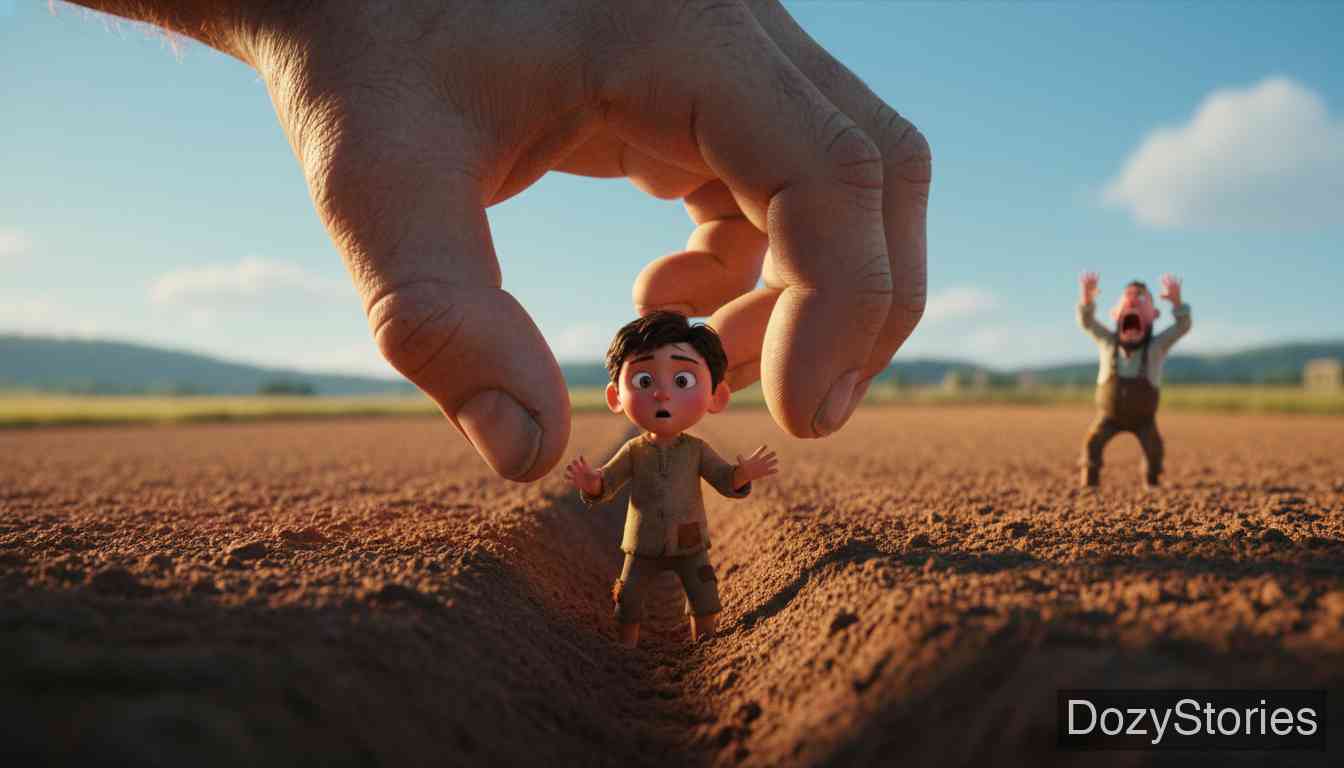
谁知话音未落,巨人已站在垄沟里。
Too surprised or afraid to speak.
说不出话的;哑口无言的。
The poor father stood speechless with fear.
父亲吓呆了,站在那里,好半天出不了声。
Pulled or lifted something heavy with great effort.
(用力)举起,拽起。
The boy heaved the strongest oak in the wood out of the ground, and the trunk split in two.
孩子抓住林中最粗壮的橡树,轻轻一拽,连树干都裂成了两半。
The way you hold something tightly with your hand.
紧握;握力。
His grip was so strong that the share sank deep into the earth.
年轻人一只手按住犁把——手劲太大,犁铧一下子扎进土里老深。
Broke up and leveled ploughed soil with a spiked frame.
(用耙)耙地。
Then he ploughed all two acres alone, and after that he harrowed the whole field with two harrows at once.
他一个人犁完了两亩地,又套上两张耙,把整块地细细耙了一遍。
Very frightening or ugly to look at.
可怕的;吓人的。
When his mother saw him, she cried out, “What a frightful giant! Go away! You are not our son!”
母亲在院里见了,惊叫起来:“好个吓人的大个子!走开走开,你不是我们的儿子!”
Broke something suddenly with a sharp sound.
(咔嚓一声)折断。
The young man snapped it in half like a dry twig.
年轻人往膝上一搁——咔嚓一声,像折豆秸一样断成两截。
A person who hates spending money and keeps everything for himself.
吝啬鬼;守财奴。
The miser was delighted, for he would save a lot of money.
吝啬鬼听了正中下怀——这样能省下多少工钱!
The heavy iron block on which a smith hammers hot metal.
铁砧。
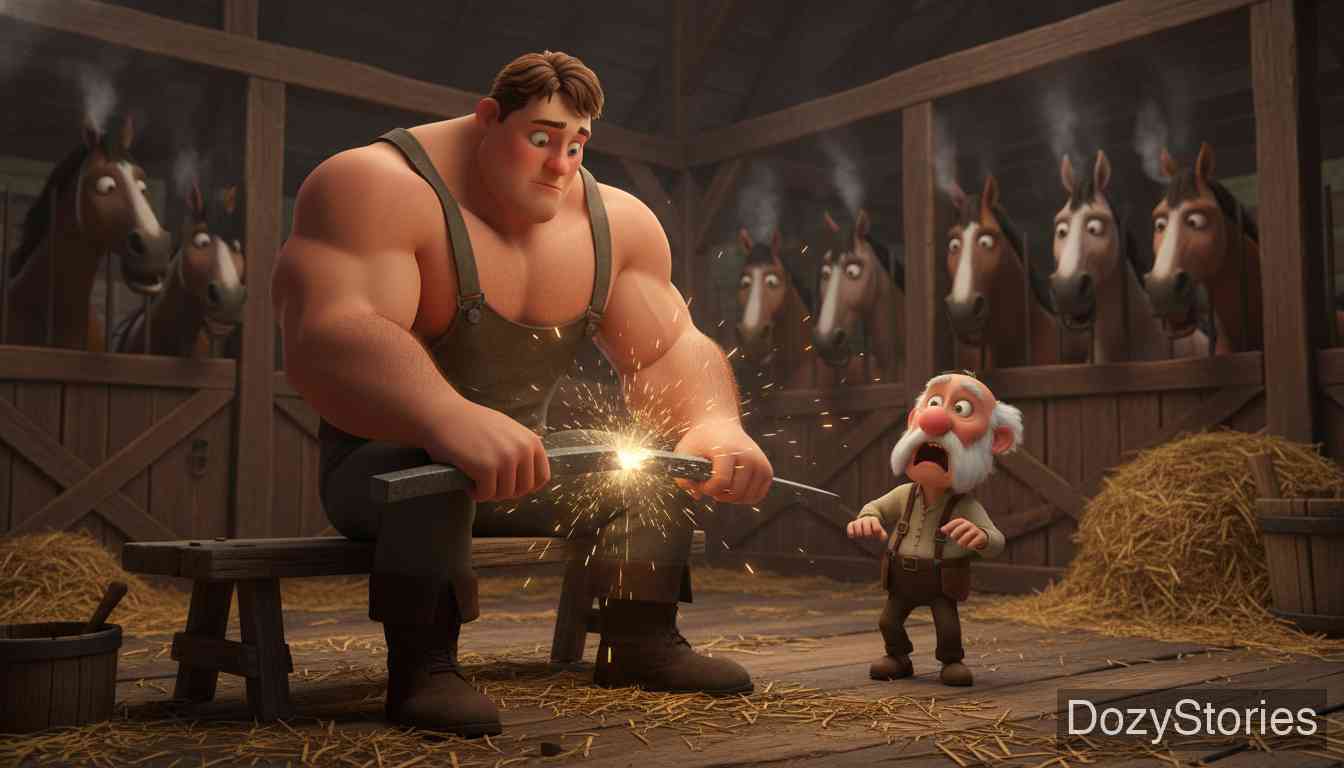
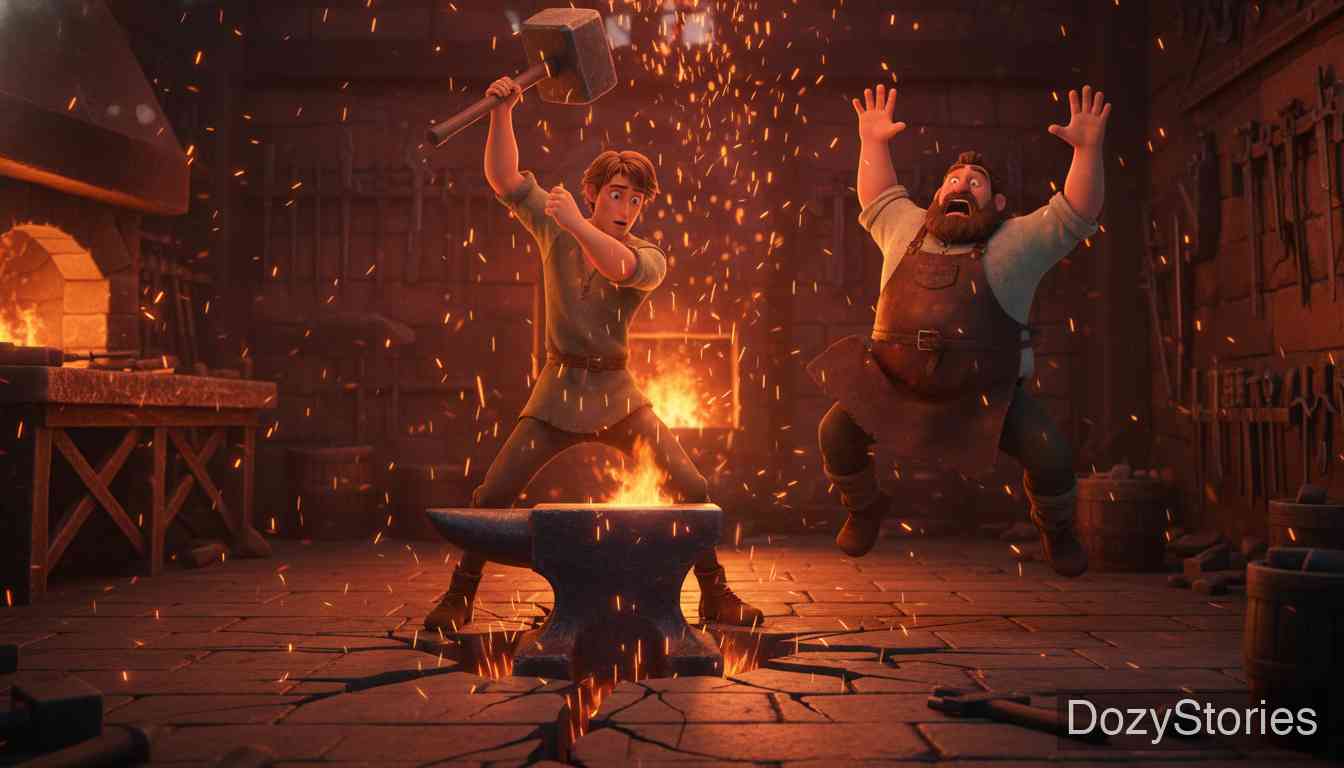
The hot iron flew apart, and the anvil sank so deep into the ground that no one could pull it out.
师傅刚夹出烧红的铁条,年轻人头一锤下去,铁条四下飞散,铁砧直陷进地里,再也拔不出来。
A man who manages a farm or estate for its owner.
庄头;田庄管事。
He asked the bailiff whether he needed a head-servant.
走了好些日子,他来到一座小田庄,问庄头要不要长工头。
A pile of things built to block a road or path.
路障;障碍物。
On the way he piled trees and brushwood across the ravine and made a barricade that no horse could pass.
路过一道峡谷,他停下马车,搬来树木柴枝,垒起一道高障,任什么马也过不去。
Pulled or dragged something heavy with effort.
(用力)拖,拉。
Then he unhitched his own horses, laid them on top of the cart, and hauled the whole load over the barricade with his bare hands.
他卸下自己的马,把马放到车顶上,两手抓住车辕,连车带马一起拖过了障子。
Reading Together & Learning More
The Moral
True strength is not measured by mighty arms but by keeping your word and never bullying the weak. Those who scheme against others in greed end up caught in their own traps.
Educational Value
Children learn that strength should serve fairness, that keeping a promise matters more than brute force, and that greedy schemers end up caught in their own traps. The comic, exaggerated episodes make the value of honesty easy to remember.
Tips for Parents
After reading, ask your child: the giant is so strong, why does he only use his strength against greedy masters and never against good people? Then talk about why keeping a promise matters, and connect the lesson to everyday life.
Talk About It
- The tiny boy is fed by a giant for six years and grows mighty. Do you think a person's abilities come mostly from birth or from practice?
- The giant wants no money, only “three kicks.” Why do you think he sets such a strange rule?
- The smith and the bailiff both try to cheat him, and both are kicked into the sky. Did they bring this on themselves?
- The giant is so strong, yet he never bullies a good person. What do you think keeps him from becoming a bully?
- If you one day had enormous strength, what would you use it for, and what rule would you set for yourself?