A Riddling Tale
Introduction
'A Riddling Tale' is one of the shortest pieces in the Brothers Grimm collection. It is not really a story at all, but a riddle wrapped in a few lines of narrative — the teller asks the listener to solve the puzzle before giving the answer. Riddle tales are an old family of tales found across the world, from the riddle of the Sphinx in Greek myth to the three riddles of Princess Turandot, and they all share one delight: winning by wit instead of by force. When we retold this one as a fable, we chose the oldest way of teaching in the world — tell a small tale, then point to a simple truth. A fable and a riddle share the same bones: both are short, both ask the listener to think, and both end with a quiet lesson. The answer to this puzzle, the flower that slept at home and carried no dew, echoes an old saying: where there is a will, there is a way. In Chinese we say 明察秋毫, which means seeing clearly even the tip of an autumn hair: if we look closely enough, nothing truly hides. Read this tale with your child slowly, and stop before the answer so they can play detective. Then ask together: what problems in daily life are solved by noticing one small thing that everyone else has missed?

Vocabulary from "A Riddling Tale"
12 key words from this story with definitions and original context sentences for language learners.
Causing pain or sadness on purpose; unkind.
残忍的;狠心的。
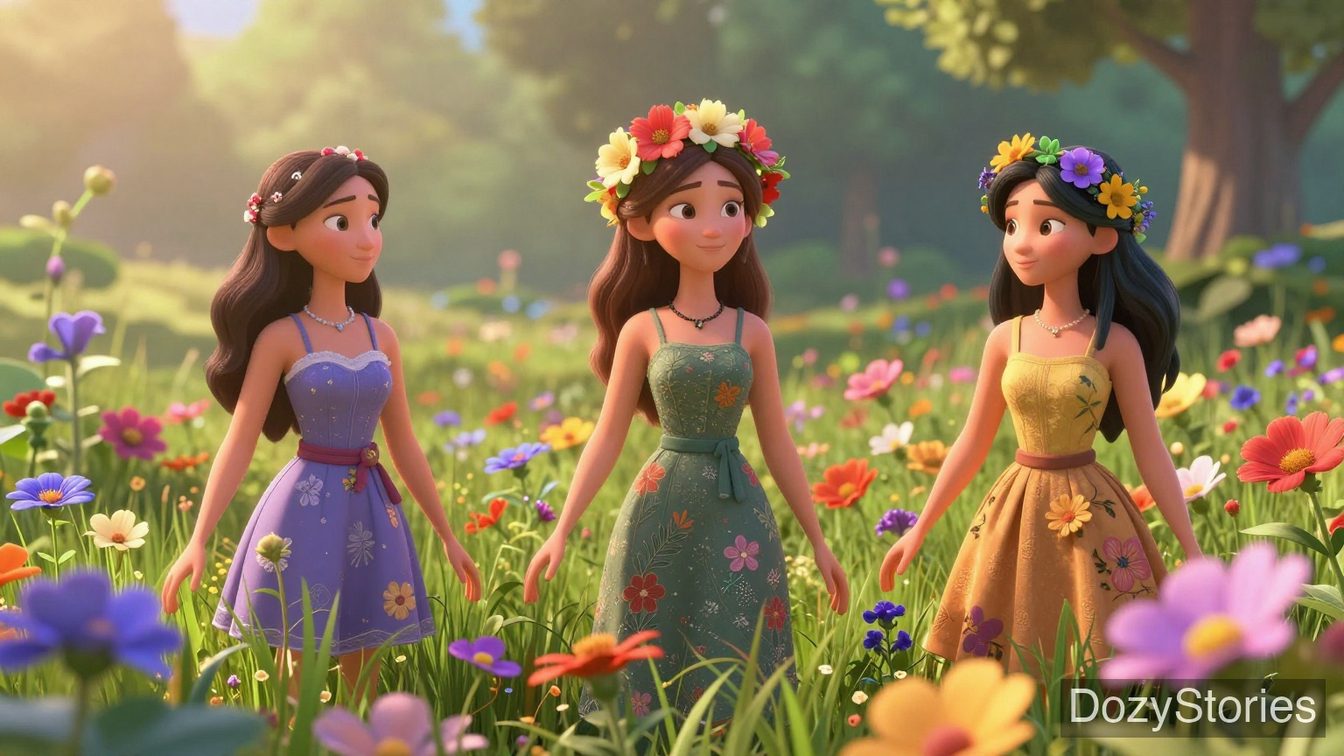
Long ago, a cruel spell turned three women into flowers.
从前,有三个女子,被一道狠心的魔法变成了花。
Flowers, especially on a plant.
花朵。
The three blossoms grew side by side in a wide green field, and they looked exactly alike.
三朵花并排长在一片宽宽的田野里,模样一模一样。
Moving up and down gently, like a head saying yes.
点头;轻轻摇晃。
People who walked past saw only three pretty flowers nodding in the wind.
路过的行人只当是几朵好看的花在风里点头。
Light in colour; not bright or strong.
苍白的;泛白的。
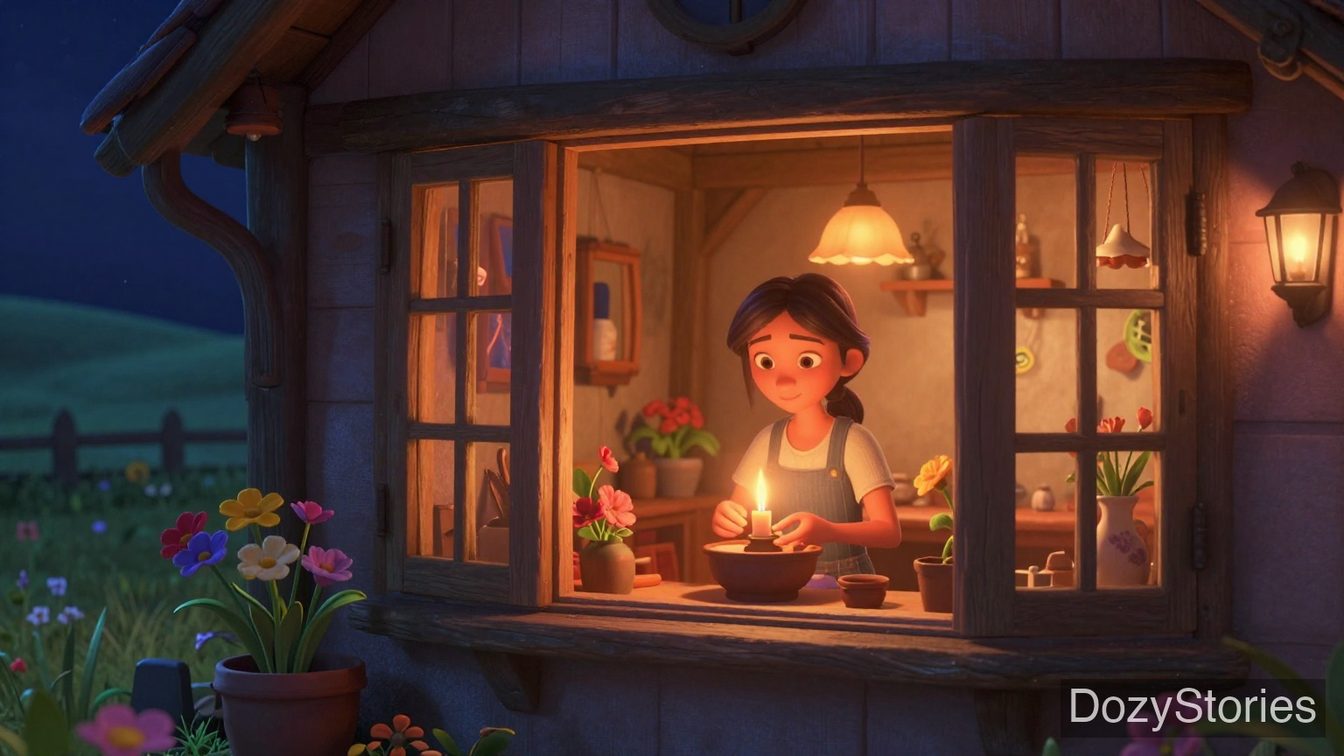
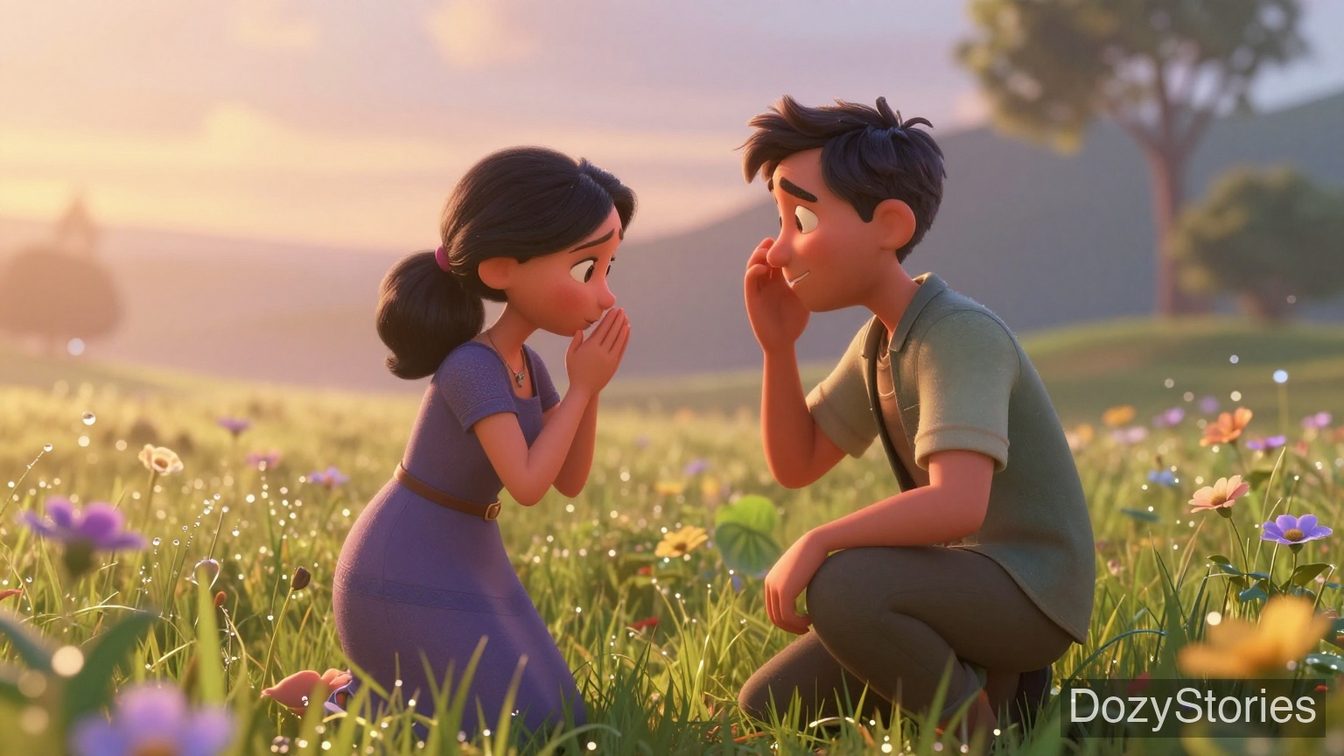
The two sat by the lamp and talked until the sky began to turn pale in the east.
夫妻俩坐在灯下说话,说不完的体己话,直到天边泛起鱼肚白。
Moved or did something quickly.
匆忙地赶;赶紧。
Then, with a heavy heart, she hurried back to the field before the daylight came.
直到天边泛起鱼肚白,她才恋恋不舍地赶回田野里去。
Went down; here it means he suddenly felt sad and hopeless.
下沉;(心)一沉。
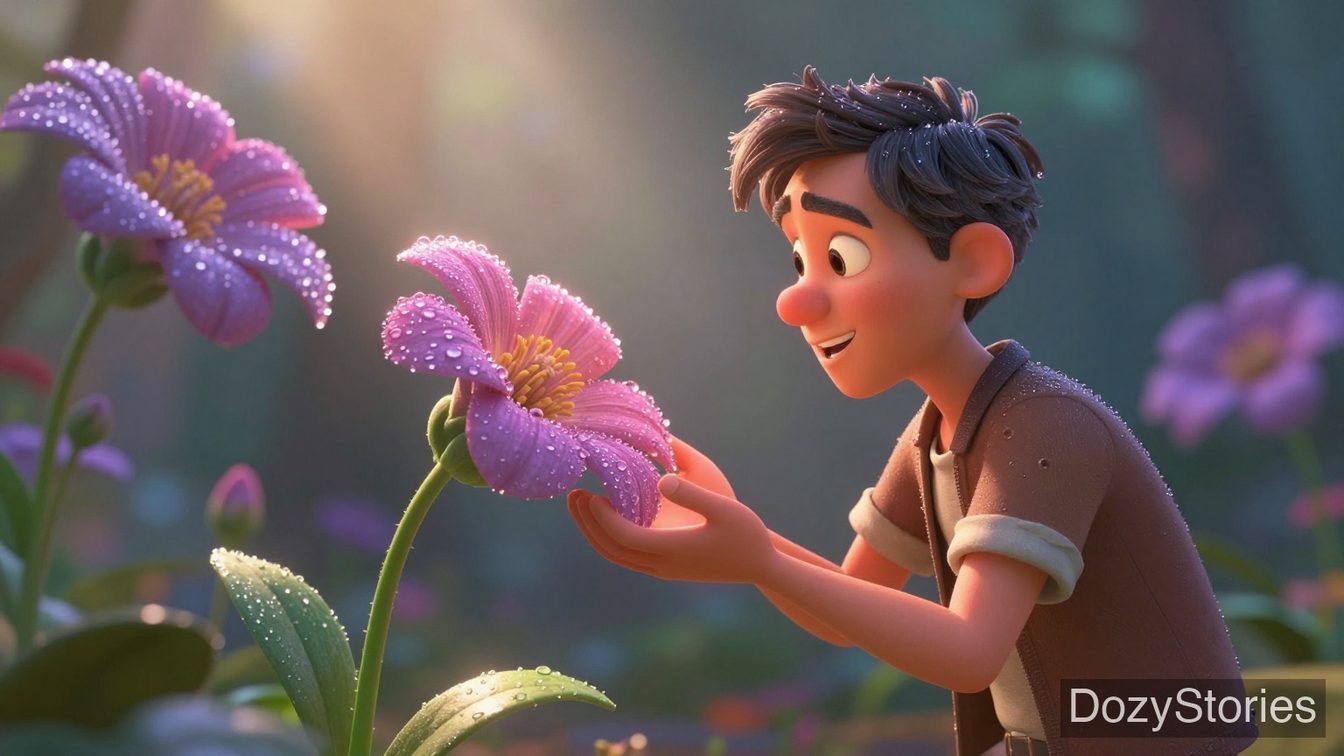
Three flowers stood in a row, and his heart sank.
三朵花并排立着,他的心一下子沉了下去。
One of the soft, coloured parts of a flower.
花瓣。
They were the same height and the same colour, and their petals had the same shape.
一般高矮,一般颜色,连花瓣的样子都分毫不差。
A clever question that is hard to answer.
谜语;谜题。
Now, dear readers, here is the riddle: how did he know which flower was his wife?
各位小听众,谜题就在这里:他凭什么认出了自己的妻子?
Tiny drops of water that form on plants and grass in the early morning.
露水;露珠。
Cold dew had wet their petals, so they were soaked from top to bottom.
凉露打湿了它们的瓣儿,从头到脚都是湿漉漉的。
Completely wet.
湿透的;浸透的。
Cold dew had wet their petals, so they were soaked from top to bottom.
凉露打湿了它们的瓣儿,从头到脚都是湿漉漉的。
Ready and happy to do something.
愿意的;心甘情愿的。
This tale tells us that nothing is too hard for a willing heart.
这故事告诉我们:世上无难事,只怕有心人。
Fails to see or notice something.
忽略;没注意到。
The answer to a hard problem often hides in the small detail that everyone else overlooks.
难题的答案,常常就藏在一个被众人忽略的小地方。
Reading Together & Learning More
The Moral
Nothing is too hard for a willing heart. To find the right flower, the husband needed no magic — only a pair of careful eyes. The answer to a hard problem often hides in the small detail that everyone else overlooks.
Educational Value
This fable teaches a child that careful observation is a real skill. When a problem seems hard, we should stay calm, look closely, and think — the answer is often right in front of us. Finding the flower without dew is a gentle game that trains a child's eye to notice.
Tips for Parents
This tale is short, gentle, and nothing to fear — the best way to read it is to stop halfway and guess together. When the husband faces the three flowers, close the book and ask your child: the flowers look exactly alike, so how can he tell which one is his wife? If they are stuck, whisper a hint: 'What was different about her night compared with the other two flowers?' The joyful 'aha' when the answer comes is the brightest moment of this fable. After reading, play a 'spot the difference' game together, and make careful looking a habit.
Talk About It
- Don't read the answer yet! If you were the husband, and the three flowers looked exactly alike, how would you find your wife?
- The key clue is 'dew' — she slept at home, so no dew touched her. Did the story quietly plant this clue earlier? Where?
- No magic broke the spell — only careful eyes. Have you ever solved a problem by noticing one small detail?
- The tale says nothing is too hard for a willing heart. What do you think 'a willing heart' means — being clever, or something else?
- Can you invent another 'find the difference' trick to pick out one special thing from a pile of identical things?