Allerleirauh

Introduction

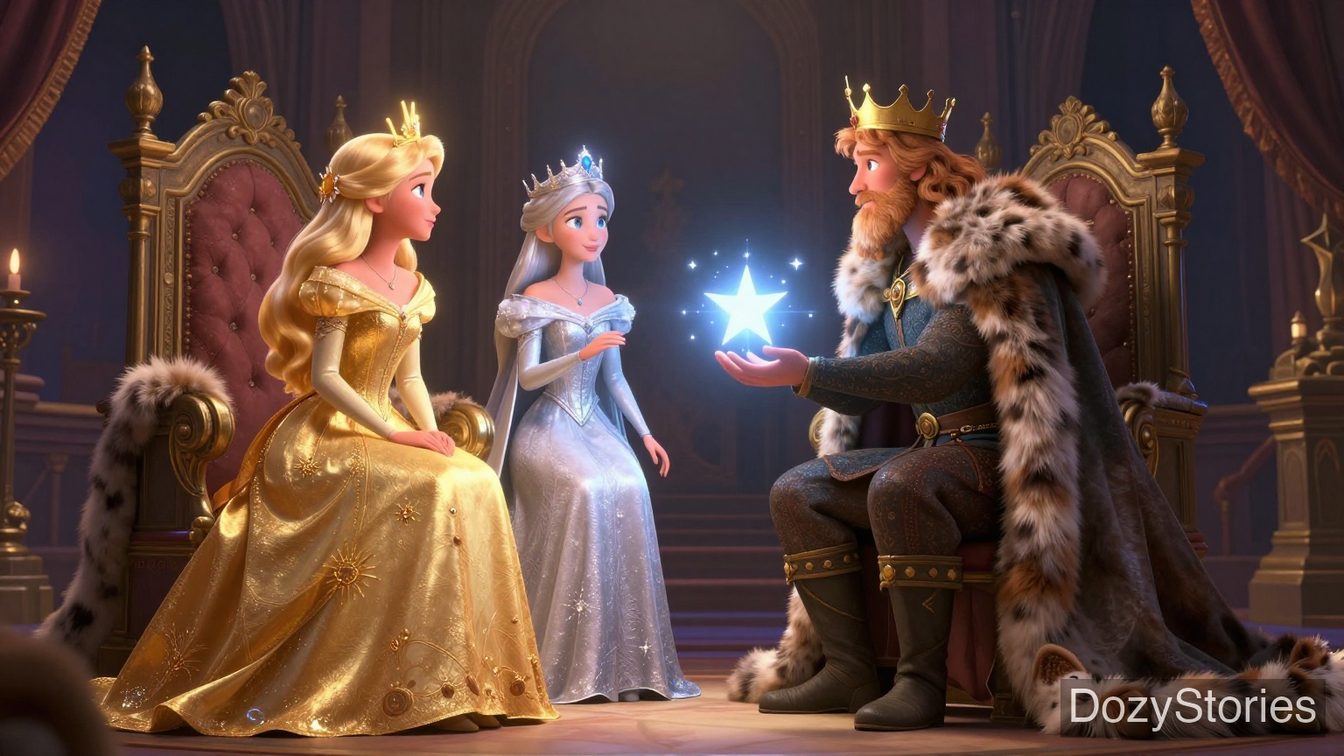
This tale comes from the Brothers Grimm, and folklorists place it in the same family as "Cinderella." Retelling it as a Chinese-style fable felt natural, because its bones are already those of a fable: a cloak of a thousand furs is a mask, and the three dresses and three golden treasures are the light that finally breaks through the mask. Hide and reveal, hide and reveal — this is the old folk wisdom that gold buried in ashes will shine at last, the very idea behind the Chinese saying that real gold does not fear the fire. Even the Grimms found the opening too dark: the father's plan to marry his daughter was softened again and again in later editions. A fable lets us treat that plan as simply a wrong thought, so the tale can focus on what truly matters — the girl's quick mind and her stubborn courage. When you read together, do not linger on the start. Instead, ask your child to watch the three treasures: why does she drop a ring, a spinning-wheel, and a reel, one after another, into the soup? Each gift is bolder than the last, and that is the story speaking for her: you can hide for a season, but not forever.
Font Size
1 / 15
Stopped
Allerleirauh - On her deathbed, the queen makes the king promise to marry only a woman as beautiful as herself, with golden hair like hers; yet no such woman can be found anywhere. - Scene Illustration 1
On her deathbed, the queen makes the king promise to marry only a woman as beautiful as herself, with golden hair like hers; yet no such woman can be found anywhere.
Long ago, there lived a king whose wife had golden hair. No one in the whole world was as beautiful as she was. But one day the queen fell ill, and she knew that her time was short. She asked the king to come to her bedside. "If you ever marry again," she said, "you must choose a woman as beautiful as I am, with golden hair like mine. Promise me this." The king promised. Then the queen closed her eyes and died.
The king grieved for a long time and did not want another wife. But his councillors said, "A kingdom needs a queen. The king must marry again." So the king sent messengers far and wide to look for a bride as beautiful as the late queen, with golden hair like hers. They searched every land, yet they found no one. No other woman in the world had such golden hair, and the messengers came home with empty hands.
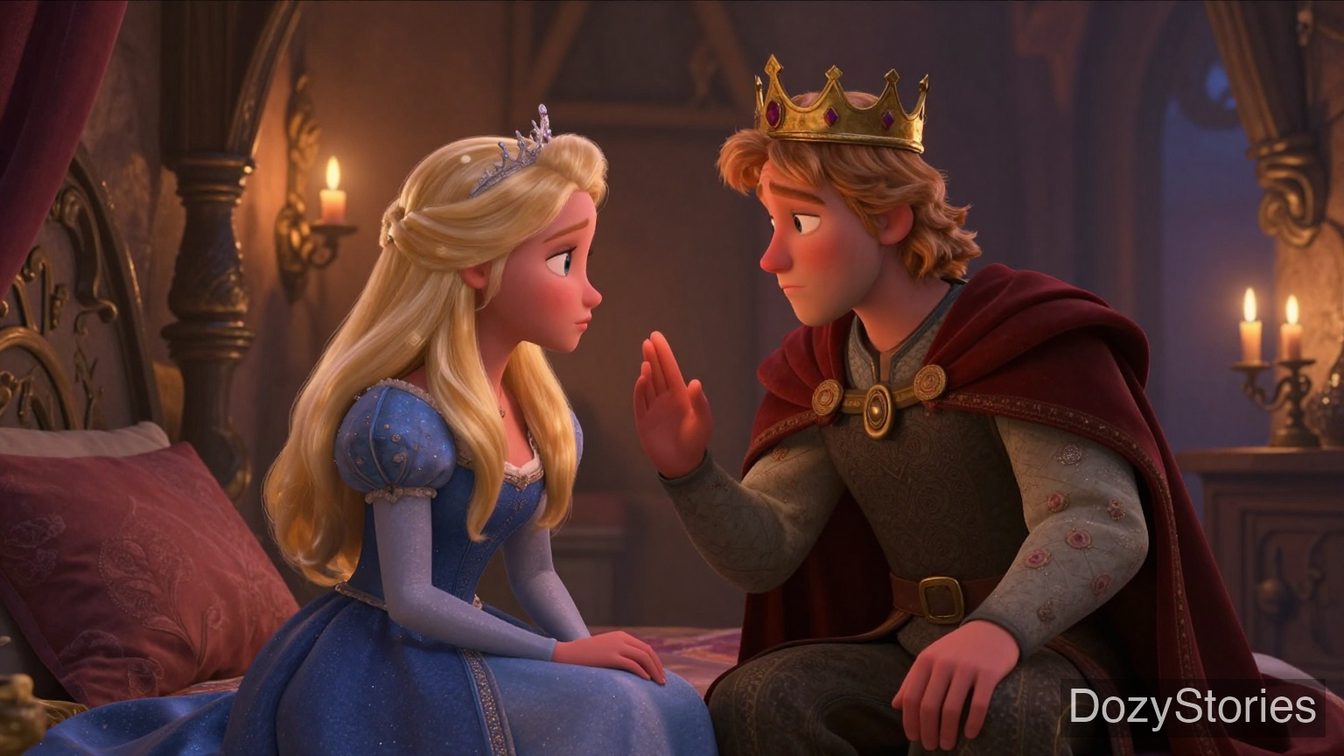
Allerleirauh - The king sees his daughter's face as the image of his late wife, and a wrong wish rises in his heart: he wants to marry her. - Scene Illustration 2
The king sees his daughter's face as the image of his late wife, and a wrong wish rises in his heart: he wants to marry her.
The king had one daughter. She looked just like her mother, and her hair was golden too. When the princess grew up, the king looked at her one day. He saw his late wife in her face, and a wrong desire rose in his heart. He told his councillors, "I will marry my daughter. She is the image of my queen, and no other bride can equal her." The councillors were shocked. "This is a terrible sin," they said. "No good can come of it. It will bring ruin upon the whole kingdom."
The princess was frightened when she heard her father's plan, but she was clever as well. She thought of a way to stop him. "Before I obey you," she said, "I must have three dresses. One as golden as the sun, one as silver as the moon, and one as bright as the stars. I also need a cloak made of a thousand kinds of fur. Every animal in your land must give one piece of skin." She said to herself, "No one can ever make these things. Then my father will give up this wicked plan."
But the king did not give up. He ordered the cleverest weavers in the land to make the three dresses. He sent his huntsmen to catch one animal of every kind and take a piece of skin from each. Soon the cloak of a thousand furs was ready. The king spread it out before the princess. "Everything is ready," he said. "Tomorrow, we will marry."
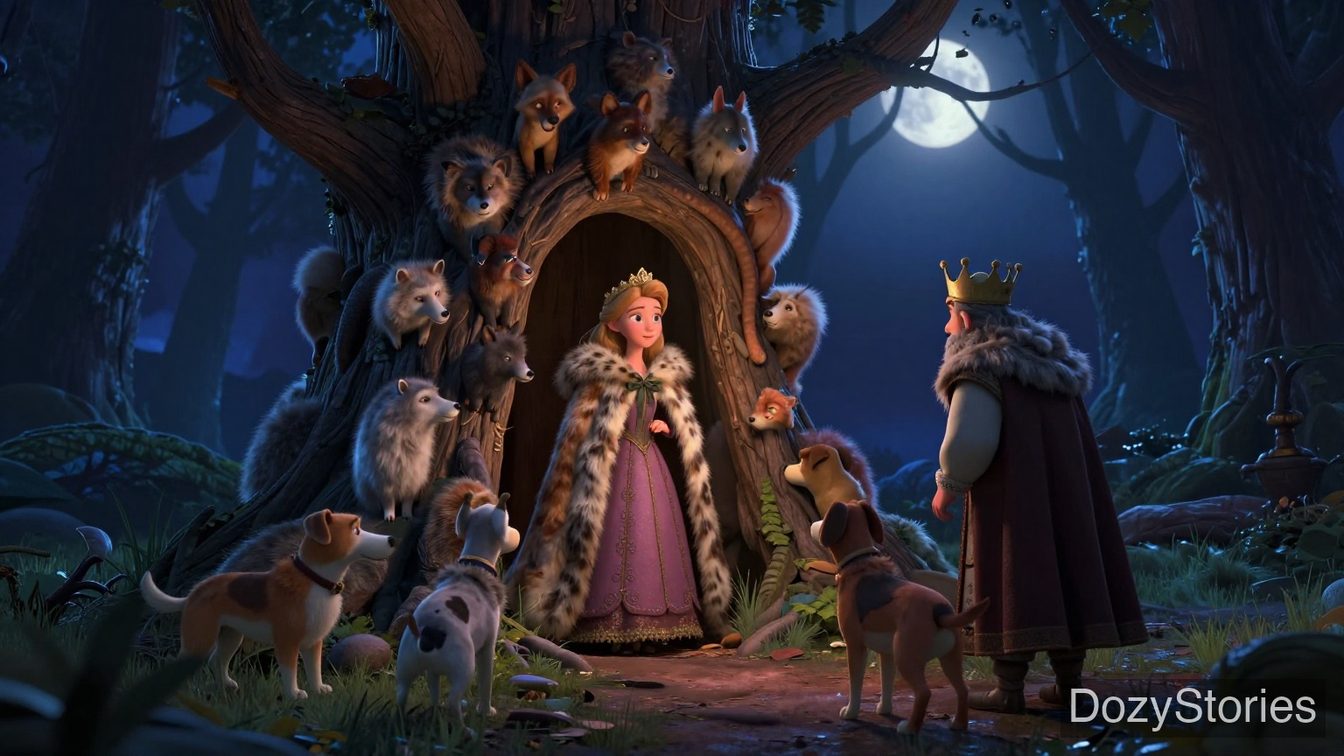
Allerleirauh - The princess flees by night, hides in a hollow tree in her fur cloak, and is carried off by another king's huntsmen to work in his kitchen. - Scene Illustration 3
The princess flees by night, hides in a hollow tree in her fur cloak, and is carried off by another king's huntsmen to work in his kitchen.
Now the princess saw that there was no hope, so she made up her mind to run away. That night, while everyone slept, she took three treasures: a golden ring, a golden spinning-wheel, and a golden reel. She hid the three dresses inside a nutshell. Then she put on the fur cloak and blackened her face and hands with soot. She walked through the dark until she reached a great forest. She was very tired, so she climbed into a hollow tree and fell asleep.
The sun rose higher and higher, but the girl still slept. Now this forest belonged to another king, and on that day he was hunting there. His dogs ran to the hollow tree, sniffed at it, and barked and barked. "Go and see what beast is hiding inside," said the king. The huntsmen came back and said, "There is a strange creature in the tree. It is covered with a thousand kinds of fur, and it is fast asleep." "Catch it if you can," said the king. "Put it in the carriage, and we will take it home."
When the huntsmen touched her, the girl woke up in fear. "I am a poor child with no father and no mother," she cried. "Please have pity on me and take me with you." "Rough-skin," they said, "you can be useful in the kitchen. Come with us and sweep the ashes." So they put her in the carriage and brought her to the palace. They gave her a tiny room under the stairs, where no daylight ever came. "Hairy girl, live and sleep here," they said. From that day on, she carried wood, drew water, swept the hearth, plucked the chickens, and did every dirty job in the kitchen.
Allerleirauh - Twice the girl slips away to the feast, in her dress of gold and her dress of silver; first a golden ring, then a golden spinning-wheel, sinks into the king's soup. - Scene Illustration 4
Twice the girl slips away to the feast, in her dress of gold and her dress of silver; first a golden ring, then a golden spinning-wheel, sinks into the king's soup.
Rough-skin lived in misery for a long time. One day, the palace held a great feast. She asked the cook, "May I go upstairs and watch for a little while? I will only stand by the door." "Yes, go," said the cook, "but come back in half an hour to sweep the hearth." She took her lamp to her little room, took off the fur cloak, and washed the soot from her face. Her beauty shone out again. She opened the nutshell and took out the dress as golden as the sun. Then she went up to the feast. No one knew her, so everyone stepped aside and took her for a princess. The king came to greet her and asked her to dance. "My eyes have never seen anyone so beautiful," he thought. When the dance ended, she bowed. Before the king could turn around, she had vanished.
She ran back to her room, put on the fur cloak, and blackened her face again. She was about to sweep the ashes when the cook said, "Leave the ashes until morning. Make the king's soup instead. I want to watch the feast too. But do not let one hair fall into it, or you will get nothing to eat." As soon as the cook left, Rough-skin made a fine soup. Then she took out her golden ring and dropped it into the soup bowl.
When the feast was over, the king asked for his soup. It tasted so good that he had never eaten better. At the bottom of the bowl lay a golden ring, and he could not guess where it had come from. He sent for the cook. The cook was afraid and blamed Rough-skin at first, but before the king he had to tell the truth. "I did not make the soup," he said. "The rough girl made it." The king called for Rough-skin. "Who are you?" he asked. "I am a poor girl with no father and no mother." "What can you do in my palace?" "Nothing at all. I am only good for having boots thrown at my head." "Where did you get the ring?" "I know nothing about any ring." The king could get no more from her, so he sent her away.
Some days later, the palace held another feast. Rough-skin asked the cook for leave again. "Go," he said, "but come back in half an hour and make the king his bread soup." She ran to her room, washed quickly, and put on the dress as silver as the moon. She went up to the feast, and the king was very glad to see her again. He danced with her, but when the dance ended, she vanished again in an instant. She changed back into the hairy girl and went to the kitchen to make the soup. While the cook was upstairs, she put the golden spinning-wheel into the bowl and covered it with soup. The king liked the soup just as much as before. He sent for the cook, and the cook confessed that Rough-skin had made it. She came before the king again, but she only said that she was good for nothing but having boots thrown at her head, and she knew nothing about any spinning-wheel.
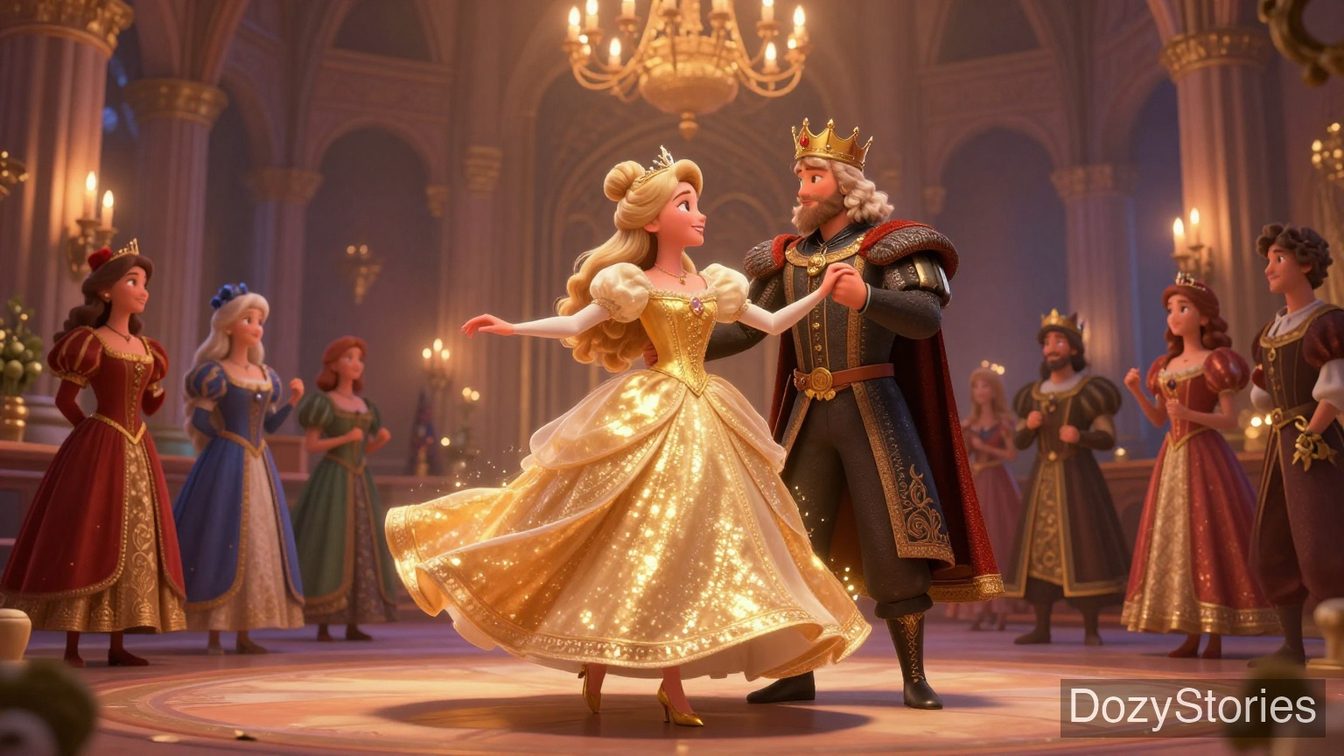
The king held a third feast, and everything happened as before. "Rough-skin," said the cook, "you must be a witch. Your soup is so good that the king likes it better than mine." But she begged so sweetly that he let her go upstairs at the set time. This time she wore the dress as bright as the stars. The king danced with her again, and she had never looked more lovely. While they danced, he quietly slipped a golden ring onto her finger. He had told the musicians to play this dance for a long, long time.
When the dance ended, the king tried to hold her hand. She broke free, ran through the crowd, and was soon gone. She raced back to her little room under the stairs. But she had stayed too long, more than half an hour, and there was no time to change. She only threw the fur cloak over her dress. In her hurry, she forgot to blacken herself, so one finger stayed white. Then she ran to the kitchen to make the king's bread soup, and while the cook was away, she dropped her golden reel into the bowl.
The king found the reel at the bottom of the bowl and sent for Rough-skin. This time he saw the white finger, and he saw the ring he had put there during the dance. He took her hand and held it fast. She tried to pull away, but the fur cloak fell open, and the star dress shone out. The king tore off the cloak. Her golden hair came tumbling down, and there she stood in all her beauty, with nowhere left to hide. When the soot was washed from her face, she was the most beautiful woman in the world. "You are my dear bride," said the king, "and we will never part." So they were married, and they lived happily together for the rest of their lives. And that is the lesson of this tale: a disguise can hide a face, but it can never hide a good heart and clever hands. Gold buried in ashes will shine at last.

Vocabulary from "Allerleirauh"

12 key words from this story with definitions and original context sentences for language learners.

councillors(councillor)C1
/ˈkaʊnsələz/n.

People who advise a ruler or a king.

大臣;国王身边的谋士。

But his councillors said, "A kingdom needs a queen. The king must marry again."

但大臣们进言:“宫中不能没有王后,大王还得再娶。”

wickedB2
/ˈwɪkɪd/adj.

Very bad or evil.

邪恶的;居心不良的。

Then my father will give up this wicked plan.

那样,父亲就会打消这个不该有的念头。

treasures(treasure)B1
/ˈtreʒəz/n.

Valuable things, such as gold and jewels.

珍宝;贵重的东西。

That night, while everyone slept, she took three treasures: a golden ring, a golden spinning-wheel, and a golden reel.

当夜,众人睡熟,她悄悄取了三样宝贝:一只金戒指、一架金纺车、一只金线轴。

hollowB2
/ˈhɒləʊ/adj.

Empty inside, with a space in the middle.

中空的;空心的。

She was very tired, so she climbed into a hollow tree and fell asleep.

她走得实在乏了,便钻进一棵空心树里,沉沉睡去。

sootC1
/sʊt/n.

The black powder that smoke leaves behind.

煤烟;炭灰。

Then she put on the fur cloak and blackened her face and hands with soot.

随后她披上毛皮斗篷,用炭灰涂黑了脸和手。

miseryB2
/ˈmɪzəri/n.

A state of great unhappiness or suffering.

痛苦;凄惨的处境。

Rough-skin lived in misery for a long time.

千种皮就这样苦熬了许久。

confessed(confess)B2
/kənˈfest/v.

Admitted that something was true, especially something bad.

承认(过错);招认。

He sent for the cook, and the cook confessed that Rough-skin had made it.

国王传厨子来问,厨子只得承认,汤是千种皮做的。

vanished(vanish)B2
/ˈvænɪʃt/v.

Disappeared suddenly and completely.

突然消失;不见了踪影。

Before the king could turn around, she had vanished.

国王还没转过身来,她已不见了踪影。

tumbling(tumble)B2
/ˈtʌmblɪŋ/v.

Falling or rolling down quickly.

滚落;倾泻而下。

Her golden hair came tumbling down, and there she stood in all her beauty, with nowhere left to hide.

金发倾泻而下,她光彩照人地站着,再也藏不住了。

begged(beg)B1
/beɡd/v.

Asked for something again and again, very earnestly.

再三恳求;哀求。

But she begged so sweetly that he let her go upstairs at the set time.

可她苦苦哀求,厨子到底还是准她按时上楼。

disguiseB2
/dɪsˈɡaɪz/n.

A way of changing your looks so people do not know you.

伪装;乔装打扮。

And that is the lesson of this tale: a disguise can hide a face, but it can never hide a good heart and clever hands.

这故事告诉我们:伪装藏得住一张脸,却藏不住一颗好心与一双巧手。

shone(shine)B1
/ʃɒn/v.

Gave out bright light.

发光;闪耀。

Her beauty shone out again.

她的美貌便又焕发出来。

Reading Together & Learning More

The Moral

A disguise can hide a face, but it can never hide a good heart and clever hands. Gold buried in ashes will shine at last.

Educational Value

Children learn that a wrong situation calls for courage to leave and cleverness to protect oneself; a dirty coat may fool people for a while, but real skill and a good heart always shine through in the end.

Tips for Parents

Before reading, gently explain that the father's wish at the start of the tale is absolutely wrong; the heart of the fable is how the girl protects herself with wit and wins respect through her own skill. After reading, ask your child why Rough-skin hid her name for so long, and what finally gave her away. Use the answers to lead the talk toward one idea: true worth is always seen in the end.

Talk About It

  1. The princess asks for three nearly impossible dresses, hoping to make her father give up. Where is the cleverness in that plan? What would happen to the story if he truly could not make them?
  2. Rough-skin blackens her face and works in the kitchen, so people treat her like a dirty animal. Does a person's worth really shrink just because they look ragged? Why or why not?
  3. Three times the king fails to keep his beautiful dance partner, yet he finally knows her by one white finger. Can you remember other tales where a small object gives someone away? Why do you think storytellers love such tiny clues?
  4. If you were Rough-skin, what would you do after you escaped? Hide and wait for your chance, or go straight to the new king and tell him the whole truth? What are the good and bad sides of each choice?
  5. The fable ends by saying that gold buried in ashes will shine at last. Have you ever seen someone who was looked down on at first, and later found to be truly good at something?