The Rabbit and the Maiden
Introduction
"The Rabbit and the Maiden" is the 66th tale of the Brothers Grimm. Its German name, Häsichenbraut, means "the Hare's Bride." Why retell it as a fable? Because the story already wears a fable's shape: the characters are types — a pushy hare, a quick-witted maiden; the plot runs in threes — three visits, three invitations; and the ending turns on a single clever trick. A fable speaks of people through animals and teaches through small things, which suits this tale perfectly. The maiden's way out is like the old trick of "leaving an empty shell behind": the copy stays, the real one is already gone. The hare's end answers a proverb of its own: a fruit picked before it is ripe tastes bitter, and nobody stays where they are held by force. As you read, guide your child toward two things. First, the hare says almost the same words every time, while the maiden's answers quietly change; that sameness and change is the hidden engine of the story. Second, the closing lesson — ask the child to put it in their own words: what does this tale want to tell us? A fable is not finished when you close the book; it is finished when the thinking begins.
Vocabulary from "The Rabbit and the Maiden"
12 key words from this story with definitions and original context sentences for language learners.
Soft and easy to bite, not tough.
嫩的;柔软的。
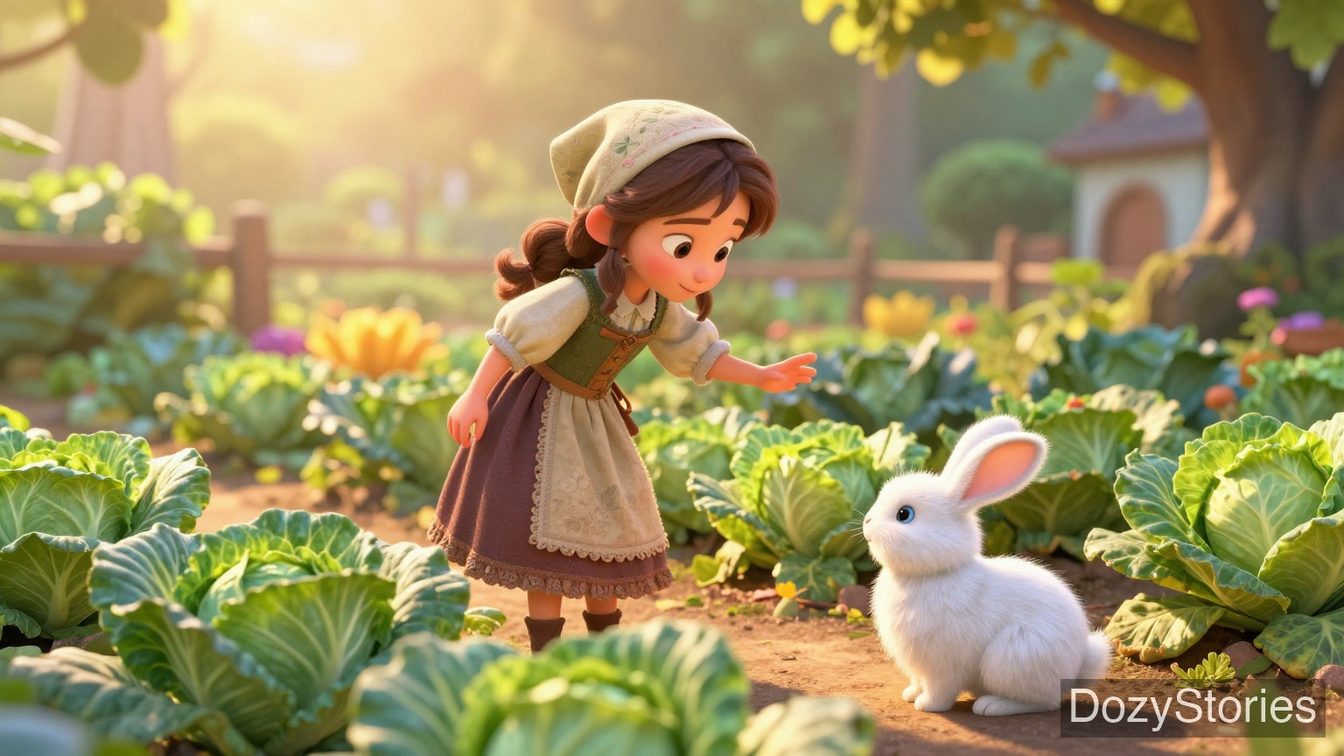
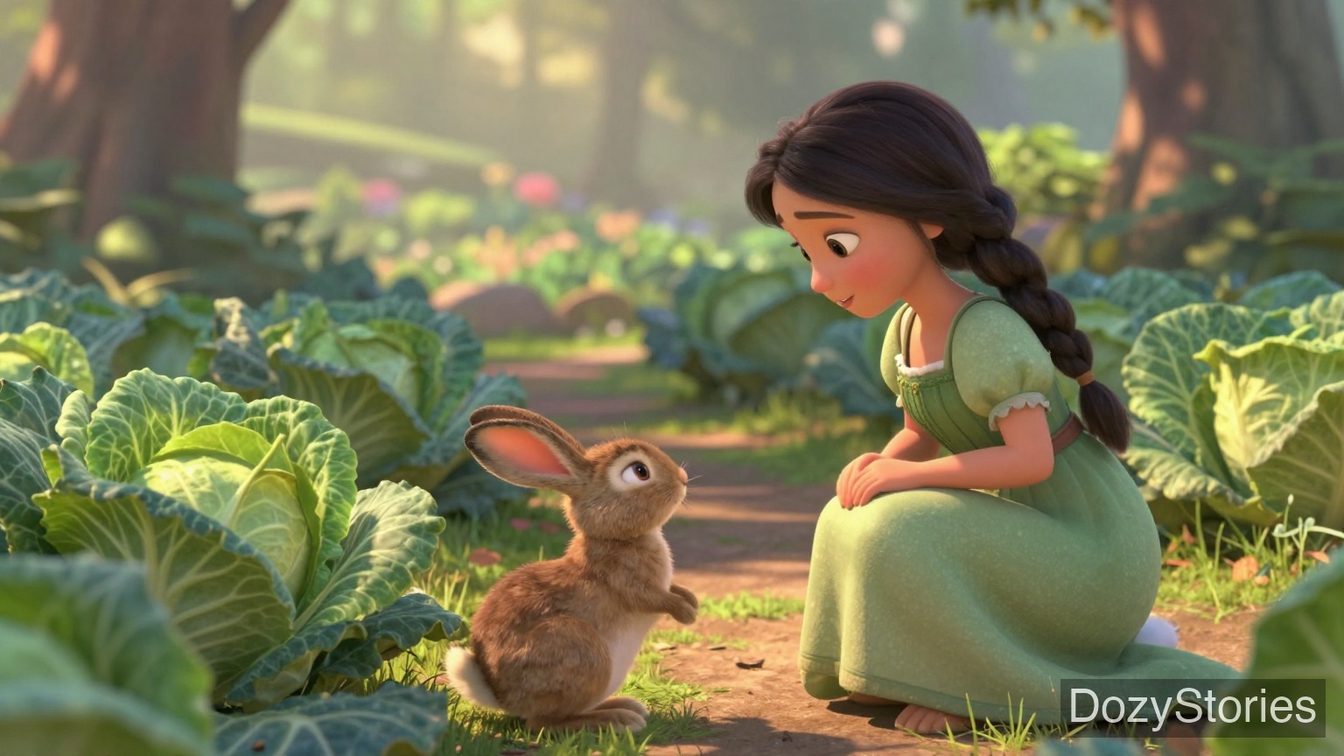
The cabbages were tender and sweet.
菜园里种着一畦卷心菜,又嫩又甜。
Moved the head from side to side to say no.
摇头(表示拒绝)。
The girl shook her head and would not go.
姑娘摇摇头,不肯跟它走。
Bit off small pieces of food with the front teeth.
小口地啃;细嚼。
The next day, the hare came back and nibbled the cabbages again.
第二天,兔子又来了,照旧把卷心菜啃得乱七八糟。
A small wooden house where a rabbit or hare lives.
兔窝;兔笼。
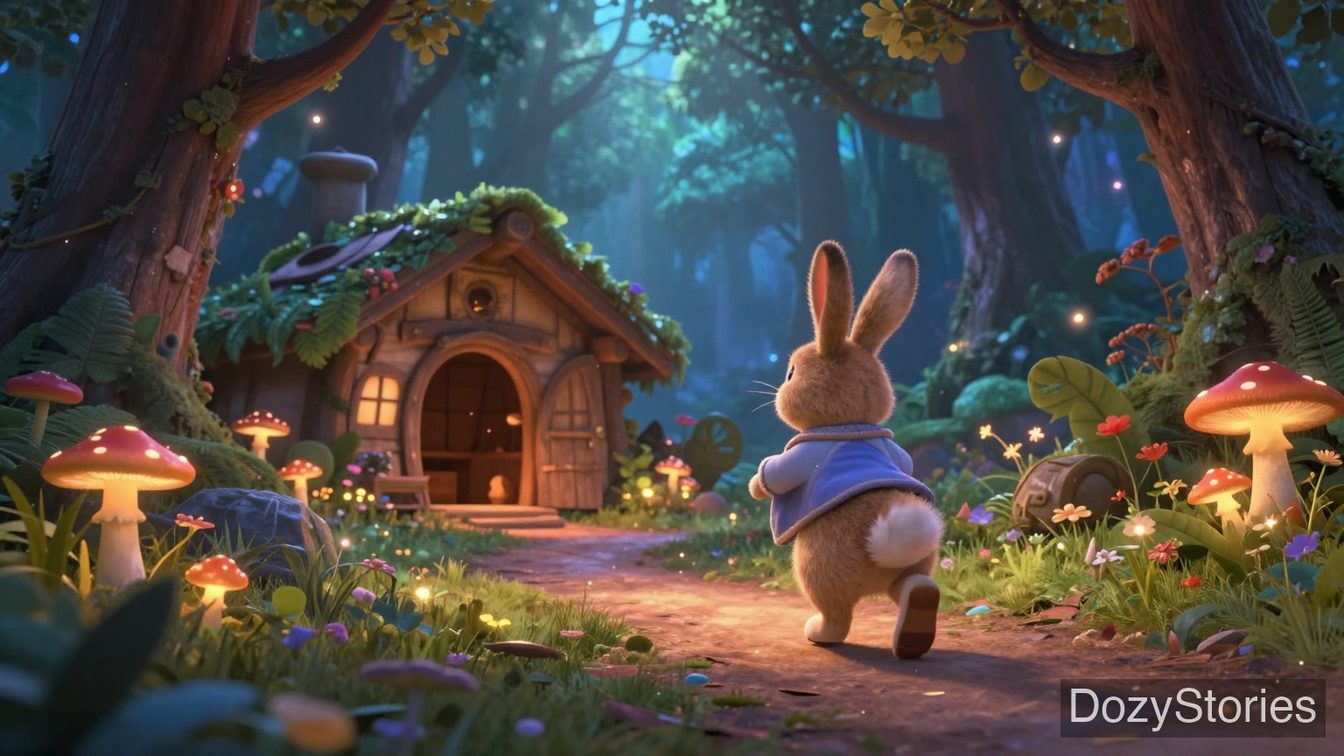
Sit on my tail, and I will carry you home to my hutch.
坐到我的尾巴上,随我回窝里去。
The rough outer skin of grain, often cooked for animals.
麸皮;糠。
"Now," said the hare, "cook some bran and cabbage for us. I am going out to ask the guests to our wedding."
“好了,”兔子说,“你给我们煮些麸皮和卷心菜。我去请婚礼的客人来。”
Came together in one place.
聚集;聚齐。
Soon the guests were all gathered.
客人们很快到齐了。
A priest who leads a church in the countryside.
牧师。
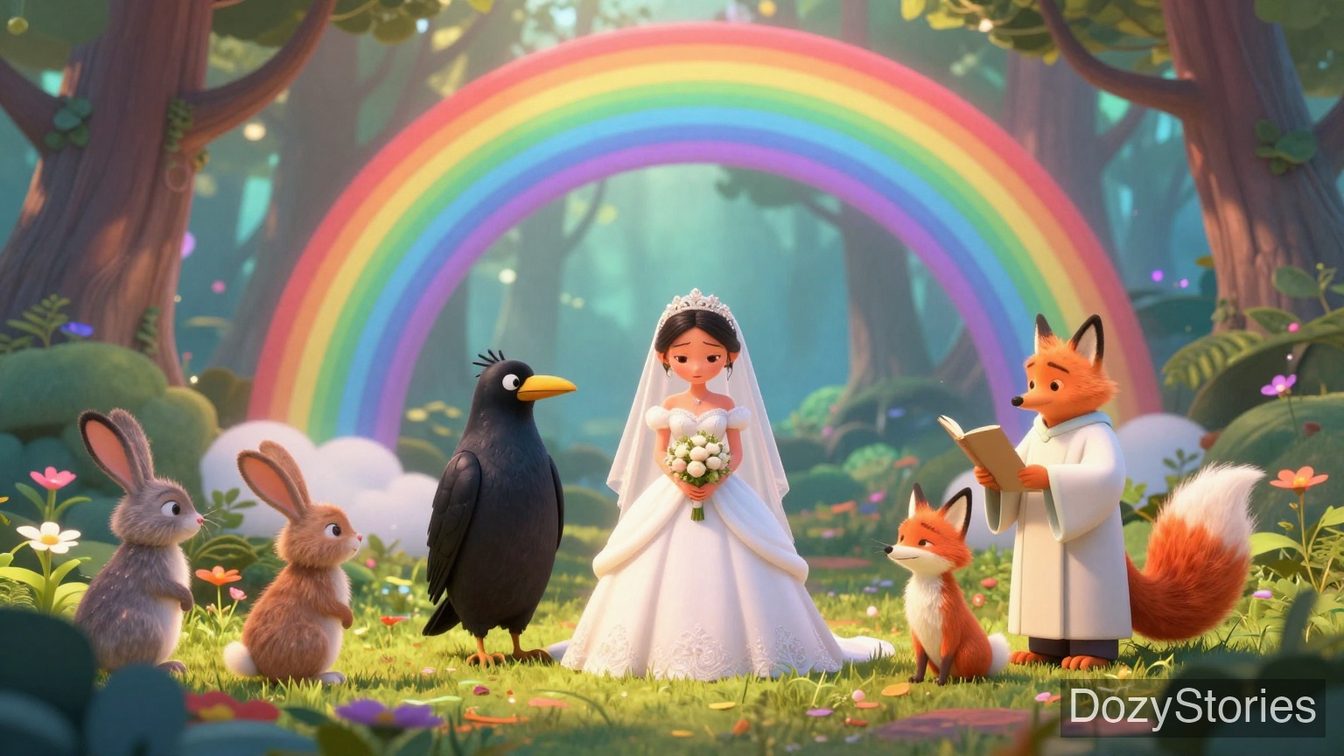
A crow came to be the parson, and a fox came to be the clerk.
乌鸦来做主持婚礼的牧师,狐狸来做书记官。
A person who writes down records, for example at a wedding.
书记员;文书。
A crow came to be the parson, and a fox came to be the clerk.
乌鸦来做主持婚礼的牧师,狐狸来做书记官。
Cried quietly with tears.
哭泣;流泪。
The bride only wept and said nothing.
新娘只是掉眼泪,一个字也不说。
Hit someone or something hard.
打;击。
The hare struck it on the head.
兔子伸手往它头上打去。
A messy pile of things lying on the ground.
一堆;一摊。
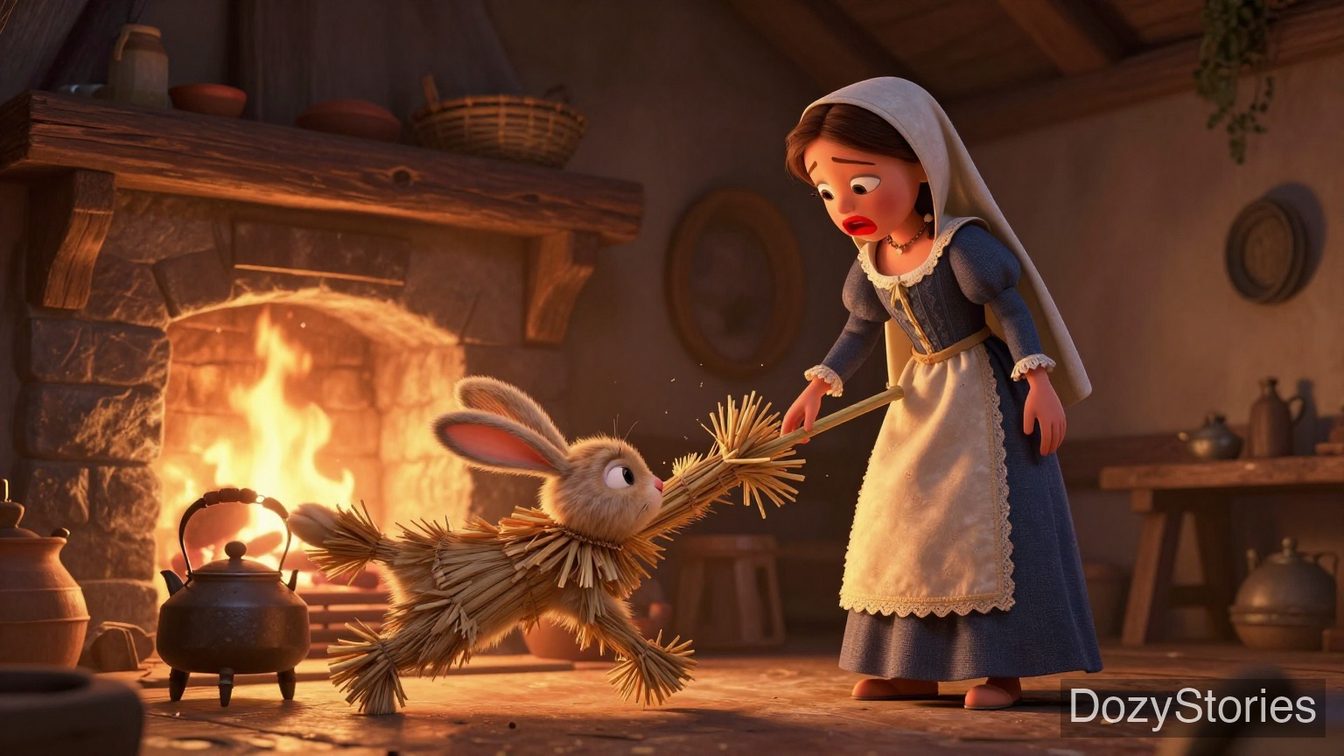
Crash! The straw girl tumbled down in a heap.
哗啦一声,草人塌成一堆。
Moved away quietly and quickly, so nobody noticed.
悄悄溜走;轻轻滑出。
Then she slipped out of the door and ran all the way home to her mother.
姑娘轻轻溜出门,一口气跑回了母亲家。
Reading Together & Learning More
The Moral
A forced match brings no joy. The hare trusts its strength and carries the unwilling maiden home to be its bride, yet in the end it gains nothing. The maiden is small, but she keeps her head, swaps in a straw double, and wins her freedom — in a tight spot, a clear head beats strong arms.
Educational Value
This short fable is easy to remember, and its three repeated talks let a child join in and guess the next line. It is a natural little lesson in "wit over strength": the maiden wins not with force but with one clever straw double. After reading, ask your child: when trouble is too big to fight, besides pushing back or crying, is there a third way — stop and think?
Tips for Parents
This fable has a nice rhythm; by the second reading, most children will already jump in with "Shoo, shoo, little hare!" At the end, the hare strikes the straw figure and thinks it has killed its bride — just say lightly, "That was only a straw dummy. The maiden slipped home long ago," and no one will be scared. Afterwards, play a game of imagination: if you had to sneak away, what would you use to make a "fake you"?
Talk About It
- The hare tricks the maiden onto its tail and carries her home to be its bride. Do you think she is right to refuse and to escape? Why?
- The maiden is no match for the hare in strength, yet she gets away in the end. Does she win by force or by brains? If it were you, what trick would you try?
- On the third visit, the maiden says yes at last. What do you think she was thinking in her heart?
- The hare comes three times and says almost the same words each time. Do you like this "say it three times" way of telling? What makes it feel different to read?
- A crow is the parson, a fox is the clerk, and the table is set under a rainbow. If you held a wedding for the animals, who would you invite, and what job would you give them?