The Wonderful Musician

Introduction

'The Wonderful Musician' (folklorists number it ATU 151) is a thought-provoking tale, because its 'hero' is not really so admirable. Lonely on his own in the forest, the musician uses his fiddle to draw a wolf, a fox, and a hare, and then tricks and torments each in turn: wedging the wolf's paws in a split tree, flinging the fox up into the air, choking the hare against a trunk. The three animals came only because the music charmed them and they wished to learn—yet they become the victims. So it is well worth pausing to ask: who is really the one doing wrong here? What the story is truly fascinated by is music's power to 'summon' all things—the fiddle echoes through the woods, the beasts come at its sound, and in the end even the woodcutter is 'bewitched.' This idea of music that seizes the heart is very old, running from Orpheus of the Greeks, whose playing tamed wild beasts and made stones weep, to the later Pied Piper. The tale also draws a line between human and beast: the kindred spirit the musician finally waits for is a man (the woodcutter), not an animal—in old stories, music was often seen as a distinctly human art, one of the things that makes us human. As you read, discuss with your child: is it right for the musician to treat the animals this way? If you were the wolf, would you forgive him?

Font Size
Image Layout
1 / 5
Stopped
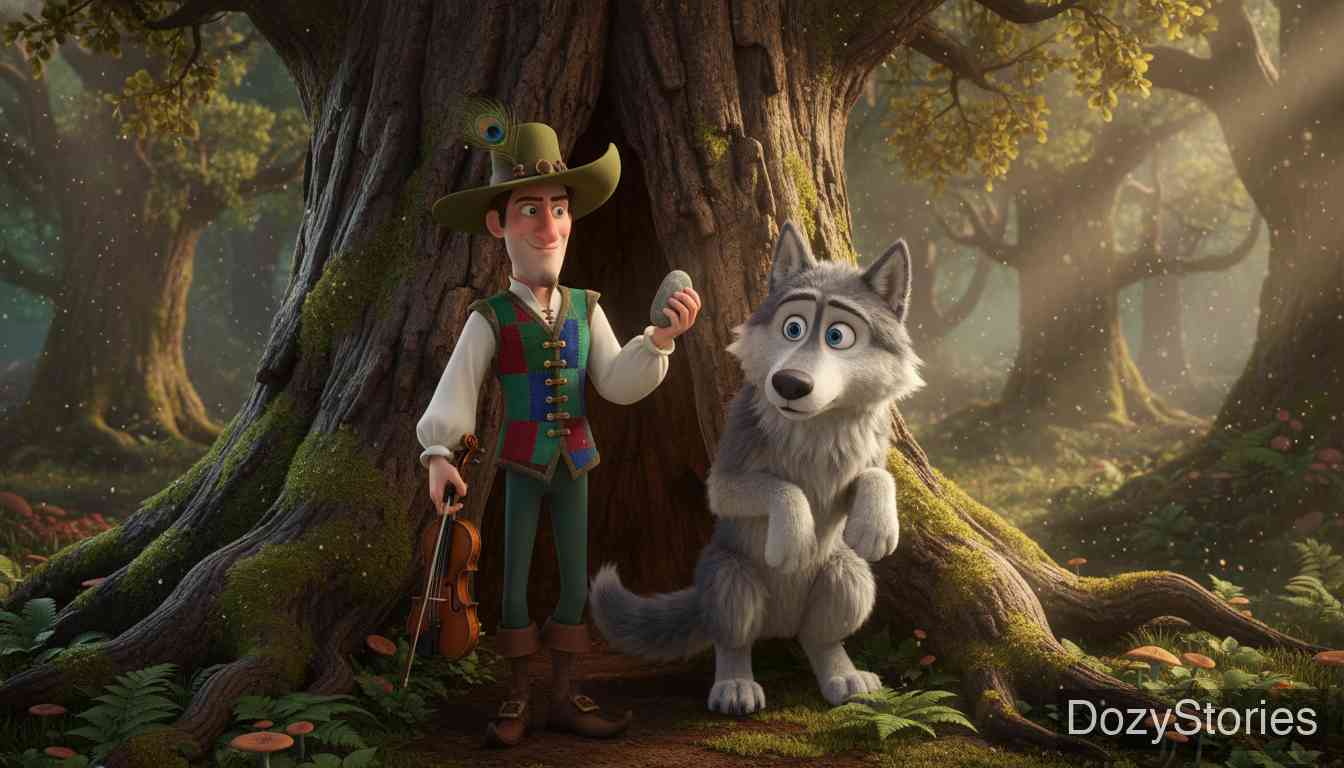
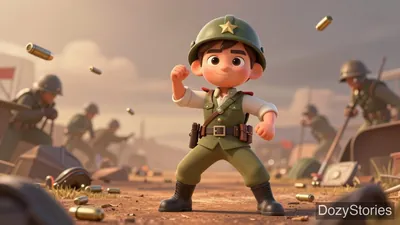
There was once a wonderful musician, who went quite alone through a forest and thought of all manner of things, and when nothing was left for him to think about, he said to himself, "Time is beginning to pass heavily with me here in the forest, I will fetch hither a good companion for myself." Then he took his fiddle from his back, and played so that it echoed through the trees. It was not long before a wolf came trotting through the thicket towards him. "Ah, here is a wolf coming! I have no desire for him!" said the musician; but the wolf came nearer and said to him, "Ah, dear musician, how beautifully thou dost play. I should like to learn that, too." - "It is soon learnt," the musician replied, "thou hast only to do all that I bid thee." - "Oh, musician," said the wolf, "I will obey thee as a scholar obeys his master." The musician bade him follow, and when they had gone part of the way together, they came to an old oak-tree which was hollow inside, and cleft in the middle. "Look," said the musician, "if thou wilt learn to fiddle, put thy fore paws into this crevice." The wolf obeyed, but the musician quickly picked up a stone and with one blow wedged his two paws so fast that he was forced to stay there like a prisoner. "Stay there until I come back again," said the musician, and went his way.
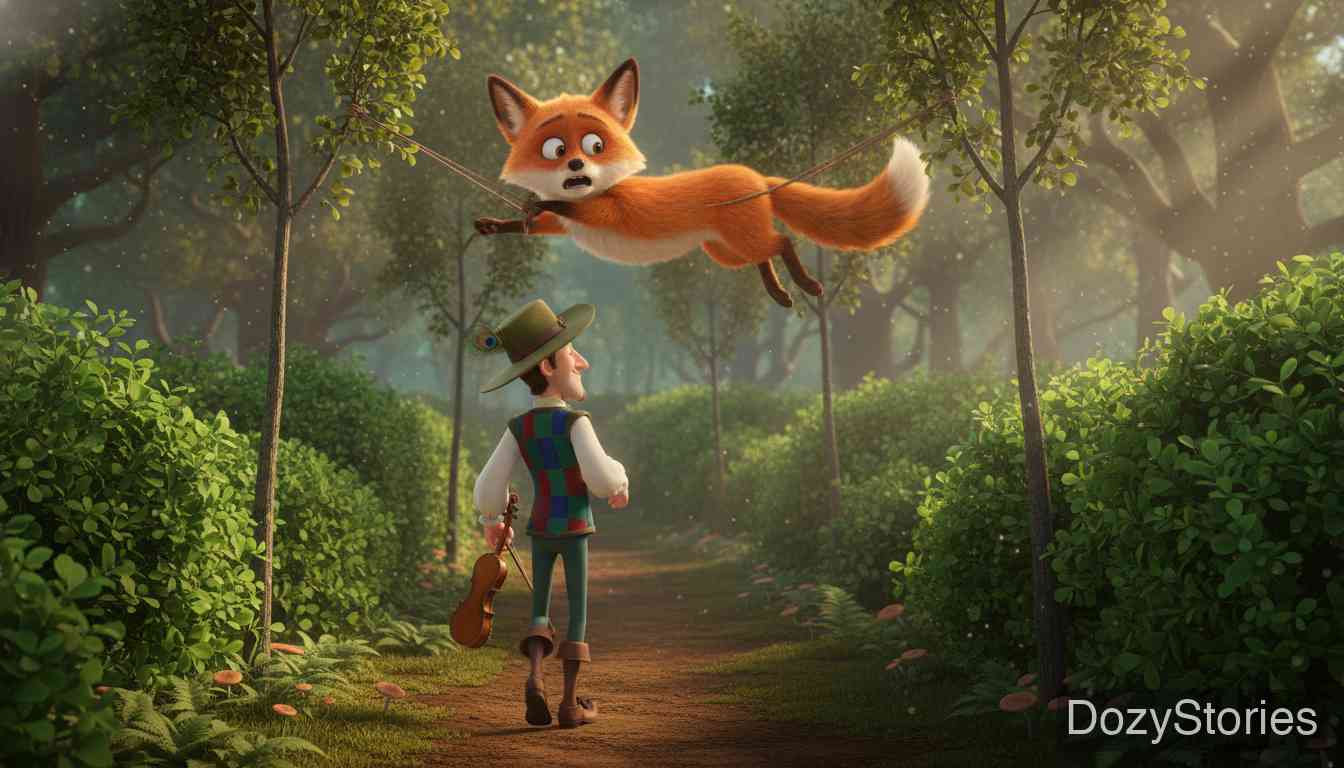
After a while he again said to himself, "Time is beginning to pass heavily with me here in the forest, I will fetch hither another companion," and took his fiddle and again played in the forest. It was not long before a fox came creeping through the trees towards him. "Ah, there's a fox coming!" said the musician. "I have no desire for him." The fox came up to him and said, "Oh, dear musician, how beautifully thou dost play! I should like to learn that too." - "That is soon learnt," said the musician. "Thou hast only to do everything that I bid thee." - "Oh, musician," then said the fox, "I will obey thee as a scholar obeys his master." - "Follow me," said the musician; and when they had walked a part of the way, they came to a footpath, with high bushes on both sides of it. There the musician stood still, and from one side bent a young hazel-bush down to the ground, and put his foot on the top of it, then he bent down a young tree from the other side as well, and said, "Now little fox, if thou wilt learn something, give me thy left front paw." The fox obeyed, and the musician fastened his paw to the left bough. "Little fox," said he, "now reach me thy right paw" and he tied it to the right bough. When he had examined whether they were firm enough, he let go, and the bushes sprang up again, and jerked up the little fox, so that it hung struggling in the air. "Wait there till I come back again," said the musician, and went his way.
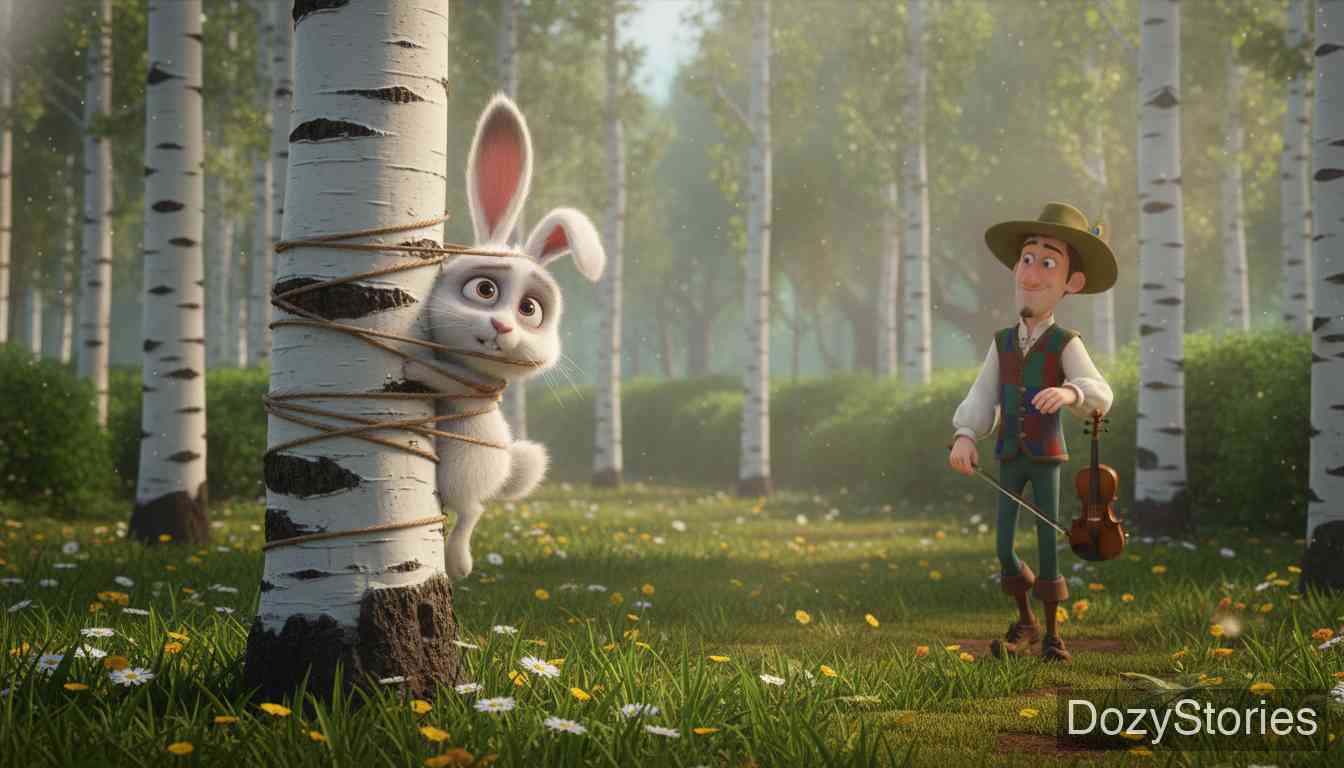
Again he said to himself, "Time is beginning to pass heavily with me here in the forest, I will fetch hither another companion," so he took his fiddle, and the sound echoed through the forest. Then a little hare came springing towards him. "Why, a hare is coming," said the musician, "I do not want him." - "Ah, dear musician," said the hare, "how beautifully thou dost fiddle; I too, should like to learn that." - "That is soon learnt," said the musician, "thou hast only to do everything that I bid thee." - "Oh, musician," replied the little hare, "I will obey thee as a scholar obeys his master." They went a part of the way together until they came to an open space in the forest, where stood an aspen tree. The musician tied a long string round the little hare's neck, the other end of which he fastened to the tree. "Now briskly, little hare, run twenty times round the tree!" cried the musician, and the little hare obeyed, and when it had run round twenty times, it had twisted the string twenty times round the trunk of the tree, and the little hare was caught, and let it pull and tug as it liked, it only made the string cut into its tender neck. "Wait there till I come back," said the musician, and went onwards.
The wolf, in the meantime, had pushed and pulled and bitten at the stone, and had worked so long that he had set his feet at liberty and had drawn them once more out of the cleft. Full of anger and rage he hurried after the musician and wanted to tear him to pieces. When the fox saw him running, he began to lament, and cried with all his might, "Brother wolf, come to my help, the musician has betrayed me!" The wolf drew down the little tree, bit the cord in two, and freed the fox, who went with him to take revenge on the musician. They found the tied-up hare, whom likewise they delivered, and then they all sought the enemy together.
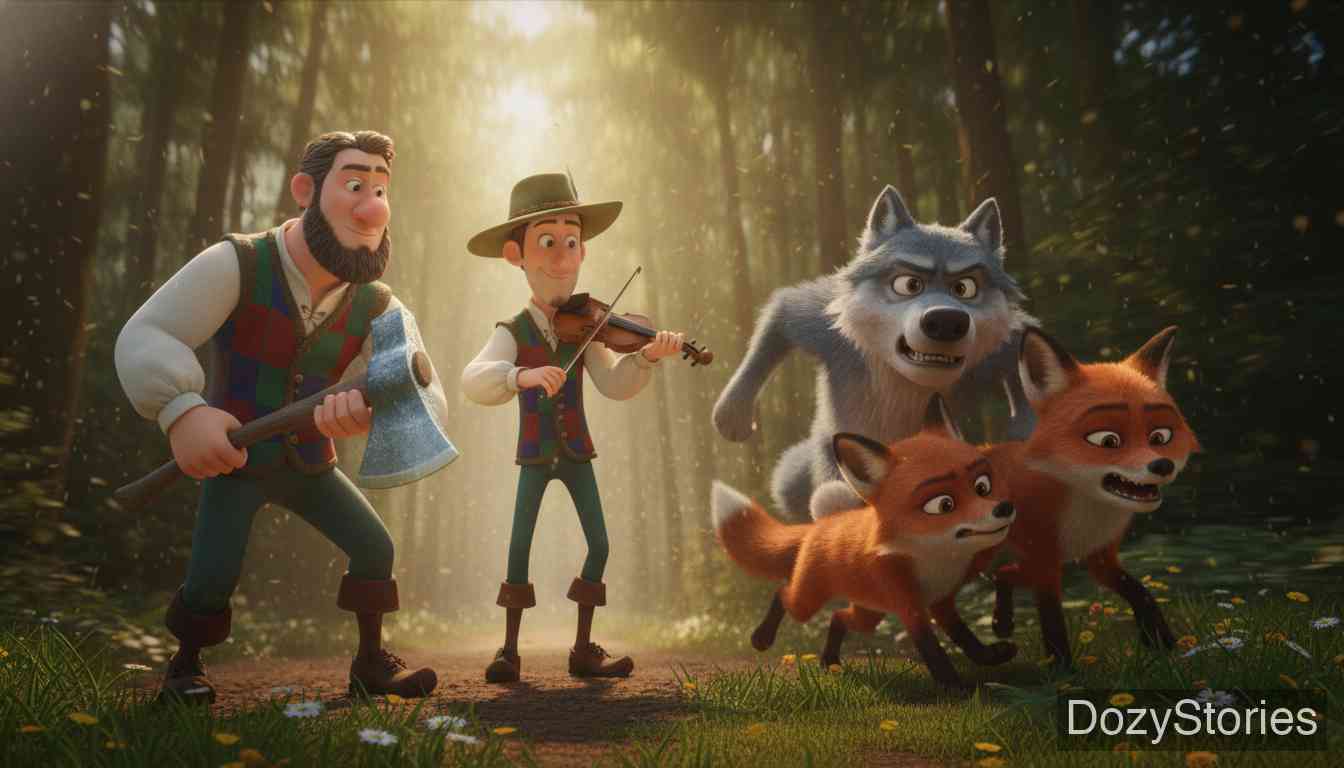
The musician had once more played his fiddle as he went on his way, and this time he had been more fortunate. The sound reached the ears of a poor wood-cutter, who instantly, whether he would or no, gave up his work and came with his hatchet under his arm to listen to the music. "At last comes the right companion," said the musician, "for I was seeking a human being, and no wild beast." And he began and played so beautifully and delightfully that the poor man stood there as if bewitched, and his heart leaped with gladness. And as he thus stood, the wolf, the fox, and the hare came up, and he saw well that they had some evil design. So he raised his glittering axe and placed himself before the musician, as if to say, "Whoso wishes to touch him let him beware, for he will have to do with me!" Then the beasts were terrified and ran back into the forest. The musician, however, played once more to the man out of gratitude, and then went onwards

Vocabulary from "The Wonderful Musician"

12 key words from this story with definitions and original context sentences for language learners.

fiddleB2
/ˈfɪdl/n.

A violin, especially one used to play folk music.

小提琴(尤指演奏民间音乐的)。

Then he took his fiddle from his back, and played so that it echoed through the trees.

于是他取下背上的小提琴,拉了起来,琴声在树林间回荡。

echoed(echo)B2
/ˈekəʊd/v.

(Of a sound) was repeated or sent back so it could be heard again.

回响;回荡;发出回声。

So he took his fiddle, and the sound echoed through the forest.

于是他拿起小提琴,琴声在森林里回荡。

thicketC1
/ˈθɪkɪt/n.

A group of bushes or small trees growing close together.

灌木丛;矮树丛。

It was not long before a wolf came trotting through the thicket towards him.

没过多久,一只狼穿过灌木丛向他跑来。

companionB2
/kəmˈpæniən/n.

A person or animal you spend time with; a friend who keeps you company.

同伴;伙伴;旅伴。

I will fetch hither a good companion for myself.

我要把一个好伙伴引到这儿来。

bidC1
/bɪd/v.

To tell or order someone to do something (old-fashioned).

吩咐;命令;嘱咐(旧式用法)。

It is soon learnt, the musician replied, thou hast only to do all that I bid thee.

这很快就能学会,音乐家回答,你只要照我说的做就行。

scholarB2
/ˈskɒlər/n.

A student, or a person who studies and knows a lot about a subject.

学生;学者;求学者。

I will obey thee as a scholar obeys his master.

我会像学生服从老师一样听你的话。

creviceC1
/ˈkrevɪs/n.

A narrow crack or opening, as in rock or wood.

裂缝;裂隙。

If thou wilt learn to fiddle, put thy fore paws into this crevice.

如果你想学拉琴,就把你的前爪放进这个裂缝里。

wedged(wedge)B2
/wedʒd/v.

Forced or fixed something tightly into a narrow space.

把……楔紧;卡进(狭缝里)。

The musician quickly picked up a stone and with one blow wedged his two paws so fast that he was forced to stay there like a prisoner.

但音乐家迅速捡起一块石头,用力一击,把它的两只爪子牢牢地楔在里面,使它像囚犯一样被迫待在那里。

boughC1
/baʊ/n.

A large branch of a tree.

大树枝;粗枝。

The fox obeyed, and the musician fastened his paw to the left bough.

狐狸照做了,音乐家把它的爪子绑在左边的树枝上。

betrayed(betray)B2
/bɪˈtreɪd/v.

Hurt someone who trusted you by being disloyal or deceiving them.

背叛;出卖;辜负(信任)。

Brother wolf, come to my help, the musician has betrayed me!

狼兄弟,快来帮帮我,音乐家出卖了我!

revengeB2
/rɪˈvendʒ/n.

Harm done to someone in return for harm they have caused you.

报复;复仇。

The wolf drew down the little tree, bit the cord in two, and freed the fox, who went with him to take revenge on the musician.

狼把小树拉下来,咬断绳子,释放了狐狸,狐狸便和它一起去向音乐家复仇。

bewitchedC1
/bɪˈwɪtʃt/adj.

So charmed or fascinated that you seem to be under a spell.

着了魔似的;被迷住的。

He began and played so beautifully and delightfully that the poor man stood there as if bewitched.

于是他开始演奏,琴声如此优美动人,穷人站在那里仿佛被迷住了。

Reading Together & Learning More

The Moral

Cleverness used to trick and hurt others eventually rebounds on you; the true meaning of music—and of all beautiful things—is to move the heart and find those who understand it.

Educational Value

Through a story whose 'hero' is not wholly in the right, it exercises children's critical thinking—seeing a situation from different characters' points of view—while letting them feel music's power to move us and the worth of a true kindred spirit.

Tips for Parents

This story's 'good guy / bad guy' is not clear-cut—perfect for practicing perspective-taking with your child: viewed from the musician, the wolf, and the woodcutter in turn, how would you judge what happens?

Talk About It

  1. The wolf, fox, and hare came only because the music charmed them and they wanted to learn, yet the musician traps each one. Who do you think is really in the wrong?
  2. The musician says the companion he wants is 'a human being, and no wild beast.' Why do you think it matters so much to him?
  3. After breaking free, the three animals band together for revenge. Can you understand their anger?
  4. The woodcutter steps forward to protect the musician because he loves the music. If you were there, whose side would you take?
  5. In the story the fiddle draws both beasts and people to it. Have you ever been deeply moved by a song or a piece of music?