The Wishing-Table, the Gold-Ass, and the Cudgel in the Sack
Introduction
This tale — known in German as "Tischlein deck dich" — is one of the Brothers Grimm's best-loved "magic gifts" stories, and folklorists number it among tale type ATU 563. We have retold it as a fable because it is really a story about lessons: a lying goat, a father who believes one side too quickly, and an innkeeper who wants everything for himself are all portraits of familiar human faults. Its wisdom runs close to old sayings children may know — "the greedy snake is never full" and "seeing is believing." What makes the tale worth rereading is the way each brother earns his gift through honest years of apprenticeship, while the greedy innkeeper loses everything through his own tricks. The three gifts themselves carry a small lesson: a table that feeds and an ass that gives gold can both be stolen in one night, yet a cudgel that protects what you own wins everything back. As you read, ask your child to guess why the goat lies, whether the innkeeper will be caught a third time, and which of the three gifts they would choose for themselves. Then talk about how the ending answers each guess. A fable rewards careful listening, and so does the lesson hidden inside it.
Vocabulary from "The Wishing-Table, the Gold-Ass, and the Cudgel in the Sack"
12 key words from this story with definitions and original context sentences for language learners.
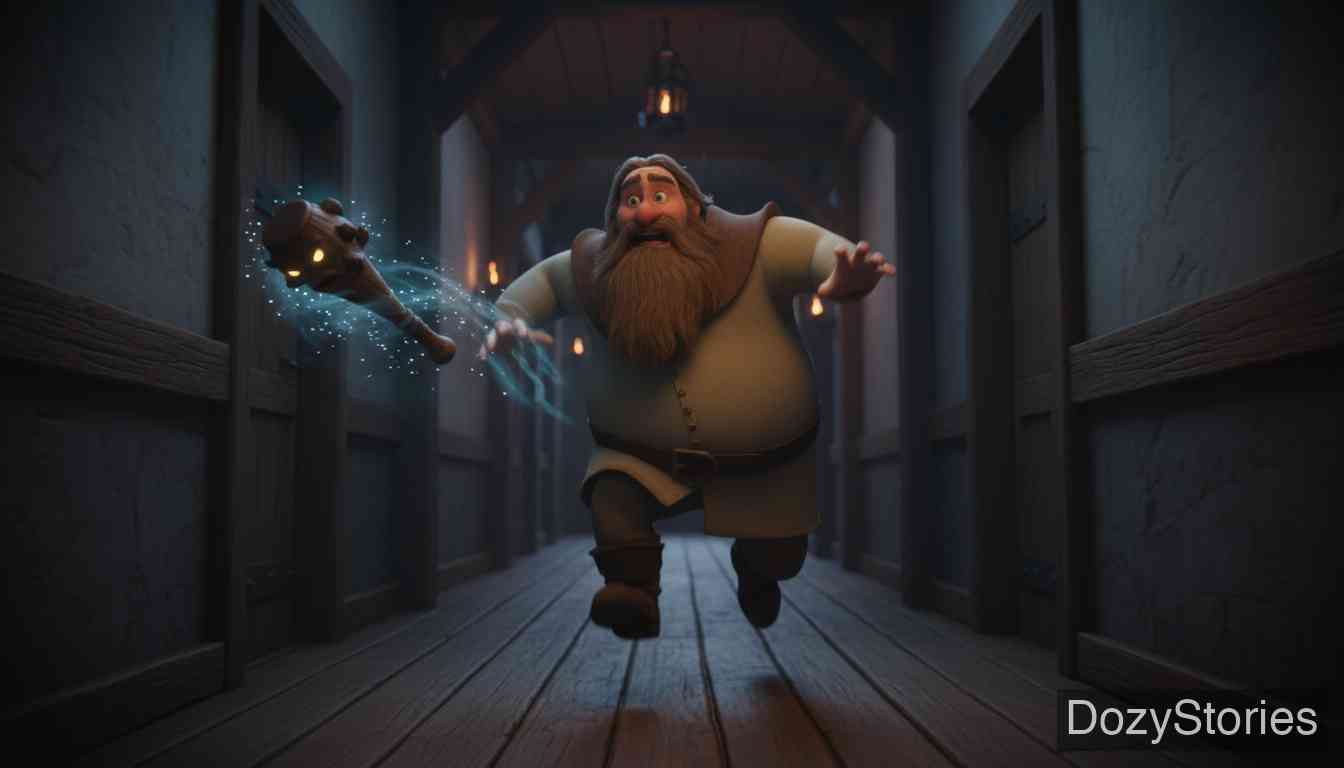
A short, thick stick used as a weapon.
短粗的木棍,可作武器。
The cudgel sprang out and beat the innkeeper without mercy.
木棍立刻蹦了出来,把店主打得毫无还手之力。
A young person who learns a trade from an experienced master.
学徒,向师傅学习手艺的年轻人。
After he left home, he became a joiner's apprentice and learned his trade well.
他离家之后,拜了一位木匠为师,学得一手好手艺。
To talk about yourself with too much pride.
吹嘘、夸口,骄傲地谈论自己。
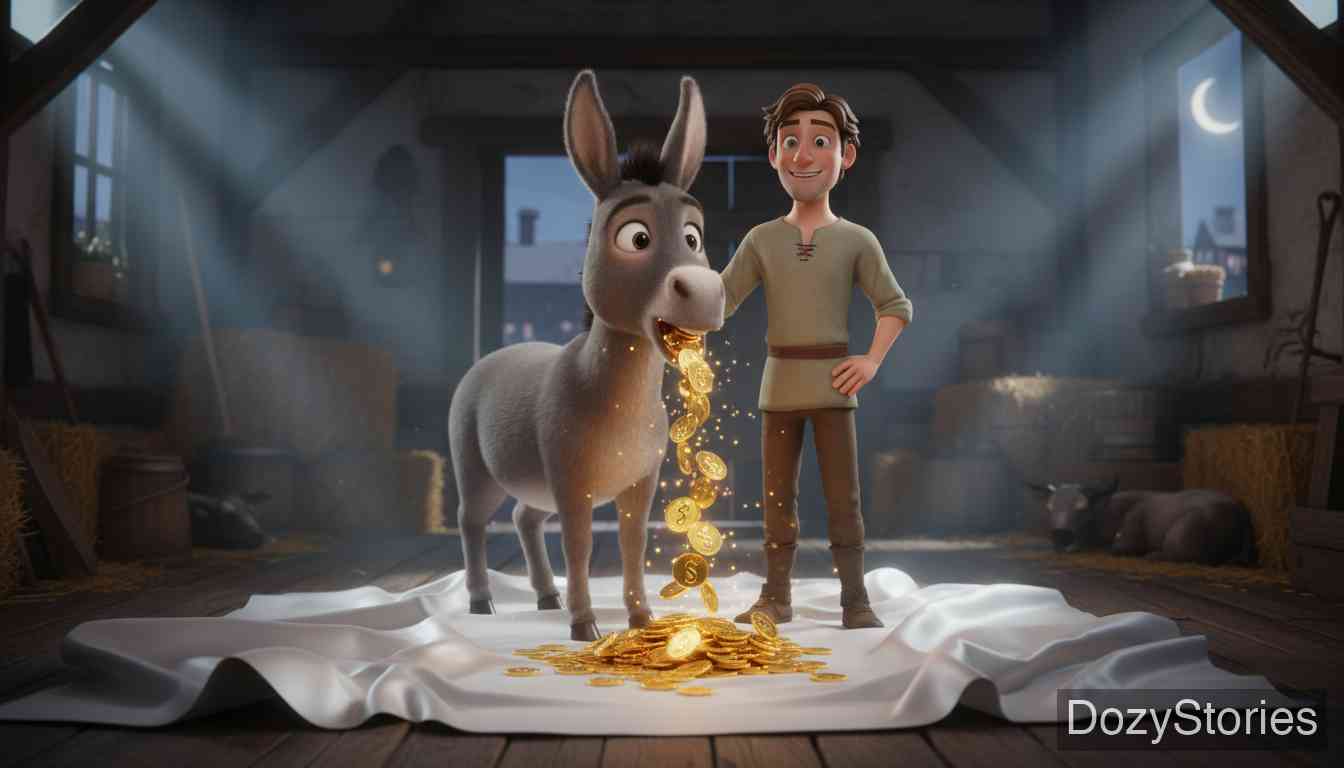
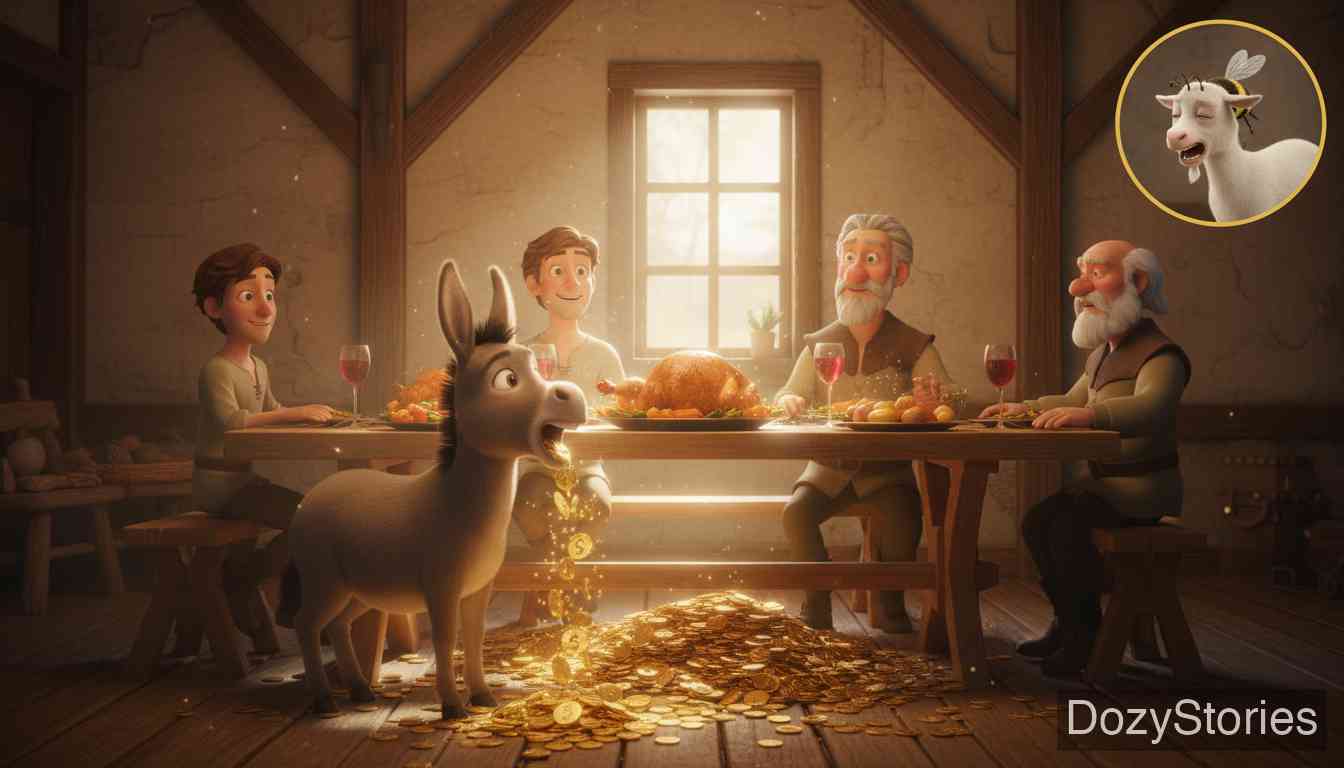
At noon, he reached his father's house and boasted, "Father, I have brought a gold-ass!"
晌午他到了家,向父亲夸下海口:“爹,我带回一头金驴!”
Wanting more than you really need.
贪婪的,总想要更多。
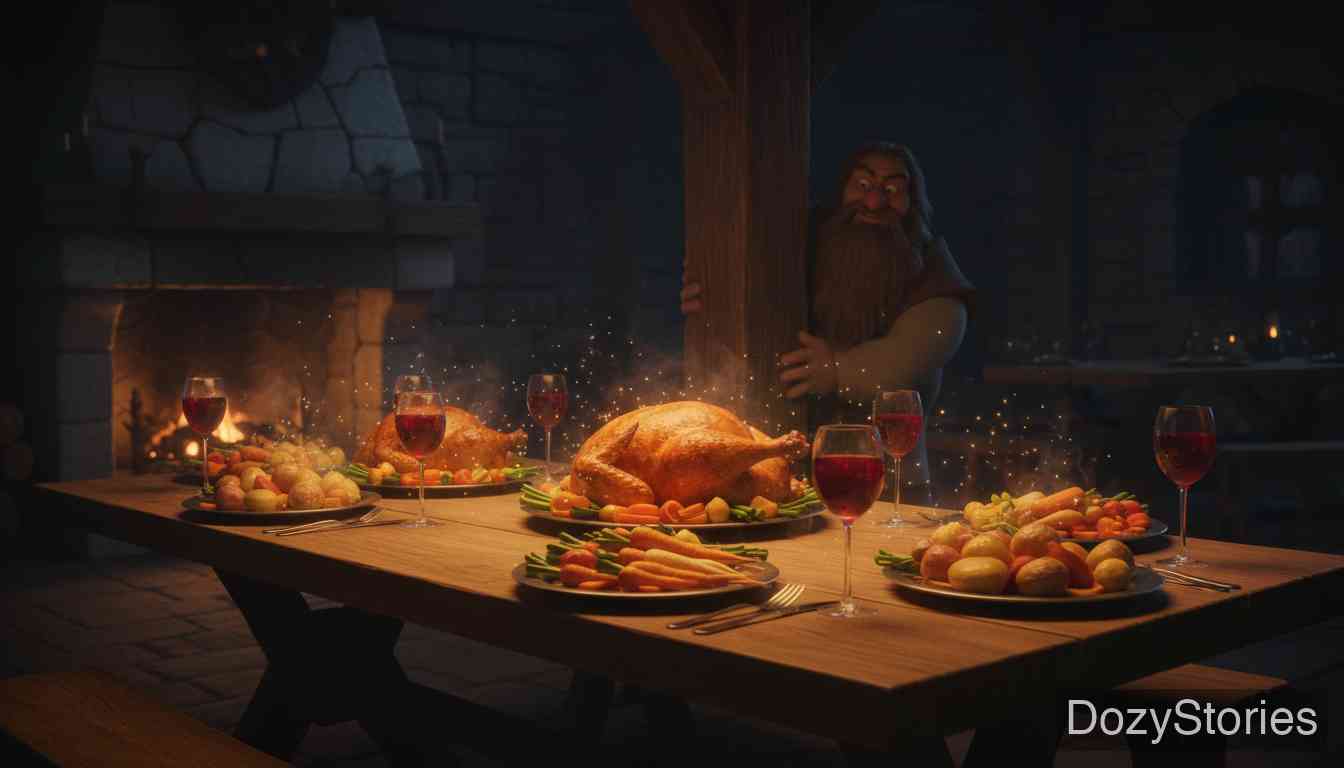
The greedy innkeeper stood in the corner and watched.
贪心的店主站在墙角,看得眼珠子都快掉出来。
Kindness shown to someone you could punish.
慈悲、宽恕,对犯错的人手下留情。
If anyone hurts you, say, 'Out of the sack, Cudgel!' and it will leap out and dance on his back until he begs for mercy.
谁若欺你害你,你只消喊一声“棍子,出袋!”,它便跳出来,在坏人背上跳一场舞,跳到那人求饶才肯停。
Valuable things, such as gold and jewels.
宝物、财宝,如金子、珠宝。
They are fine things, but the treasure in my sack is the finest of all.
可都算不得稀奇,我袋里这件宝贝,才叫天下无双。
Feeling bad about something you did or how you look.
羞愧的,因做错事或出丑而感到难为情。
She was ashamed of her bald head, so she crept into a fox's den.
它顶着光秃秃的脑袋,自觉没脸见人,一头钻进狐狸洞里。
A large and special meal for many people.
盛宴,为许多人准备的大餐。
It was the greatest feast the tailor's house had ever seen.
这一顿盛宴,老裁缝家从来没有过。
To walk from place to place without a clear plan.
漫步、游荡,漫无目的地走。
The young man thanked his master and wandered across the world with his little table.
大儿子千恩万谢,背着桌子走遍四方。
To break open suddenly, often from too much pressure.
爆裂、撑破,突然裂开。
"I am full, I am full! One more leaf, and I shall burst! Meh, meh!"
“饱啦,饱啦!再吃一片叶子,肚子就要撑破啦!咩!咩!”
To cut hair off very close to the skin.
剃,把毛发剃到贴近皮肤。
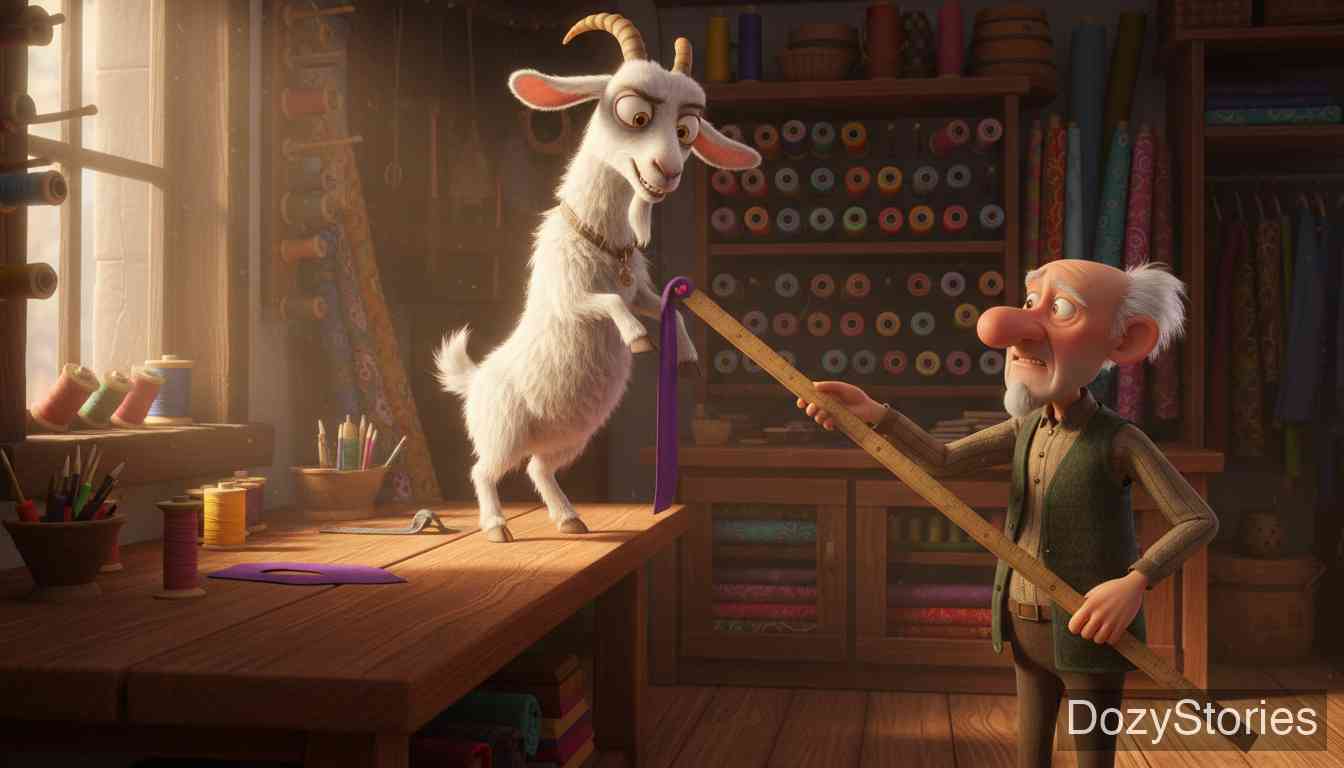
He shaved the goat's head bare and beat her with his whip, and she ran away crying, never to return.
他取来剃刀把羊头剃得光溜溜,又抡起马鞭狠狠抽了一顿。
To trick someone in order to take something from them.
欺骗、骗取,用不正当手段拿走别人的东西。
One evening, he came to the very inn where his brothers had been cheated.
这一日傍晚,三儿子来到两个哥哥受骗的那家客店。
Reading Together & Learning More
The Moral
Do not trust one side of a story alone, or you may wrong the people closest to you. And those who grasp at everything will one day be ruined by their own greed.
Educational Value
Children learn to look and listen before they judge, and to understand that guarding what you have with skill and wisdom is better than showing it off to everyone.
Tips for Parents
After reading, act out the lying goat and the dancing cudgel with your child, and ask: what did the tailor do wrong? Would you steal another person's treasure like the innkeeper? Then ask your child how they can be sure of the truth before they speak.
Talk About It
- How did the goat tell one story to the sons and another to the tailor? What could the tailor have done to find out the truth?
- The table and the ass only "give," while the cudgel can "protect." Why is it the cudgel that wins everything back in the end?
- The innkeeper stole twice, and on the third night he got beaten. Was it his own fault? What might have happened if he had stopped after the first theft?
- Each brother received his gift from his master after years of honest work. Were the treasures free gifts, or were they earned?
- If you could choose one treasure — the table that sets itself, the ass that drops gold, or the cudgel that beats wrongdoers — which would you pick, and why?