The White Snake

Introduction

This is a warm tale of kindness repaid, of the much-loved worldwide 'grateful animals' type (ATU 554): the good-hearted hero helps three creatures along his way — stranded fish, ants trodden by hooves, and starving young ravens — and later, when he faces three impossible tasks, those very animals come swimming, crawling, and flying to repay him. The white snake that lets him understand animal speech has an old pedigree, too: in many ancient myths, tasting a magic food grants the language of birds and beasts — the Norse hero Sigurd understood the birds after tasting dragon's blood. What is most moving here is that the hero's kindness costs him something — to feed the famished ravens he even kills his own horse. The story quietly tells children that real kindness is sometimes not a small, easy favour but a willingness to give up something for the weak. As you read, ask your child: when the hero helped those little animals, he had no idea he would ever be repaid — how is kindness given without expecting a reward different from kindness given to get something?

Font Size
Image Layout
1 / 16
Stopped
A long time ago there lived a king who was famed for his wisdom through all the land. Nothing was hidden from him, and it seemed as if news of the most secret things was brought to him through the air. But he had a strange custom; every day after dinner, when the table was cleared, and no one else was present, a trusty servant had to bring him one more dish. It was covered, however, and even the servant did not know what was in it, neither did anyone know, for the King never took off the cover to eat of it until he was quite alone.
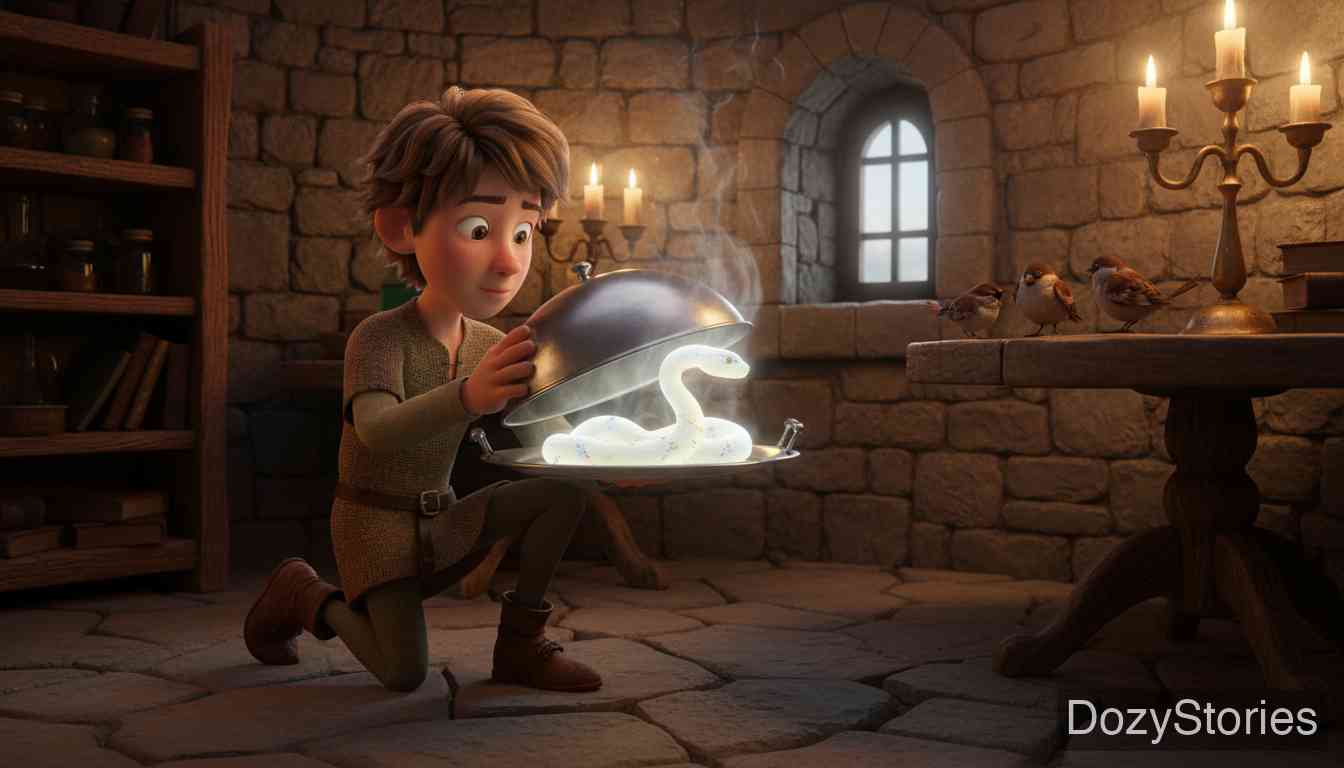
This had gone on for a long time, when one day the servant, who took away the dish, was overcome with such curiosity that he could not help carrying the dish into his room. When he had carefully locked the door, he lifted up the cover, and saw a white snake lying on the dish. But when he saw it he could not deny himself the pleasure of tasting it, so he cut off a little bit and put it into his mouth. No sooner had it touched his tongue than he heard a strange whispering of little voices outside his window. He went and listened, and then noticed that it was the sparrows who were chattering together, and telling one another of all kinds of things which they had seen in the fields and woods. Eating the snake had given him power of understanding the language of animals.
Now it so happened that on this very day the Queen lost her most beautiful ring, and suspicion of having stolen it fell upon this trusty servant, who was allowed to go everywhere. The King ordered the man to be brought before him, and threatened with angry words that unless he could before the morrow point out the thief, he himself should be looked upon as guilty and executed. In vain he declared his innocence; he was dismissed with no better answer. In his trouble and fear he went down into the courtyard and took thought how to help himself out of his trouble.
Now some ducks were sitting together quietly by a brook and taking their rest; and, whilst they were making their feathers smooth with their bills, they were having a confidential conversation together. The servant stood by and listened. They were telling one another of all the places where they had been waddling about all the morning, and what good food they had found, and one said in a pitiful tone, "Something lies heavy on my stomach; as I was eating in haste I swallowed a ring which lay under the Queen's window."
The servant at once seized her by the neck, carried her to the kitchen, and said to the cook, "Here is a fine duck; pray, kill her." - "Yes," said the cook, and weighed her in his hand; "she has spared no trouble to fatten herself, and has been waiting to be roasted long enough." So he cut off her head, and as she was being dressed for the spit, the Queen's ring was found inside her. The servant could now easily prove his innocence; and the King, to make amends for the wrong, allowed him to ask a favour, and promised him the best place in the court that he could wish for.
The servant refused everything, and only asked for a horse and some money for travelling, as he had a mind to see the world and go about a little. When his request was granted he set out on his way, and one day came to a pond, where he saw three fishes caught in the reeds and gasping for water. Now, though it is said that fishes are dumb, he heard them lamenting that they must perish so miserably, and, as he had a kind heart, he got off his horse and put the three prisoners back into the water. They quivered with delight, put out their heads, and cried to him, "We will remember you and repay you for saving us!"
He rode on, and after a while it seemed to him that he heard a voice in the sand at his feet. He listened, and heard an ant-king complain, "Why cannot folks, with their clumsy beasts, keep off our bodies? That stupid horse, with his heavy hoofs, has been treading down my people without mercy!" So he turned on to a side path and the ant-king cried out to him, 'We will remember you - one good turn deserves another!"
The path led him into a wood, and here he saw two old ravens standing by their nest, and throwing out their young ones. "Out with you, you idle, good-for-nothing creatures!" cried they; "we cannot find food for you any longer; you are big enough, and can provide for yourselves." But the poor young ravens lay upon the ground, flapping their wings, and crying, "Oh, what helpless chicks we are! We must shift for ourselves, and yet we cannot fly! What can we do, but lie here and starve?" So the good young fellow alighted and killed his horse with his sword, and gave it to them for food. Then they came hopping up to it, satisfied their hunger, and cried, "We will remember you - one good turn deserves another!"
And now he had to use his own legs, and when he had walked a long way, he came to a large city. There was a great noise and crowd in the streets, and a man rode up on horseback, crying aloud, "The King's daughter wants a husband; but whoever sues for her hand must perform a hard task, and if he does not succeed he will forfeit his life." Many had already made the attempt, but in vain; nevertheless when the youth saw the King's daughter he was so overcome by her great beauty that he forgot all danger, went before the King, and declared himself a suitor.
So he was led out to the sea, and a gold ring was thrown into it, in his sight; then the King ordered him to fetch this ring up from the bottom of the sea, and added, "If you come up again without it you will be thrown in again and again until you perish amid the waves." All the people grieved for the handsome youth; then they went away, leaving him alone by the sea.
He stood on the shore and considered what he should do, when suddenly he saw three fishes come swimming towards him, and they were the very fishes whose lives he had saved. The one in the middle held a mussel in its mouth, which it laid on the shore at the youth's feet, and when he had taken it up and opened it, there lay the gold ring in the shell.
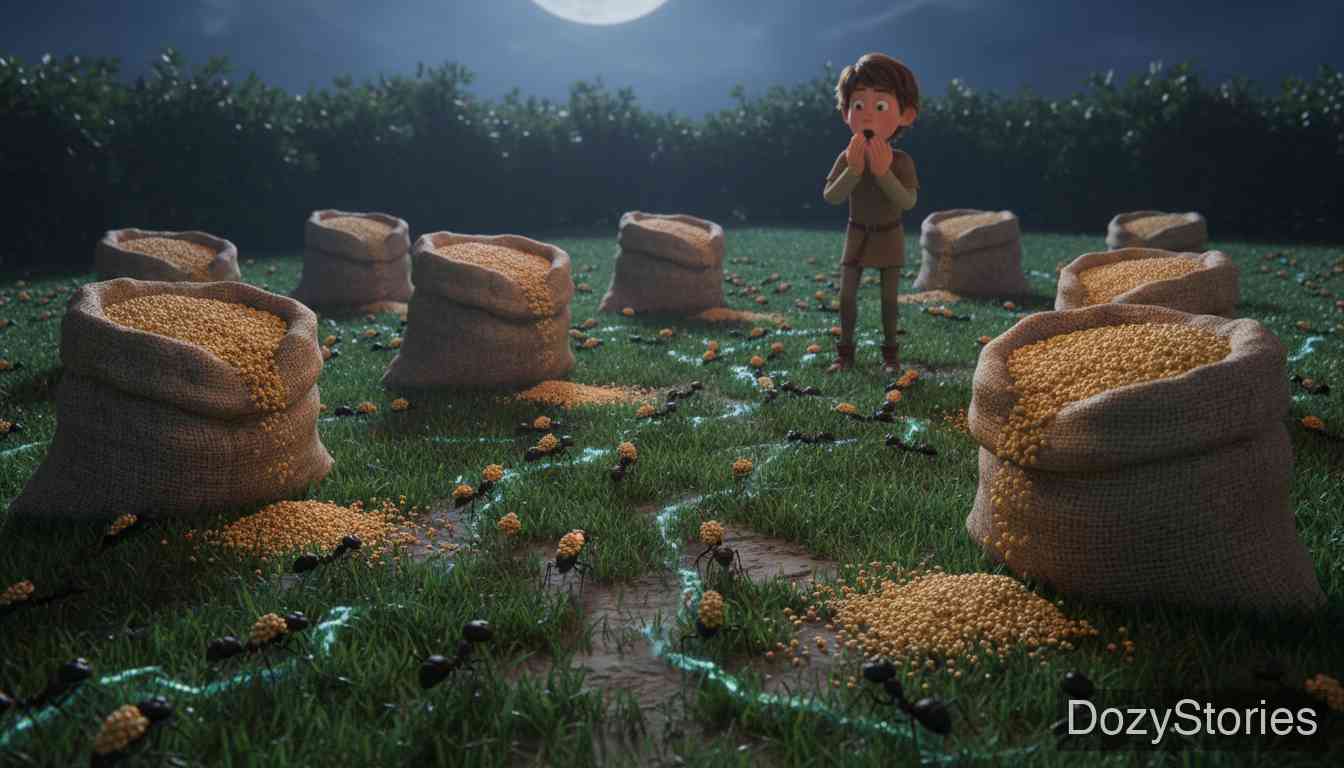
Full of joy he took it to the King, and expected that he would grant him the promised reward. But when the proud princess perceived that he was not her equal in birth, she scorned him, and required him first to perform another task. She went down into the garden and strewed with her own hands ten sacks-full of millet-seed on the grass; then she said, "To-morrow morning before sunrise these must be picked up, and not a single grain be wanting."
The youth sat down in the garden and considered how it might be possible to perform this task, but he could think of nothing, and there he sat sorrowfully awaiting the break of day, when he should be led to death. But as soon as the first rays of the sun shone into the garden he saw all the ten sacks standing side by side, quite full, and not a single grain was missing. The ant-king had come in the night with thousands and thousands of ants, and the grateful creatures had by great industry picked up all the millet-seed and gathered them into the sacks.
Presently the King's daughter herself came down into the garden, and was amazed to see that the young man had done the task she had given him. But she could not yet conquer her proud heart, and said, "Although he has performed both the tasks, he shall not be my husband until he has brought me an apple from the Tree of Life."
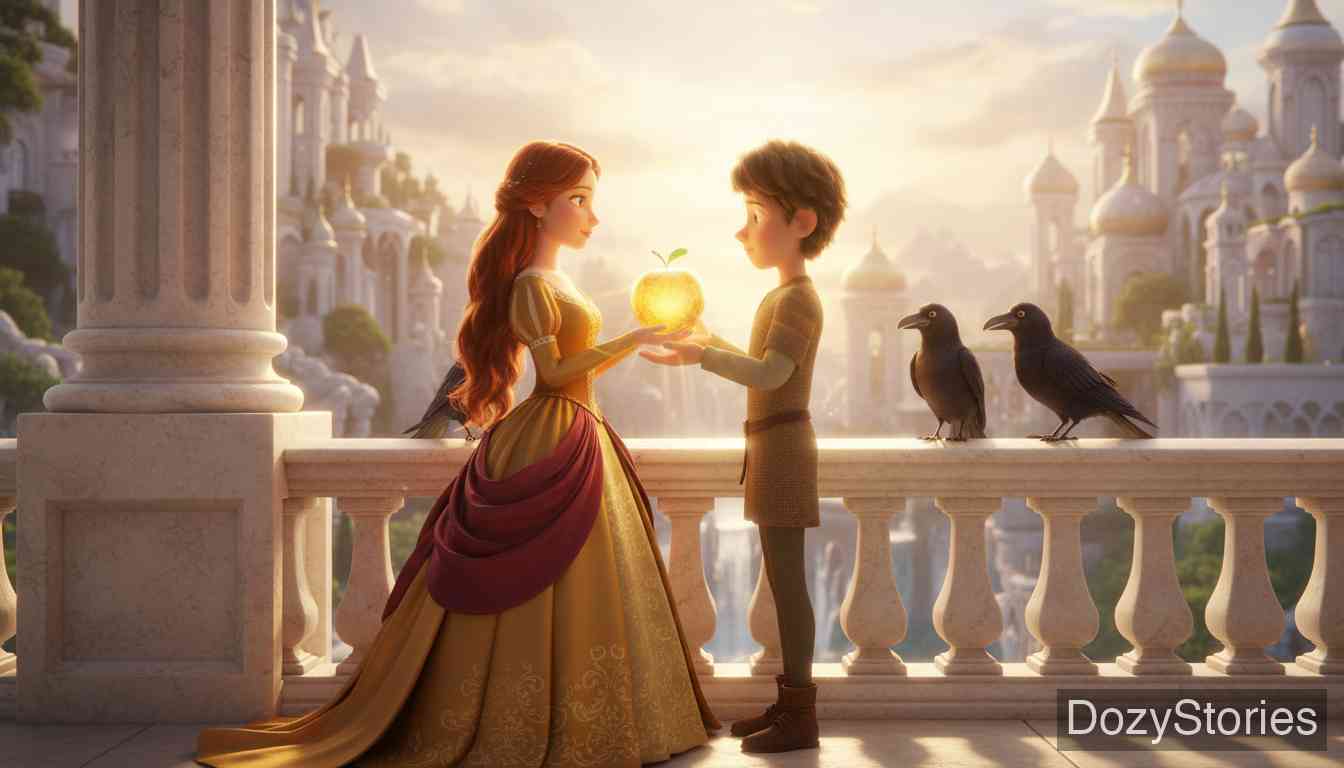
The youth did not know where the Tree of Life stood, but he set out, and would have gone on for ever, as long as his legs would carry him, though he had no hope of finding it. After he had wandered through three kingdoms, he came one evening to a wood, and lay down under a tree to sleep. But he heard a rustling in the branches, and a golden apple fell into his hand. At the same time three ravens flew down to him, perched themselves upon his knee, and said, "We are the three young ravens whom you saved from starving; when we had grown big, and heard that you were seeking the Golden Apple, we flew over the sea to the end of the world, where the Tree of Life stands, and have brought you the apple."
The youth, full of joy, set out homewards, and took the Golden Apple to the King's beautiful daughter, who had no more excuses left to make. They cut the Apple of Life in two and ate it together; and then her heart became full of love for him, and they lived in undisturbed happiness to a great age.

Vocabulary from "The White Snake"

12 key words from this story with definitions and original context sentences for language learners.

famedC1
/feɪmd/adj.

Well known and admired; famous.

著名的;闻名的。

A long time ago there lived a king who was famed for his wisdom through all the land.

很久以前,有一位国王以智慧闻名全国。

customB2
/ˈkʌstəm/n.

A usual way of doing something; a habit or tradition.

习惯;风俗;惯例。

But he had a strange custom; every day after dinner a trusty servant had to bring him one more dish.

但他有一个奇怪的习惯:每天晚餐后,一位忠实的侍从必须给他端上最后一道菜。

curiosityB2
/ˌkjʊəriˈɒsəti/n.

A strong wish to know or find out about something.

好奇心;求知欲。

One day the servant was overcome with such curiosity that he could not help carrying the dish into his room.

有一天,那个侍从实在按捺不住好奇心,忍不住把盘子端进了自己的房间。

chattering(chatter)B2
/ˈtʃætərɪŋ/v.

Talking quickly and continuously about unimportant things.

喋喋不休地说;(鸟)啁啾。

It was the sparrows who were chattering together, and telling one another of all kinds of things.

原来是麻雀们在聊天,互相讲述着各种见闻。

suspicionB2
/səˈspɪʃn/n.

A feeling that someone has done something wrong.

怀疑;嫌疑。

The Queen lost her most beautiful ring, and suspicion of having stolen it fell upon this trusty servant.

王后丢失了她最美丽的一枚戒指,嫌疑落在了这个忠实的侍从身上。

innocenceB2
/ˈɪnəsns/n.

The state of being not guilty of a crime.

无辜;清白。

In vain he declared his innocence; he was dismissed with no better answer.

侍从极力申辩自己是无辜的,但这无济于事,他被赶了出来。

perishC1
/ˈperɪʃ/v.

To die, especially in a sudden or violent way.

死亡;丧生;灭亡。

He heard them lamenting that they must perish so miserably.

他听到它们在哀叹自己将要悲惨地死去。

reeds(reed)B2
/riːdz/n.

Tall grass-like plants that grow in or near water.

芦苇。

He came to a pond, where he saw three fishes caught in the reeds and gasping for water.

他来到一个池塘边,看到三条鱼被困在芦苇丛中,缺水挣扎。

forfeitC1
/ˈfɔːfɪt/v.

To lose something (or one's life) as a penalty for failing.

丧失;被没收;(作为代价)付出。

Whoever sues for her hand must perform a hard task, and if he does not succeed he will forfeit his life.

求婚者必须完成一项艰难的任务,如果失败,就要付出生命的代价。

musselB2
/ˈmʌsl/n.

A small sea or river animal with a dark, hinged shell.

贻贝;淡菜;蚌。

The one in the middle held a mussel in its mouth, which it laid on the shore at the youth's feet.

中间那条嘴里衔着一只蚌,把它放在年轻人脚边的岸上。

scorned(scorn)C1
/skɔːnd/v.

Looked down on someone as worthless; treated with contempt.

轻蔑;鄙视;看不起。

When the proud princess perceived that he was not her equal in birth, she scorned him.

当骄傲的公主发现他出身并不高贵时,便看不起他。

milletC1
/ˈmɪlɪt/n.

A cereal plant with tiny seeds, grown for food.

小米;粟;黍。

She strewed with her own hands ten sacks-full of millet-seed on the grass.

她亲手在草地上撒了十袋小米种子。

Reading Together & Learning More

The Moral

Be kind to every small creature, and kindness will be repaid in ways you never expect; true kindness is willing to pay a price for others.

Educational Value

Cultivates children's empathy and care for the weak, teaches kindness given without expecting reward, and shows the beauty of gratitude repaid.

Tips for Parents

Find together the three animals the hero helped and match each to how it repaid him, as a game; then talk about whether we should help others while thinking of a reward.

Talk About It

  1. When the hero helped the fish, ants, and ravens, he had no idea he would ever be repaid. How is kindness given without expecting a reward different from kindness given to get something?
  2. To feed the starving young ravens, he even killed his own horse. Do you think it was worth it? Is kindness still easy when it 'costs' us something?
  3. The three humblest creatures — fish, ants, and ravens — end up doing what no human could. What does this tell us about how to treat those who seem small or weak?
  4. The princess at first looked down on him for his low birth and set task after task. What do you think finally won her over?