The Three Snake-Leaves

Introduction

'The Three Snake-Leaves' is an old and unusual tale in the Grimm collection (folklorists number it ATU 612), and it weaves together two extremely ancient motifs. The first is 'the snake and the reviving herb': the hero watches a snake bring its cut-up companion back to life with three green leaves, and learns to use them to revive his own dead wife. This motif is unfathomably old—already in Greek myth the seer Polyidus, having seen a snake revive another with a herb, uses the same herb to bring back Glaucus, son of King Minos; and in the far older Epic of Gilgamesh, the plant that restores youth is stolen away by a serpent. Why a snake? Perhaps because a snake sheds its skin and seems reborn, so people of old saw it as the creature that holds the secret of death and life. The second motif is even more troubling: the wife, brought back from death by her husband's near-limitless devotion, has a change of heart once revived and turns to murder her rescuer. Through this the story asks a sharp question—can a person's true nature really be changed by kindness? (The faithful servant who saves his master twice recalls the same devotion in 'Faithful John.') A note of caution: the opening premise of being buried with a dead spouse, and the later betrayal and punishment, are on the heavier side, better suited to older children, so it is best read together and talked over. As you read, ask your child: does saving someone's life always earn their gratitude?

Font Size
Image Layout
1 / 19
Stopped
There was once on a time a poor man, who could no longer support his only son. Then said the son, "Dear father, things go so badly with us that I am a burden to you. I would rather go away and see how I can earn my bread."
So the father gave him his blessing, and with great sorrow took leave of him. At this time the King of a mighty empire was at war, and the youth took service with him, and with him went out to fight. And when he came before the enemy, there was a battle, and great danger, and it rained shot until his comrades fell on all sides, and when the leader also was killed, those left were about to take flight, but the youth stepped forth, spoke boldly to them, and cried, "We will not let our fatherland be ruined!" Then the others followed him, and he pressed on and conquered the enemy.
When the King heard that he owed the victory to him alone, he raised him above all the others, gave him great treasures, and made him the first in the kingdom.
The King had a daughter who was very beautiful, but she was also very strange. She had made a vow to take no one as her lord and husband who did not promise to let himself be buried alive with her if she died first. "If he loves me with all his heart," said she, "of what use will life be to him afterwards?" On her side she would do the same, and if he died first, would go down to the grave with him. This strange oath had up to this time frightened away all wooers, but the youth became so charmed with her beauty that he cared for nothing, but asked her father for her.
"But dost thou know what thou must promise?" said the King. "I must be buried with her," he replied, "if I outlive her, but my love is so great that I do not mind the danger." Then the King consented, and the wedding was solemnized with great splendour.
They lived now for a while happy and contented with each other, and then it befell that the young Queen was attacked by a severe illness, and no physician could save her. And as she lay there dead, the young King remembered what he had been obliged to promise, and was horrified at having to lie down alive in the grave, but there was no escape. The King had placed sentries at all the gates, and it was not possible to avoid his fate. When the day came when the corpse was to be buried, he was taken down into the royal vault with it and then the door was shut and bolted.
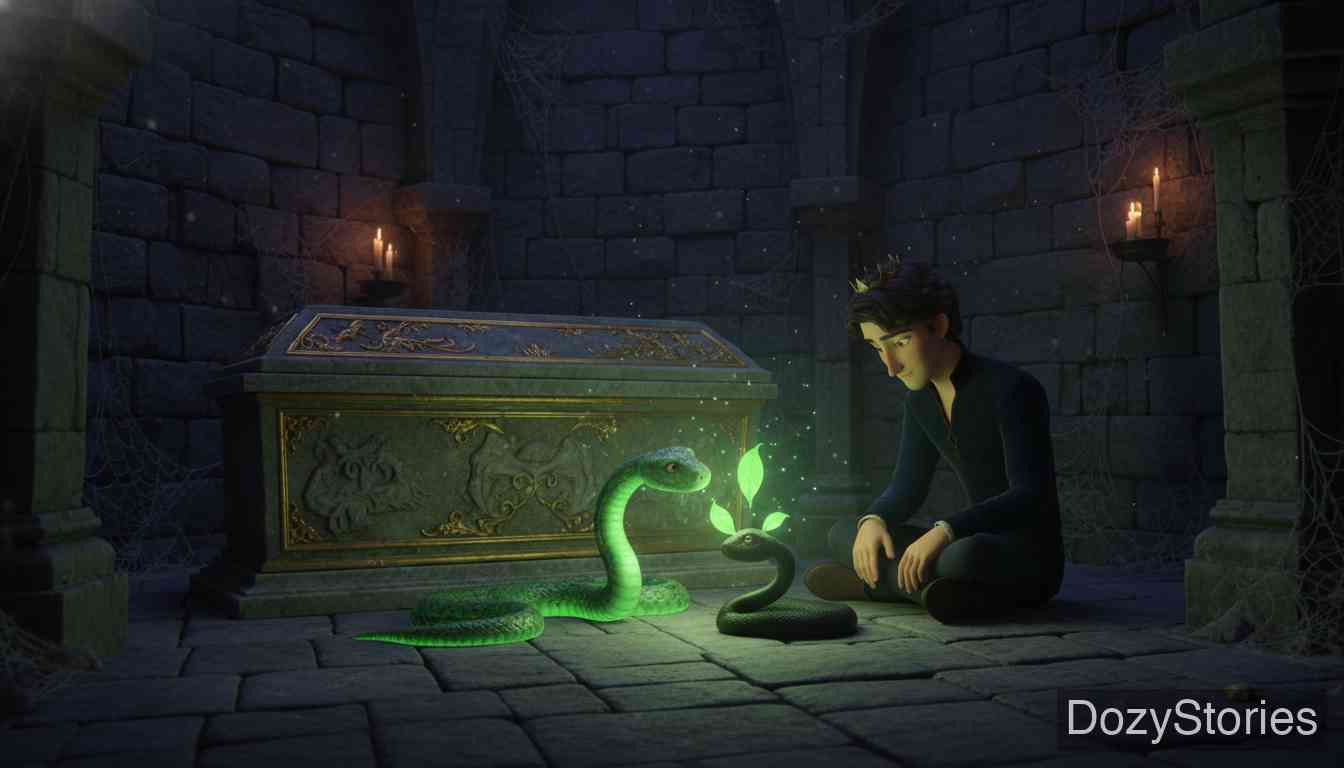
Near the coffin stood a table on which were four candles, four loaves of bread, and four bottles of wine, and when this provision came to an end, he would have to die of hunger. And now he sat there full of pain and grief, ate every day only a little piece of bread, drank only a mouthful of wine, and nevertheless saw death daily drawing nearer.
Whilst he thus gazed before him, he saw a snake creep out of a corner of the vault and approach the dead body. And as he thought it came to gnaw at it, he drew his sword and said, "As long as I live, thou shalt not touch her," and hewed the snake in three pieces.
After a time a second snake crept out of the hole, and when it saw the other lying dead and cut in pieces, it went back, but soon came again with three green leaves in its mouth. Then it took the three pieces of the snake, laid them together, as they ought to go, and placed one of the leaves on each wound. Immediately the severed parts joined themselves together, the snake moved, and became alive again, and both of them hastened away together.
The leaves were left lying on the ground, and a desire came into the mind of the unhappy man who had been watching all this, to know if the wondrous power of the leaves which had brought the snake to life again, could not likewise be of service to a human being. So he picked up the leaves and laid one of them on the mouth of his dead wife, and the two others on her eyes.
And hardly had he done this than the blood stirred in her veins, rose into her pale face, and coloured it again. Then she drew breath, opened her eyes, and said, "Ah, God, where am I?" - "Thou art with me, dear wife," he answered, and told her how everything had happened, and how he had brought her back again to life.
Then he gave her some wine and bread, and when she had regained her strength, he raised her up and they went to the door and knocked, and called so loudly that the sentries heard it, and told the King. The King came down himself and opened the door, and there he found both strong and well, and rejoiced with them that now all sorrow was over. The young King, however, took the three snake-leaves with him, gave them to a servant and said, "Keep them for me carefully, and carry them constantly about thee; who knows in what trouble they may yet be of service to us!"
A change had, however, taken place in his wife; after she had been restored to life, it seemed as if all love for her husband had gone out of her heart. After some time, when he wanted to make a voyage over the sea, to visit his old father, and they had gone on board a ship, she forgot the great love and fidelity which he had shown her, and which had been the means of rescuing her from death, and conceived a wicked inclination for the skipper.
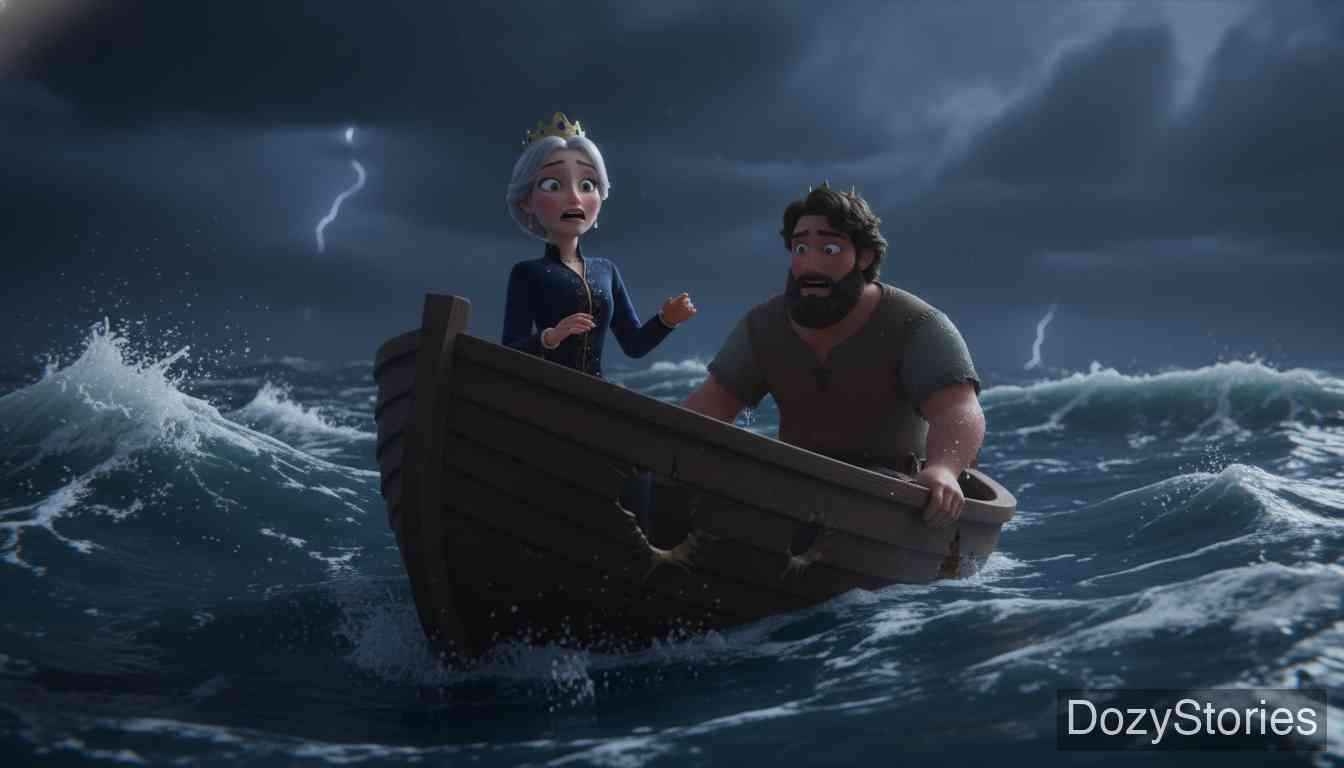
And once when the young King lay there asleep, she called in the skipper and seized the sleeper by the head, and the skipper took him by the feet, and thus they threw him down into the sea. When the shameful deed was done, she said, "Now let us return home, and say that he died on the way. I will extol and praise thee so to my father that he will marry me to thee, and make thee the heir to his crown."
But the faithful servant who had seen all that they did, unseen by them, unfastened a little boat from the ship, got into it, sailed after his master, and let the traitors go on their way. He fished up the dead body, and by the help of the three snake-leaves which he carried about with him, and laid on the eyes and mouth, he fortunately brought the young King back to life.
They both rowed with all their strength day and night, and their little boat flew so swiftly that they reached the old King before the others did. He was astonished when he saw them come alone, and asked what had happened to them. When he learnt the wickedness of his daughter he said, "I cannot believe that she has behaved so ill, but the truth will soon come to light," and bade both go into a secret chamber and keep themselves hidden from every one.
Soon afterwards the great ship came sailing in, and the godless woman appeared before her father with a troubled countenance. He said, "Why dost thou come back alone? Where is thy husband?" - "Ah, dear father," she replied, "I come home again in great grief; during the voyage, my husband became suddenly ill and died, and if the good skipper had not given me his help, it would have gone ill with me. He was present at his death, and can tell you all."
The King said, "I will make the dead alive again," and opened the chamber, and bade the two come out. When the woman saw her husband, she was thunderstruck, and fell on her knees and begged for mercy.
The King said, "There is no mercy. He was ready to die with thee and restored thee to life again, but thou hast murdered him in his sleep, and shalt receive the reward that thou deservest." Then she was placed with her accomplice in a ship which had been pierced with holes, and sent out to sea, where they soon sank amid the waves.

Vocabulary from "The Three Snake-Leaves"

12 key words from this story with definitions and original context sentences for language learners.

conquered(conquer)B2
/ˈkɒŋkərd/v.

Defeated an enemy or took control by force.

征服;战胜;攻克。

Then the others followed him, and he pressed on and conquered the enemy.

其他人听了都跟随他,他冲锋陷阵,最终战胜了敌人。

vowB2
/vaʊ/n.

A serious promise.

誓言;郑重的承诺。

She had made a vow to take no one as her lord and husband who did not promise to let himself be buried alive with her if she died first.

她发过誓,如果谁想成为她的丈夫,必须承诺如果她先死,他就要被活埋在她身边。

solemnized(solemnize)C1
/ˈsɒləmnaɪzd/v.

Performed (a wedding or other ceremony) formally.

隆重举行(婚礼等仪式)。

Then the King consented, and the wedding was solemnized with great splendour.

于是国王同意了,婚礼在这个巨大的荣耀中隆重举行。

vaultC1
/vɔːlt/n.

An underground room, often used for burying the dead.

地下墓室;墓穴;地窖。

He was taken down into the royal vault with it and then the door was shut and bolted.

他随尸体一同被带进皇家墓穴,随后大门被关上并锁死。

coffinB2
/ˈkɒfɪn/n.

A box in which a dead body is buried.

棺材;灵柩。

Near the coffin stood a table on which were four candles, four loaves of bread, and four bottles of wine.

棺材旁放着一张桌子,上面有四根蜡烛、四个面包和四瓶酒。

corpseB2
/kɔːrps/n.

A dead body.

尸体;死尸。

When the day came when the corpse was to be buried, he was taken down into the royal vault with it.

安葬尸体的日子到了,他随尸体一同被带进皇家墓穴。

severedC1
/ˈsevərd/adj.

Cut off or cut apart.

被切断的;断开的。

Immediately the severed parts joined themselves together, the snake moved, and became alive again.

立刻,断开的部分连接在了一起,那条蛇动了起来,复活了。

veins(vein)B2
/veɪnz/n.

The tubes in the body through which blood flows back to the heart.

静脉;血管。

And hardly had he done this than the blood stirred in her veins, rose into her pale face, and coloured it again.

他刚做完这些,血液就在她的血管里流动起来,涌上苍白的脸庞,使它再次变得红润。

fidelityC1
/fɪˈdeləti/n.

Faithfulness and loyalty to a person or promise.

忠诚;忠实;忠贞。

She forgot the great love and fidelity which he had shown her, and which had been the means of rescuing her from death.

她忘记了他对她表现出的伟大的爱和忠诚——正是这爱将她从死亡中拯救出来。

traitors(traitor)B2
/ˈtreɪtərz/n.

People who betray someone who trusts them.

背叛者;叛徒。

He unfastened a little boat from the ship, got into it, sailed after his master, and let the traitors go on their way.

他解开船上的一只小船,坐上去划向主人,任由那两个叛徒继续前行。

accompliceC1
/əˈkʌmplɪs/n.

A person who helps another commit a crime.

同谋;帮凶。

Then she was placed with her accomplice in a ship which had been pierced with holes, and sent out to sea.

于是,她和她的同谋被装上一艘凿了洞的船,推向大海。

thunderstruckC1
/ˈθʌndərstrʌk/adj.

So shocked or surprised that you cannot speak or move.

惊呆的;如遭雷击的;目瞪口呆的。

When the woman saw her husband, she was thunderstruck, and fell on her knees and begged for mercy.

当那女人看到自己的丈夫时,如同被雷击中一般,跪倒在地祈求宽恕。

Reading Together & Learning More

The Moral

Devotion and loyalty are precious, yet not everyone knows how to be grateful; judge people by their lasting character, and true faithfulness—like the servant's—will in the end prove its worth.

Educational Value

Leads children to weigh deeper questions—devotion versus gratitude, whether a person's nature can change—and to see loyalty set against betrayal; it also introduces the ancient, worldwide motif of the snake's reviving herb, running from Greek myth to the Epic of Gilgamesh.

Tips for Parents

The story is on the heavier side (being buried with the dead, betrayal, punishment), so read it together and focus the talk on gratitude and judging character; it pairs well with the faithful servant of 'Faithful John.'

Talk About It

  1. The princess makes her husband vow to be buried with her if she dies first, saying, 'If he truly loves me, what use is life to him afterward?' Is that real love, or is it too selfish?
  2. The young man learns to revive people only by watching how a snake revives its companion. Have you ever learned a skill by watching someone—or some creature—else?
  3. The wife, revived by her husband's devotion, then plots to murder him. What do you think changed her heart? Can kindness truly not change a person's nature?
  4. The faithful servant carries the snake-leaves everywhere and saves his master twice. What would have happened if he had found them a bother and left them behind?
  5. The King does not punish his daughter at once, but first lets the truth 'speak for itself.' What is good about handling it that way?