The Three Little Men in the Wood

Introduction

'The Three Little Men in the Wood' belongs to one of folklore's most classic and widespread story types, the 'Kind and Unkind Girls' (ATU 480). Its skeleton will feel familiar: two girls, one kind and one unkind, each meet magical figures who test their hearts. The kind girl shares her bread with the little men and sweeps the snow willingly, and is blessed to grow prettier, to have gold fall from her mouth, and to marry a king; the selfish, rude girl is cursed to grow uglier, to have toads leap from her mouth, and to die a wretched death. The same shape appears in Grimm's own 'Mother Hulda' and in the Frenchman Perrault's 'The Fairies' (also called 'Diamonds and Toads,' 1697)—gold or toads from the mouth is the hallmark of this whole family of tales. The second half adds another ancient motif: the kind queen is thrown into a river by her stepmother, returns each night as a duck to nurse her child, and is freed only when the king brandishes his sword three times over her. The ending is clever too: rather than expose the truth, the king asks what someone deserves for dragging a person from bed and throwing them in the water, and the wicked stepmother pronounces the cruel punishment herself—thus sentencing herself. This trick of making the villain speak her own doom appears in 'The Goose Girl' as well. As you read, compare the two girls: what exactly is the difference in how they treat the little men?

Font Size
Image Layout
1 / 26
Stopped
There was once a man, whose wife was dead, and a woman, whose husband was dead; and the man had a daughter, and so had the woman. The girls were acquainted with each other, and used to play together sometimes in the woman's house. So the woman said to the man's daughter, "Listen to me, tell your father that I will marry him, and then you shall have milk to wash in every morning and wine to drink, and my daughter shall have water to wash in and water to drink." The girl went home and told her father what the woman had said.
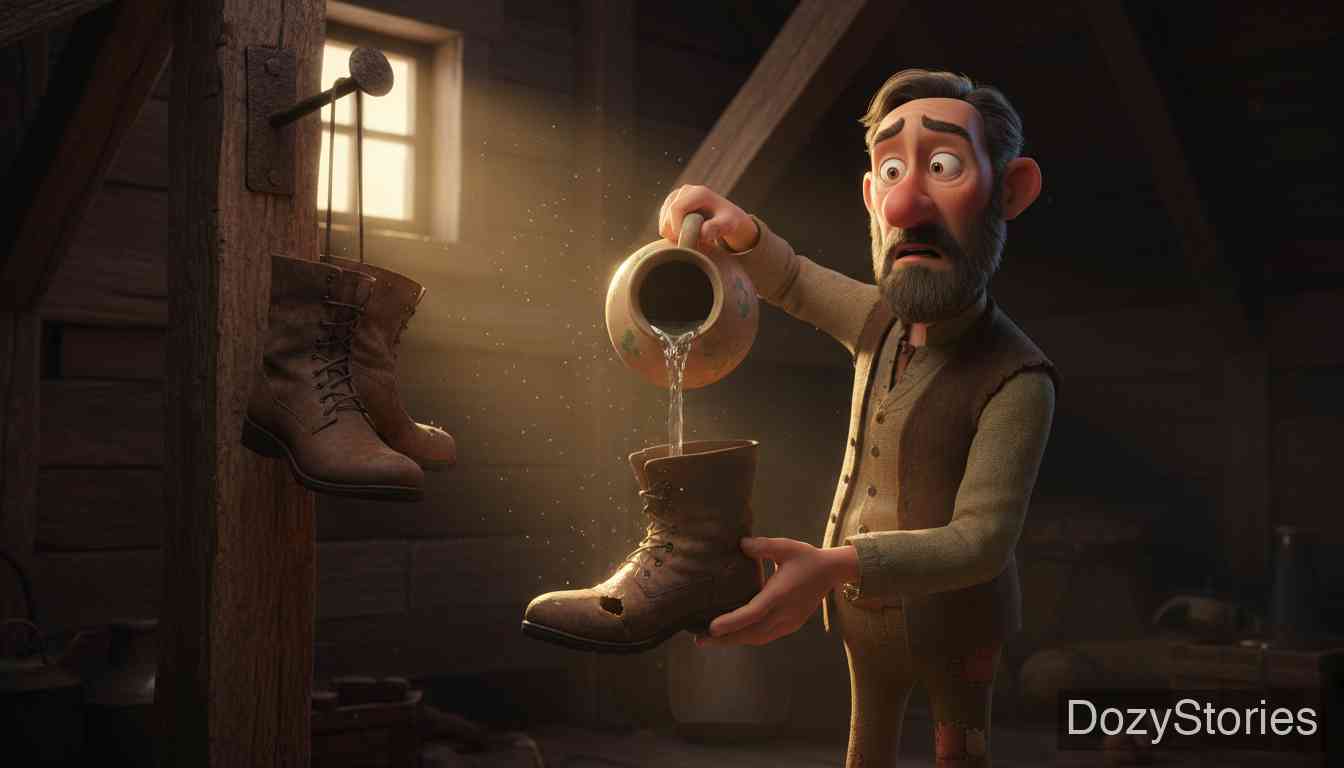
The man said, "What shall I do! Marriage is a joy, and also a torment." At last, as he could come to no conclusion, he took off his boot, and said to his daughter, "Take this boot, it has a hole in the sole; go up with it into the loft, hang it on the big nail and pour water in it. If it holds water, I will once more take to me a wife; if it lets out the water, so will I not."
The girl did as she was told, but the water held the hole together, and the boot was full up to the top. So she went and told her father how it was. And he went up to see with his own eyes, and as there was no mistake about it, he went to the widow and courted her, and then they had the wedding.
The next morning, when the two girls awoke, there stood by the bedside of the man's daughter milk to wash in and wine to drink, and by the bedside of the woman's daughter there stood water to wash in and water to drink. On the second morning there stood water to wash in and water to drink for both of them alike. On the third morning there stood water to wash in and water to drink for the man's daughter, and milk to wash in and wine to drink for the woman's daughter; and so it remained ever after. The woman hated her stepdaughter, and never knew how to treat her badly enough from one day to another. And she was jealous because her stepdaughter was pleasant and pretty, and her real daughter was ugly and hateful.
Once in winter, when it was freezing hard, and snow lay deep on hill and valley, the woman made a frock out of paper, called her stepdaughter, and said, "Here, put on this frock, go out into the wood and fetch me a basket of strawberries; I have a great wish for some."
"Oh dear," said the girl, "there are no strawberries to be found in winter; the ground is frozen, and the snow covers everything. And why should I go in the paper frock? it is so cold out of doors that one's breath is frozen; the wind will blow through it, and the thorns will tear it off my back!"
"How dare you contradict me!" cried the stepmother, "be off, and don't let me see you again till you bring me a basket of strawberries." Then she gave her a little piece of hard bread, and said, "That will do for you to eat during the day," and she thought to herself, "She is sure to be frozen or starved to death out of doors, and I shall never set eyes on her again."
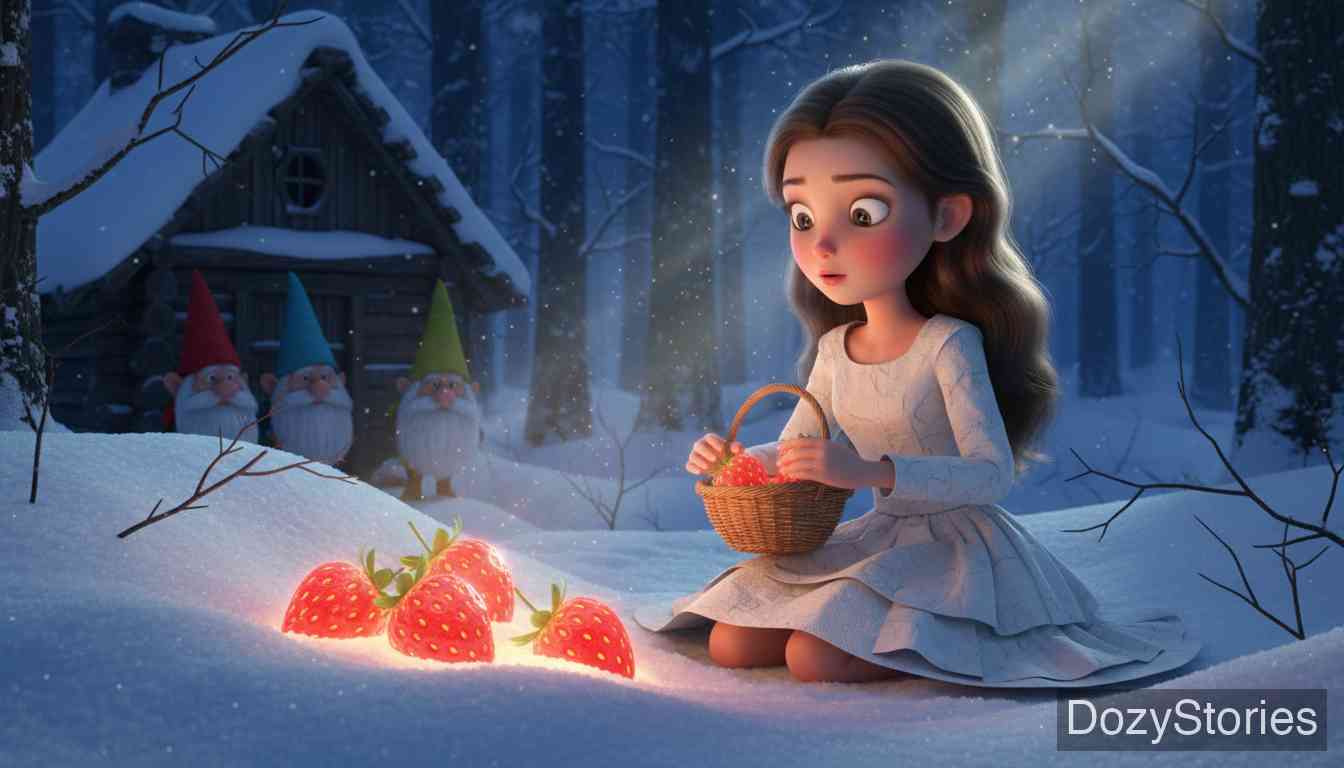
So the girl went obediently, put on the paper frock, and started out with the basket. The snow was lying everywhere, far and wide, and there was not a blade of green to be seen. When she entered the wood she saw a little house with three little men peeping out of it. She wished them good day, and knocked modestly at the door. They called her in, and she came into the room and sat down by the side of the oven to warm herself and eat her breakfast. The little men said, "Give us some of it."
"Willingly," answered she, breaking her little piece of bread in two, and giving them half. They then said, "What are you doing here in the wood this winter time in your little thin frock?"
"Oh," answered she, "I have to get a basket of strawberries, and I must not go home without them." When she had eaten her bread they gave her a broom, and told her to go and sweep the snow away from the back door. When she had gone outside to do it the little men talked among themselves about what they should do for her, as she was so good and pretty, and had shared her bread with them. Then the first one said, "She shall grow prettier every day." The second said, "Each time she speaks a piece of gold shall fall from her mouth." The third said, "A king shall come and take her for his wife."
In the meanwhile the girl was doing as the little men had told her, and had cleared the snow from the back of the little house, and what do you suppose she found? fine ripe strawberries, showing dark red against the snow! Then she joyfully filled her little basket full, thanked the little men, shook hands with them all, and ran home in haste to bring her stepmother the thing she longed for. As she went in and said, "Good evening," a piece of gold fell from her mouth at once. Then she related all that had happened to her in the wood, and at each word that she spoke gold pieces fell out of her mouth, so that soon they were scattered all over the room.
"Just look at her pride and conceit!" cried the stepsister, "throwing money about in this way!" but in her heart she was jealous because of it, and wanted to go too into the wood to fetch strawberries. But the mother said, "No, my dear little daughter, it is too cold, you will be frozen to death." But she left her no peace, so at last the mother gave in, got her a splendid fur coat to put on, and gave her bread and butter and cakes to eat on the way.
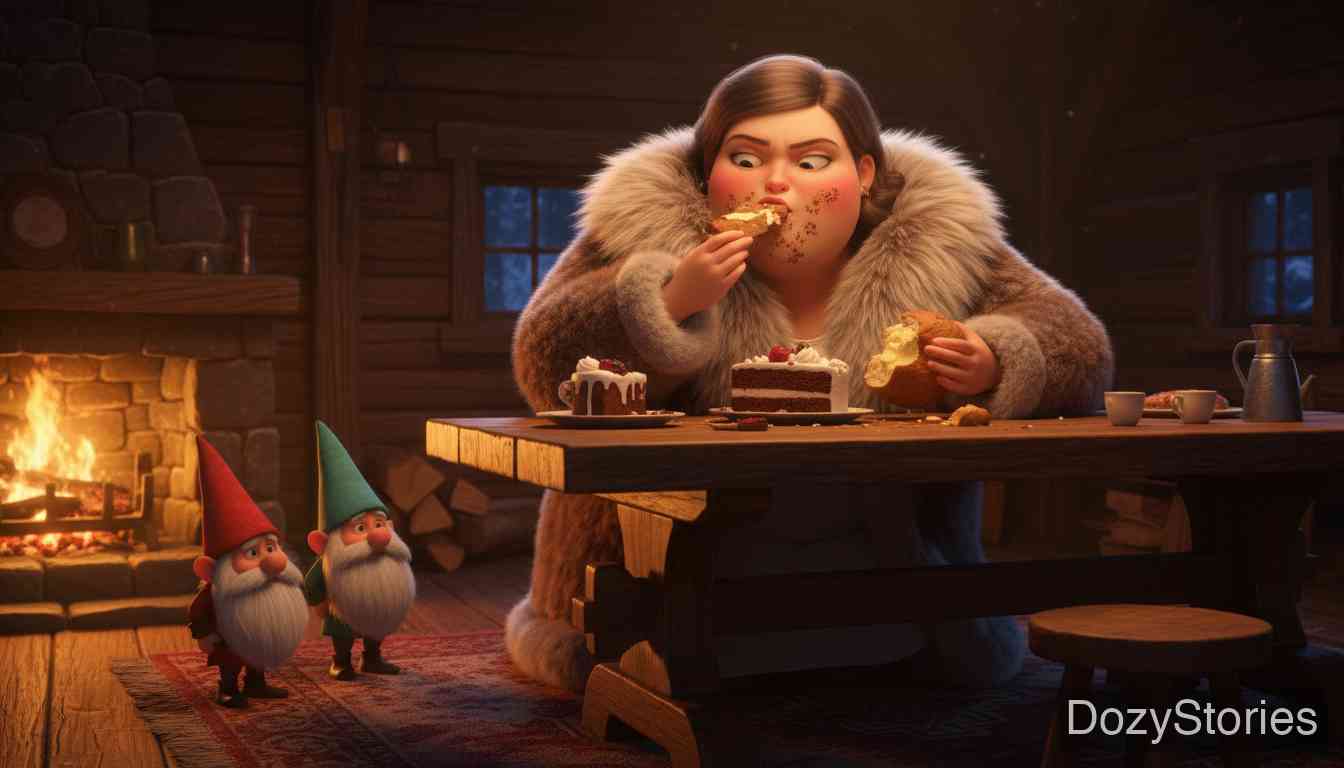
The girl went into the wood and walked straight up to the little house. The three little men peeped out again, but she gave them no greeting, and without looking round or taking any notice of them she came stumping into the room, sat herself down by the oven, and began to eat her bread and butter and cakes.
"Give us some of that," cried the little men, but she answered, "I've not enough for myself; how can I give away any?" Now when she had done with her eating, they said, "Here is a broom, go and sweep all clean by the back door."
"Oh, go and do it yourselves," answered she; "I am not your housemaid." But when she saw that they were not going to give her anything, she went out to the door. Then the three little men said among themselves, "What shall we do to her, because she is so unpleasant, and has such a wicked jealous heart, grudging everybody everything?" The first said, "She shall grow uglier every day." The second said, "Each time she speaks a toad shall jump out of her mouth at every word." The third said, "She shall die a miserable death."
The girl was looking outside for strawberries, but as she found none, she went sulkily home. And directly she opened her mouth to tell her mother what had happened to her in the wood a toad sprang out of her mouth at each word, so that every one who came near her was quite disgusted.
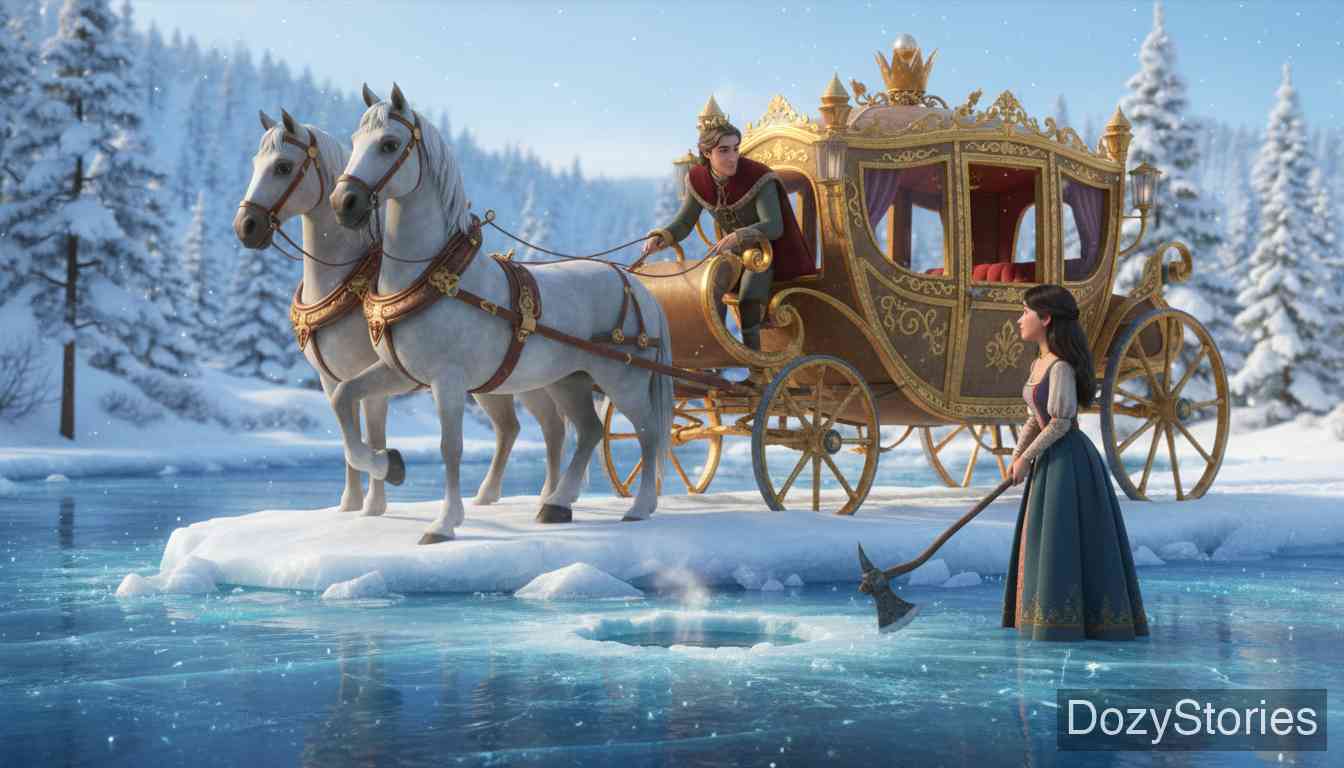
The stepmother became more and more set against the man's daughter, whose beauty increased day by day, and her only thought was how to do her some injury. So at last she took a kettle, set it on the fire, and scalded some yarn in it. When it was ready she hung it over the poor girl's shoulder, and gave her an axe, and she was to go to the frozen river and break a hole in the ice, and there to rinse the yarn. She obeyed, and went and hewed a hole in the ice, and as she was about it there came by a splendid coach, in which the King sat. The coach stood still, and the King said, "My child, who art thou, and what art thou doing there?"
She answered, "I am a poor girl, and am rinsing yarn." Then the King felt pity for her, and as he saw that she was very beautiful, he said, "Will you go with me?"
"Oh yes, with all my heart," answered she; and she felt very glad to be out of the way of her mother and sister.
So she stepped into the coach and went off with the King; and when they reached his castle the wedding was celebrated with great splendour, as the little men in the wood had foretold.
At the end of a year the young Queen had a son; and as the stepmother had heard of her great good fortune she came with her daughter to the castle, as if merely to pay the King and Queen a visit. One day, when the King had gone out, and when nobody was about, the bad woman took the Queen by the head, and her daughter took her by the heels, and dragged her out of bed, and threw her out of the window into a stream that flowed beneath it. Then the old woman put her ugly daughter in the bed, and covered her up to her chin.
When the King came back, and wanted to talk to his wife a little, the old woman cried, "Stop, stop! she is sleeping nicely; she must be kept quiet to day." The King dreamt of nothing wrong, and came again the next morning; and as he spoke to his wife, and she answered him, there jumped each time out of her mouth a toad instead of the piece of gold as heretofore. Then he asked why that should be, and the old woman said it was because of her great weakness, and that it would pass away.
But in the night, the boy who slept in the kitchen saw how something in the likeness of a duck swam up the gutter, and said, "My King, what mak'st thou? Sleepest thou, or wak'st thou?" But there was no answer. Then it said, "What cheer my two guests keep they?" So the kitchen-boy answered, "In bed all soundly sleep they." It asked again, "And my little baby, how does he?" And he answered, "He sleeps in his cradle quietly."
Then the duck took the shape of the Queen and went to the child, and gave him to drink, smoothed his little bed, covered him up again, and then, in the likeness of a duck, swam back down the gutter. In this way she came two nights, and on the third she said to the kitchen-boy, "Go and tell the King to brandish his sword three times over me on the threshold!" Then the kitchen-boy ran and told the King, and he came with his sword and brandished it three times over the duck, and at the third time his wife stood before him living, and hearty, and sound, as she had been before.
The King was greatly rejoiced, but he hid the Queen in a chamber until the Sunday came when the child was to be baptized. And after the baptism he said, "What does that person deserve who drags another out of; bed and throws him in the water?"
And the old woman answered, "No better than to be put into a cask with iron nails in it, and to be rolled in it down the hill into the water." Then said the King, "You have spoken your own sentence;"and he ordered a cask to be fetched, and the old woman and her daughter were put into it, and the top hammered down, and the cask was rolled down the hill into the river.

Vocabulary from "The Three Little Men in the Wood"

12 key words from this story with definitions and original context sentences for language learners.

soleB2
/səʊl/n.

The bottom part of a shoe or foot.

鞋底;脚底。

Take this boot, it has a hole in the sole.

拿着这只靴子,鞋底上有个洞。

loftB2
/lɒft/n.

A room or space just under the roof of a house.

阁楼;顶楼。

Go up with it into the loft, hang it on the big nail and pour water in it.

把它拿到阁楼上去,挂在大钉子上,然后往里灌水。

jealousB1
/ˈdʒeləs/adj.

Feeling unhappy because someone has something you want, or is better than you.

嫉妒的;妒忌的。

And she was jealous because her stepdaughter was pleasant and pretty, and her real daughter was ugly and hateful.

她还非常嫉妒,因为继女长得漂亮可爱,而她自己的女儿却又丑又令人讨厌。

frockC1
/frɒk/n.

An old-fashioned word for a dress.

连衣裙;女装(旧式说法)。

The woman made a frock out of paper, called her stepdaughter.

那女人用纸糊了一件衣裳,叫来继女。

contradictB2
/ˌkɒntrəˈdɪkt/v.

To say that the opposite of what someone has said is true; to talk back.

反驳;顶嘴;与……相抵触。

"How dare you contradict me!" cried the stepmother.

'你敢跟我顶嘴!'继母吼道。

obedientlyB2
/əˈbiːdiəntli/adv.

In a way that shows you do what you are told.

顺从地;听话地。

So the girl went obediently, put on the paper frock, and started out with the basket.

姑娘只好顺从地穿上纸衣裳,提着篮子出去了。

conceitC1
/kənˈsiːt/n.

Too much pride in yourself and what you can do.

自负;自大;狂妄。

"Just look at her pride and conceit!" cried the stepsister.

'瞧她那副狂妄劲儿!'继妹喊道。

grudging(grudge)C1
/ˈɡrʌdʒɪŋ/v.

Being unwilling to give or allow someone something.

吝惜;舍不得给;对……心怀不满。

She is so unpleasant, and has such a wicked jealous heart, grudging everybody everything.

她是如此令人讨厌,心肠又坏又嫉妒,对谁都吝啬。

disgustedB2
/dɪsˈɡʌstɪd/adj.

Feeling strong dislike for something unpleasant.

厌恶的;反感的;觉得恶心的。

A toad sprang out of her mouth at each word, so that every one who came near her was quite disgusted.

每说一个字就有一只癞蛤蟆从嘴里跳出来,结果把所有靠近她的人都恶心坏了。

rinseB2
/rɪns/v.

To wash something in clean water to remove dirt or soap.

漂洗;用清水冲洗。

She was to go to the frozen river and break a hole in the ice, and there to rinse the yarn.

让她去结冰的河面上凿个洞,在里面清洗纱线。

foretold(foretell)C1
/fɔːrˈtəʊld/v.

Said in advance that something would happen; predicted.

预言;预告;预先说出。

When they reached his castle the wedding was celebrated with great splendour, as the little men in the wood had foretold.

到了城堡,他们举行了盛大的婚礼,正如森林里的三个小矮人预言的那样。

brandishC1
/ˈbrændɪʃ/v.

To wave something (such as a weapon) in the air in a bold way.

挥舞;舞动(尤指武器)。

Go and tell the King to brandish his sword three times over me on the threshold!

去告诉国王,让他拿剑在门槛上对着我挥舞三次!

Reading Together & Learning More

The Moral

Kindness, generosity, and good manners bring unexpected rewards, while selfishness, spite, and envy come back upon those who hold them.

Educational Value

Through the sharp contrast between the kind and the unkind girl, it helps children feel the value of sharing, courtesy, and goodwill, and introduces them to the worldwide 'Kind and Unkind Girls' story type.

Tips for Parents

As you read, compare line by line how each girl behaves in the little house; then discuss: the gold and the toads from their mouths really ask—what do the words we speak turn into?

Talk About It

  1. Both girls go to the wood and meet the same little men. Why is one blessed and the other cursed?
  2. The kind girl shares even her one small piece of bread with the little men. Why do you think being willing to share matters so much?
  3. The unkind girl says, 'I've not enough for myself.' If you had only a little food, would you share it?
  4. The story lets the wicked stepmother name her own punishment. Do you think this 'sentencing yourself' ending is better than simply punishing her?
  5. Gold from one mouth, toads from the other—if everything you said turned into something you could see, what would you want it to be?