The Three Languages

Introduction

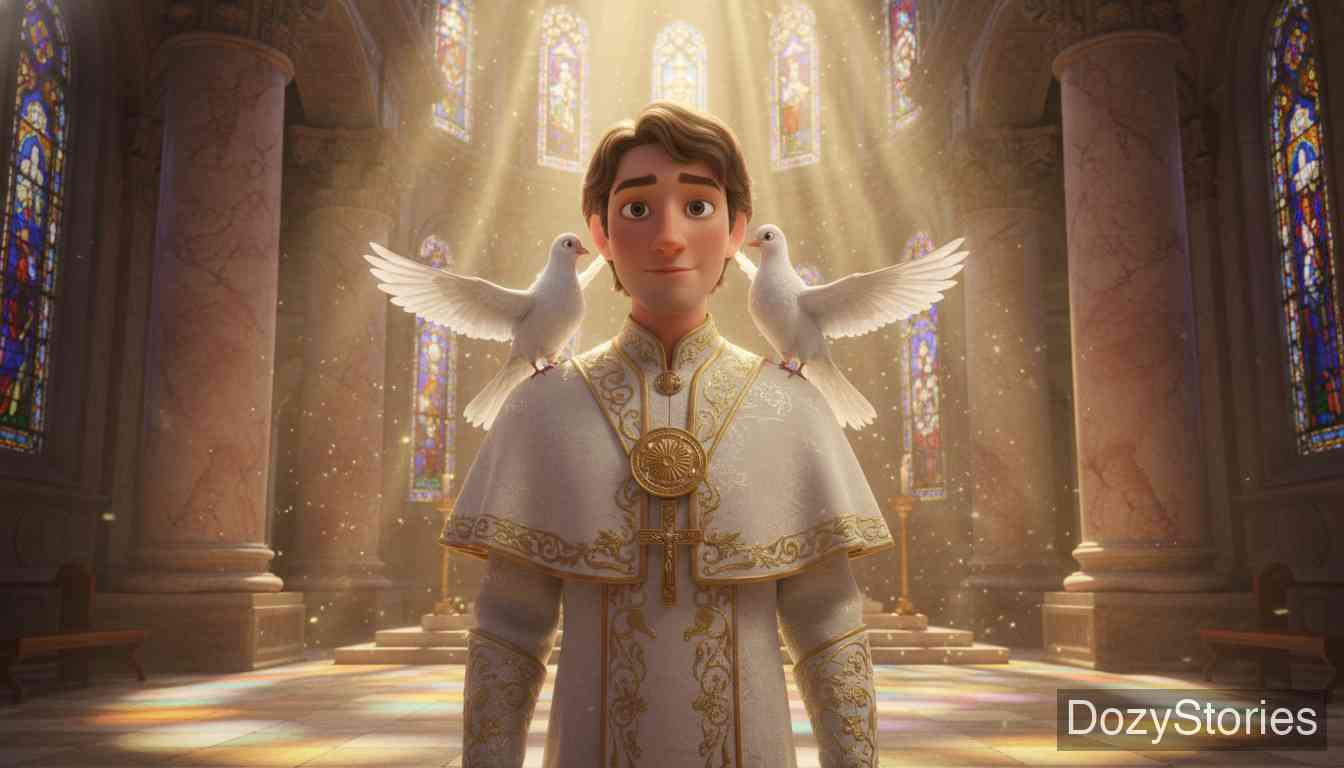
This is an encouraging story, made for any child who has been dismissed as 'no good' by grown-ups. The count's son is thought 'stupid, able to learn nothing,' and after his father spends a fortune on his schooling he comes back having learned only three seemingly useless skills: to understand the speech of dogs, birds, and frogs. The father is so angry he orders him killed. Yet the tale lets each 'useless' language prove its worth: the dogs' speech helps him win a magic treasure and free a suffering land; the frogs foretell his destiny; and in the end he becomes Pope. It quietly tells children that no real learning is ever wasted — if you cannot see its use today, that does not mean it has none. The ending hides a charming detail: the new Pope does not know the words of the mass, so two white doves perch on his shoulders and whisper it in his ear — in Western art, 'a dove at the ear' is the classic image of divine inspiration (Pope Gregory the Great was often painted with a dove dictating in his ear). As you read, ask your child: was the boy his father called 'good for nothing' really stupid? Can something grown-ups think is 'useless' actually turn out to be useful?

Font Size
Image Layout
1 / 9
Stopped
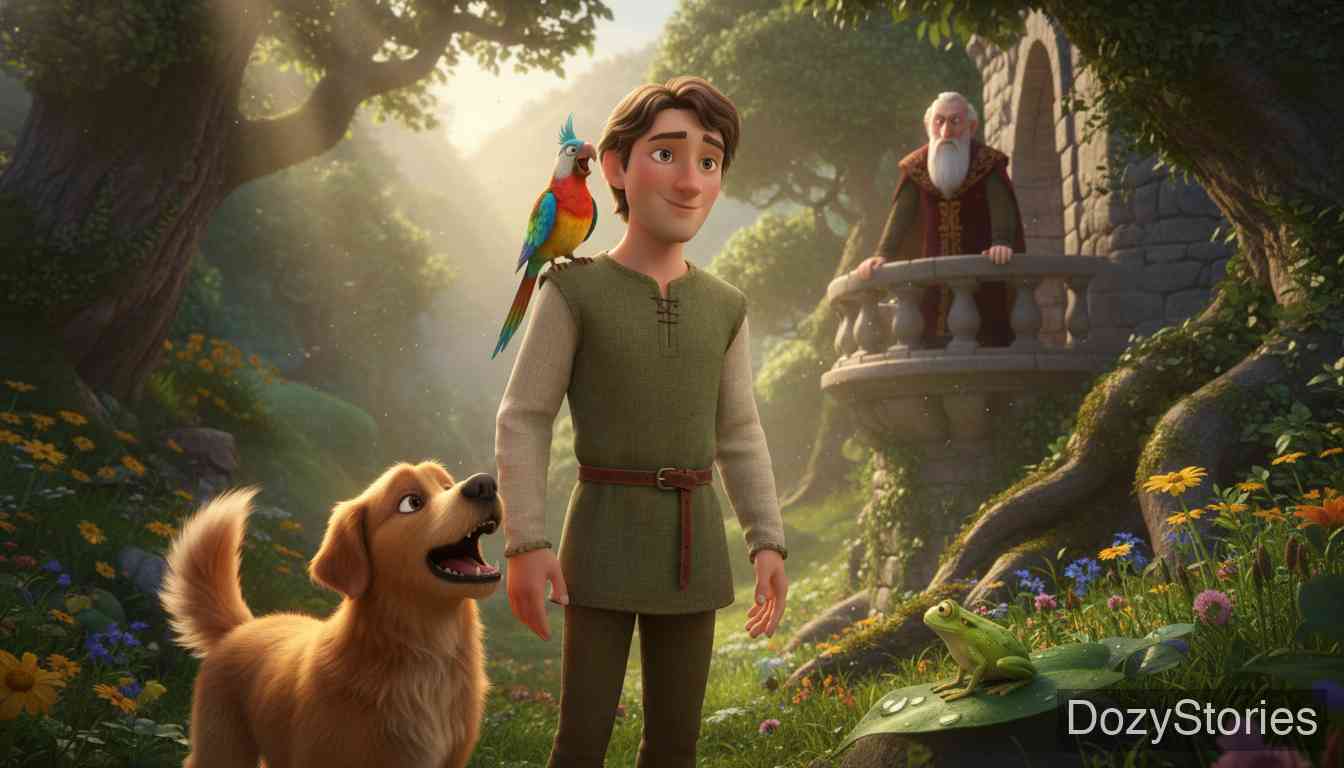
An aged count once lived in Switzerland, who had an only son, but he was stupid, and could learn nothing. Then said the father, "Hark thee, my son, I can get nothing into thy head, let me try as I will. Thou must go from hence, I will give thee into the care of a celebrated master, who shall see what he can do with thee." The youth was sent into a strange town, and remained a whole year with the master. At the end of this time, he came home again, and his father asked, "Now, my son, what hast thou learnt?" - "Father, I have learnt what the dogs say when they bark." - "Lord have mercy on us!" cried the father; "is that all thou hast learnt? I will send thee into another town, to another master."
The youth was taken thither, and stayed a year with this master likewise. When he came back the father again asked, "My son, what hast thou learnt?" He answered, "Father, I have learnt what the birds say." Then the father fell into a rage and said, "Oh, thou lost man, thou hast spent the precious time and learnt nothing; art thou not ashamed to appear before mine eyes? I will send thee to a third master, but if thou learnest nothing this time also, I will no longer be thy father." The youth remained a whole year with the third master also, and when he came home again, and his father inquired, "My son, what hast thou learnt?" he answered, "Dear father, I have this year learnt what the frogs croak." Then the father fell into the most furious anger, sprang up, called his people thither, and said, "This man is no longer my son, I drive him forth, and command you to take him out into the forest, and kill him." They took him forth, but when they should have killed him, they could not do it for pity, and let him go, and they cut the eyes and the tongue out of a deer that they might carry them to the old man as a token.
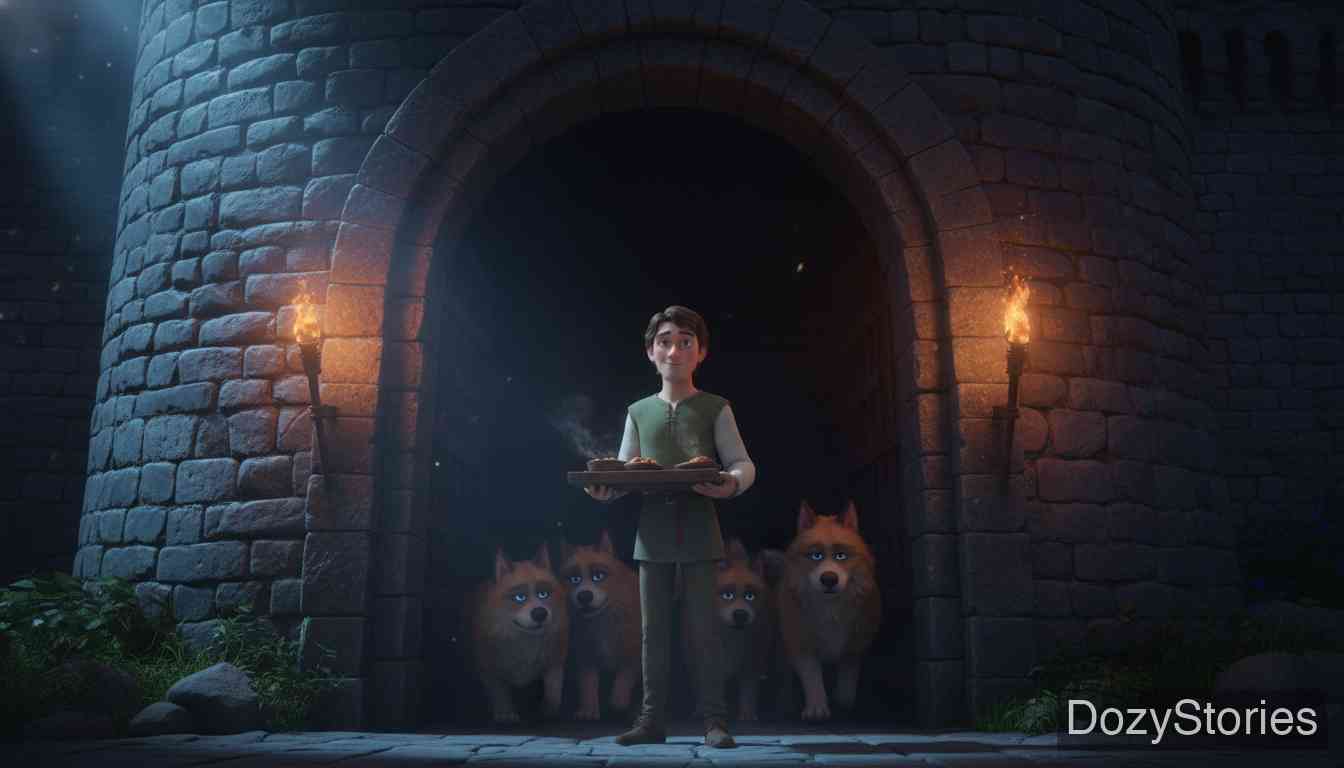
The youth wandered on, and after some time came to a fortress where he begged for a night's lodging. "Yes," said the lord of the castle, "if thou wilt pass the night down there in the old tower, go thither; but I warn thee, it is at the peril of thy life, for it is full of wild dogs, which bark and howl without stopping, and at certain hours a man has to be given to them, whom they at once devour."
The whole district was in sorrow and dismay because of them, and yet no one could do anything to stop this. The youth, however, was without fear, and said, "Just let me go down to the barking dogs, and give me something that I can throw to them; they will do nothing to harm me." As he himself would have it so, they gave him some food for the wild animals, and led him down to the tower.
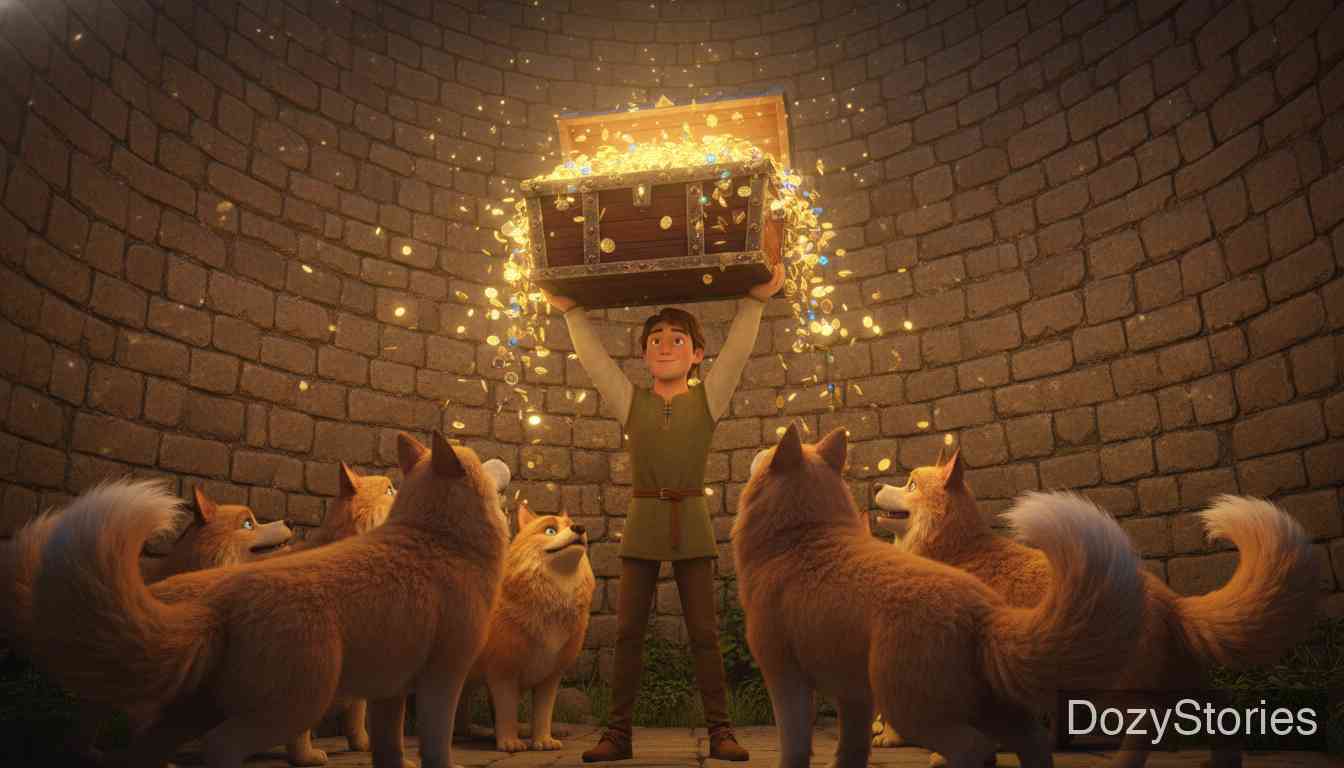
When he went inside, the dogs did not bark at him, but wagged their tails quite amicably around him, ate what he set before them, and did not hurt one hair of his head. Next morning, to the astonishment of everyone, he came out again safe and unharmed, and said to the lord of the castle, "The dogs have revealed to me, in their own language, why they dwell there, and bring evil on the land. They are bewitched, and are obliged to watch over a great treasure which is below in the tower, and they can have no rest until it is taken away, and I have likewise learnt, from their discourse, how that is to be done."
Then all who heard this rejoiced, and the lord of the castle said he would adopt him as a son if he accomplished it successfully. He went down again, and as he knew what he had to do, he did it thoroughly, and brought a chest full of gold out with him. The howling of the wild dogs was henceforth heard no more; they had disappeared, and the country was freed from the trouble.
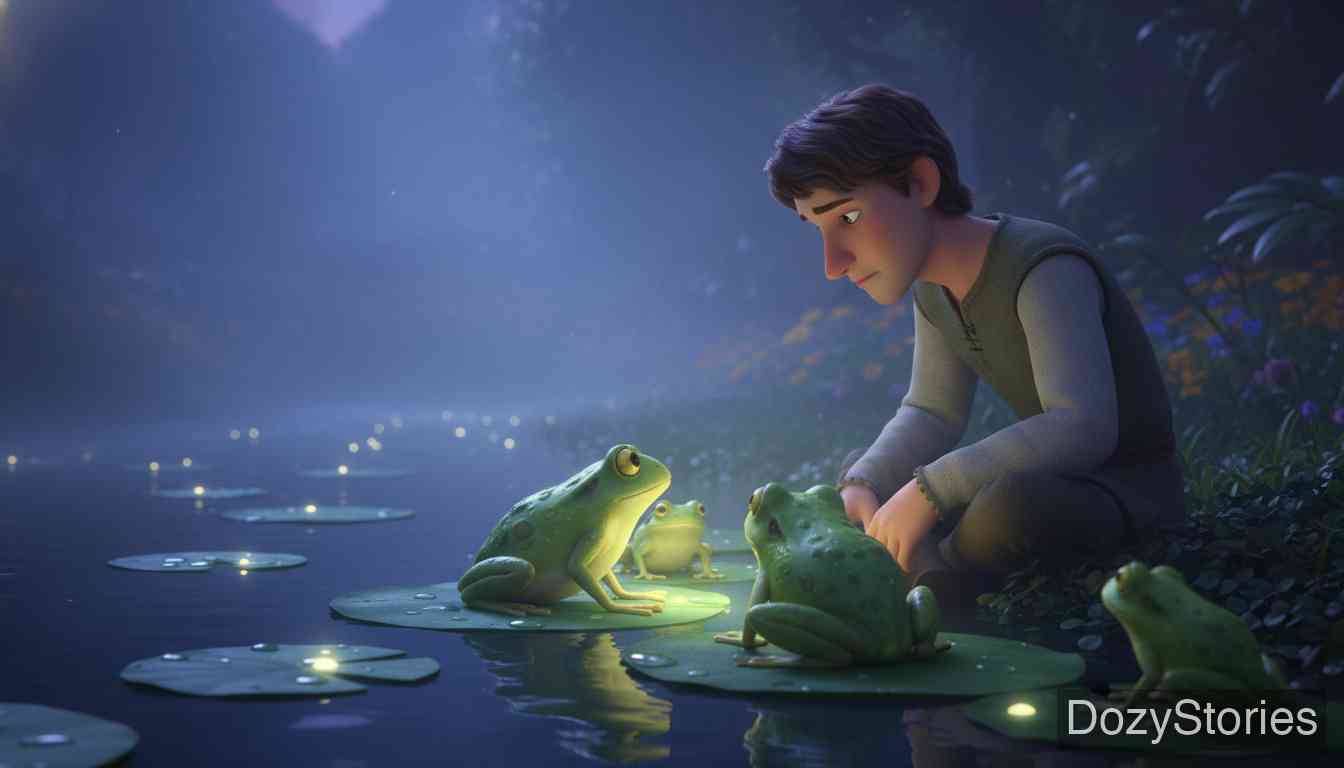
After some time he took it into his head that he would travel to Rome. On the way he passed by a marsh, in which a number of frogs were sitting croaking. He listened to them, and when he became aware of what they were saying, he grew very thoughtful and sad.
At last he arrived in Rome, where the Pope had just died, and there was great difficulty as to whom they should appoint as his successor. They at length agreed that the person should be chosen as pope who should be distinguished by some divine and miraculous token. And just as that was decided on, the young count entered into the church, and suddenly two snow-white doves flew on his shoulders and remained sitting there. The ecclesiastics recognized therein the token from above, and asked him on the spot if he would be pope.
He was undecided, and knew not if he were worthy of this, but the doves counselled him to do it, and at length he said yes. Then was he anointed and consecrated, and thus was fulfilled what he had heard from the frogs on his way, which had so affected him, that he was to be his Holiness the Pope. Then he had to sing a mass, and did not know one word of it, but the two doves sat continually on his shoulders, and said it all in his ear.

Vocabulary from "The Three Languages"

12 key words from this story with definitions and original context sentences for language learners.

celebratedC1
/ˈselɪbreɪtɪd/adj.

Famous and much admired.

著名的;有名望的。

I will give thee into the care of a celebrated master, who shall see what he can do with thee.

我会把你交给一位著名的老师,看他能把你怎么样。

tokenB2
/ˈtəʊkən/n.

A thing that serves as proof or a sign of something.

标记;凭证;信物。

They cut the eyes and the tongue out of a deer that they might carry them to the old man as a token.

他们带回一只鹿的眼睛和舌头交给老伯爵,作为凭证复命。

fortressB2
/ˈfɔːtrəs/n.

A large, strong building built to defend against attack.

堡垒;要塞。

The youth wandered on, and after some time came to a fortress where he begged for a night's lodging.

年轻人继续流浪,不久来到一座要塞,请求留宿一晚。

perilC1
/ˈperəl/n.

Serious and immediate danger.

危险;风险;危难。

I warn thee, it is at the peril of thy life, for it is full of wild dogs.

但我警告你,那会有生命危险,因为那里到处是野狗。

dismayC1
/dɪsˈmeɪ/n.

A feeling of worry, shock, and discouragement.

沮丧;惊愕;忧虑。

The whole district was in sorrow and dismay because of them, and yet no one could do anything to stop this.

整个地区都为此感到忧虑和沮丧,却没人能阻止这一切。

amicablyC1
/ˈæmɪkəbli/adv.

In a friendly, good-natured way.

友好地;和睦地。

The dogs did not bark at him, but wagged their tails quite amicably around him.

狗并没有朝他狂吠,而是友好地在他身边摇尾巴。

discourseC1
/ˈdɪskɔːs/n.

Talk or conversation; the exchange of words.

谈话;言谈;话语。

I have likewise learnt, from their discourse, how that is to be done.

我也从它们的谈话中学会了该怎么做。

accomplished(accomplish)B2
/əˈkʌmplɪʃt/v.

Succeeded in doing or completing something.

完成;实现;达成。

The lord of the castle said he would adopt him as a son if he accomplished it successfully.

城堡主人说,如果他能成功办到,就收他为义子。

marshB2
/mɑːʃ/n.

An area of low, soft, wet land.

沼泽;湿地。

On the way he passed by a marsh, in which a number of frogs were sitting croaking.

途中他经过一片沼泽,许多青蛙正坐在那里呱呱叫。

thoughtfulB1
/ˈθɔːtfl/adj.

Thinking deeply and seriously.

沉思的;深思的。

When he became aware of what they were saying, he grew very thoughtful and sad.

当他意识到它们在说什么时,他变得非常深沉和忧伤。

successorC1
/səkˈsesə/n.

A person who takes over a job or position after someone else.

继任者;接班人。

The Pope had just died, and there was great difficulty as to whom they should appoint as his successor.

那里的教皇刚刚去世,人们正为选谁做继任者而发愁。

worthyB2
/ˈwɜːði/adj.

Deserving respect, admiration, or a particular thing.

配得上的;值得的;有价值的。

He was undecided, and knew not if he were worthy of this.

他犹豫不决,不知自己是否配得上。

Reading Together & Learning More

The Moral

No real learning is ever wasted; if you cannot see its use today, that does not mean it has none — do not underestimate yourself, or knowledge that seems 'useless.'

Educational Value

Encourages underestimated children to build confidence, respect all kinds of knowledge and talent, and see that 'usefulness' often shows only when it matters most.

Tips for Parents

For a child who has been called 'no good' or has an 'unusual' hobby, this is a wonderfully encouraging story. Ask your child: what skill do you love that others think is 'useless'?

Talk About It

  1. The father thought understanding animals was useless and was angry enough to kill his son, yet all three skills later saved him. Is something grown-ups call 'useless' always really useless?
  2. The boy his family called 'stupid and unteachable' — do you think he really was stupid? What in him did the grown-ups overlook?
  3. Everyone feared the tower full of wild dogs, but only he dared go in, and he saved them all. What let him do what no one else could?
  4. If you could understand one animal's language, which would you most want, and why?