The Spirit in the Glass Bottle

Introduction

'The Spirit in the Glass Bottle' (folklorists number it ATU 331) contains a classic scene almost everyone loves: a mighty spirit, once released, turns on the very person who freed it, but the quick-witted young man tricks it back inside by saying, 'I don't believe you could ever fit into that little bottle again.' This clever 'dare it back into the jar' ruse is exactly the one used in the famous 'Fisherman and the Jinni' from the Arabian Nights, where the Arab fisherman lures a giant genie back into a brass jar the same way. That the same trick crosses both the European and Arab traditions shows how good stories travel. The tale also hides an unusual layer: the spirit calls itself 'Mercurius' (Mercury). In old alchemy, Mercurius was the name for the 'spirit of quicksilver,' and the magic rag that turns iron into silver is itself a picture of the alchemist's dream of transmuting base metal—few Grimm tales carry such an openly alchemical figure. There is a gentle defense of learning here too: the father mocks his son for having 'students' tricks stuck in his head' while knowing nothing of chopping wood, yet it is precisely that scholar's quickness, joined to a little daring, that finally makes him the most famous doctor in the world. As you read, ask your child: facing the spirit that means to kill him, does the young man rely on strength, or on his mind?

Font Size
Image Layout
1 / 21
Stopped
Once upon a time there was a poor woodcutter who worked from morning until late at night. When he had finally saved up some money he said to his boy, "You are my only child. I want to spend the money that I have earned by the sweat of my brow on your education. Learn an honest trade so you can support me in my old age when my limbs have grown stiff and I have to sit at home." Then the boy went to a university and studied diligently.
His teachers praised him, and he remained there for some time. After he had worked through a few classes, but was still not perfect in everything, the little pittance that the father had saved was all spent, and the boy had to return home to him. "Oh," said the father sadly, "I cannot give you anything more, and in these hard times I cannot earn a heller more than what we need for our daily bread."
"Father, dear," answered the son, "don't worry about it. If it is God's will everything will turn out well for me. I will do all right." When the father said he was going into the woods and earn some money by cutting cordwood, the son said, "I will go with you and help you." - "No, my son," said the father, "you will find it too difficult. You are not used to hard work, and will not be able to do it. Furthermore, I have only one ax and no money left to buy another one with." - "Just go to the neighbor," answered the son. "He will lend you his ax until I have earned enough to buy one for myself."
So the father borrowed an ax from the neighbor, and the next morning at daybreak they went out into the woods together. The son helped his father and was quite cheerful and full of energy. When the sun was directly above them, the father said, "Let us rest now and eat our noon meal. Then all will go twice as well." The son picked up his bread and said, "Just you rest, father. I am not tired. I will walk about a little in the woods and look for birds' nests." - "Oh, you fool," said the father, "why do you want to run about? Afterwards you will be tired and no longer able to lift an arm. Stay here, and sit down beside me."
But the son went into the woods, ate his bread, was very cheerful, and looked into the green branches to see if he could find a bird's nest. He walked to and fro until at last he came to an enormous oak that was certainly many hundred years old, and that five men would not have been able to span. He stood there looking at it, and thought, "Many a bird must have built its nest in that tree."
Then suddenly he thought that he heard a voice. Listening, he became aware of someone calling out with a muffled voice, "Let me out. Let me out." He looked around but could not see anything. Then he thought that the voice was coming out of the ground, so he shouted, "Where are you?" The voice answered, "I am stuck down here among the oak roots. Let me out. Let me out."
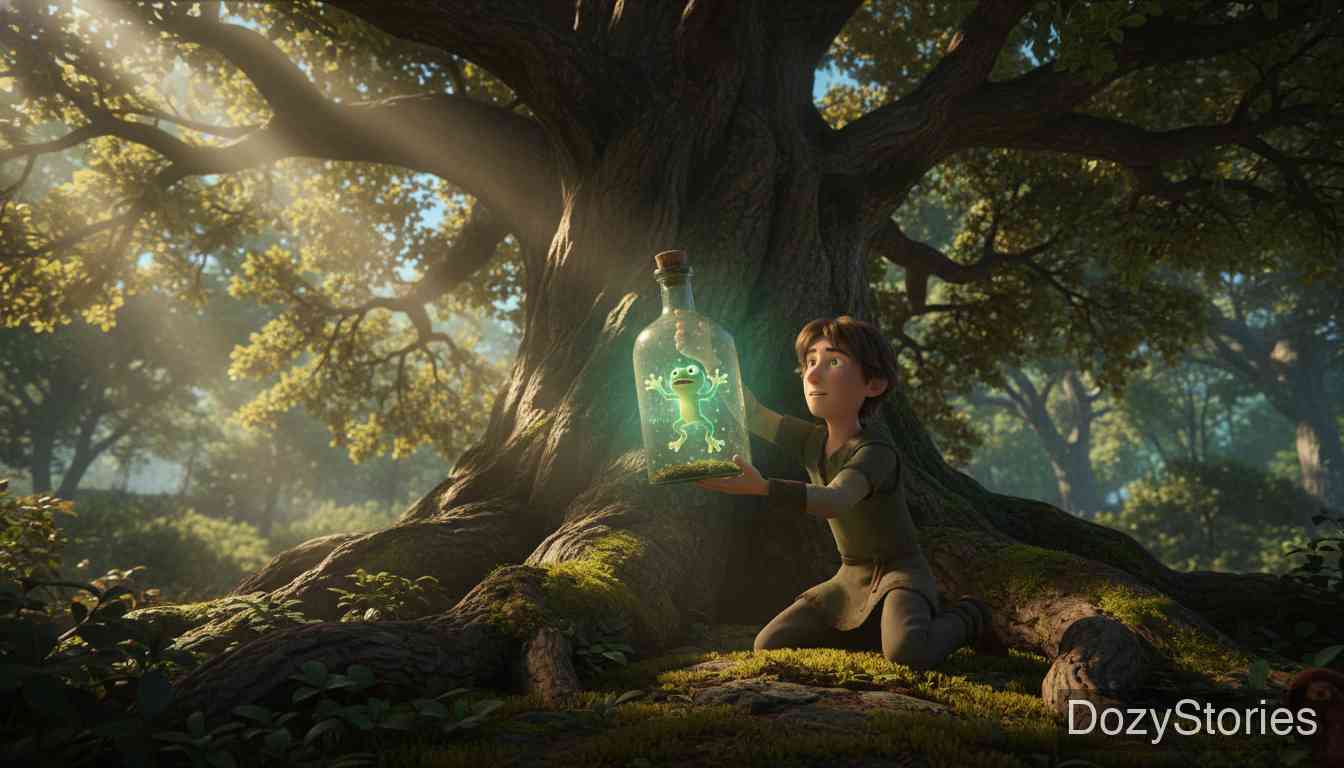
The student began to scrape about beneath the tree, searching among the roots, until at last he found a glass bottle in a little opening. Lifting it up, he held it against the light, and then saw something shaped like a frog jumping up and down inside. "Let me out. Let me out," it cried again, and the student, thinking no evil, pulled the cork from the bottle.
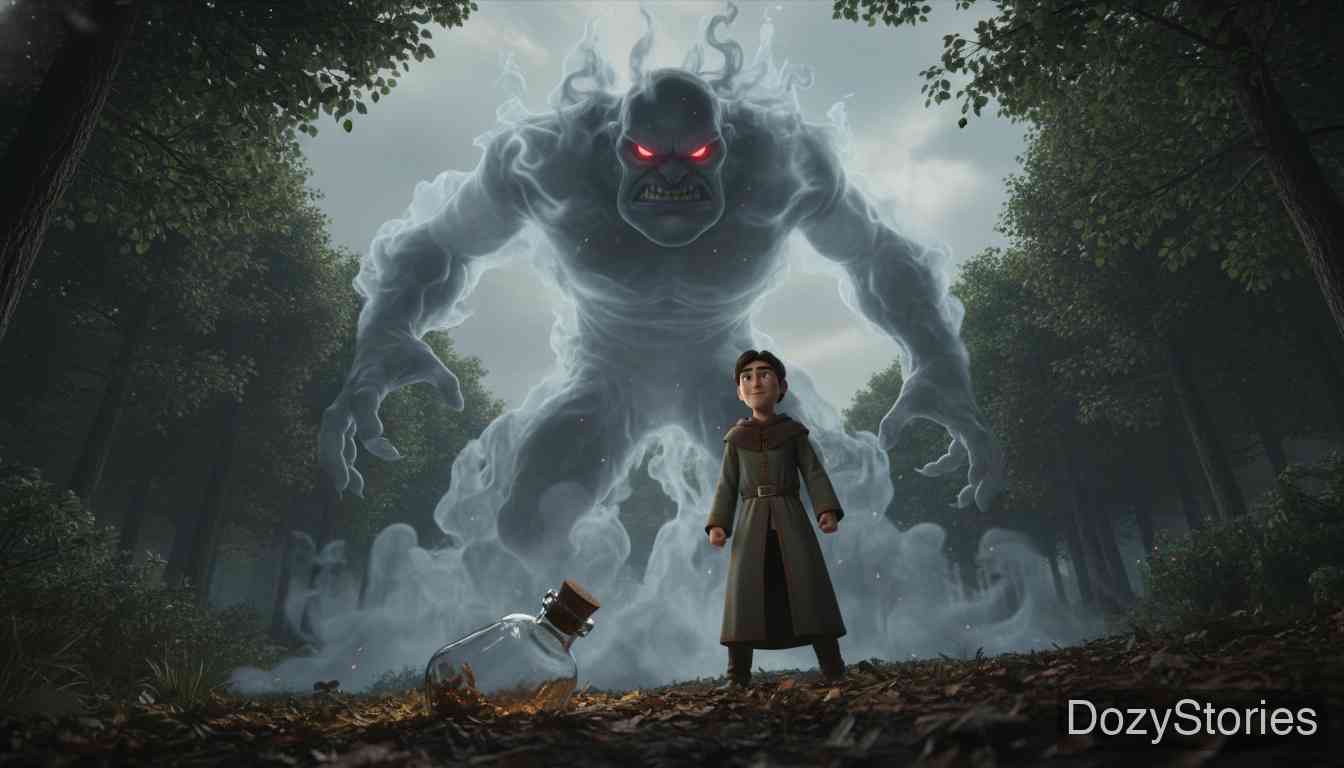
Immediately a spirit ascended from it and began to grow. It grew so fast that within a few moments a horrible fellow, half as big as the tree, was standing there before the student. "Do you know," he cried in an terrifying voice, "what your reward is for having let me out?" - "No," replied the student fearlessly. "How should I know that?"
"Then I will tell you," shouted the spirit. "I must break your neck for it." - "You should have said so sooner," answered the student, "for then I would have left you shut up inside. However, my head is going to stay where it is until more people have been consulted." - "More people here, more people there," shouted the spirit. "You shall have the reward you have earned. Do you think that I was shut up there for such a long time as a favor? No, it was a punishment. I am the mighty Mercurius. I must break the neck of whomsoever releases me."
"Calm down," answered the student. "Not so fast. First I must know that you really were shut up in that little bottle, and that you are the right spirit. If you can indeed get inside again, then I will believe it, and you may do with me whatsoever you want." The spirit said arrogantly, "that is an easy trick," pulling himself in and making himself as thin and short as he had been before. He then crept back into the opening and through the neck of the bottle. He was scarcely inside when the student pushed the cork back into the bottle, and threw it back where it had been among the oak roots. And thus the spirit was deceived.
The student was about to return to his father, but the spirit cried out pitifully, "Oh, do let me out. Oh, do let me out." - "No," answered the student, "not a second time. I will not release a person who once tried to kill me, now that I have captured him again." - "If you will set me free," cried the spirit, "I will give you so much that you will have enough for all the days of your life."
"No," answered the student, "you would cheat me like you tried to the first time." - "You are giving away your own good fortune," said the spirit. "I will not harm you, but instead will reward you richly." The student thought, "I will venture it. Perhaps he will keep his word, and in any event he will not get the better of me."
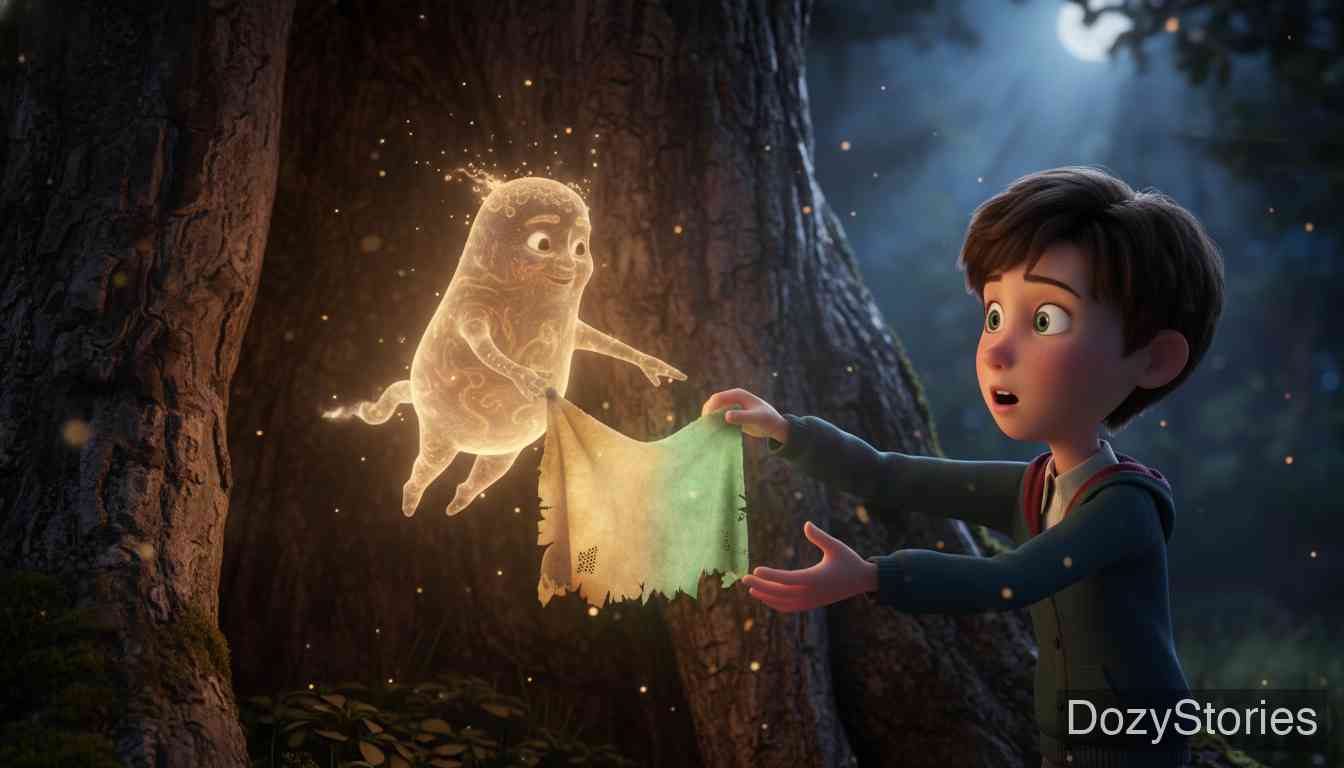
So he pulled out the cork, and the spirit rose up from the bottle as before, and extended himself, becoming as large as a giant. "Now you shall have your reward," he said, handing the student a little rag that looked just like a small bandage. He said, "If you rub a wound with the one end, it will heal, and if you rub steel or iron with the other end, it will turn into silver."
"I have to try that," said the student. He went to a tree, scratched the bark with his ax, then rubbed it with the one end of the bandage. It immediately closed together and was healed. "Now it is all right," he said to the spirit, "and we can part." The spirit thanked him for having freed him, and the student thanked the spirit for the present, and returned to his father.
"Where have you been running about?" said the father. "Why have you forgotten your work? I said that you wouldn't get anything done." - "Don't be concerned, father. I will make it up." - "Make it up indeed," said the father angrily. "Don't bother." - "Just watch, father. I will soon cut down that tree there and make it crash."
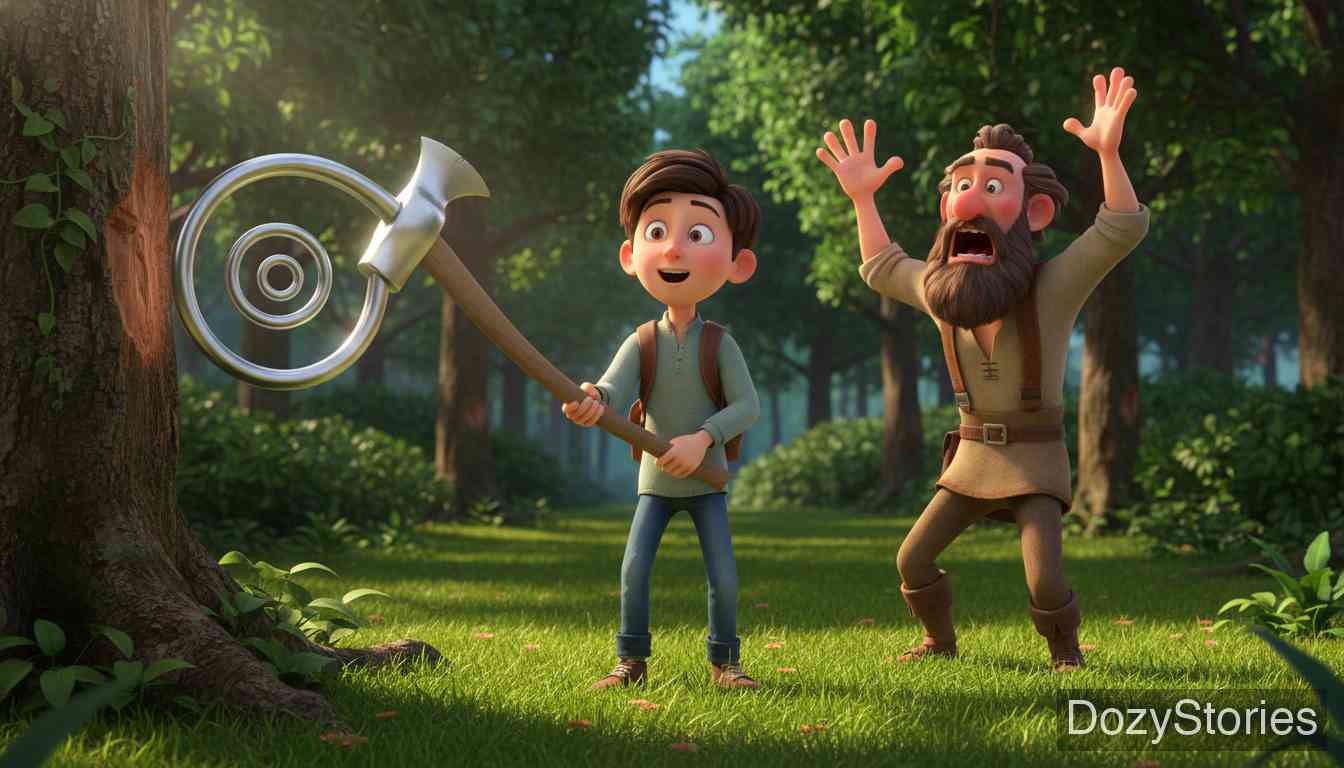
Then he took his bandage, rubbed the ax with it, and struck a mighty blow, but because the iron had turned into silver, the cutting edge bent back on itself. "Hey, father, just look what a bad ax you've given me. It is all bent out of shape." The father was shocked and said, "Oh, what have you done! Now I'll have to pay for the ax, and I don't know what with. That is all the good I have from your work."
"Don't get angry," said the son, "I will pay for the ax." - "Oh, you blockhead," cried the father, "How will you pay for it? You have nothing but what I give you. You have students' tricks stuck in your head, but you don't know anything about chopping wood."
After a little while the student said, "Father, I can't work any longer after all. Let's quit for the day." - "Now then," he answered, "do you think I can stand around with my hands in my pockets like you? I have to go on working, but you may head for home." - "Father, I am here in these woods for the first time. I don't know my way alone. Please go with me." His anger had now subsided, so the father at last let himself be talked into going home with him.
There he said to the son, "Go and sell the damaged ax and see what you can get for it. I will have to earn the difference, in order to pay the neighbor." The son picked up the ax and took it into town to a goldsmith, who tested it, weighed it, and then said, "It is worth four hundred talers. I do not have that much cash with me."
The student said, "Give me what you have. I will lend you the rest." The goldsmith gave him three hundred talers and owed him one hundred. Then the student went home and said, "Father, I have some money. Go and ask the neighbor what he wants for the ax." - "I already know," answered the old man. "One taler, six groschens." - "Then give him two talers, twelve groschens. That is double its worth and is plenty. See, I have more than enough money."
Then he gave the father a hundred talers, saying, "You shall never need anything. Live just like you want to." - "My goodness," said the old man. "Where did you get all that money?" Then the son told him everything that had happened, and how by trusting in his luck he had made such a catch. With the money that was left he went back to the university and continued his studies, and because he could heal all wounds with his bandage he became the most famous doctor in the whole world.

Vocabulary from "The Spirit in the Glass Bottle"

12 key words from this story with definitions and original context sentences for language learners.

cheerfulB1
/ˈtʃɪərfl/adj.

Happy and in good spirits.

高兴的;愉快的;兴致好的。

The son helped his father and was quite cheerful and full of energy.

儿子帮着父亲,心情愉快,充满活力。

pittanceC1
/ˈpɪtns/n.

A very small amount of money.

微薄的钱;一点点收入或积蓄。

The little pittance that the father had saved was all spent, and the boy had to return home to him.

父亲攒下的微薄积蓄全都花光了,儿子不得不回家回到父亲身边。

spanB2
/spæn/v.

To reach or stretch all the way across something.

横跨;(用手臂)合抱;跨越。

He came to an enormous oak that was certainly many hundred years old, and that five men would not have been able to span.

他来到一棵巨大的橡树前,这树肯定有几百岁了,五个人也合抱不过来。

muffledC1
/ˈmʌfld/adj.

(Of a sound) not clear, as if coming from behind something.

(声音)低沉的;沉闷模糊的;被捂住般的。

He became aware of someone calling out with a muffled voice, "Let me out. Let me out."

他察觉到有人用闷闷的声音喊道:'放我出去。放我出去。'

corkB2
/kɔːrk/n.

A stopper for closing a bottle, often made from soft bark.

瓶塞;软木塞。

The student, thinking no evil, pulled the cork from the bottle.

学生没想什么坏事,拔掉了瓶塞。

fearlesslyB2
/ˈfɪərləsli/adv.

In a brave way, without being afraid.

无所畏惧地;勇敢地。

"No," replied the student fearlessly. "How should I know that?"

'不知道,'学生无畏地回答,'我怎么会知道那个?'

arrogantlyC1
/ˈærəɡəntli/adv.

In a proud way, as if you think you are better than others.

傲慢地;自大地。

The spirit said arrogantly, "that is an easy trick," pulling himself in and making himself as thin and short as he had been before.

妖怪傲慢地说,'这是个简单的把戏,'于是把身子缩回去,变得像以前一样细小。

deceived(deceive)B2
/dɪˈsiːvd/v.

Tricked someone into believing something that is not true.

欺骗;蒙骗。

He was scarcely inside when the student pushed the cork back into the bottle, and threw it back where it had been among the oak roots. And thus the spirit was deceived.

它刚进去,学生就把瓶塞塞回瓶子,把它扔回原来的橡树根下。就这样妖怪被骗了。

ventureC1
/ˈventʃər/v.

To risk doing something, even though it may be dangerous.

冒险尝试;大胆去做。

The student thought, "I will venture it. Perhaps he will keep his word, and in any event he will not get the better of me."

学生想:'我还是冒险试试吧。也许它会守信用,反正它也占不了我的便宜。'

bandageB1
/ˈbændɪdʒ/n.

A strip of cloth used to cover and protect a wound.

绷带;裹伤布。

"Now you shall have your reward," he said, handing the student a little rag that looked just like a small bandage.

'现在你会得到你的奖赏,'它说着递给学生一块小破布,看起来就像一小块绷带。

subsided(subside)C1
/səbˈsaɪdɪd/v.

Became less strong or calmed down.

(情绪、风浪等)平息;减弱;消退。

His anger had now subsided, so the father at last let himself be talked into going home with him.

父亲的怒气消了,最后被说服和他一起回家了。

goldsmithB2
/ˈɡəʊldsmɪθ/n.

A person who makes things out of gold and other precious metals.

金匠;金饰工匠。

The son picked up the ax and took it into town to a goldsmith, who tested it, weighed it.

儿子拿起斧子进城去找金匠,金匠测试并称重后……

Reading Together & Learning More

The Moral

Against an opponent stronger than yourself, wits and a cool head often work better than force; and knowledge paired with kindness leads, in the end, to a better fate.

Educational Value

Encourages children to think under pressure and stay calm in danger, and to feel the value of knowledge and gratitude; through the cross-cultural 'spirit in the bottle' motif it also widens their view of world storytelling.

Tips for Parents

Try telling the 'trick the spirit back into the bottle' ruse alongside the fisherman's tale from the Arabian Nights; then discuss: once the young man has money, who does he think of first?

Talk About It

  1. Threatened with having his neck broken, the young man does not fight but finds a way to trick the spirit back into the bottle. Where do you think his cleverness shows most?
  2. Freeing the spirit the first time nearly cost his life, yet he decides to free it again. Is that brave, or too risky? Would you have let it out?
  3. The father first mocks his son for 'only being able to study, not work.' By the end of the story, was the studying worth anything?
  4. With more money than he can spend, the young man's first acts are to repay the neighbor double and provide for his father. What does this tell you about him?
  5. If you had that magic rag—one end to heal wounds, the other to turn iron into silver—what would you use it for first?