The Sparrow and the Dog
Introduction
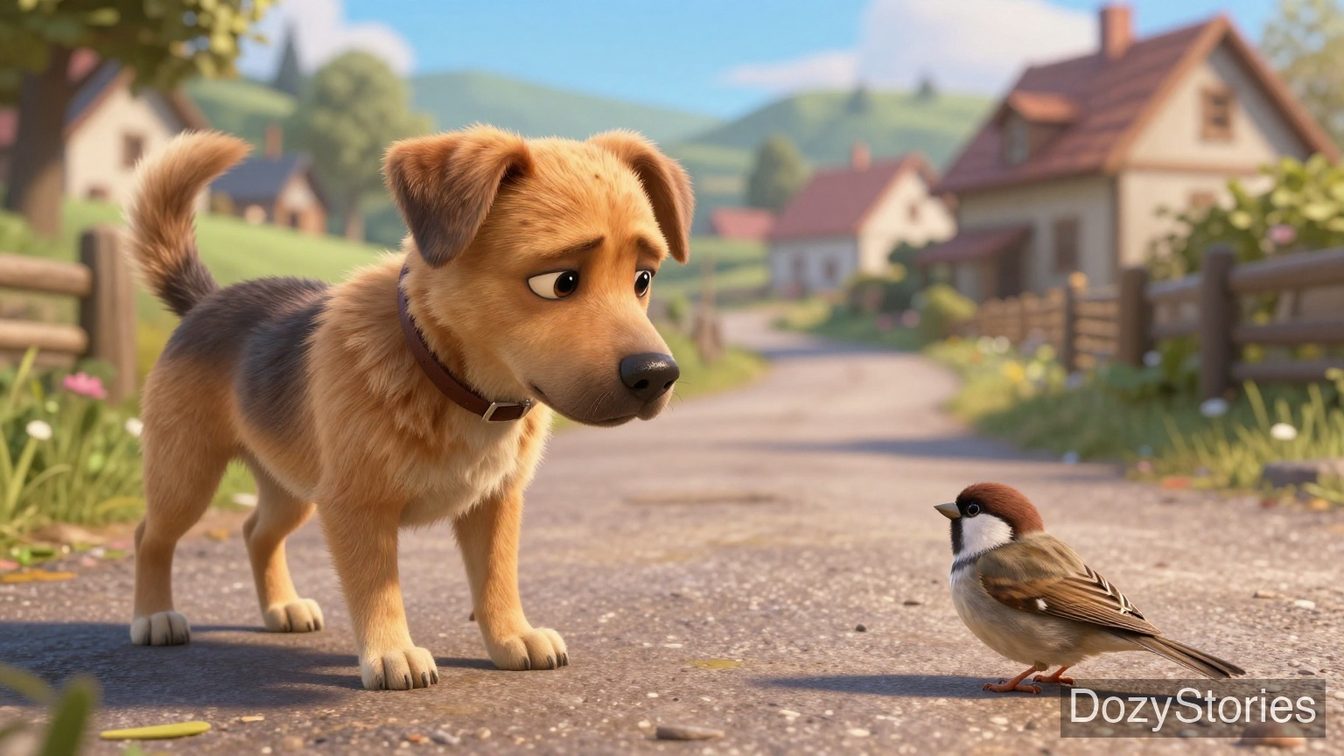
Why retell a Brothers Grimm tale in the manner of a Chinese fable? Because the two traditions grow from the same root: both believe that a story should teach, and that a short tale told well can carry more weight than a long speech. 'The Sparrow and the Dog' fits this tradition almost perfectly. It is a story of the weak against the strong, and in Chinese folk wisdom the weak do not win by force but by rightness. The sparrow is tiny and the carter is brutal, yet every swing of his axe costs him one of his own horses. 'Evil deeds will be repaid,' says the old proverb, and this tale shows it step by step. Readers of the original Grimm version will remember its dark refrain; in this retelling the same refrain becomes the patient, cold promise that bad luck has only just begun. One more thing is worth noting: this is among the darkest tales in the whole collection, and later retellings for children have often softened or cut its ending. We keep it whole, because a fable that hides its teeth teaches nothing. Read it slowly, and let your child watch how each wrong choice locks the next one in place; the question of whether revenge is ever truly right is one they can grow into.
Vocabulary from "The Sparrow and the Dog"
12 key words from this story with definitions and original context sentences for language learners.
Very hungry; suffering because there is no food.
饿极了的;正在挨饿的。
I am nearly starving, and I cannot find a single bite of food.
我快要饿死了,连一口吃的也寻不到。
Almost not; only just.
几乎不;简直不。
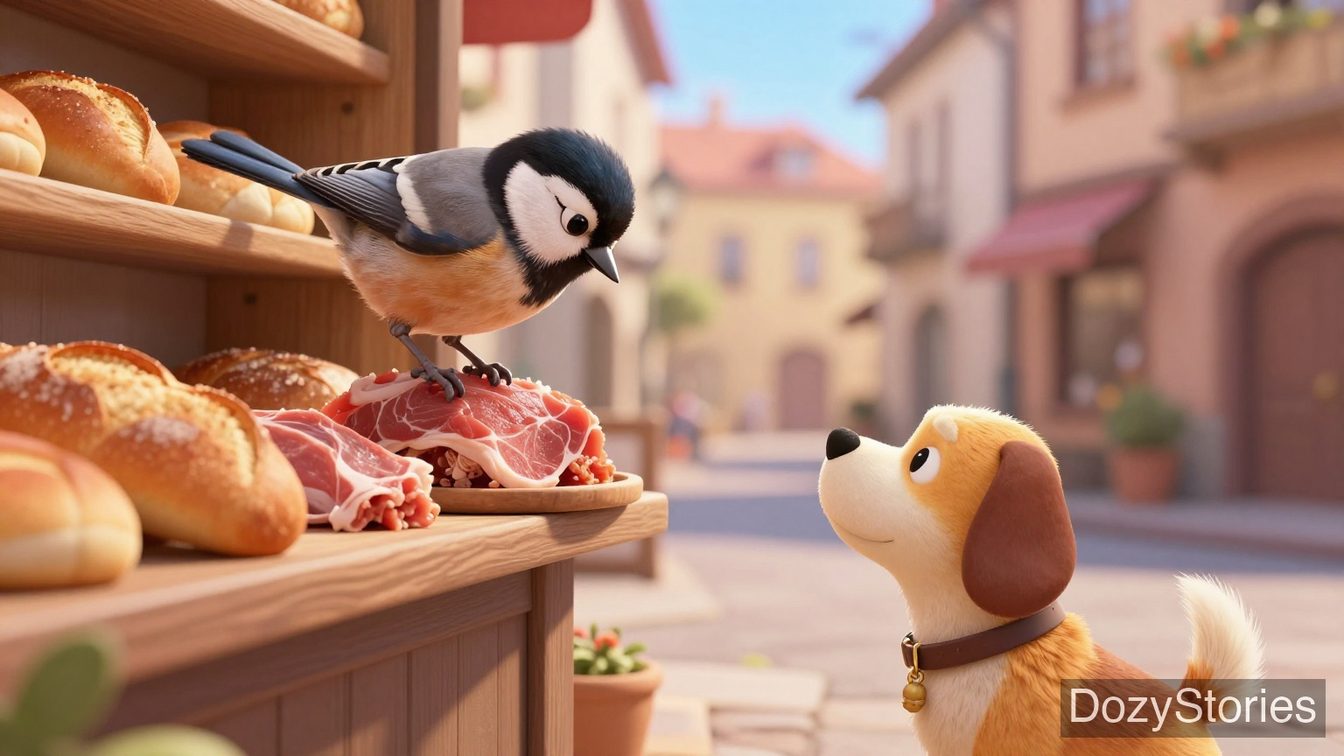
The dog hardly believed her, but he followed her into the town.
狗将信将疑,跟着她进了镇子。
Took hold of something suddenly and firmly.
一把抓住;猛地叼起。
The dog seized it at once, ran to a corner, and ate it all up.
狗一口叼起,躲到墙角,三口两口吃了个精光。
A short sleep, usually in the daytime.
小睡;打盹。
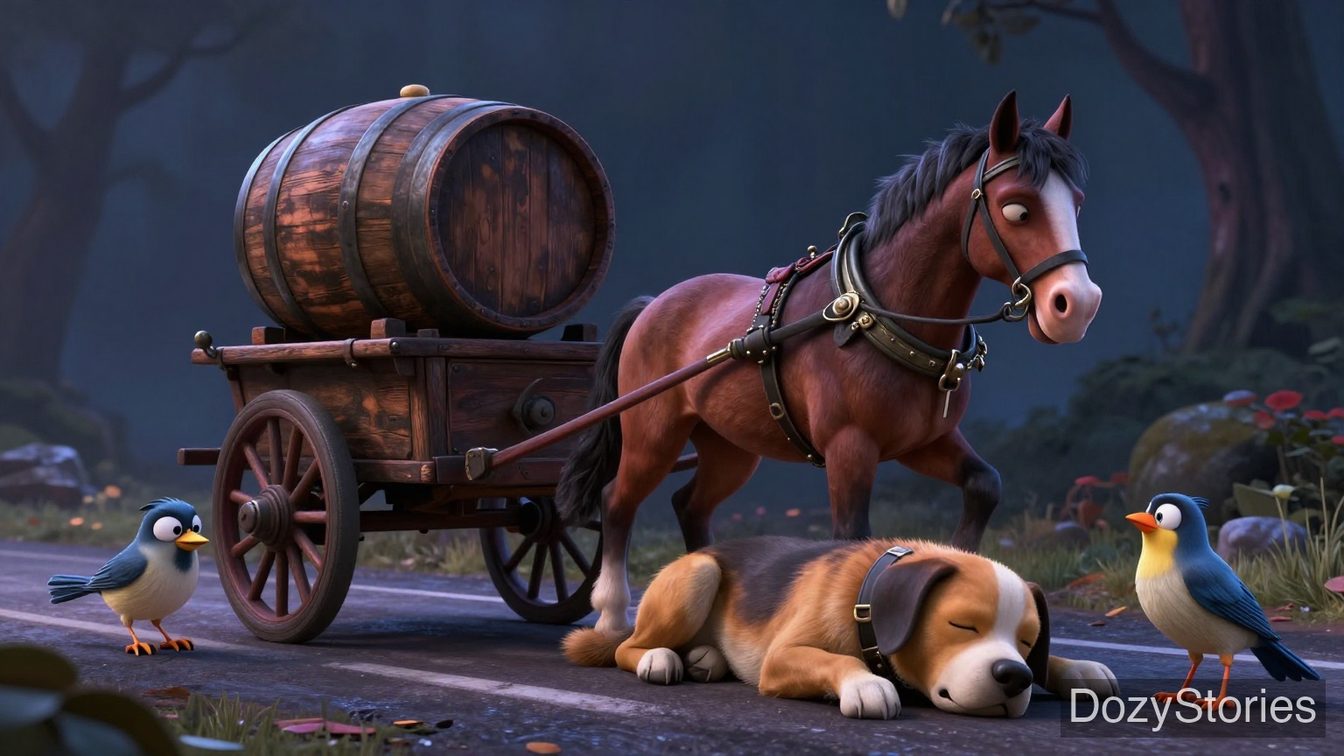
I should like to take a nap here by the road.
我乏得很,想在这路边打个盹。
A long thin rope with a handle, used to make horses go faster.
鞭子。
He cracked his whip, and the cart rolled over the sleeping dog.
说着甩了个响鞭,大车便从熟睡的狗身上碾了过去。
Wanting to hurt others; not kind at all.
残忍的;狠心的。
You cruel man! You have killed my friend!
你这狠心的人!你害死了我的朋友!
A big wooden barrel used for holding wine.
大木桶;酒桶。
She slipped under the cover of the cart and pecked at the stopper of a wine cask until it came loose.
她悄悄钻进车篷底下,对着酒桶的塞子啄了又啄,直到把塞子啄松。
A person who is very unlucky or miserable.
可怜虫;倒霉鬼。
What an unlucky wretch I am!
我真是个倒霉鬼!
Very strong anger that is hard to control.
盛怒;狂怒。
The carter flew into a rage.
赶车的大怒。
In a silent, bad-tempered way.
闷闷不乐地;愠怒地。
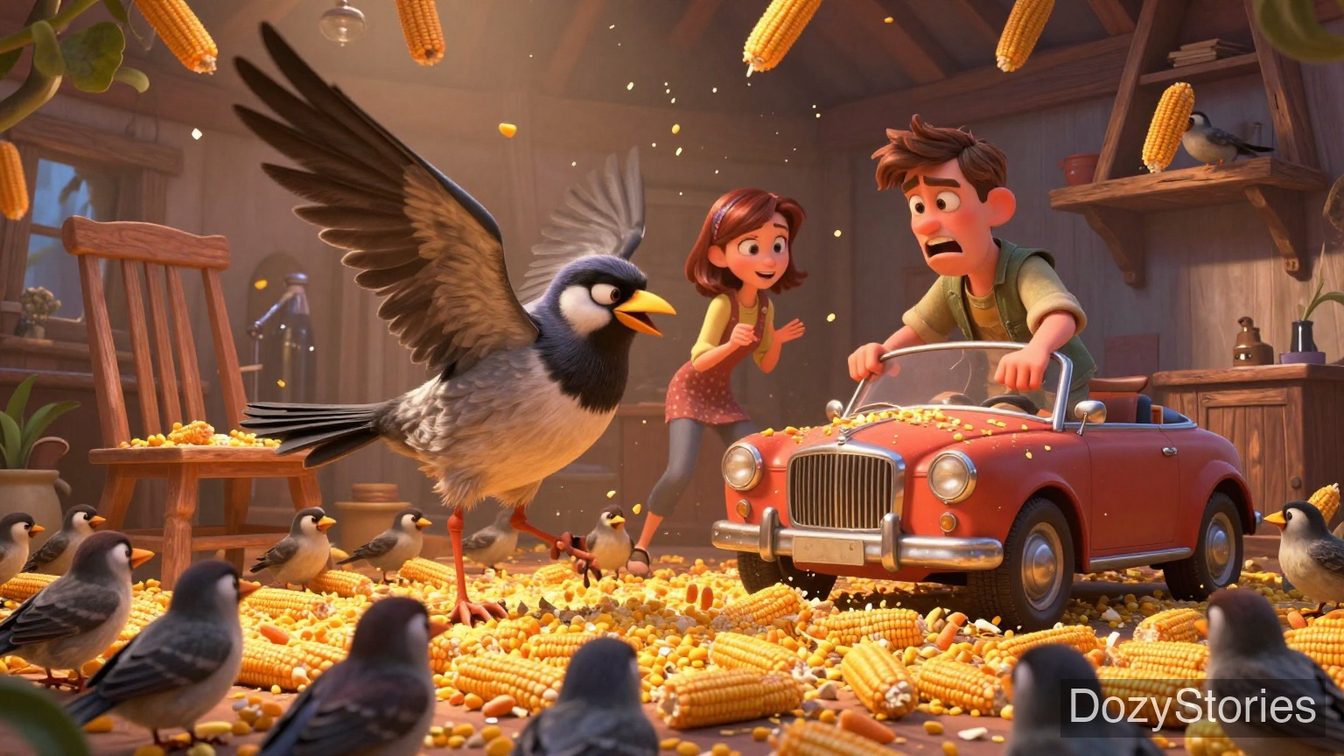
The carter, seeing that all his goods were lost, went down to the kitchen, where he sat sullenly in the chimney corner.
赶车的眼看着家当败尽,垂头丧气地走进厨房,闷坐在炉角里。
The direction in which you point or throw something.
瞄准的方向;准头。
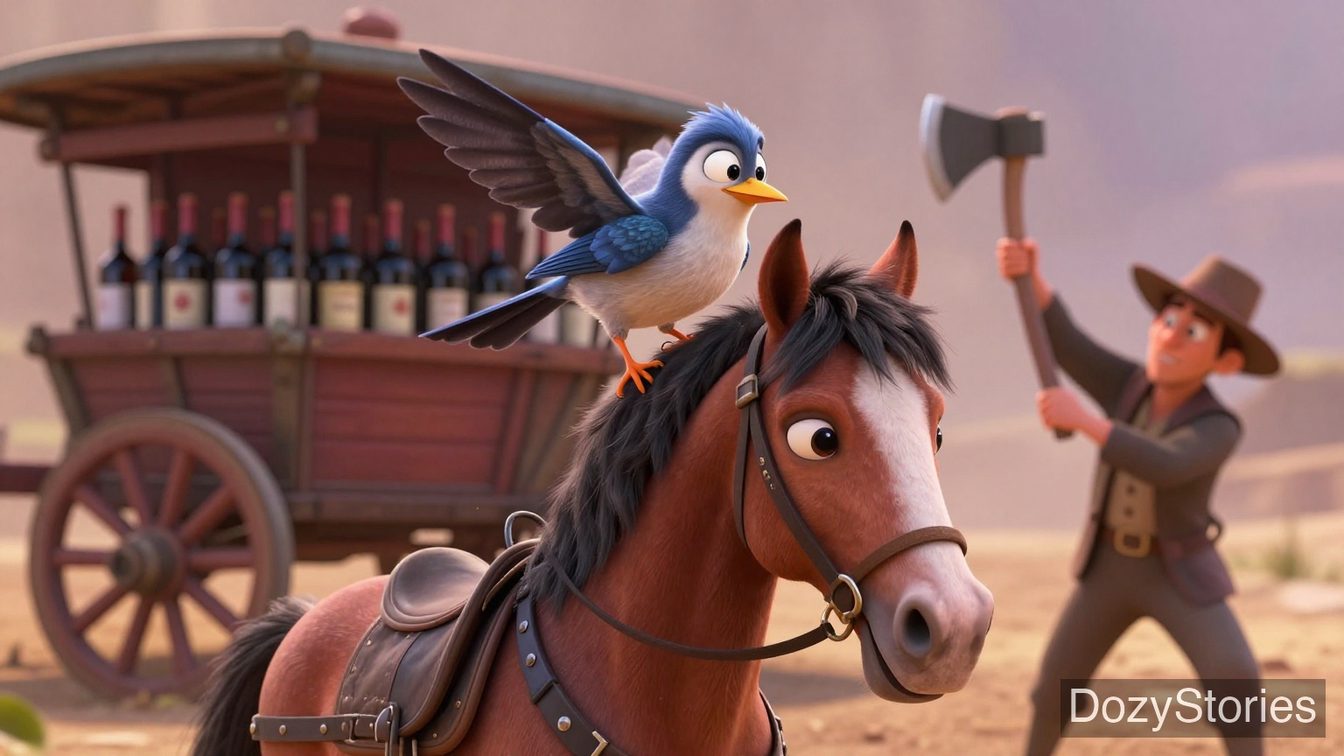
She swung the hatchet, but her aim was wide.
妻子一斧砍下,却砍偏了。
Stood up on its back legs, as a frightened horse does.
(马)人立而起。
The horse was frightened, and he reared up and kicked.
马受了惊,人立起来,又踢又跳。
Reading Together & Learning More
The Moral
Every deed bears its own fruit. Those who sow cruelty will one day reap it, and even the smallest creature can still bring about justice.
Educational Value
This fable teaches two things: cruelty always carries its own punishment, and loyalty is not measured by size, for the tiny sparrow repays kindness and stands by her friend to the end. It also gives children a first taste of how a fable tells a lesson through a story.
Tips for Parents
This tale includes harsh scenes, so please read it as a cause-and-effect fable and do not dwell on the violence. Keep your child's eye on the carter, who knows he is wrong yet never once admits it. After reading, ask: if the carter had said sorry even once along the way, could the ending have been different? That one question opens the way to talking about regret and consequence.
Talk About It
- The sparrow is only as big as your hand, yet she feeds a dog she has never met and later stands up for her friend. What is the most valuable thing about her, in your eyes?
- Every time the carter swings his hatchet at the sparrow, one of his own horses falls down dead. Someone says, 'What really killed him was not the sparrow, but himself.' Do you agree? Why or why not?
- If the carter had stopped his cart and turned aside when the sparrow first warned him, could everything that followed have been avoided? Why do you think he chose not to stop?
- The sparrow's revenge finally cost the carter his life. Was she 'seeking justice' or 'going too far'? If you were the sparrow, how far would you go before you stopped?
- The tale ends with the lesson that good and evil each reap their own reward. Can you think of a small example from your own life where a choice brought its own result?