The Poor Man and the Rich Man

Introduction

'The Poor Man and the Rich Man' (folklorists number it ATU 750A) is an old tale of 'hospitality rewarded.' Its premise—that the Lord walks the earth disguised as an ordinary traveler, knocking for a night's lodging, and so reads the goodness or hardness of people's hearts—is an ancient motif found the world over. Its most famous cousin is the Greek myth of Baucis and Philemon: when Zeus and Hermes wander in the guise of poor travelers seeking shelter, only one poor old couple opens their door, and so the kind pair are richly rewarded while their cold neighbors are punished (as told in Ovid's Metamorphoses). The clever turn in Grimm's version is to use 'three wishes' to reveal two kinds of heart: the kind poor couple ask only for eternal happiness, lifelong health, and daily bread—content and free of greed; while the rich man, granted the same three wishes, squanders them one by one through greed, temper, and envy—first cursing his own horse to death in a fit of anger, then jealously wishing his wife stuck to the saddle, and finally having to spend his last wish just to free her, ending with nothing. This is the classic shape of the 'three wishes' comic fable: the wishes are wasted not by bad luck but by the wisher's own character. As you read, ask your child: with the very same three wishes, why does the poor man grow happier with each one while the rich man grows more wretched?

Font Size
1 / 22
Stopped
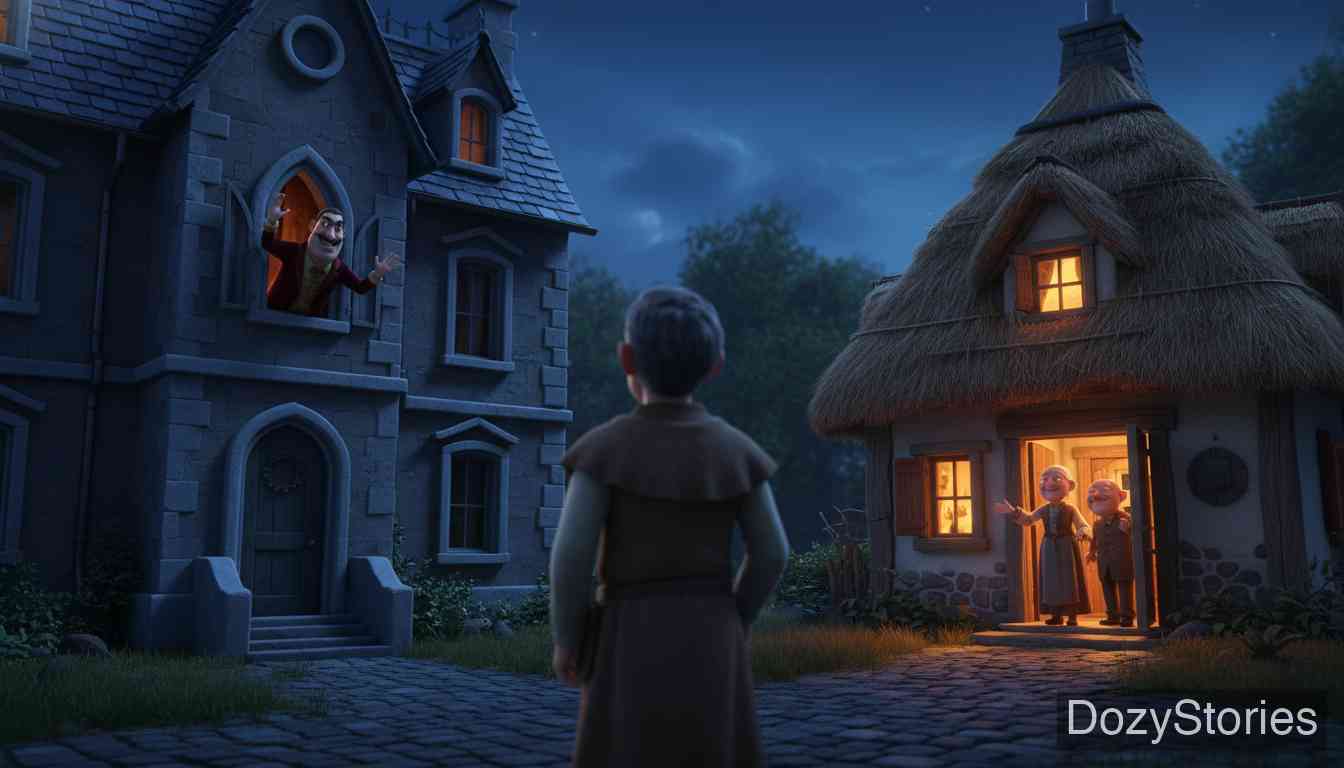
The Poor Man and the Rich Man - While walking on earth, the Lord seeks lodging. A wealthy man arrogantly refuses him, but a poor couple across the way welcomes him warmly, sharing their meager food and giving up their own bed. - Scene Illustration 1
While walking on earth, the Lord seeks lodging. A wealthy man arrogantly refuses him, but a poor couple across the way welcomes him warmly, sharing their meager food and giving up their own bed.
In olden days the Lord still walked about this earth among ordinary people. It happened once that he was tired, and darkness overtook him before he could reach an inn. On the road ahead of him stood two houses facing each other. One was large and handsome, the other small and poor. The large one belonged to a rich man, the small one to a poor man.
"I shall be no burden to the rich man," thought the Lord. "I shall spend the night with him." When the rich man heard the knock at his door, he opened his window and asked the stranger what he wanted. "I ask only for a night's lodging," the Lord answered.
The rich man looked the traveller over from head to foot. The Lord wore plain clothes and did not look like a man with money in his pocket. The rich man shook his head. "No, I cannot take you in. My rooms are full of herbs and seeds. If I lodged everyone who knocked at my door, I should soon be out begging myself. Look elsewhere for a bed." With that the window banged shut, and the Lord was left standing in the road.
So the Lord turned his back on the rich man, crossed over to the small house and knocked. He had hardly done so before the poor man opened the little door and asked the traveller to come in. "Spend the night here. It is dark already," he said. "You cannot go any further tonight." This pleased the Lord, and in he went.
The poor man's wife shook hands with him and made him welcome. He was to make himself at home, she said, and put up with what little they had. They had not much to offer, but whatever they had they would give him gladly. Then she put the potatoes on the fire. While they boiled she milked the goat, so that there might be a little milk to go with them.
Once the cloth was laid, the Lord took his place with the man and his wife. Their plain food tasted good to him, for the faces round that table were happy ones. When supper was over and bedtime came, the woman took her husband aside. "Listen, dear husband, let us make up a bed of straw for ourselves tonight. Then the poor traveller can sleep in our bed and get a proper rest. He has been walking the whole day, and that wears a man out."
"With all my heart," he answered. "I shall go and offer it to him." He went to the stranger and asked whether he would object to taking their bed and giving his tired limbs a proper rest. The Lord was unwilling to take the bed from the two old people. But they would not be satisfied until at last he gave in. He lay down in their bed, and they lay on straw on the floor.
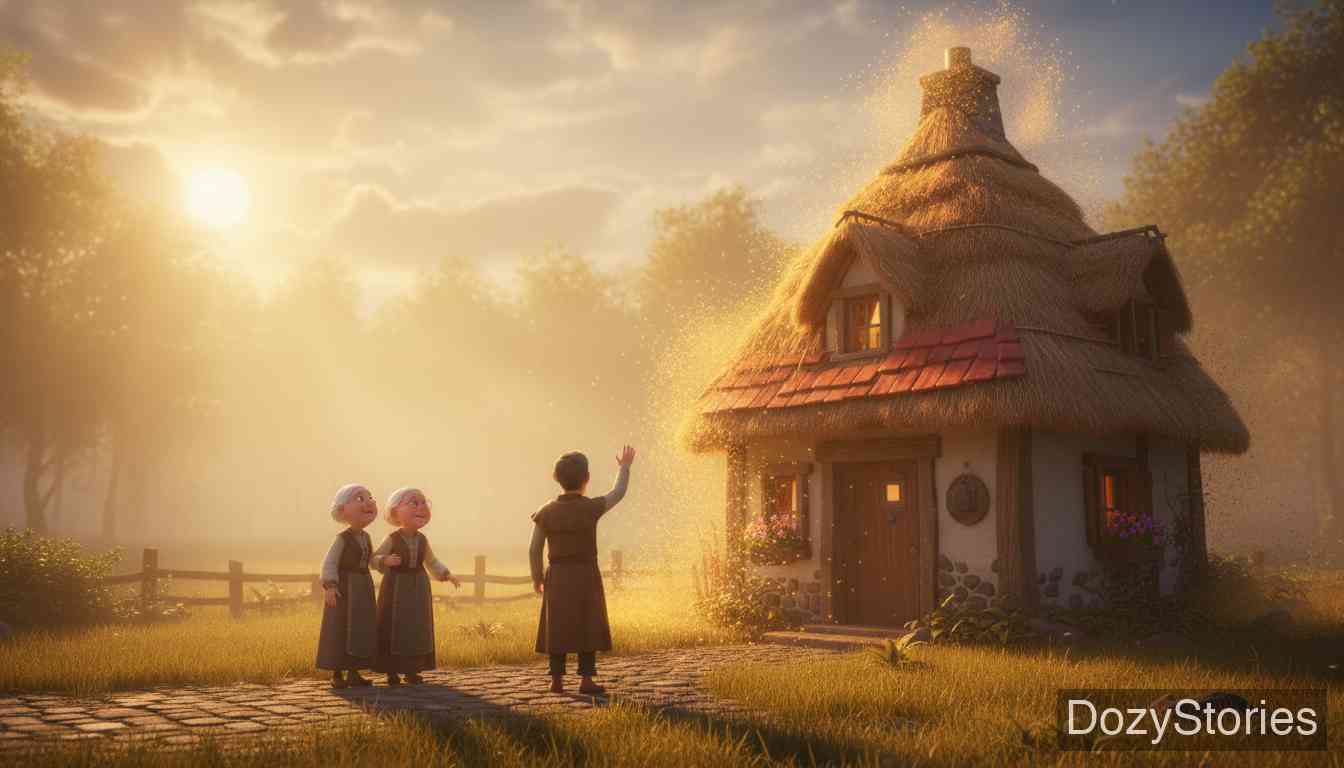
The Poor Man and the Rich Man - The next morning, to reward the poor couple's kindness, the Lord grants them three wishes. They ask for eternal happiness, health and daily bread, and a new house to replace their old hut. - Scene Illustration 2
The next morning, to reward the poor couple's kindness, the Lord grants them three wishes. They ask for eternal happiness, health and daily bread, and a new house to replace their old hut.
Next morning they were up before daybreak and made their guest as good a breakfast as they could. When the sun shone in at the little window, the Lord got up. He ate with them again and then made ready to go on his way.
But as he stood in the doorway he turned round. "Kind and good as you have been, you may name three wishes for yourselves," he said, "and I shall grant them." Then the man said, "What should I wish for but everlasting happiness? And that the two of us may be healthy as long as we live, and have our daily bread. As for the third wish, I cannot think what to ask."
"Would you wish for a new house instead of this old one?" the Lord said to him. — "Oh yes," said the man. "If I may have that too, I should like it very much." So the Lord granted his wish and turned their old house into a new one. Then he gave them his blessing once more and went on his way.
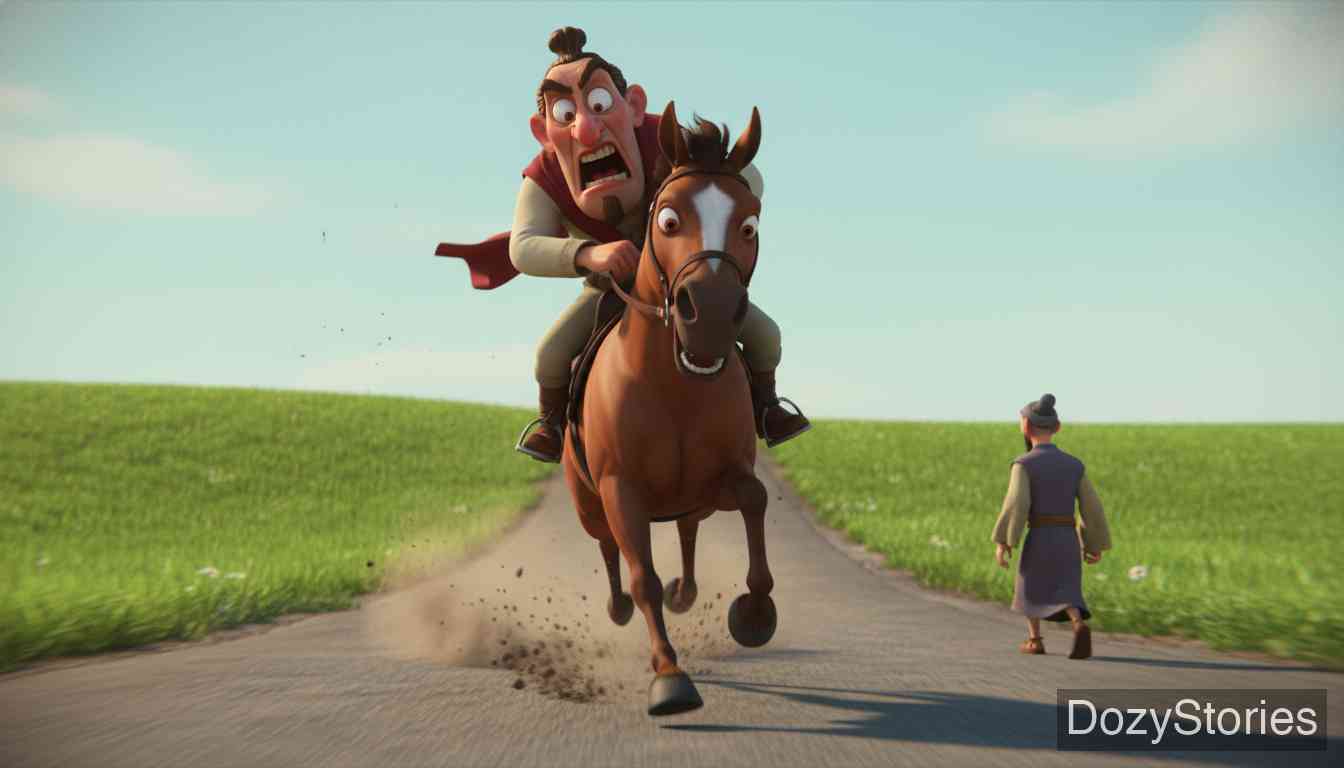
The Poor Man and the Rich Man - The rich man awakes to find the poor hut replaced by a new house. Regretting his refusal, he chases the Lord on horseback at his wife's urging and insists on also getting three wishes, which the Lord reluctantly grants. - Scene Illustration 3
The rich man awakes to find the poor hut replaced by a new house. Regretting his refusal, he chases the Lord on horseback at his wife's urging and insists on also getting three wishes, which the Lord reluctantly grants.
The sun was high when the rich man got up. He leaned out of his window and looked across the road. Where the old hut used to stand there was now a clean new house with red tiles and bright windows. He was astonished, and called his wife. "Tell me, what can have happened? Last night there was a wretched little hut standing there, and today there is a fine new house. Run over and find out how it came about."
So his wife went and asked the poor man. "Yesterday evening a traveller came here and asked for a night's lodging," he told her. "This morning, when he took his leave of us, he granted us three wishes. Everlasting happiness, health in this life together with our daily bread — and, best of all, this fine new house where our old hut once stood."
When the rich man's wife heard this, she hurried back and told her husband how it had all come about. "I could tear myself to pieces," said the man. "If only I had known! That very traveller came to our door asking for a bed, and I turned him away." — "Quick, onto your horse," said his wife. "There is still time to overtake him, and then you must ask for three wishes of your own."
The rich man took this good advice, galloped off, and before long he had overtaken the Lord. He spoke to him gently and pleasantly, begging him not to hold it against him that the door had not opened at once. He had been hunting for the front-door key, he said, and by the time he found it the stranger had walked on. Should he ever pass this way again, he must be sure to lodge with him. "Very well," said the Lord. "If I ever come back, I shall do so."
Then the rich man asked whether he too might wish for three things, as his neighbour had done. The Lord said that he might, but that it would do him no good and he would be better off wishing for nothing at all. The rich man, however, was sure he could easily name something to add to his happiness, if only he knew the wish would be granted. So the Lord said to him, "Ride home, then, and the three wishes you make shall be fulfilled."
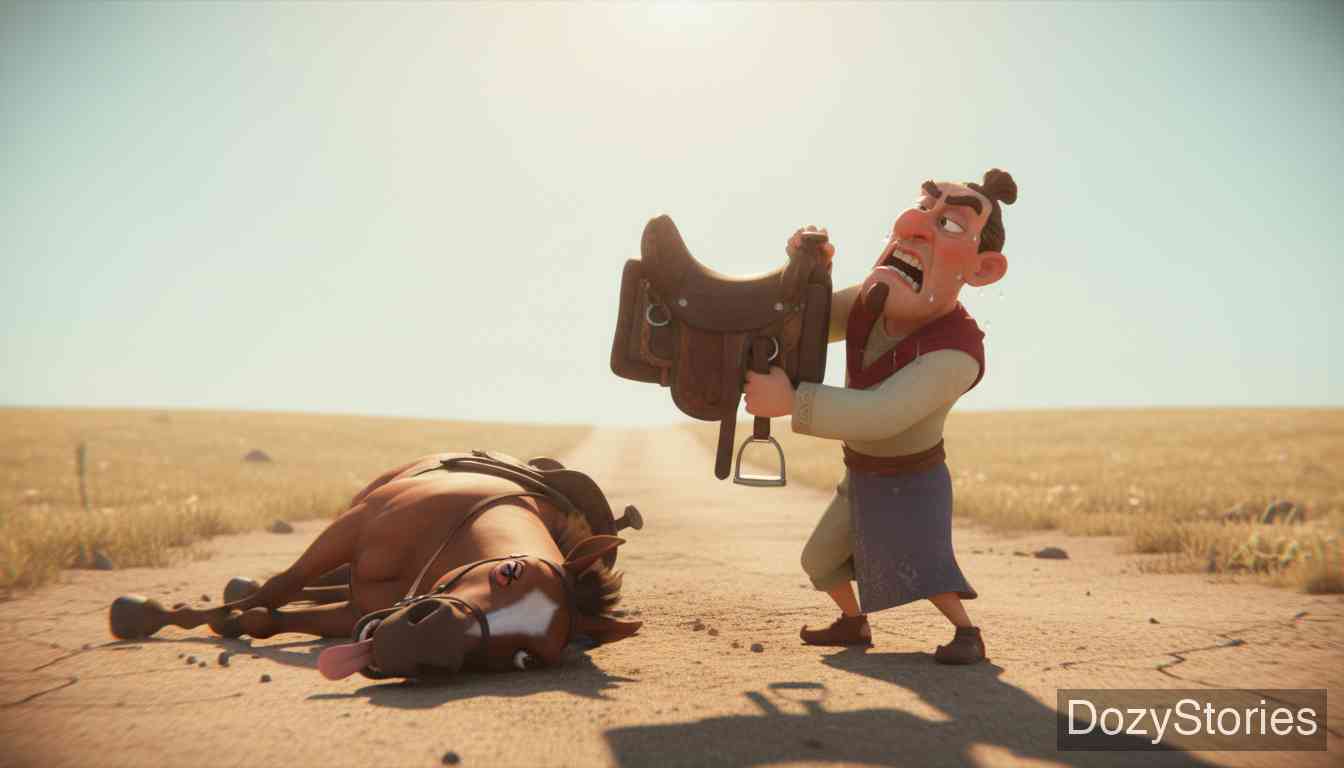
The Poor Man and the Rich Man - On his ride home, the rich man cannot concentrate on his wishes due to his skittish horse. Impatiently, he wishes the horse's neck broken, and instantly his first wish comes true. The horse dies, and he is forced to carry the saddle on foot. - Scene Illustration 4
On his ride home, the rich man cannot concentrate on his wishes due to his skittish horse. Impatiently, he wishes the horse's neck broken, and instantly his first wish comes true. The horse dies, and he is forced to carry the saddle on foot.
Having got what he was after, the rich man rode for home, turning over in his mind what he ought to wish for. Deep in thought he let the bridle drop, and the horse began to caper about. His thoughts were broken into again and again, and he could not collect them at all. He patted its neck and said, "Gently, Lisa," but the horse only started fresh tricks.
At last he lost his temper and cried out impatiently, "I wish your neck were broken!" The words were hardly out of his mouth before the horse dropped to the ground, and there it lay dead and never stirred again. And so his first wish was fulfilled. Miserly by nature, he could not bear to leave good harness lying in the road. He cut it free, hoisted it onto his back, and went on afoot. "I still have two wishes left," he said, and comforted himself with that.
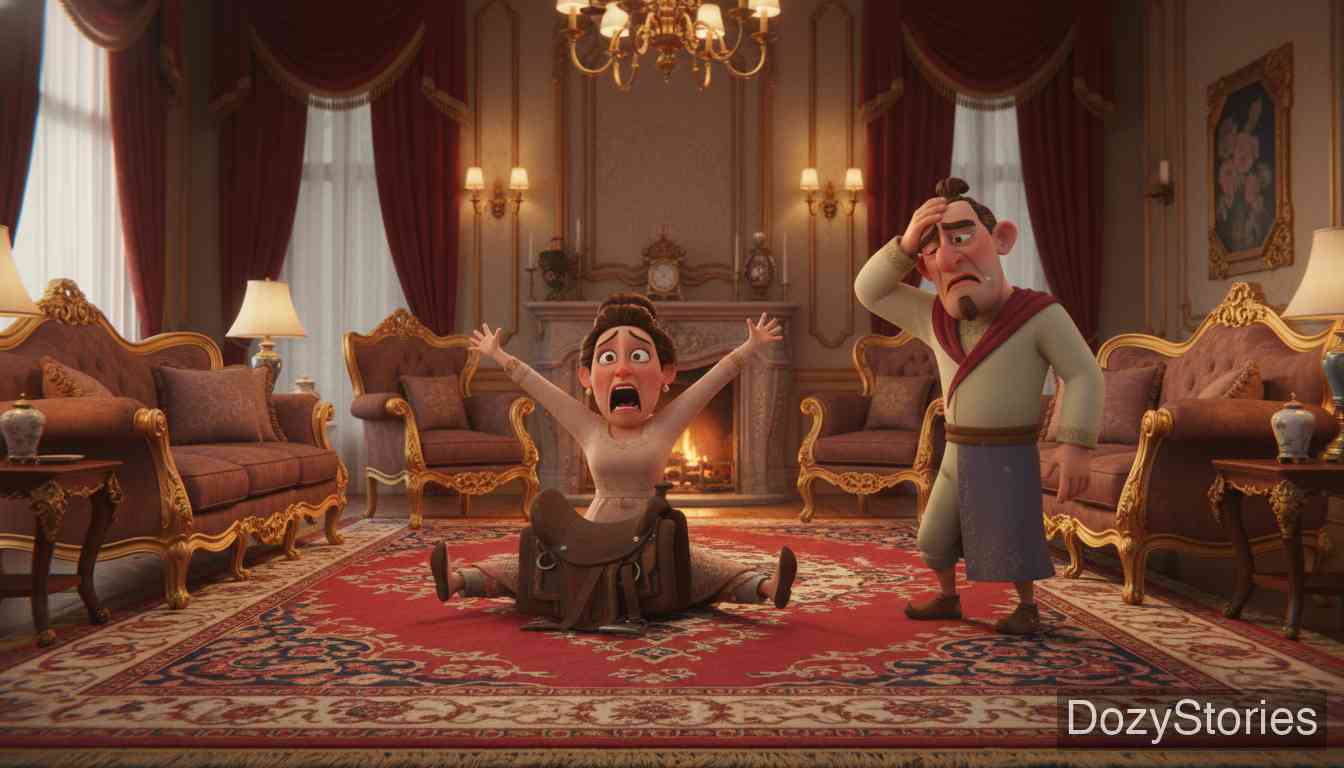
The Poor Man and the Rich Man - Hot and tired, the rich man envies his wife's comfort at home and rashly wishes she were stuck on the saddle. Finding her glued to it upon his return, he is forced to use his final wish to free her, gaining nothing but trouble and loss. - Scene Illustration 5
Hot and tired, the rich man envies his wife's comfort at home and rashly wishes she were stuck on the saddle. Finding her glued to it upon his return, he is forced to use his final wish to free her, gaining nothing but trouble and loss.
Now, as he trudged slowly through the sand with the noonday sun burning down on him, he grew hot-tempered and cross. The saddle hurt his back, and he still had no idea what to wish for. "If I wished for all the riches in the world," he said to himself, "I should still think of other things afterwards. I know that already. I shall arrange matters so that there is nothing left for me to wish for at all."
Then he sighed. "Ah, if only I were that Bavarian peasant who also had three wishes granted, and knew perfectly well what to do with them. First he wished for a great deal of beer, second for as much beer as he could drink. And third, a whole barrel of beer thrown in."
Many a time he thought he had hit on the right wish, and then it seemed too small after all. Then it came into his head what an easy life his wife had, sitting at home in a cool room and enjoying herself. This vexed him thoroughly. Before he knew what he was saying, out it came: "I wish she were the one stuck fast on this saddle, instead of my hauling it about on my back."
The last word was scarcely out before the saddle vanished from his back, and he understood that his second wish was used up. Now the heat came down on him in earnest. He began to run. He wanted to be alone in his own room at home, to think of something truly grand for his last wish. But when he got there and opened the parlour door, there in the middle of the room sat his wife upon the saddle. She was weeping and complaining, with no way at all of getting down.
"Do bear it," he said, "and I shall wish for all the riches on earth for you. Only stay where you are." But she called him a fool. "What good will all the riches on earth do me if I have to sit on this saddle? You wished me onto it, so you must help me off it." So, willing or not, he had to spend his third wish setting her free of the saddle. It was granted at once. So he gained nothing by it but vexation, trouble, hard words and the loss of his horse. The poor people, meanwhile, lived on quietly and happily to the end of their days.

Vocabulary from "The Poor Man and the Rich Man"

12 key words from this story with definitions and original context sentences for language learners.

lodgingB2
/ˈlɒdʒɪŋ/n.

A place to stay for a short time.

住处;借宿。

"I ask only for a night's lodging," the Lord answered.

"我只求借宿一晚,"主答道。

herbs(herb)B2
/hɜːbz/n.

Plants used for medicine or for flavouring food.

草药;香草。

"No, I cannot take you in. My rooms are full of herbs and seeds."

"不成,我留不下你。我屋里堆满了草药和种子。"

wretchedC1
/ˈretʃɪd/adj.

In a very poor or miserable condition.

破烂的;凄惨的。

Last night there was a wretched little hut standing there, and today there is a fine new house.

昨晚那儿还是间破烂的小棚屋,今天就成了漂亮的新房子。

wearyB2
/ˈwɪəri/adj.

Very tired.

疲惫的。

He has been walking the whole day, and that wears a man out.

他走了整整一天,那可是很熬人的。

everlastingB2
/ˌevəˈlɑːstɪŋ/adj.

Lasting for ever.

永久的;永恒的。

Then the man said, "What should I wish for but everlasting happiness?"

那男人便说:"除了永久的福分,我还能求什么呢?"

astonished(astonish)B2
/əˈstɒnɪʃt/adj.

Very surprised.

惊讶的。

He was astonished, and called his wife.

他吃惊得很,喊来妻子。

galloped(gallop)B2
/ˈɡæləpt/v.

Rode a horse at its fastest speed.

策马飞奔。

The rich man took this good advice, galloped off, and before long he had overtaken the Lord.

富人听了这好主意,纵马飞奔而去,不多时就追上了主。

bridleC1
/ˈbraɪdl/n.

The straps put on a horse's head for steering it.

马笼头;缰绳。

Deep in thought he let the bridle drop, and the horse began to caper about.

他一边想一边松了缰绳,马便撒起欢来。

caperC1
/ˈkeɪpə/v.

To jump and skip about in a lively way.

蹦跳;撒欢。

He patted its neck and said, "Gently, Lisa," but the horse only started fresh tricks.

他拍拍马脖子说:"老实点,丽莎,"可那马反倒又耍起新花样。

harnessC1
/ˈhɑːnɪs/n.

The straps and fittings put on a horse for riding or pulling.

马具;挽具。

Miserly by nature, he could not bear to leave good harness lying in the road.

他生性吝啬,舍不得把那副好鞍具丢在路上。

miserlyC1
/ˈmaɪzəli/adj.

Unwilling to spend or give anything away.

吝啬的。

Miserly by nature, he could not bear to leave good harness lying in the road.

他生性吝啬,舍不得把那副好鞍具丢在路上。

vexationC1
/vekˈseɪʃn/n.

The feeling of being annoyed and frustrated.

烦恼;懊恼。

So he gained nothing by it but vexation, trouble, hard words and the loss of his horse.

他到头来什么也没落着,只落了一肚子气、一身麻烦、一顿数落,外加折了一匹马。

Reading Together & Learning More

The Moral

True wealth lies in kindness and contentment, not in a full purse; greed and a bad temper can ruin even the good fortune already in one's hands.

Educational Value

Leads children to value hospitality, contentment, and kindness while seeing the cost of greed and temper; the paired 'three wishes' structure is also good practice in reasoning and making choices.

Tips for Parents

When you reach the rich man's wishes, pause and ask your child, 'If it were you, how would you use the three wishes?'—letting them feel why it matters to think before deciding.

Talk About It

  1. The rich man and the poor man both received the same traveler, but treated him completely differently. What do you think the Lord really wanted to see?
  2. The poor couple ask only for health, daily bread, and happiness—no gold or treasure. Do you think that wish is foolish, or wise?
  3. The rich man's three wishes are ruined not by bad luck but by his own temper. Can you explain, one by one, how each goes wrong?
  4. If you were given three wishes right now, what would you ask for? Would you worry about wishing wrongly?
  5. The story says the poor couple lived happily and peacefully, while the rich man got 'nothing but trouble and loss.' What is it that truly makes a person happy?