The Pack of Ragamuffins

Introduction

'The Pack of Ragamuffins' is the 10th tale in Grimm, and its German title, 'Das Lumpengesindel,' is itself an insult — roughly 'a bunch of ragged riffraff, a worthless rabble' — so from the title alone the Brothers Grimm are already curling their lip at this cast. It belongs to the same lively family as 'The Bremen Town Musicians' and 'Herr Korbes,' which we've read: a group of mismatched characters (cock, hen, duck, pin, and needle) band together on the road and cause a ruckus at their lodging. But this one has a telling twist — in 'Bremen,' the old cast-off animals are lovable underdogs we genuinely root for; here, the heroes are a pack of selfish, greedy, ungrateful little rogues: they steal nuts, refuse to pull the cart, eat and lodge for free, and on their way out hide a needle in the chair-cushion and an eggshell in the hearth, all to spite the kind host who took them in. So it teaches no grand lesson; it is pure dark comedy of 'watching scoundrels run riot.' Worth noting: the booby-traps at the end — the pin scratching a face, the eggshell popping into an eye, the needle hidden in a seat — are almost identical to those in 'Herr Korbes,' showing that this 'pin, eggshell, and hearth' prank-combo was a ready-made old script in German folk comedy. Read it for exactly that absurd delight of 'knowing full well they're no good, yet laughing all the same.'

Font Size
Image Layout
1 / 24
Stopped
The cock once said to the hen, "It is now the time when our nuts are ripe, so let us go to the hill together and for once eat our fill before the squirrel takes them all away."
"Yes," replied the hen, "come, we will have some pleasure together."
Then they went away to the hill, and on it was a bright day they stayed till evening.
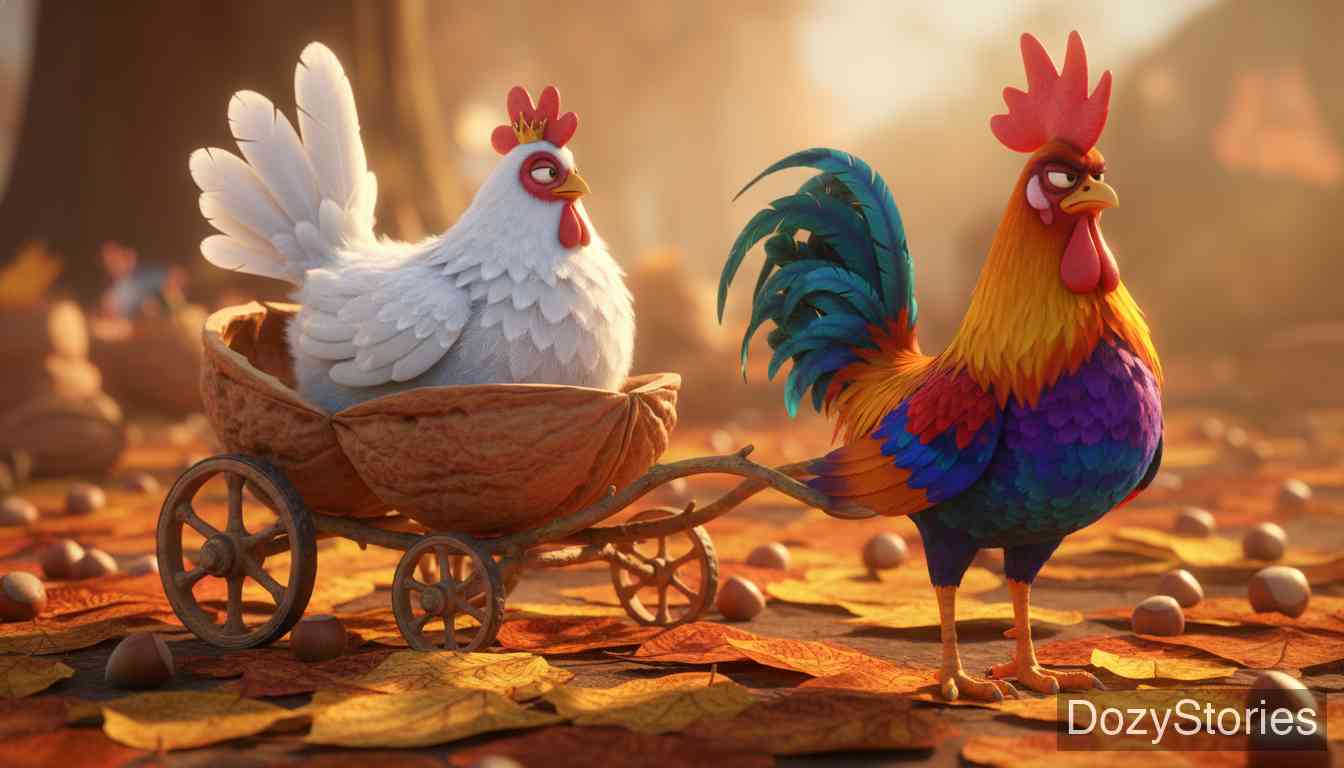
Now I do not know whether it was that they had eaten till they were too fat, or whether they had become proud, but they would not go home on foot, and the cock had to build a little carriage of nut-shells.
When it was ready, the little hen seated herself in it and said to the cock, "Thou canst just harness thyself to it."
"I like that!" said the cock, "I would rather go home on foot than let myself be harnessed to it; no, that is not our bargain. I do not mind being coachman and sitting on the box, but drag it myself I will not."
As they were thus disputing, a duck quacked to them, "You thieving folks, who bade you go to my nut-hill? Well, you shall suffer for it!" and ran with open beak at the cock.
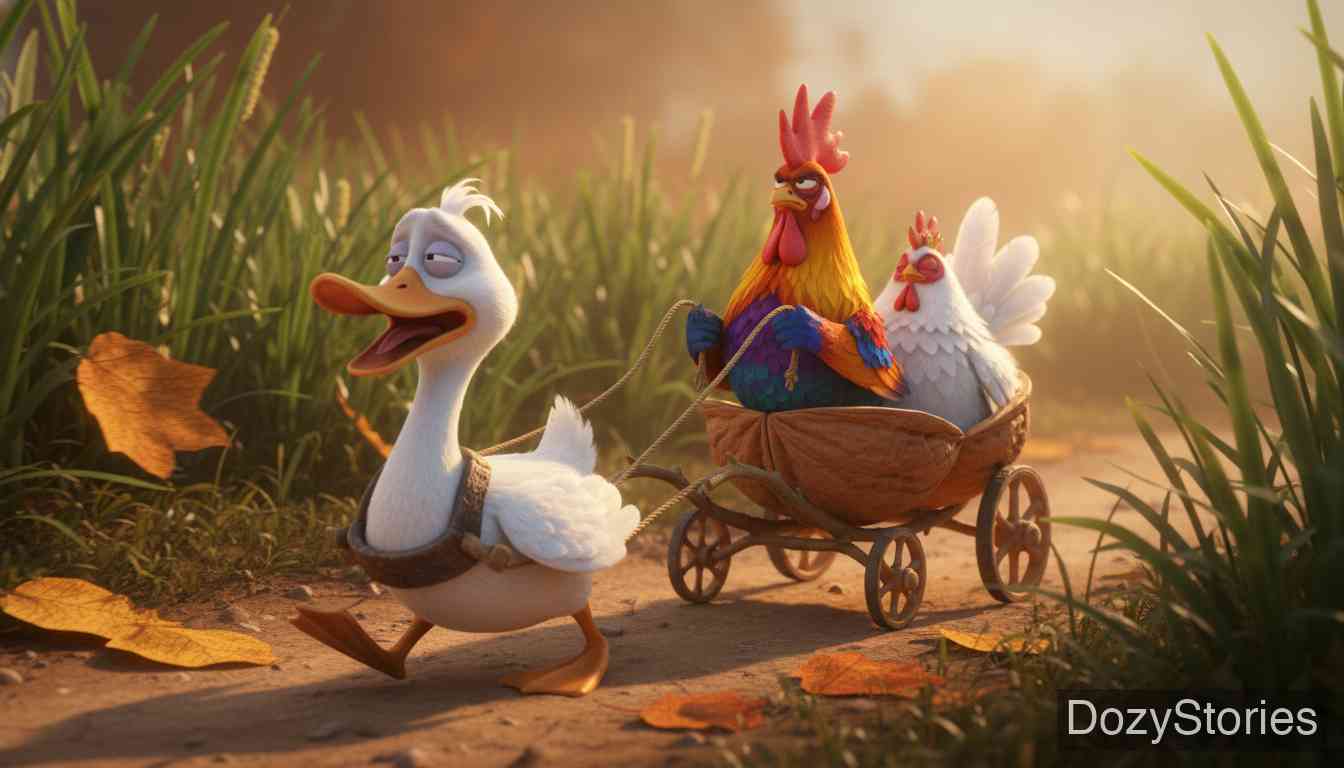
But the cock also was not idle, and fell boldly on the duck, and at last wounded her so with his spurs that she also begged for mercy, and willingly let herself be harnessed to the carriage as a punishment.
The little cock now seated himself on the box and was coachman, and thereupon they went off in a gallop, with "Duck, go as fast as thou canst."
When they had driven a part of the way they met two foot-passengers, a pin and a needle.
They cried, "Stop! stop!" and said that it would soon be as dark as pitch, and then they could not go a step further, and that it was so dirty on the road, and asked if they could not get into the carriage for a while.
They had been at the tailor's public- house by the gate, and had stayed too long over the beer.
As they were thin people, who did not take up much room, the cock let them both get in, but they had to promise him and his little hen not to step on their feet.
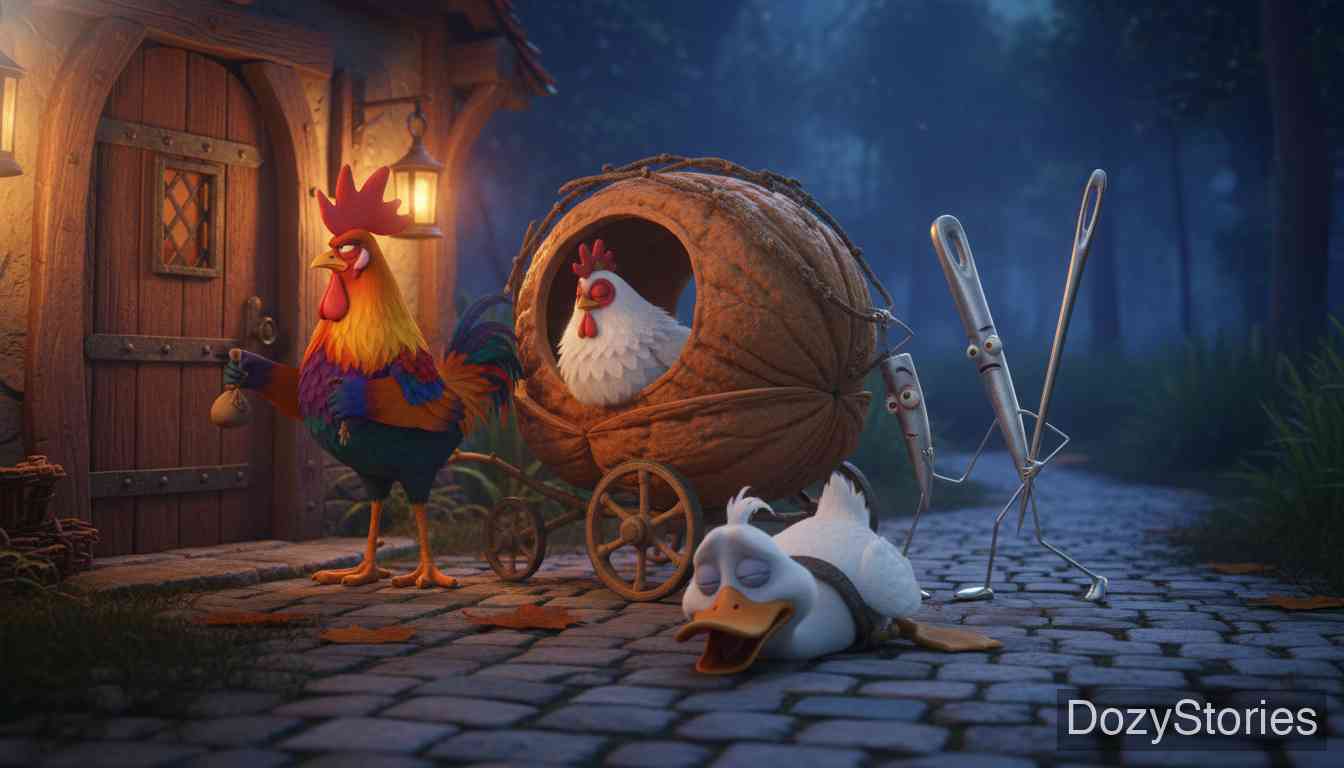
Late in the evening they came to an inn, and as they did not like to go further by night, and as the duck also was not strong on her feet, and fell from one side to the other, they went in.
The host at first made many objections, his house was already full, besides he thought they could not be very distinguished persons; but at last, as they made pleasant speeches, and told him that he should have the egg which the little hen has laid on the way, and should likewise keep the duck, which laid one every day, he at length said that they might stay the night.
And now they had themselves well served, and feasted and rioted.
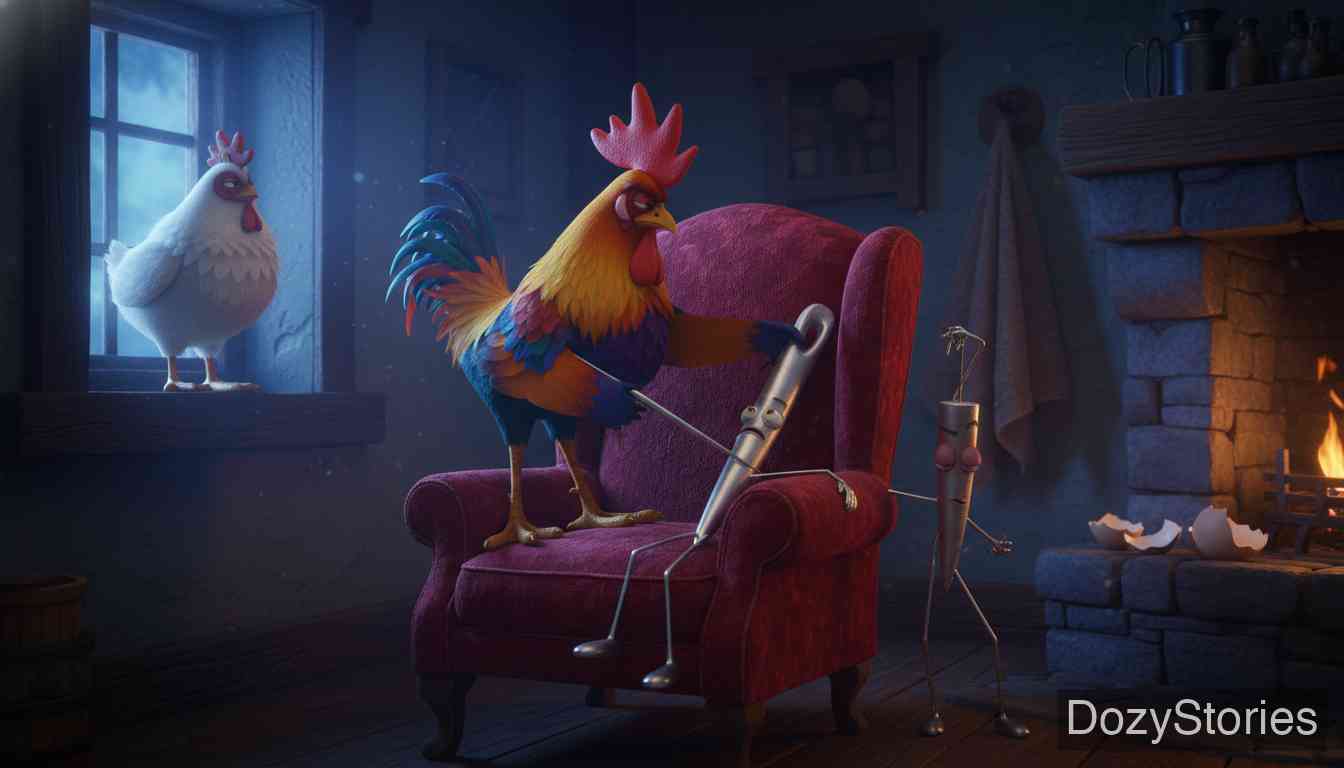
Early in the morning, when day was breaking, and every one was asleep, the cock awoke the hen, brought the egg, pecked it open, and they ate it together, but they threw the shell on the hearth.
Then they went to the needle which was still asleep, took it by the head and stuck it into the cushion of the landlord's chair, and put the pin in his towel, and at the last without more ado they flew away over the heath.
The duck who liked to sleep in the open air and had stayed in the yard, heard them going away, made herself merry and found a stream, down which she swam, which was a much quicker way of travelling than being harnessed to a carriage.
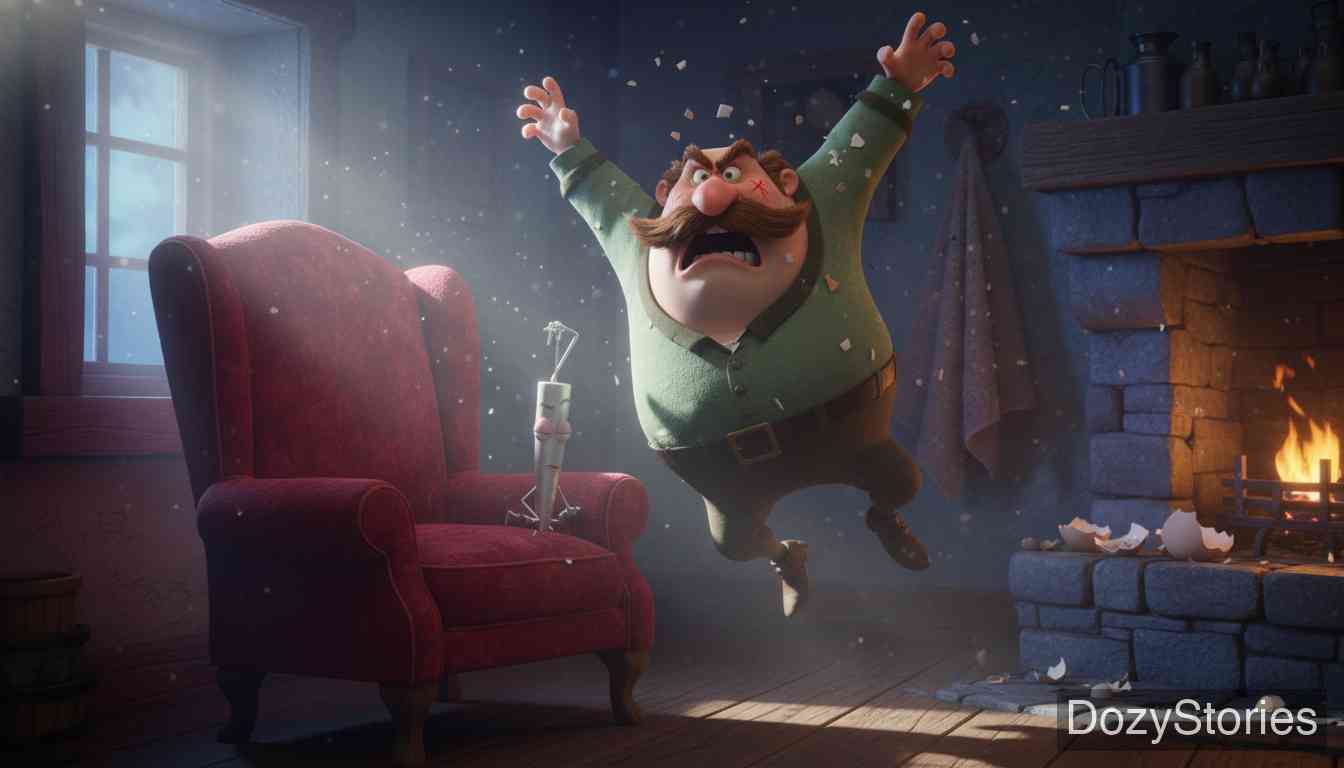
The host did not get out of bed for two hours after this; he washed himself and wanted to dry himself, then the pin went over his face and made a red streak from one ear to the other.
After this he went into the kitchen and wanted to light a pipe, but when he came to the hearth the egg-shell darted into his eyes.
"This morning everything attacks my head, " said he, and angrily sat down on his grandfather's chair, but he quickly started up again and cried, "Woe is me, " for the needle had pricked him still worse than the pin, and not in the head.
Now he was thoroughly angry, and suspected the guests who had come so late the night before, and when he went and looked about for them, they were gone.
Then he made a vow to take no more ragamuffins into his house, for they consume much, pay for nothing, and play mischievous tricks into the bargain by way of gratitude.

Vocabulary from "The Pack of Ragamuffins"

12 key words from this story with definitions and original context sentences for language learners.

ripeB1
/raɪp/adj.

Fully grown and ready to be eaten or gathered.

成熟的;熟的。

It is now the time when our nuts are ripe, so let us go to the hill together.

现在正是坚果成熟的时候,咱们一起去山上吧。

harnessC1
/ˈhɑːnɪs/v.

To fasten an animal to a cart with straps so it can pull it.

给(牲口)套上挽具(以便拉车)。

The little hen seated herself in it and said to the cock, "Thou canst just harness thyself to it."

小母鸡坐了进去,对公鸡说:"你可以把自己套在车前面拉车。"

coachmanC1
/ˈkəʊtʃmən/n.

A man who drives a horse-drawn carriage.

马车车夫。

I do not mind being coachman and sitting on the box, but drag it myself I will not.

我不介意当车夫坐在驾座上,但要我自己拉车,我绝不干。

quacked(quack)B1
/kwækt/v.

Made the sound a duck makes.

(鸭子)嘎嘎叫。

A duck quacked to them, "You thieving folks, who bade you go to my nut-hill?"

一只鸭子向他们嘎嘎叫道:"你们这些小偷,谁让你们到我的坚果山上来的?"

beakB1
/biːk/n.

The hard, pointed mouth of a bird.

鸟喙;鸟嘴。

"Well, you shall suffer for it!" and ran with open beak at the cock.

"哼,你们要为此付出代价!"说着它张开嘴向公鸡冲了过去。

mercyB2
/ˈmɜːsi/n.

Kindness shown by not harming someone you have power over.

仁慈;饶恕。

At last he wounded her so with his spurs that she also begged for mercy.

他用他的距猛刺鸭子,疼得鸭子只好求饶。

gallopB2
/ˈɡæləp/n.

The fastest running pace of a horse.

疾驰;飞奔。

The little cock now seated himself on the box and was coachman, and thereupon they went off in a gallop.

小公鸡这下坐在了驾座上当起了车夫,随即他们便飞奔而去。

innB1
/ɪn/n.

A small hotel or pub, especially an old one.

小旅店;客栈。

Late in the evening they came to an inn, and as they did not like to go further by night, they went in.

深夜里,他们来到一家旅店,因为他们不想在夜里继续赶路。

objections(objection)B2
/əbˈdʒekʃnz/n.

Reasons for disagreeing with or opposing something.

反对(意见);异议。

The host at first made many objections, his house was already full.

店主起初提了许多反对意见,说他的房子已经住满了。

feasted(feast)B2
/ˈfiːstɪd/v.

Ate and drank a large amount with great enjoyment.

尽情吃喝;大吃大喝。

And now they had themselves well served, and feasted and rioted.

这下他们让自己得到了很好的款待,大肆吃喝喧闹。

hearthC1
/hɑːθ/n.

The floor of a fireplace, and the area in front of it.

壁炉;炉灶。

They ate it together, but they threw the shell on the hearth.

两人一起把它吃了,却把蛋壳扔到了炉灶里。

ragamuffins(ragamuffin)C1
/ˈræɡəmʌfɪnz/n.

People, often ragged, who behave in a rough or disreputable way.

衣衫褴褛的人;流氓无赖。

Then he made a vow to take no more ragamuffins into his house, for they consume much, pay for nothing.

于是他发誓,以后再也不让这种流氓无赖进他的屋子。

Reading Together & Learning More

The Moral

This tale is unlike most fairy stories — its heroes are in fact a pack of out-and-out rascals: the cock and hen steal nuts and refuse to pull the cart, and the whole crew eats and drinks for free at an inn, then plays nasty tricks on the host as they leave. So it isn't a story that teaches you to be good, but an absurd farce you laugh at while shaking your head. If it quietly makes a point, it's the host's parting grumble: folk like these — who 'eat much, pay nothing, and repay you with mischief' — bring bad luck to whoever takes them in. Read it half for the fun of it, and half to sort out with a child: entertaining as this crew is, which of their tricks is really anything we should copy?

Educational Value

This is a good example for meeting the 'prank farce,' and a rare 'negative example': almost none of the characters is a role model, which is just right for 'spotting the faults' with a child — the cock refuses to pull, the crew eats and stays for free, and they trick the host on the way out; what's wrong with each of these? And why is it the kind-hearted host who takes them in that ends up suffering? A story whose 'heroes aren't good people' actually sharpens a child's independent judgement: you can't assume that whatever the main character does must be right. It also belongs, with 'The Bremen Town Musicians' and 'Herr Korbes,' to the type of 'a band of odd companions travelling together,' and makes a nice comparison — see what's alike and what differs.

Tips for Parents

Before reading this one, it's worth 'inoculating' your child a little: this pack of cock, hen, duck, pin, and needle are no role models, so don't treat them as heroes. The story as a whole is a light, slapstick farce with no gore, and the pranks at the end — the pin scratching his face, the eggshell popping into his eye, the needle pricking him (the text pointedly says 'not on the head') — are tried-and-true comic bits from folk humour that will likely have children in fits of laughter; just ham it up a bit there. Amusingly, these 'needle-in-the-cushion, eggshell-in-the-hearth' tricks are almost exactly the same as in 'Herr Korbes,' which we've read — clearly a ready-made 'household prank combo' in German folk tales. Afterwards, it's natural to chat: this crew is funny, but eating for free and cheating a kind person — isn't that rather unkind?

Talk About It

  1. The cock builds the cart himself, yet flatly refuses to pull it and only wants to be the coachman sitting up front. Do you think that's fair of him?
  2. This crew eats and drinks for free at the inn and tricks the kind host who took them in as they leave. Why is it the kindest person who ends up suffering?
  3. This story is a lot like 'The Bremen Town Musicians' — a band of odd companions travelling together. So why are the animals in 'Bremen' likeable, while this pack is hard to like?
  4. There's hardly a single 'good person' in this story; the heroes are a gang of little rogues. Do you think a story like this means to teach us something, or is it purely for a laugh?
  5. If you were the host who woke to find yourself so badly cheated, what would you do? Would you, like him, merely vow to 'never take in such folk again'?