The Mouse, the Bird, and the Sausage
Introduction
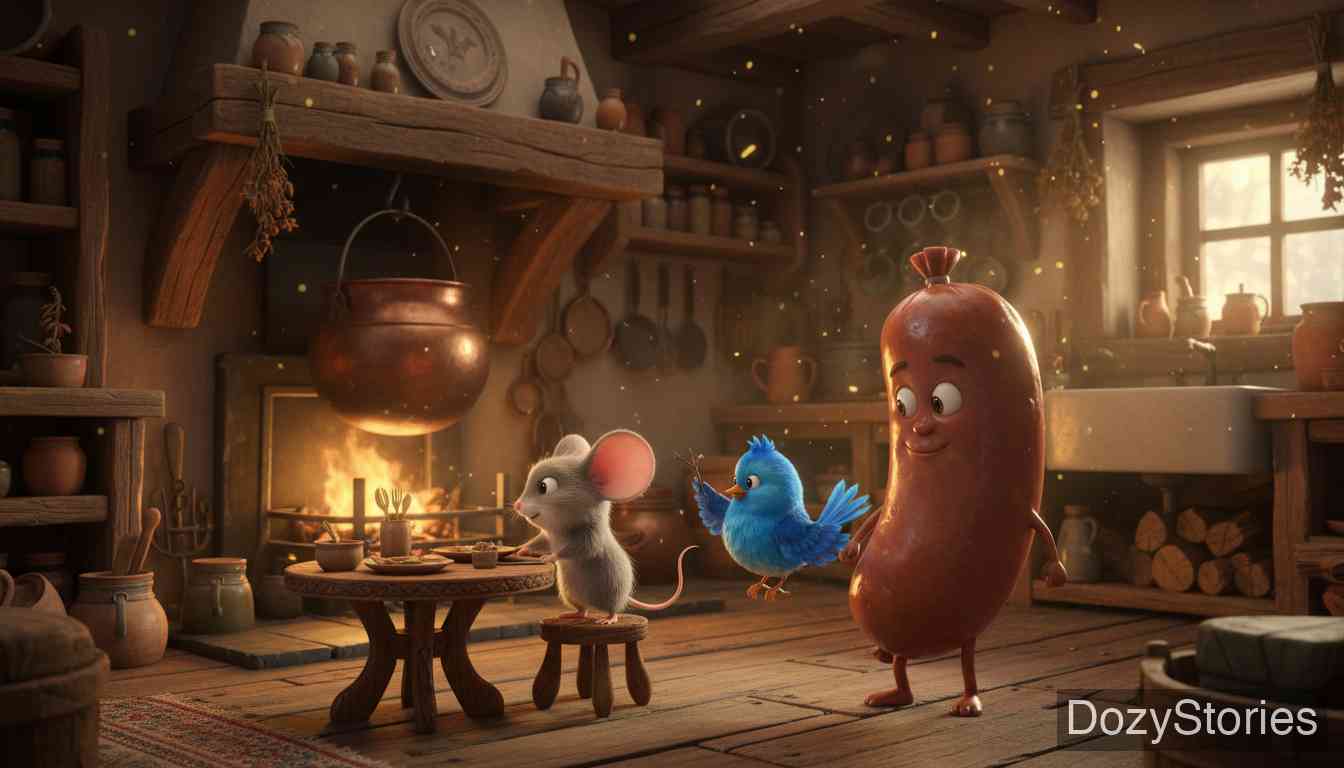
This little tale, which the Brothers Grimm included in their very first collection in 1812, is less a fairy tale than a beast fable: short, plain, and merciless. Chinese children will find its shape familiar, for it turns on a lesson our own ancient fables love to teach — know your place, and do your own job. Folklorists number it ATU 85, and its odd, comic detail of a sausage sliding through the pot to salt the meal is typical of old German household stories. The household of the mouse, the bird, and the sausage runs smoothly while each friend keeps to his post; trouble begins only when the bird hears a piece of gossip and lets envy grow in his heart. That is the genius of the fable: it does not soften the ending. All three partners are lost, and nothing is left but ashes. The harsh ending is itself the teacher, because a lesson that does not sting is soon forgotten. When you read it aloud, pause and ask your child to guess what would have happened if the bird had ignored the gossip. Then bring the story home: who does which job in your family, and what happens when one person stops doing his share? A child who learns this small truth early will grow into a person who values both cooperation and self-knowledge.
Vocabulary from "The Mouse, the Bird, and the Sausage"
12 key words from this story with definitions and original context sentences for language learners.
An amount that is more than enough.
富足;丰裕。
They were fast friends and lived in peace and plenty for many years.
它们是交情深厚的好友,多年来过着安宁富足的日子。
Unable to stay calm or satisfied, because you want a change.
静不下心的;闲不住的。
But a comfortable life can make a heart restless.
可日子过得太舒服,心反而静不下来。
Said good things about something or someone.
称赞;夸耀。
One day the bird met a stranger in the forest, who praised his own easy days and laughed at him.
这一日,小鸟在林中遇见一只陌生的鸟,那鸟夸耀自己清闲的日子,还笑话他。
The unhappy feeling you have when you want what someone else has.
嫉妒;眼红。
The bird listened, and a seed of envy took root in his heart.
小鸟听了,心里便埋下了一颗眼红的种子。
Said firmly that you would not do something.
拒绝;不肯。
The next morning, the bird refused to fly to the woods.
第二天一早,小鸟说什么也不肯再飞进树林。
A person who works in another person's house, doing jobs for them.
仆人;佣人。
'I have been your servant long enough,' he said.
「我给你们当佣人当够了。」它说。
Asked again and again in a sad or worried way.
恳求;苦苦相劝。
The mouse and the sausage begged him to change his mind, but the bird would not listen.
老鼠和香肠苦苦哀求它回心转意,可小鸟哪里肯听。
Walked slowly with heavy, tired steps.
步履沉重地走。
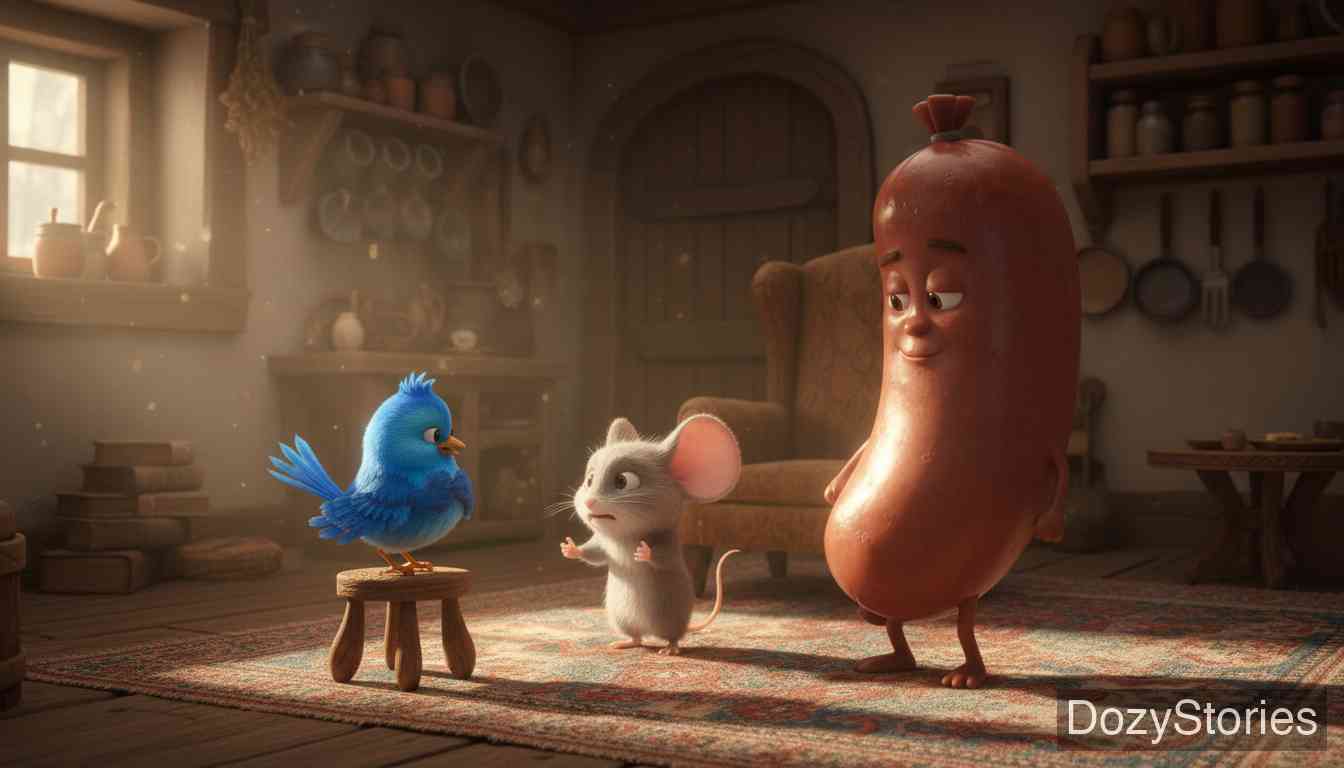
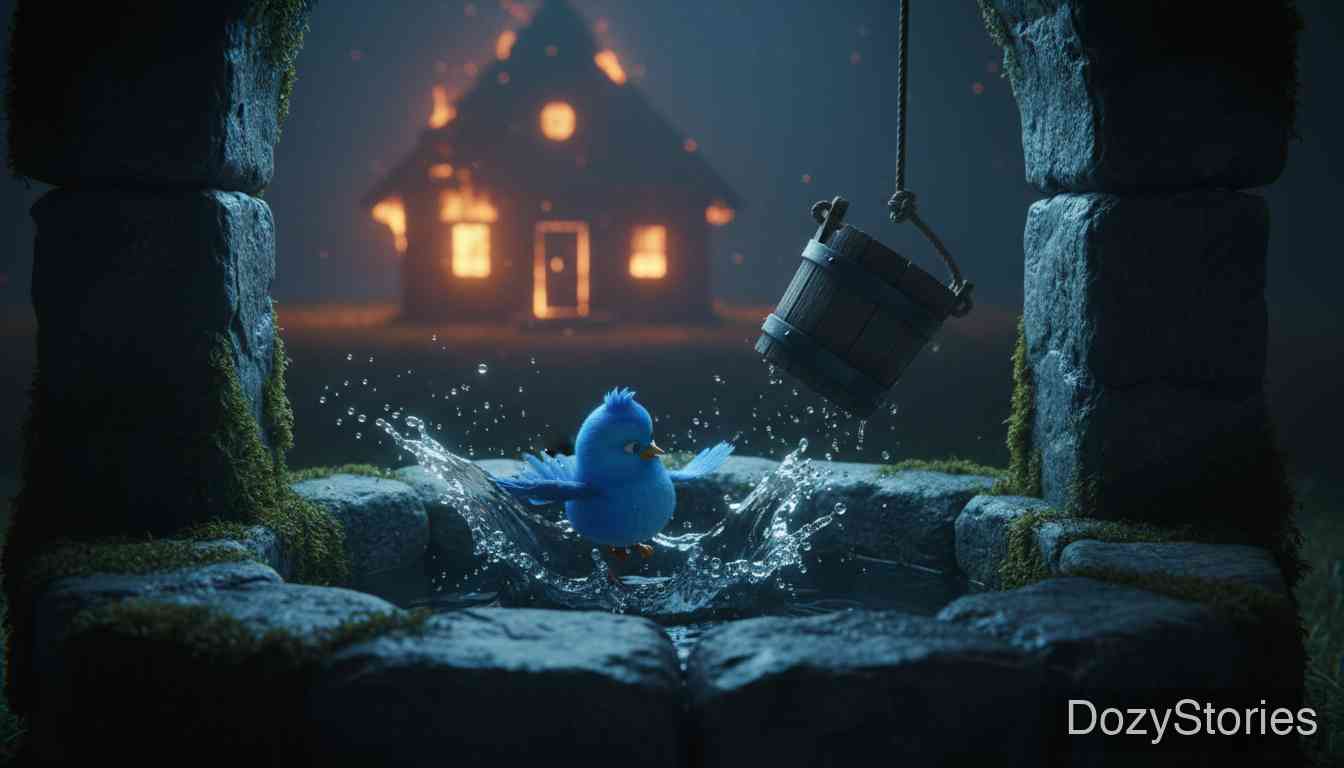
So the sausage trudged off to the forest, the mouse stood by the stove, and the bird picked up the water bucket.
于是香肠拖着步子走进树林,老鼠站到灶台前,小鸟提起了水桶。
The crime of taking something that belongs to others by force.
抢劫;抢夺。
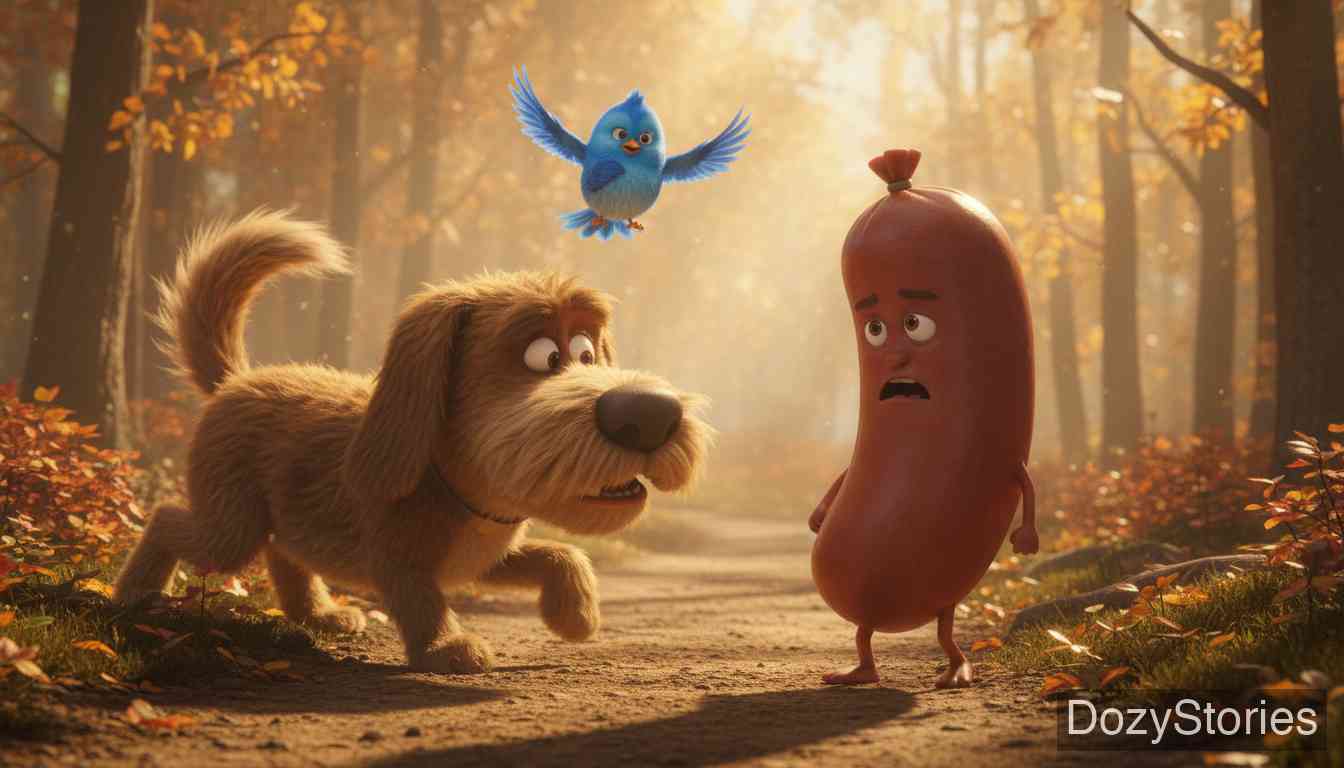
The bird shouted at the dog to stop this robbery.
小鸟高声喝止那条狗,不许它行抢。
Very hot, at the temperature at which water bubbles.
滚开的;沸腾的。
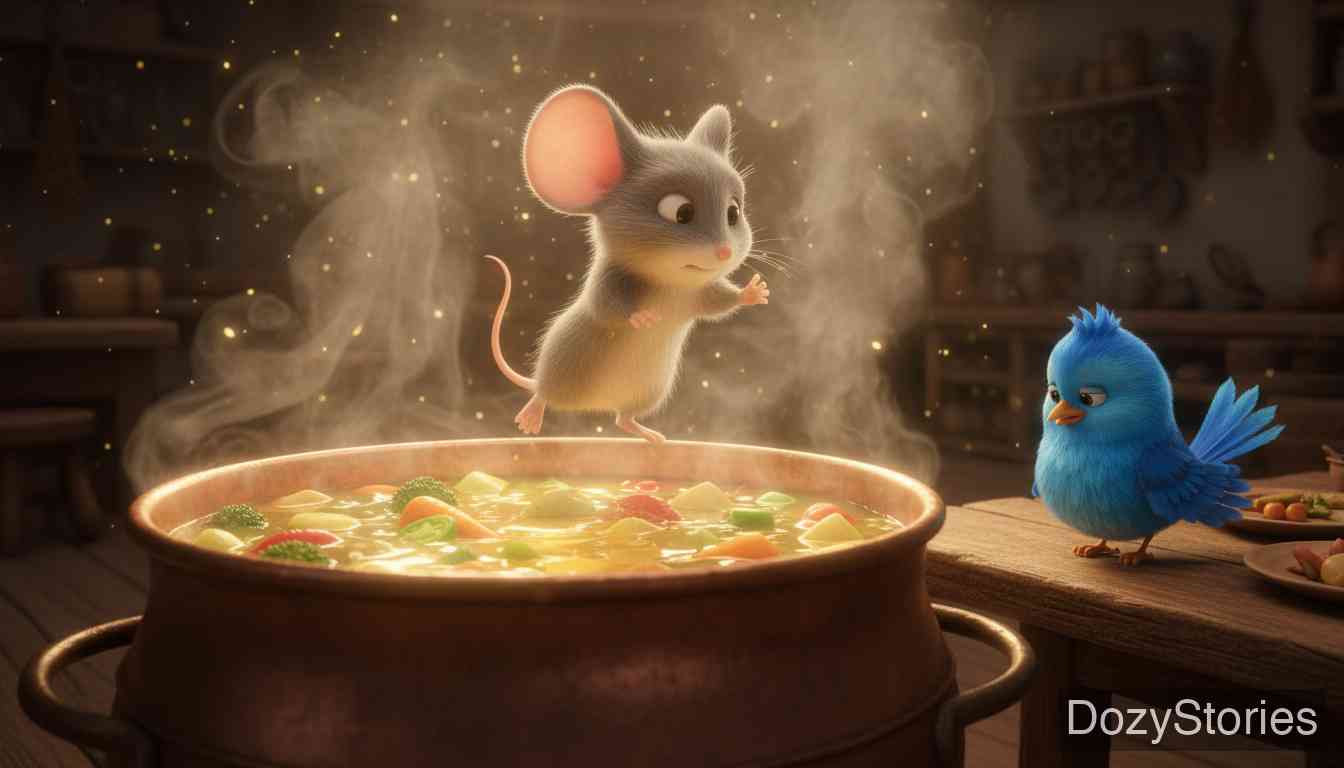
She tried to do the sausage's job and jumped into the boiling pot.
它学着香肠的样子,跳进了滚开的热锅。
Threw things in different directions.
撒开;四处散落。
In his hurry he scattered the firewood across the floor.
慌乱之中,它把柴火撒得满地都是。
The grey powder that is left after something has burned.
灰烬;余灰。
So the three friends were all lost, and nothing remained but ashes.
三个朋友全都丢了性命,只剩下了一堆灰烬。
Reading Together & Learning More
The Moral
Know your own place: when everyone does his own job, life stays peaceful; envy another's work and forget your own, and you may end with nothing.
Educational Value
Teaches children the wisdom of doing one's own job well, of valuing their own strengths, and of seeing how envy and idle talk can ruin a good life.
Tips for Parents
After reading, ask your child: was life good before the bird listened to gossip? Then invite your child to name something they do especially well, and what each family member takes care of at home.
Talk About It
- The three friends were happy with their jobs. What made the bird suddenly feel cheated? Why can a few words of gossip do so much harm?
- The mouse and the sausage both begged the bird to change his mind. Why did he still refuse? What should the head of a household think about before making a big decision?
- Each friend had something he did best. Why did everything go wrong, one after another, the moment they swapped jobs?
- Why does this fable let all three friends die? Would the lesson be as clear if the story had a happy ending?
- If you were working with a friend and felt you were doing more than your share, what would you do?