The Lazy Spinner
Introduction
This tale comes from the Brothers Grimm, where it began as a comic battle of wits between a married couple. We have retold it in the style of a Chinese fable — the way a grandmother tells stories by lamplight: short lines, little scenery, and a lesson that lands at the end. A fable must point its meaning, so we set the eye of this story on the old saying, "trying to be too clever only makes you the fool." The lazy wife wins every trick she plays, yet her house holds no yarn, no cloth, and a husband whose trust has worn thin. Chinese folk wisdom says the same thing in other words: the cleverer the scheme, the deeper the loss, or, as one proverb puts it, you try to steal a chicken and lose the grain you used to lure it. Even in the Grimms' own version, the storyteller cannot help shaking his head at the end; a fable simply says that sigh out loud. So do not rush to teach. Let your child laugh first and judge for themselves, then ask gently: is this the kind of cleverness worth copying?

Vocabulary from "The Lazy Spinner"
12 key words from this story with definitions and original context sentences for language learners.
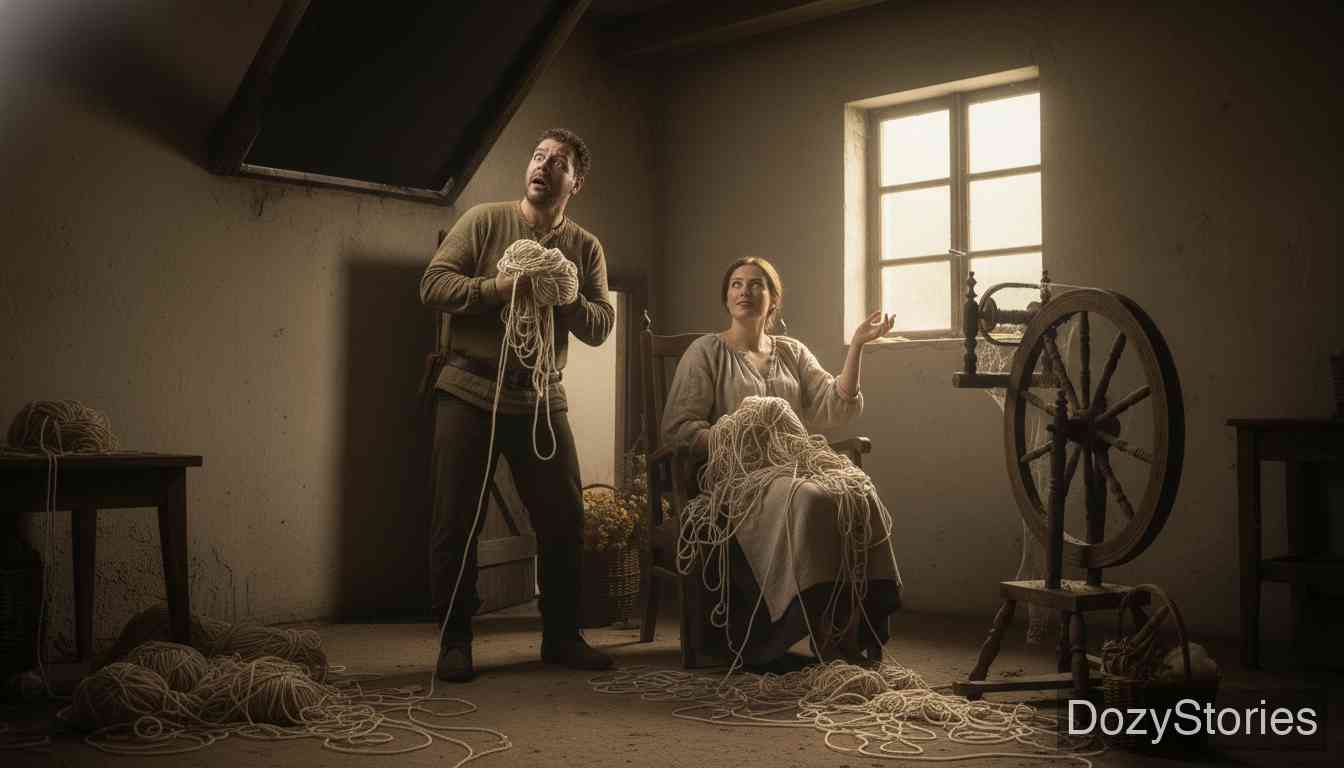
A frame that thread is wound around.
绕线架;卷轴。
How can I wind yarn without a reel?
没有绕线架,我拿什么绕线呢?
Clever in a quiet, tricky way; sneaky.
狡猾的;诡诈的。
She thought for a while, and a sly idea came to her.
她想了一会儿,心里冒出一个鬼主意。
A heavy tool with a sharp blade, used to chop wood.
斧子。
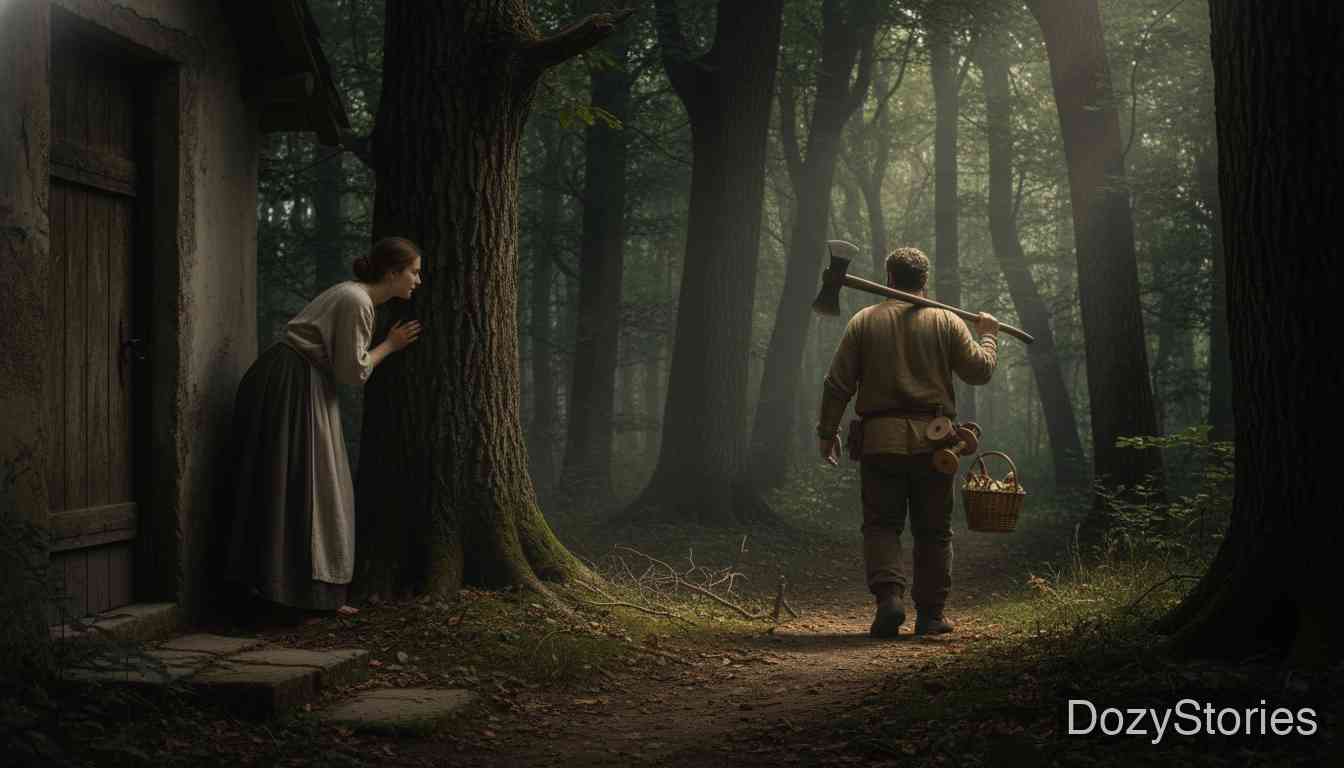
The man stopped and put down his axe.
丈夫停下手,放下斧子。
Afraid; full of fear.
受惊的;害怕的。
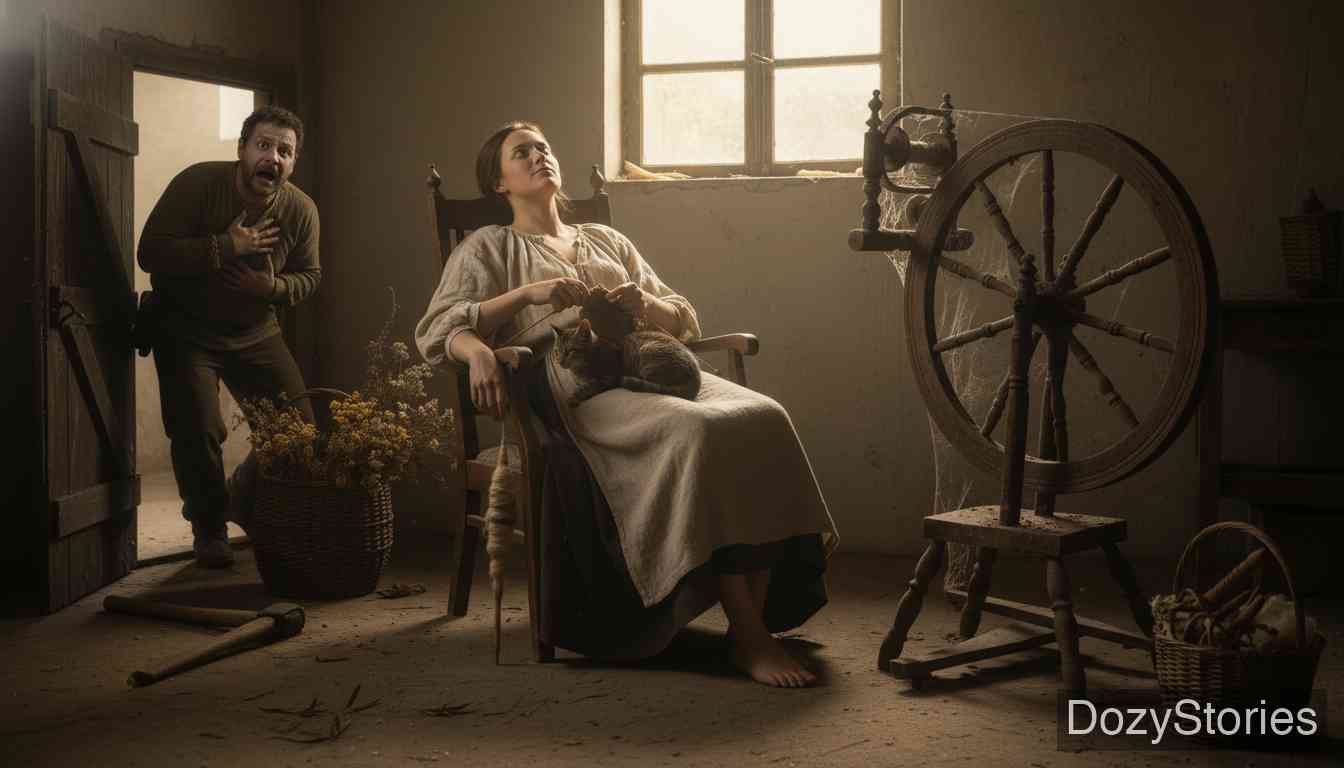
The man was truly frightened now.
这一回,丈夫可真是吓坏了。
Not guilty; here it means looking as if nothing happened.
无辜的;清白的。
When he came in, she looked as innocent as a lamb.
他进了门,她装出一副像羊羔一样无辜的样子。
A messy knot of threads that are twisted together.
乱成一团;纠缠。
The yarn lies in such a tangle.
好好的纱线,乱成一团。
A loose coil of thread or wool.
一绞(线);线束。
Up and down, until it becomes a neat skein.
抛来抛去,直到绕成一绞整整齐齐的线。
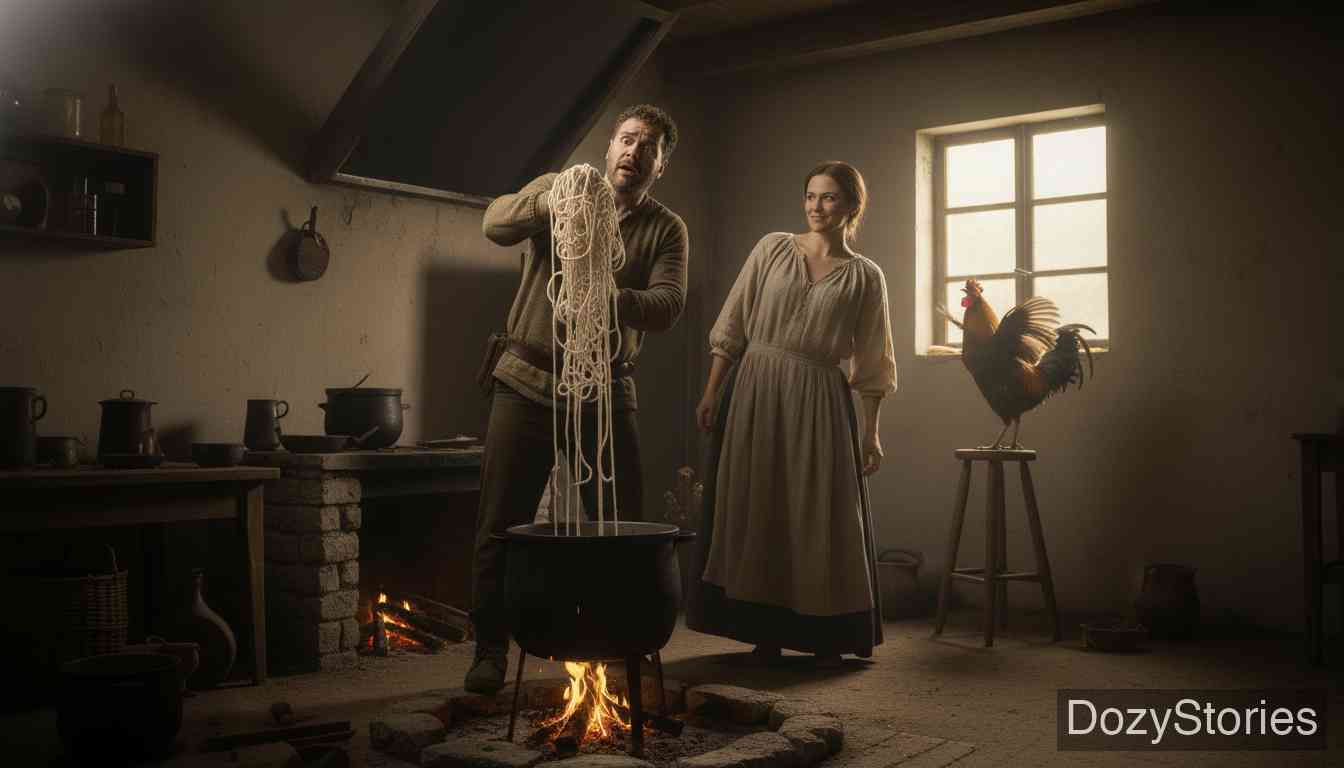
Short, rough fibres of flax that are too coarse to spin.
麻屑;粗麻纤维。
She dropped in a lump of tow, the rough waste of flax.
她放进锅里的是一团麻屑,亚麻的粗渣。
Makes the loud cry of a rooster.
(公鸡)啼叫、打鸣。
If the cock crows while you are not looking, the yarn will turn to tow.
公鸡一打鸣,你若没守着,线就要变成麻屑。
Pulled the eyebrows together to show worry or dislike.
皱眉(表示发愁或不快)。
The wife frowned, but she said, "Very well, early tomorrow."
妻子皱了皱眉,嘴上却答应:“好,明儿一早煮。”
The quality of being smart and quick at thinking.
聪明;机灵。
Her cleverness bought her nothing but a lie.
她的聪明,到头来只换来一句谎话。
Believing that other people are honest and good.
信任他人的;轻信的。
So it was with the lazy spinner, and so it is with anyone who cheats a trusting heart.
懒纺纱女如此,凡是骗一颗信任之心的人,也是如此。
Reading Together & Learning More
The Moral
The lazy spinner wins every trick, yet she loses what matters: no yarn, no cloth, and a husband whose trust has worn thin. Sly tricks may fool people for a day, but honesty and hard work are what last — try to be too clever, and you end up the fool.
Educational Value
This fable helps children see that cleverness is not good or bad by itself — what matters is how you use it. Using your wits to dodge work and deceive is self-defeating; using them for honest effort is a real skill.
Tips for Parents
Read the three curses with growing drama — louder each time — and your child will giggle. Afterwards ask: the wife wins every trick, but does she really win? Then link the story to daily life: have you ever seen someone play a sly trick and end up worse off because of it?
Talk About It
- The wife plays three tricks, and every one fools the husband. Can you name all three? Which one do you think is the worst?
- The story says the wife "wins" at the end. But does she really win? What does she gain, and what does she lose?
- The husband trusts his wife from start to finish, and even blames himself for the pot. If he ever learned the truth, how do you think he would feel?
- The husband chops wood in the forest and climbs to the loft to throw yarn. Is he a good husband? And how does she treat him in return?
- If you could add an ending in which the wife's tricks are found out, how would you write it?