The Goose Girl

Introduction

The most unforgettable figure here is Falada, the talking horse — even after his head is cut off and nailed to the gate, he keeps speaking the truth: 'Princess, dost thou so meanly fare?' That is a deep idea in fairy tales: the truth cannot be silenced, for even killed it still speaks. Two symbols run through the story: the three drops of blood the mother places on a napkin are a kind of protective power, and once the princess loses them she becomes weak and easily bullied — as if she has lost the courage to speak for herself. The tale is worth discussing: the real princess is not simply robbed of her throne; she falls because she is forced to swear a cruel oath and dares not speak up. When may a promise made under threat be broken? (Note for parents: the villain's punishment at the end is quite gruesome; you may stop at 'the wicked one was punished.')

Font Size
Image Layout
1 / 28
Stopped
There lived once an old Queen, whose husband had been dead many years. She had a beautiful daughter who was promised in marriage to a King's son living a great way off. When the time appointed for the wedding drew near, and the old Queen had to send her daughter into the foreign land, she got together many costly things, furniture and cups and jewels and adornments, both of gold and silver, everything proper for the dowry of a royal Princess, for she loved her daughter dearly.
She gave her also a waiting gentlewoman to attend her and to give her into the bridegroom's hands; and they were each to have a horse for the journey, and the Princess's horse was named Falada, and he could speak. When the time for parting came, the old Queen took her daughter to her chamber, and with a little knife she cut her own finger so that it bled; and she held beneath it a white napkin, and on it fell three drops of blood; and she gave it to her daughter, bidding her take care of it, for it would be needful to her on the way.
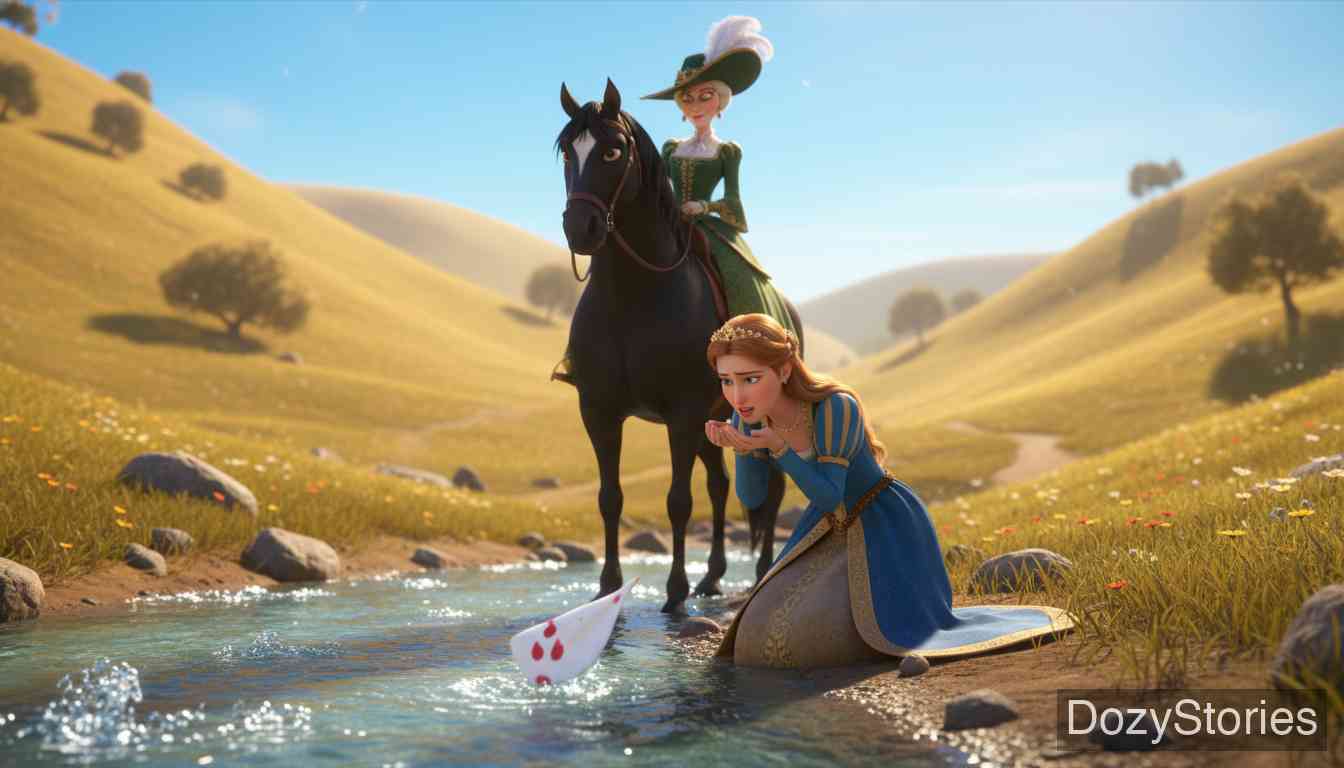
Then they took leave of each other; and the Princess put the napkin in her bosom, got on her horse, and set out to go to the bridegroom. After she had ridden an hour, she began to feel very thirsty, and she said to the waiting-woman, "Get down, and fill my cup that you are carrying with water from the brook; I have great desire to drink." - "Get down yourself," said the waiting-woman, "and if you are thirsty stoop down and drink; I will not be your slave."
And as her thirst was so great, the Princess had to get down and to stoop and drink of the water of the brook, and could not have her gold cup to serve her. "Oh dear!" said the poor Princess. And the three drops of blood heard her, and said, "If your mother knew of this, it would break her heart." But the Princess answered nothing, and quietly mounted her horse again. So they rode on some miles farther; the day was warm, the sun shone hot, and the Princess grew thirsty once more.
And when they came to a water-course she called again to the waiting-woman and said, "Get down, and give me to drink out of my golden cup." For she had forgotten all that had gone before. But the waiting-woman spoke still more scornfully and said, "If you want a drink, you may get it yourself; I am not going to be your slave." So, as her thirst was so great, the Princess had to get off her horse and to stoop towards the running water to drink, and as she stooped, she wept and said, "Oh dear!"
And the three drops of blood heard her and answered, "If your mother knew of this, it would break her heart!" And as she drank and stooped over, the napkin on which were the three drops of blood fell out of her bosom and floated down the stream, and in her distress she never noticed it; not so the waiting-woman, who rejoiced because she should have power over the bride, who, now that she had lost the three drops of blood, had become weak, and unable to defend herself.
And when she was going to mount her horse again the waiting-woman cried, "Falada belongs to me, and this jade to you." And the Princess had to give way and let it be as she said. Then the waiting-woman ordered the Princess with many hard words to take off her rich clothing and to put on her plain garments, and then she made her swear to say nothing of the matter when they came to the royal court; threatening to take her life if she refused. And all the while Falada noticed and remembered.
The waiting-woman then mounting Falada, and the Princess the sorry jade, they journeyed on till they reached the royal castle. There was great joy at their coming, and the King's son hastened to meet them, and lifted the waiting woman from her horse, thinking she was his bride; and then he led her up the stairs, while the real Princess had to remain below.
But the old King, who was looking out of the window, saw her standing in the yard, and noticed how delicate and gentle and beautiful she was, and then he went down and asked the seeming bride who it was that she had brought with her and that was now standing in the courtyard.
"Oh!" answered the bride, "I only brought her with me for company; give the maid something to do, that she may not be for ever standing idle." But the old King had no work to give her; until he bethought him of a boy he had who took care of the geese, and that she might help him. And so the real Princess was sent to keep geese with the goose-boy, who was called Conrad.
Soon after the false bride said to the Prince, "Dearest husband, I pray thee do me a pleasure." - "With all my heart," answered he. "Then "said she, "send for the knacker, that he may carry off the horse I came here upon, and make away with him; he was very troublesome to me on the journey." For she was afraid that the horse might tell how she had behaved to the Princess.
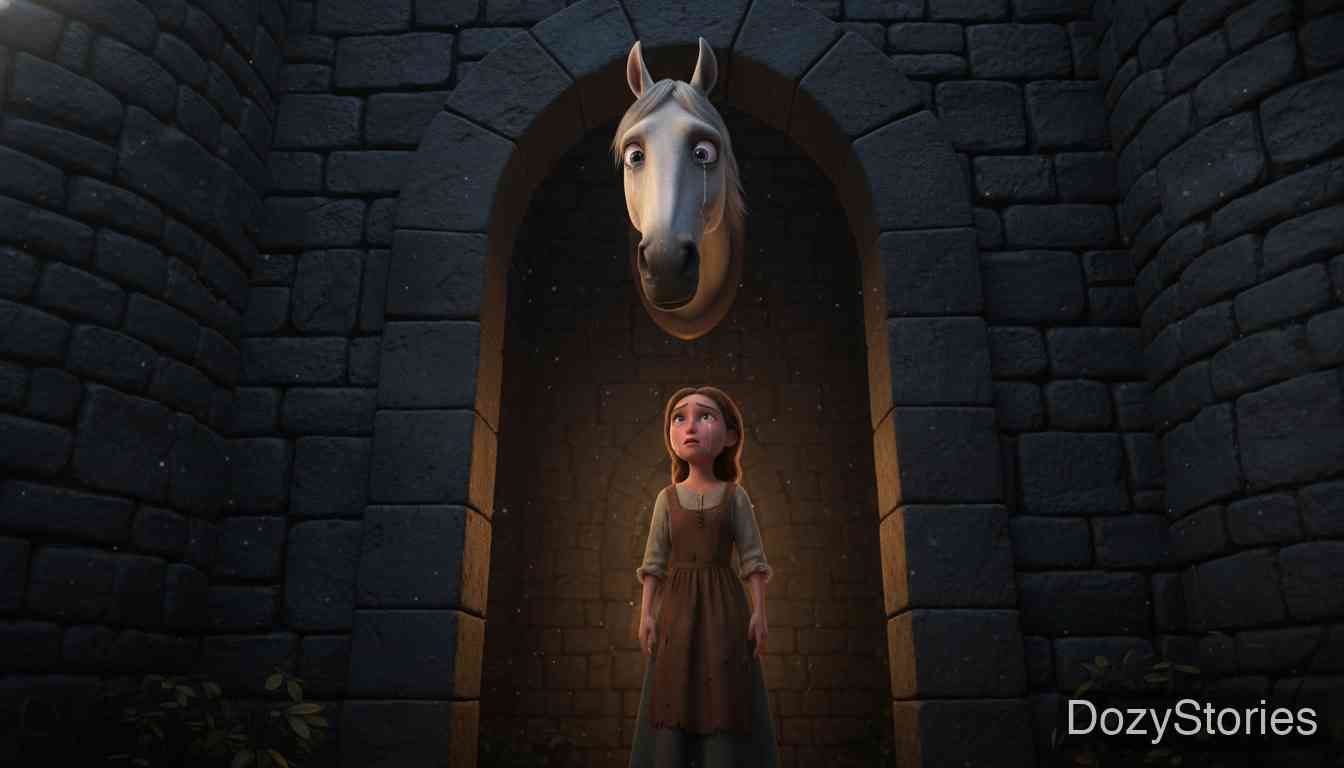
And when the order had been given that Falada should die, it came to the Princess's ears, and she came to the knacker's man secretly, and promised him a piece of gold if he would do her a service. There was in the town a great dark gate-way through which she had to pass morning and evening with her geese, and she asked the man to take Falada's head and to nail it on the gate, that she might always see it as she passed by. And the man promised, and he took Falada's head and nailed it fast in the dark gate-way.
Early next morning as she and Conrad drove their geese through the gate, she said as she went by: "O Falada, dost thou hang there?" And the head answered: "Princess, dost thou so meanly fare? But if thy mother knew thy pain, Her heart would surely break in twain."
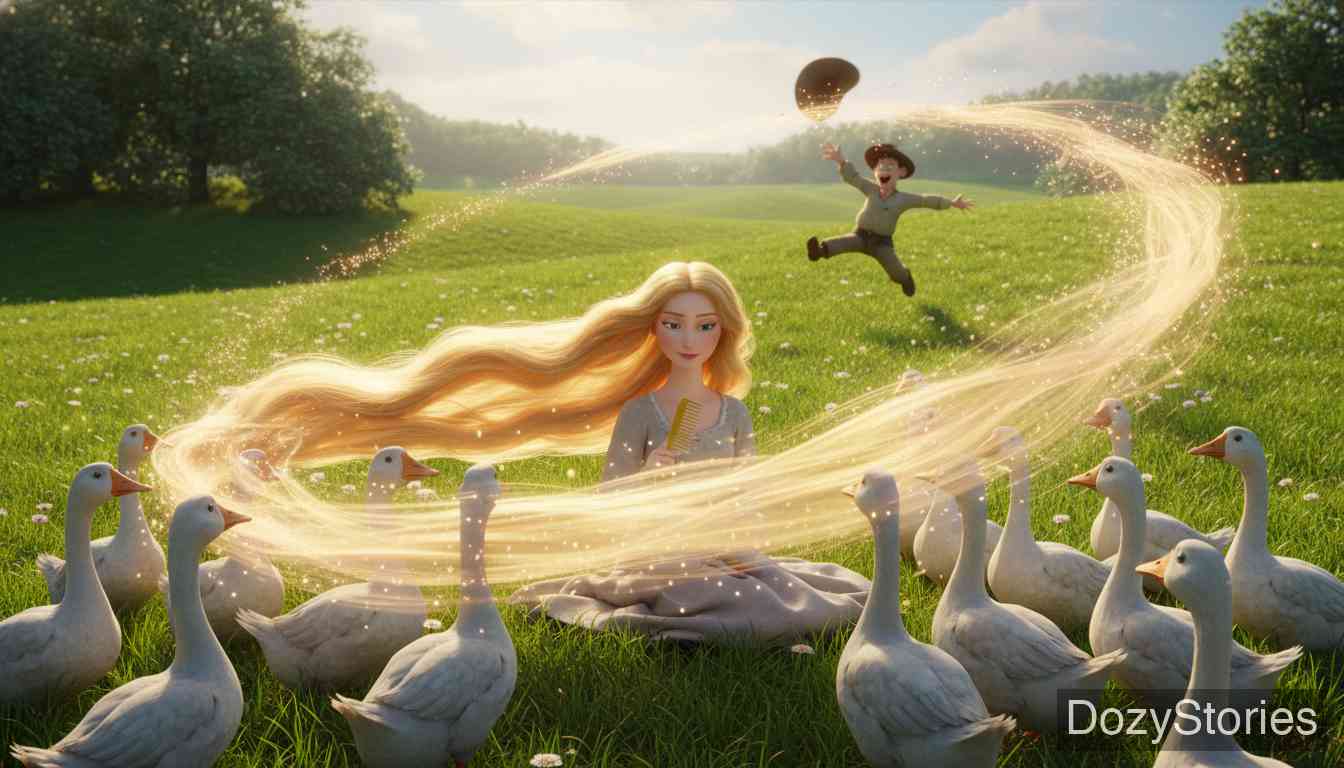
But she went on through the town, driving her geese to the field. And when they came into the meadows, she sat down and undid her hair, which was all of gold, and when Conrad saw how it glistened, he wanted to pull out a few hairs for himself. And she said: "O wind, blow Conrad's hat away, Make him run after as it flies, While I with my gold hair will play, And twist it up in seemly wise."
Then there came a wind strong enough to blow Conrad's hat far away over the fields, and he had to run after it; and by the time he came back she had put up her hair with combs and pins, and he could not get at any to pull it out; and he was sulky and would not speak to her; so they looked after the geese until the evening came, and then they went home.
The next morning, as they passed under the dark gate-way, the Princess said: "O Falada, dost thou hang there?" And Falada answered: "Princess, dost thou so meanly fare? But if thy mother knew thy pain, Her heart would surely break in twain."
And when they reached the fields she sat down and began to comb out her hair; then Conrad came up and wanted to seize upon some of it, and she cried: "O wind, blow Conrad's hat away, Make him run after as it flies, While I with my gold hair will play, And do it up in seemly wise."
Then the wind came and blew Conrad's hat very far away, so that he had to run after it, and when he came back again her hair was put up again, so that he could pull none of it out; and they tended the geese until the evening.
And after they had got home, Conrad went to the old King and said: "I will tend the geese no longer with that girl!" - "Why not?" asked the old King. "Because she vexes me the whole day long," answered Conrad. Then the old King ordered him to tell how it was.
"Every morning," said Conrad, "as we pass under the dark gate-way with the geese, there is an old horse's head hanging on the wall, and she says to it: 'O Falada, dost thou hang there?' And the head answers: 'Princess, dost thou so meanly fare? But if thy mother knew thy pain, Her heart would surely break in twain.'"
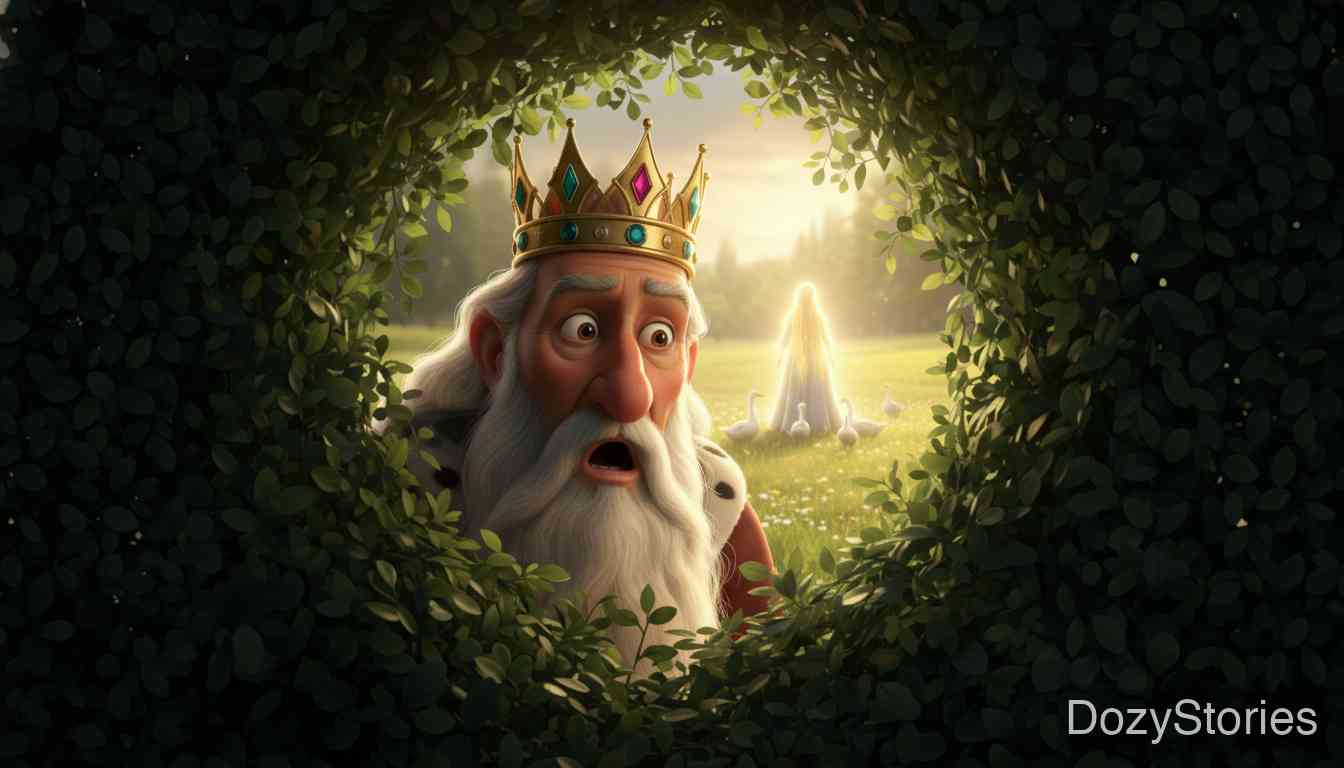
And besides this, Conrad related all that happened in the fields, and how he was obliged to run after his hat. The old King told him to go to drive the geese next morning as usual, and he himself went behind the gate and listened how the maiden spoke to Falada; and then he followed them into the fields, and hid himself behind a bush; and he watched the goose-boy and the goose-girl tend the geese; and after a while he saw the girl make her hair all loose, and how it gleamed and shone.
Soon she said: "O wind, blow Conrad's hat away, And make him follow as it flies, While I with my gold hair will play, And bind it up in seemly wise."
Then there came a gust of wind and away went Conrad's hat, and he after it, while the maiden combed and bound up her hair; and the old King saw all that went on. At last he went unnoticed away, and when the goose-girl came back in the evening he sent for her, and asked the reason of her doing all this. "That I dare not tell you," she answered, "nor can I tell any man of my woe, for when I was in danger of my life I swore an oath not to reveal it." And he pressed her sore, and left her no peace, but he could get nothing out of her.
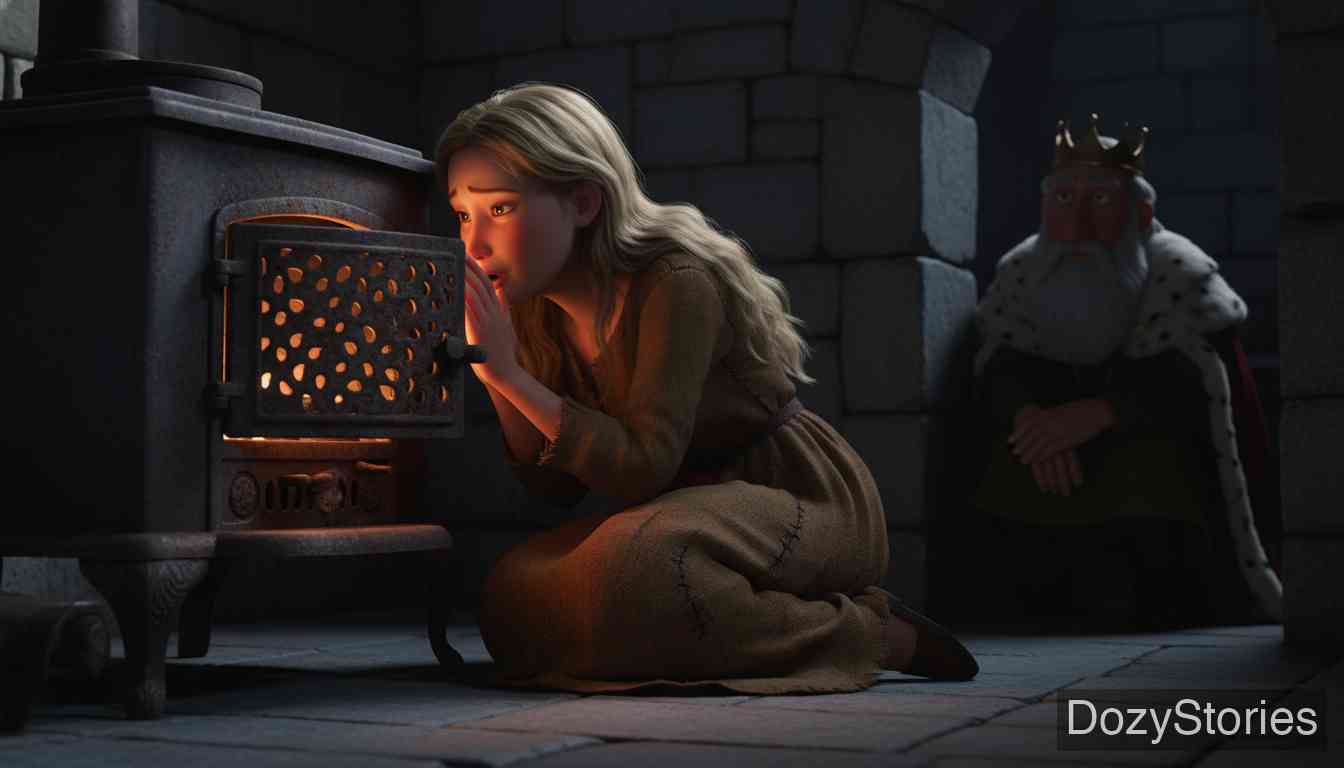
At last he said, "If you will not tell it me, tell it to the iron oven," and went away. Then she crept into the iron oven, and began to weep and to lament, and at last she opened her heart and said, "Here I sit forsaken of all the world, and I am a King's daughter, and a wicked waiting-woman forced me to give up my royal garments and my place at the bridegroom's side, and I am made a goose-girl, and have to do mean service. And if my mother knew, it would break her heart."
Now the old King was standing outside by the oven-door listening, and he heard all she said, and he called to her and told her to come out of the oven. And he caused royal clothing to be put upon her, and it was a marvel to see how beautiful she was. The old King then called his son and proved to him that he had the wrong bride, for she was really only a waiting-woman, and that the true bride was here at hand, she who had been the goose-girl.
The Prince was glad at heart when he saw her beauty and gentleness; and a great feast was made ready, and all the court people and good friends were bidden to it. The bridegroom sat in the midst with the Princess on one side and the waiting-woman on the other; and the false bride did not know the true one, because she was dazzled with her glittering braveries.
When all the company had eaten and drunk and were merry, the old King gave the waiting-woman a question to answer, as to what such an one deserved, who had deceived her masters in such and such a manner, telling the whole story, and ending by asking, "Now, what doom does such an one deserve?" - "No better than this," answered the false bride, "that she be put naked into a cask, studded inside with sharp nails, and be dragged along in it by two white horses from street to street, until she be dead."
"Thou hast spoken thy own doom," said the old King, "as thou hast said, so shall it be done." And when the sentence was fulfilled, the Prince married the true bride, and ever after they ruled over their kingdom in peace and blessedness.

Vocabulary from "The Goose Girl"

12 key words from this story with definitions and original context sentences for language learners.

adornments(adornment)C1
/əˈdɔːnmənts/n.

Things added to make someone or something more beautiful; decorations.

装饰品;饰物。

She got together many costly things, furniture and cups and jewels and adornments, both of gold and silver.

她准备了许多贵重的物品,家俱、杯子、珠宝首饰,金的银的应有尽有。

bosomB2
/ˈbʊzəm/n.

A person's chest, especially thought of as where feelings are kept.

胸前;怀中。

The Princess put the napkin in her bosom, got on her horse, and set out to go to the bridegroom.

公主把手帕塞进怀里,骑上马,出发去见新郎。

scornfullyC1
/ˈskɔːnfəli/adv.

In a way that shows you think someone is worthless; with contempt.

轻蔑地;不屑地。

But the waiting-woman spoke still more scornfully and said, If you want a drink, you may get it yourself.

但侍女说得更加轻蔑:'如果你想喝水,就自己去弄。'

garments(garment)B2
/ˈɡɑːmənts/n.

Pieces of clothing.

衣服;衣物。

The waiting-woman ordered the Princess to take off her rich clothing and to put on her plain garments.

侍女命令公主脱下华丽的衣服,穿上她那朴素的衣裳。

idleB2
/ˈaɪdl/adj.

Not working or doing anything; unoccupied.

闲着的;无所事事的。

Give the maid something to do, that she may not be for ever standing idle.

给那个丫头点事做吧,免得她老是闲站着。

sulkyB2
/ˈsʌlki/adj.

Silently bad-tempered because you are annoyed.

生闷气的;愠怒的。

He was sulky and would not speak to her; so they looked after the geese until the evening came.

他便生闷气,不和她说话;于是他们照看鹅群直到傍晚。

vexes(vex)C1
/veksɪz/v.

Annoys or troubles someone.

使烦恼;使恼火。

Because she vexes me the whole day long, answered Conrad.

'因为她整天让我恼火,'康拉德回答。

gustB2
/ɡʌst/n.

A sudden strong rush of wind.

一阵狂风;疾风。

Then there came a gust of wind and away went Conrad's hat, and he after it.

这时来了一阵风,康拉德的帽子飞走了,他在后面追。

forsaken(forsake)C1
/fəˈseɪkən/v.

Abandoned; left completely alone by everyone.

被遗弃的;被抛弃的。

Here I sit forsaken of all the world, and I am a King's daughter.

我坐在这里,被全世界遗弃,我是国王的女儿。

marvelB2
/ˈmɑːvl/n.

A wonderful, amazing thing.

奇迹;令人惊叹的事物。

He caused royal clothing to be put upon her, and it was a marvel to see how beautiful she was.

他让人给她穿上皇家衣裳,她的美丽令人惊叹。

doomB2
/duːm/n.

A terrible fate; a punishment or ruin that is coming.

厄运;劫数;(严厉的)判决。

Telling the whole story, and ending by asking, Now, what doom does such an one deserve?

老国王讲了整个故事,最后问:'现在,这样的人该受什么惩罚?'

studded(stud)C1
/ˈstʌdɪd/v.

Covered or dotted all over with small fixed objects.

布满;镶嵌;钉满(小物件)。

That she be put naked into a cask, studded inside with sharp nails.

把她放进一个里面钉满尖钉的木桶里。

Reading Together & Learning More

The Moral

The truth may be silenced for a time, but it will come out in the end; loyalty, courage, and speaking up for oneself matter too.

Educational Value

Helps children understand the power of honesty and truth, think about seeking help when threatened, and feel sympathy for the wronged while telling right from wrong.

Tips for Parents

Talk with your child about whether a promise made under threat must be kept, and teach them to turn to a trusted adult in danger. Note: the ending punishment is gory — you can stop at 'the wrongdoer was punished.'

Talk About It

  1. Falada keeps telling the truth even after his head is cut off. Why do you think the truth is so hard to silence completely?
  2. The princess was threatened into swearing she would never tell. Must a promise made in fear, under threat, still be kept?
  3. At the feast, the false bride actually pronounced her own punishment. Why do wrongdoers so often 'give themselves away'?
  4. If you were wronged but forced to stay silent, whom would you turn to, and how would you get the truth out?