The Good Bargain
Introduction
This Grimm tale is known to folklorists as ATU 1642, the story of a farmer who keeps hearing the wrong thing. We have retold it in the manner of a Chinese fable: it opens with "Long ago," moves in short plain sentences, shows each character's mind in a single line, and closes with a quiet lesson, just as the old fables of China do. Chinese readers will feel at home at once, for this farmer is a cousin of the man in the old saying "the old man at the border lost his horse, and who knows if that is not a blessing." Loss after loss — the money thrown to the frogs, the meat left to the dogs — somehow turns into luck after luck, and the story laughs all the way. As you read, you might ask your child which is more dependable, a misunderstanding or an honest word. And in the second half, when the farmer wins the coat and the gold with a flat lie, remember that the story lets him win without ever saying he was right. That gap — between who wins and who is right — is the best thing to talk about once the laughter has died down. In the Grimms' day this tale was a boisterous folk joke shared among adults; our retelling keeps the mischief but smooths the rough edges, so that the lesson stays light enough for a child's ears.
Vocabulary from "The Good Bargain"
12 key words from this story with definitions and original context sentences for language learners.
Making the deep rough sound that frogs make.
(青蛙)呱呱地叫。
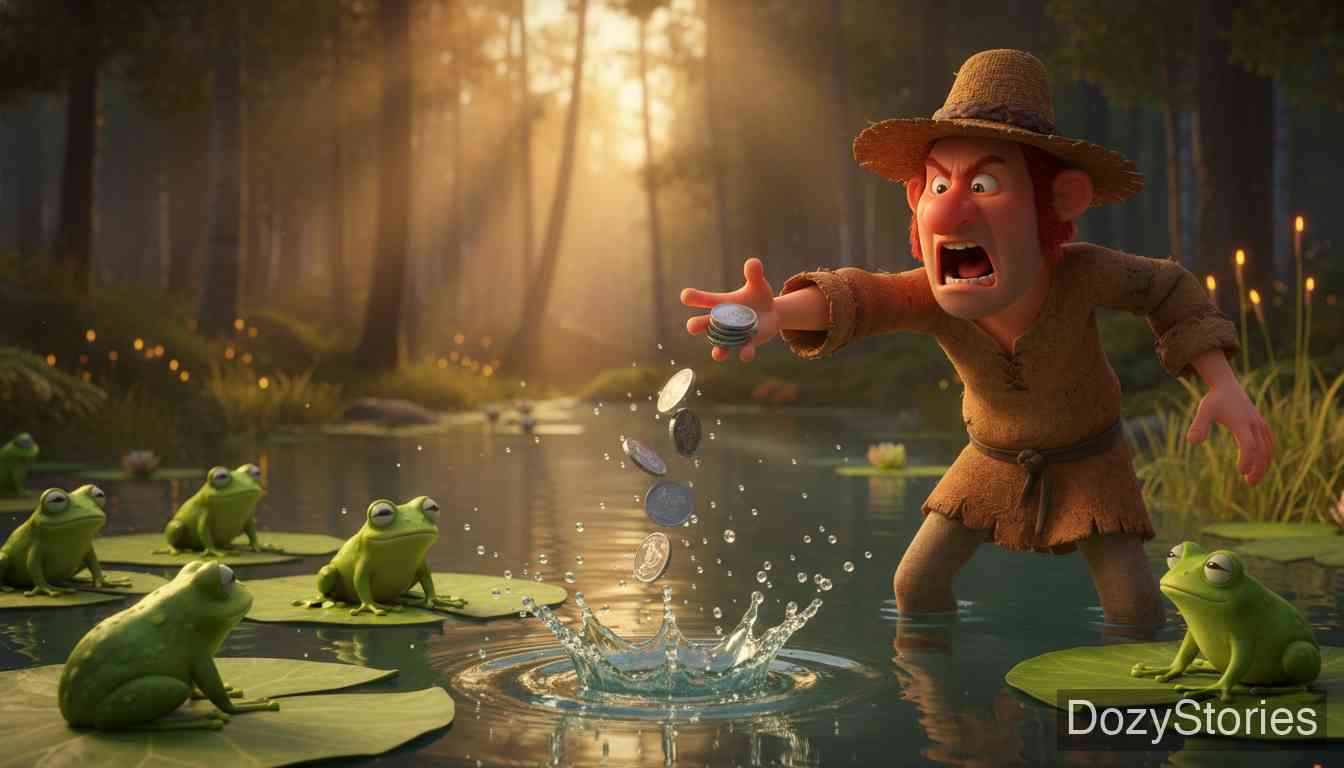
On the way home he passed a pond, and from far away he heard the frogs croaking, "Aik, aik, aik, aik."
回家的路上要路过一口池塘,他老远就听见青蛙在叫:“呱,呱,呱,呱。”
Killed an animal for its meat.
宰杀(牲畜)。
After a while, the farmer bought another cow and slaughtered her.
过了些日子,农夫又买来一头牛,宰了。
A tall, thin dog that can run very fast.
灵缇犬(一种腿长、跑得极快的猎犬)。
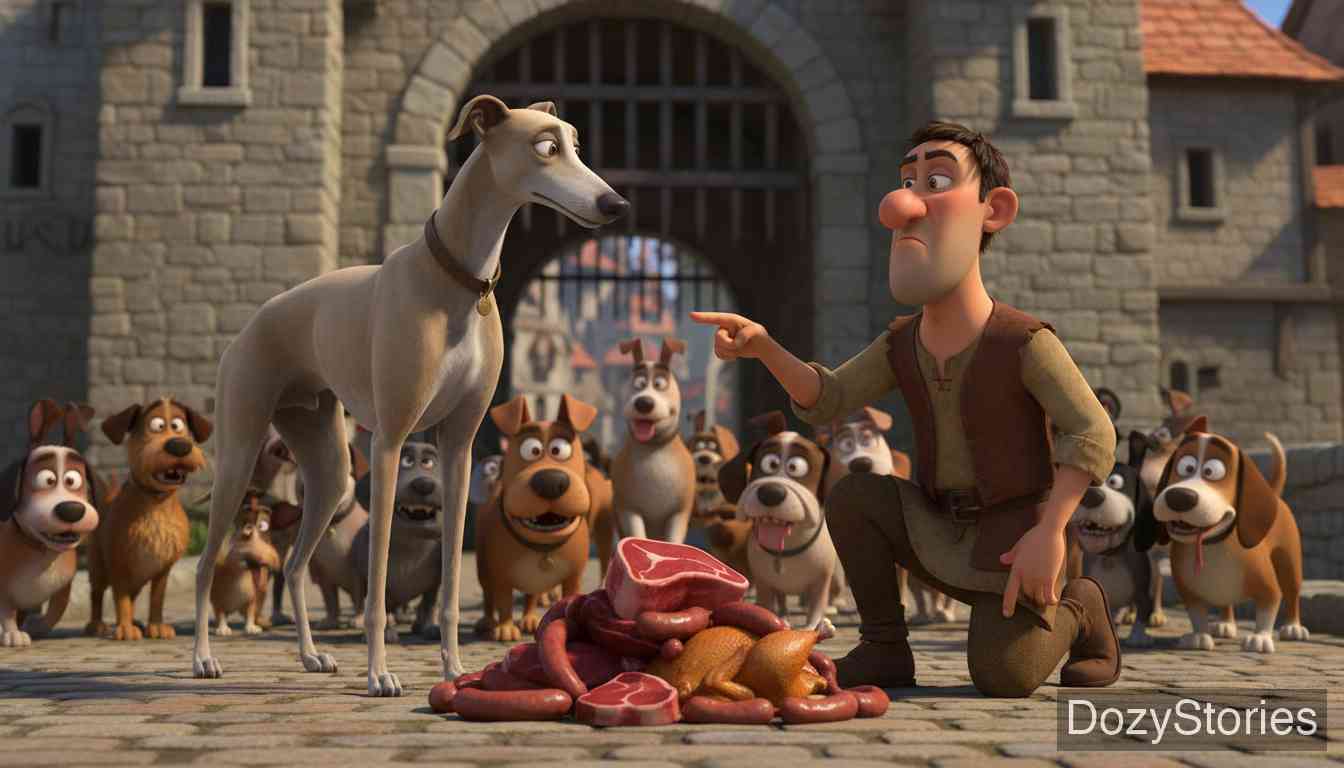
At the town gate a great pack of dogs was waiting, and a big greyhound stood at the front.
城门口蹲着一大群狗,为首的是一条高大的灵缇。
The ability to wait calmly without getting angry.
耐心;耐性。
At last his patience ran out, and he went into town to ask the butcher for his money.
他失了耐性,进城找那屠夫讨钱。
Made a serious promise.
发誓;郑重许下承诺。
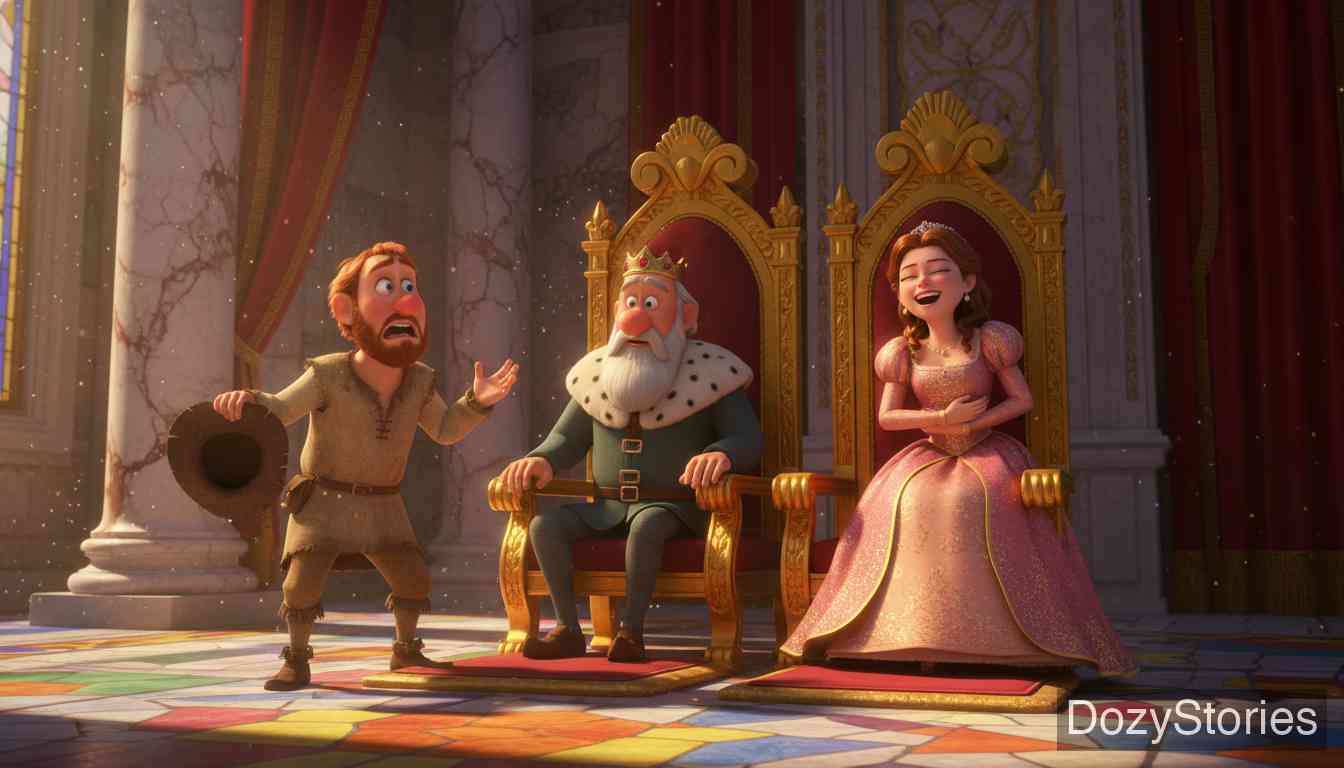
She has never laughed like that in all her life, and I swore to marry her to the man who could make her laugh.
她这辈子还没这样笑过,我早发过誓:谁逗笑她,谁就是她的丈夫。
A polite word used to address a king or queen.
陛下(对国王、王后的尊称)。
Your majesty, that money is no longer mine.
陛下,那些钱已经不属于我了。
A soldier who stands guard at a gate or door.
哨兵;卫兵。
As the farmer left the palace gate, the sentry stopped him and said, "You made the princess laugh, so you are sure to get a fine reward."
农夫走出宫门,守门的卫兵拉住他说:“你把公主逗笑了,准能得到好处。”
Extremely happy, full of joy.
欣喜若狂;高兴极了。
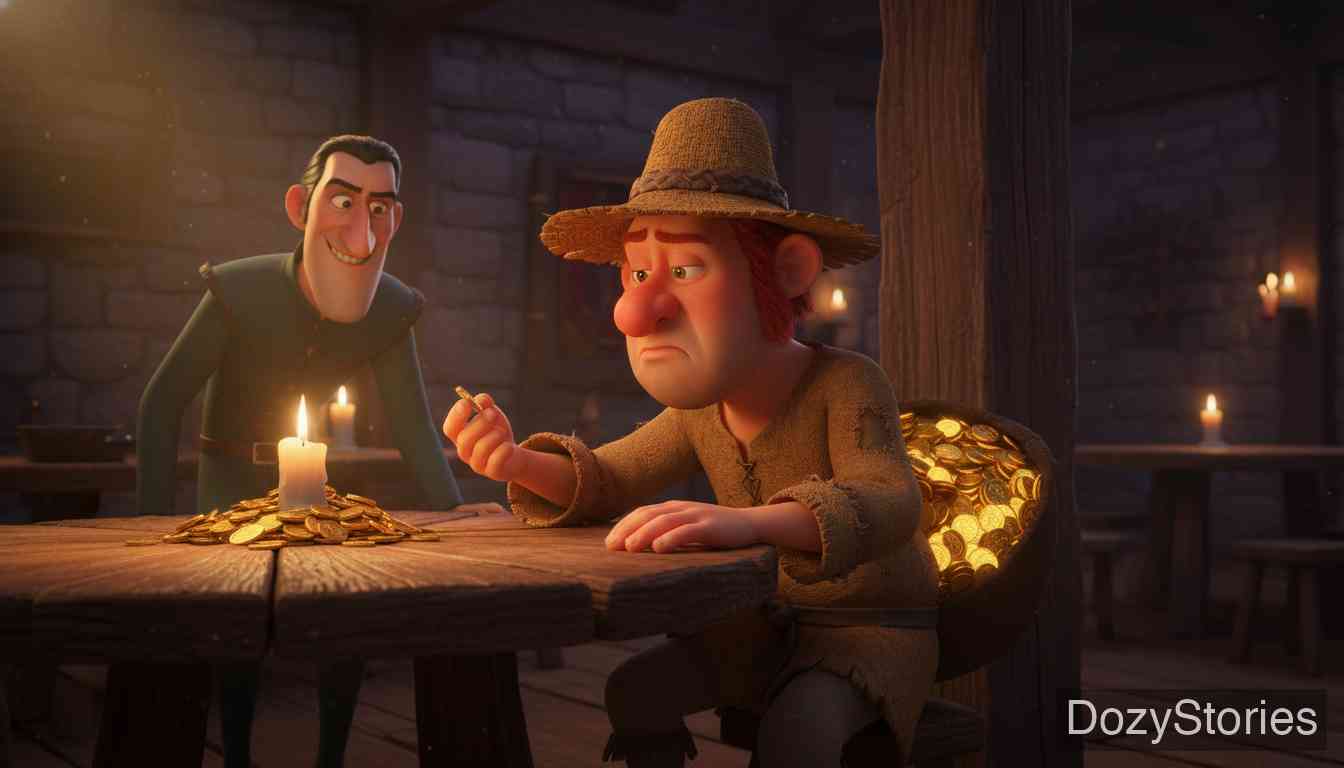
The money-changer was overjoyed at the profit and brought the sum in poor coins, three of which were worth only two good ones.
换钱商贪这笔白赚的钱,乐得合不拢嘴,掏出一把成色不足的格罗申,三枚才顶两枚好的用。
Cried out loudly in pain or sadness.
哀号;哭喊。
The money-changer wailed, "Oh no, oh no! So these are the heavy thalers, are they?"
换钱商却哭丧着脸叫苦:“哎哟,这就是那沉甸甸的塔勒吗?”
Spoke quietly and unclearly, usually in complaint.
嘟囔;低声抱怨。
As he counted, he muttered, "That sly king got the better of me after all. Why did he not hand me the money himself, so that I should know the amount?"
他一边数一边嘟囔:“这个刁滑的国王,到底还是骗了我。他要是亲手把钱交给我,我何至于连个数都闹不清?”
Old, torn, and worn out, said of clothes.
破旧的;褴褛的(指衣物)。
Do you think a man with so much money in his pocket can enter the palace in a ragged old coat?
一个口袋里揣着这么多钱的人,能穿着破旧衣裳进宫吗?
A dishonest or mischievous person.
无赖;坏家伙。
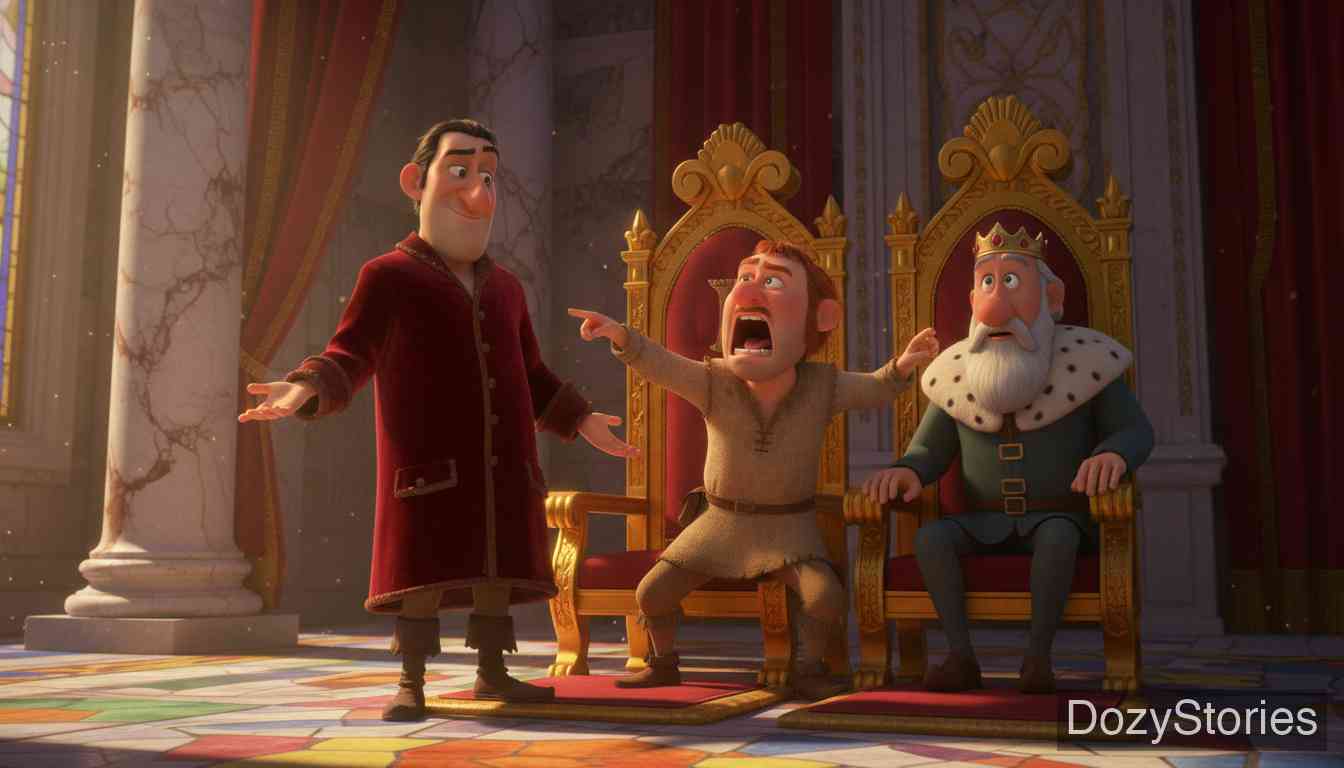
Why, that rascal would even swear that the coat on my back is his own!
你看,这个无赖,连我身上穿着的这件外衣,他都敢一口咬定是他的。
Reading Together & Learning More
The Moral
Losing out is not always losing, for luck often hides inside a misunderstanding. But if you win by lying, what you win is only a joke.
Educational Value
This tale shows children that misunderstandings can be funny and can bring unexpected turns of luck. It also opens a gentle talk about honesty: coming out ahead in a deal is not the same as doing the right thing.
Tips for Parents
Enjoy the first half (the frogs, the dogs, the laughing princess) together, and ask your child: what would you have heard in those croaks and barks? In the second half, slow down and ask: the farmer wins the coat and the gold with a lie — the story lets him win, but does it praise him? You can also link the tale to daily life and ask which lasts longer, a quick gain or a kept promise.
Talk About It
- Which of the farmer's deals looks like the biggest loss? Yet every loss turns into a gain in the end. Do you think he is lucky, or clever?
- The money-changer tells on the farmer to win a reward, and in the end he loses even his coat. If he had not been so greedy, would things have turned out differently?
- The king once swore to marry his daughter to the man who made her laugh, but the farmer already has a wife. Whose side do you take, the king's promise or the farmer's refusal?
- The farmer says the money-changer never speaks a true word, yet he lies to the king himself. Why is it easier to see lies in others than in ourselves?
- If you told this story to a friend, would you call the farmer a clever man or a lucky man? Why?