The Godfather
Introduction
This Grimm tale is one of the strangest in the whole collection: it has no tidy lesson, only a ladder of dreamlike horrors — a broom and a shovel fighting, a pile of dead fingers, fish frying themselves, and at last a pair of horns seen through a keyhole. We have retold it as a Chinese-style fable because the story already thinks like one. A fable never says everything; it leaves the point for the reader to find. This tale does exactly that: the word "devil" is never spoken, yet everyone who reads it knows who wears those horns. There is even an old Chinese custom behind this way of writing: people avoid naming fearful beings directly, calling them "that one" or "the honored guest" instead, as if saying the true name might bring bad luck. So while you read, treat each floor of that strange house as a small test of trust. With every landing the strangeness grows, until the final keyhole makes everything plain. And when the story is done, remember that the real lesson is not in the frightening pictures. It is in the poor man who turns and runs — he teaches children a sentence worth keeping for life: when your heart says a place is wrong, your feet should listen and carry you away.
Vocabulary from "The Godfather"
12 key words from this story with definitions and original context sentences for language learners.
A man who promises to help care for a child and is like a second father to it.
教父;为孩子行洗礼并照看他的男人。
He had asked almost everyone in the land to be their godfather.
十里八乡的人,几乎都被他请去当过教父。
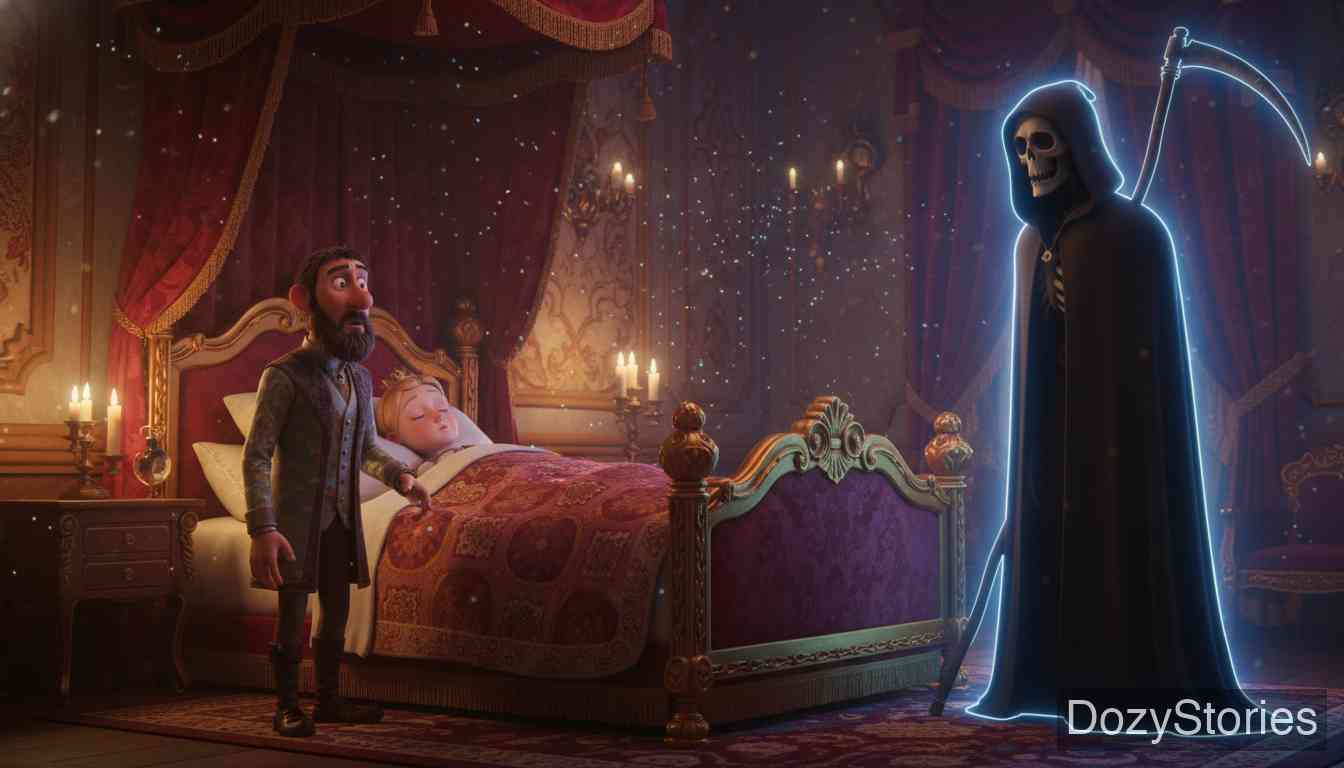
To make a sick person well again.
治愈;医好。
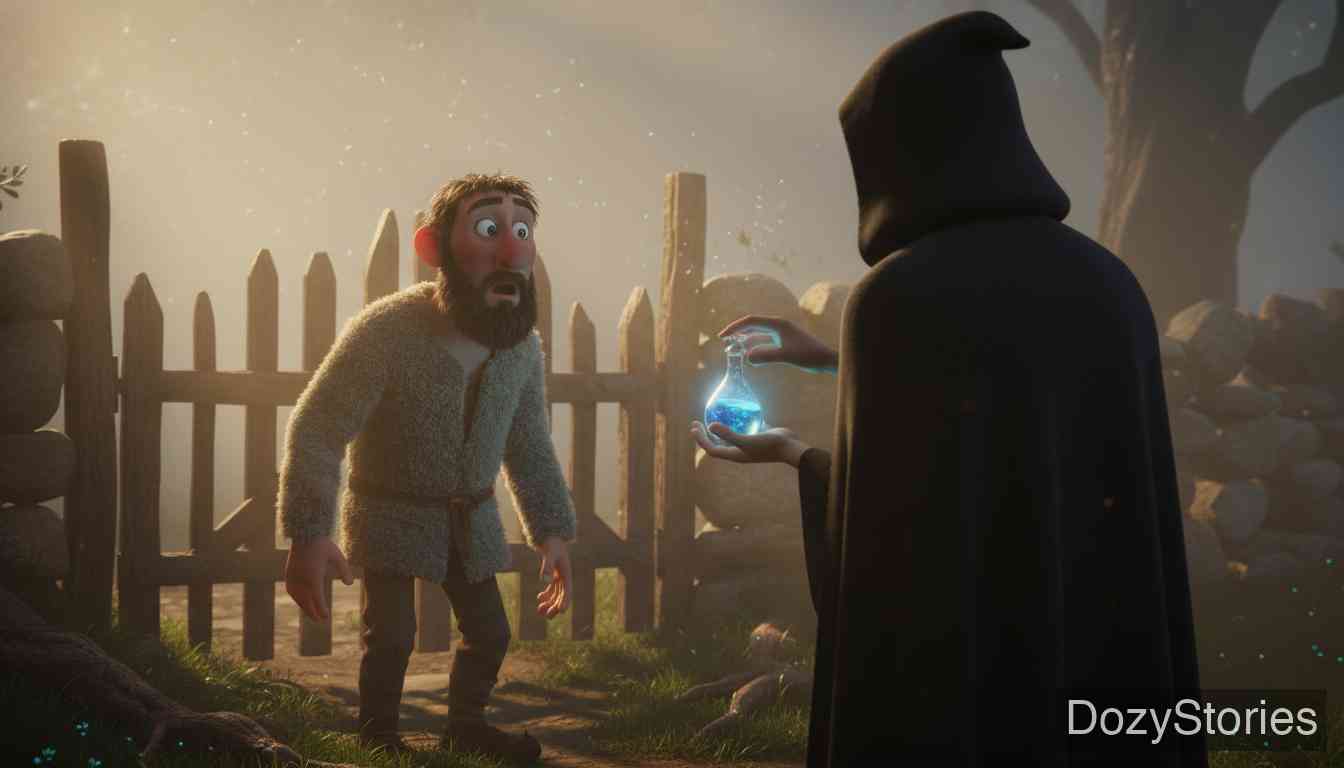
"With it you can heal the sick. But first you must see where Death is standing. If he stands at the head of the bed, give the sick one a sip, and he will get well. If he stands at the foot of the bed, no power on earth can save him."
「有了它,你能治好百病。」
A very small drink of liquid.
一小口;啜饮。
If he stands at the head of the bed, give the sick one a sip, and he will get well.
他若站在病人头边,喂病人喝一口,病人便好。
To reach more and more people or places.
传开;蔓延;扩散。
In a few years, his name spread far and wide, and he grew rich.
不出几年,他名声远扬,银子也攒下了不少。
The flat floor at the top of a flight of stairs.
楼梯平台;楼梯口。
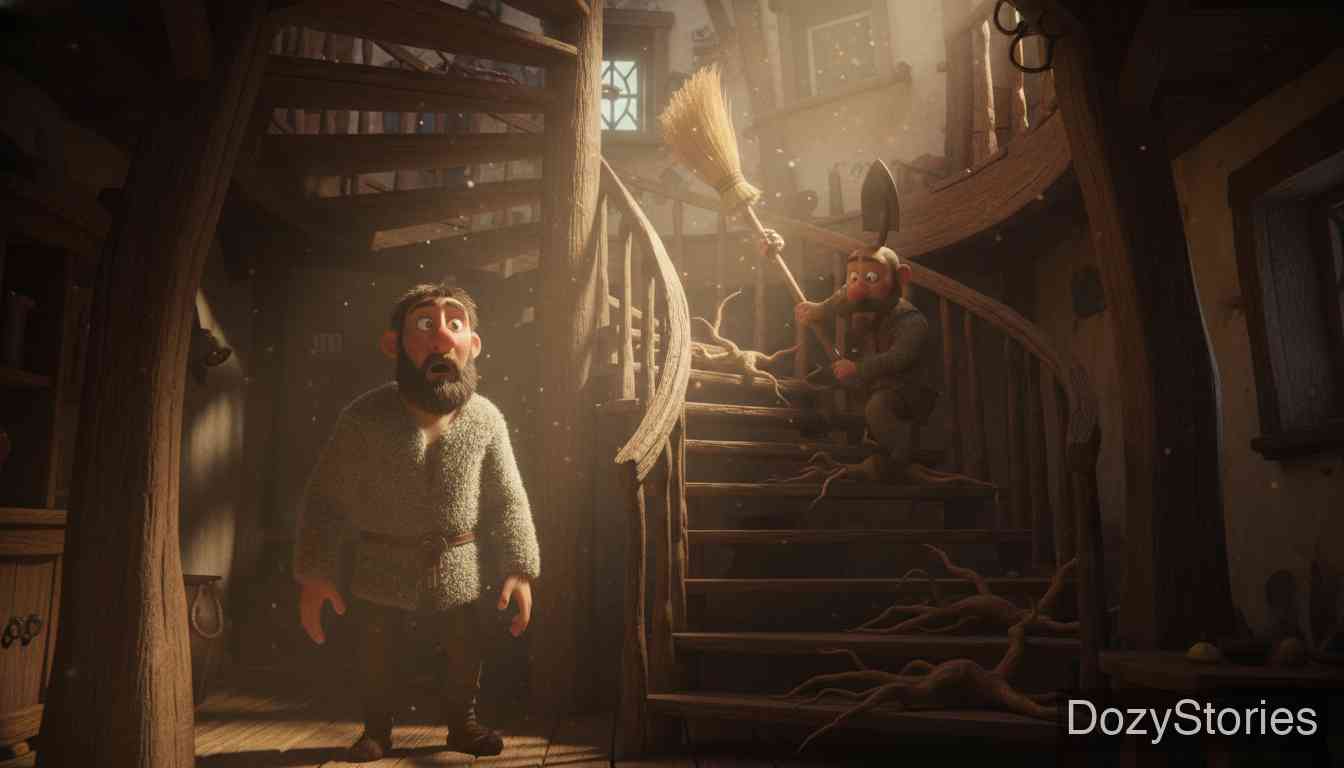
On the first landing, a broom and a shovel were fighting.
头一层楼梯口,一把扫帚和一把铁锹正扭作一团,打得不可开交。
A tool with a long handle and a wide blade, used for moving earth or coal.
铁锹;铲子。
On the first landing, a broom and a shovel were fighting.
头一层楼梯口,一把扫帚和一把铁锹正扭作一团,打得不可开交。
Making a long soft sound, like water on hot metal.
发出嘶嘶声。
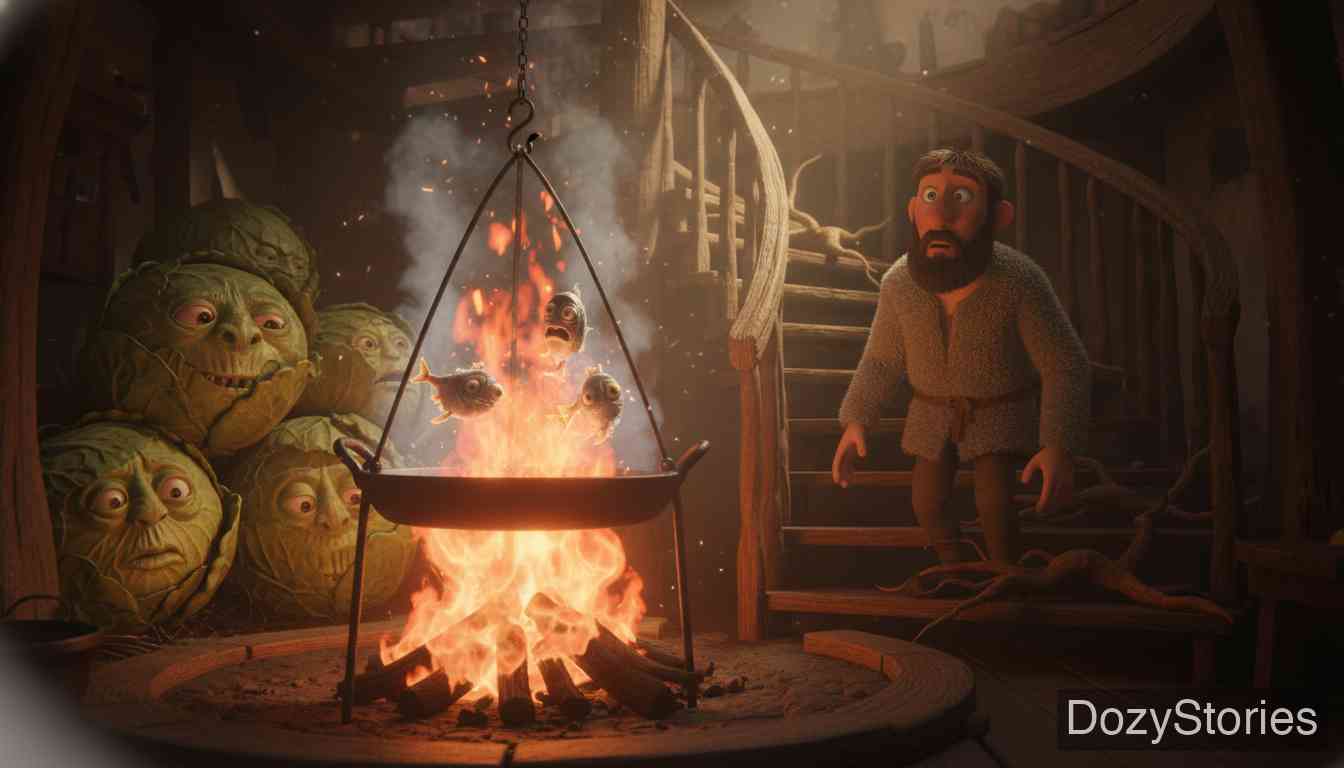
Fish were frying inside, hissing and turning over all by themselves.
几条鱼正在锅里煎得嘶嘶响,自己翻身,自己熟。
The small hole in a door that a key fits into.
锁孔;钥匙孔。
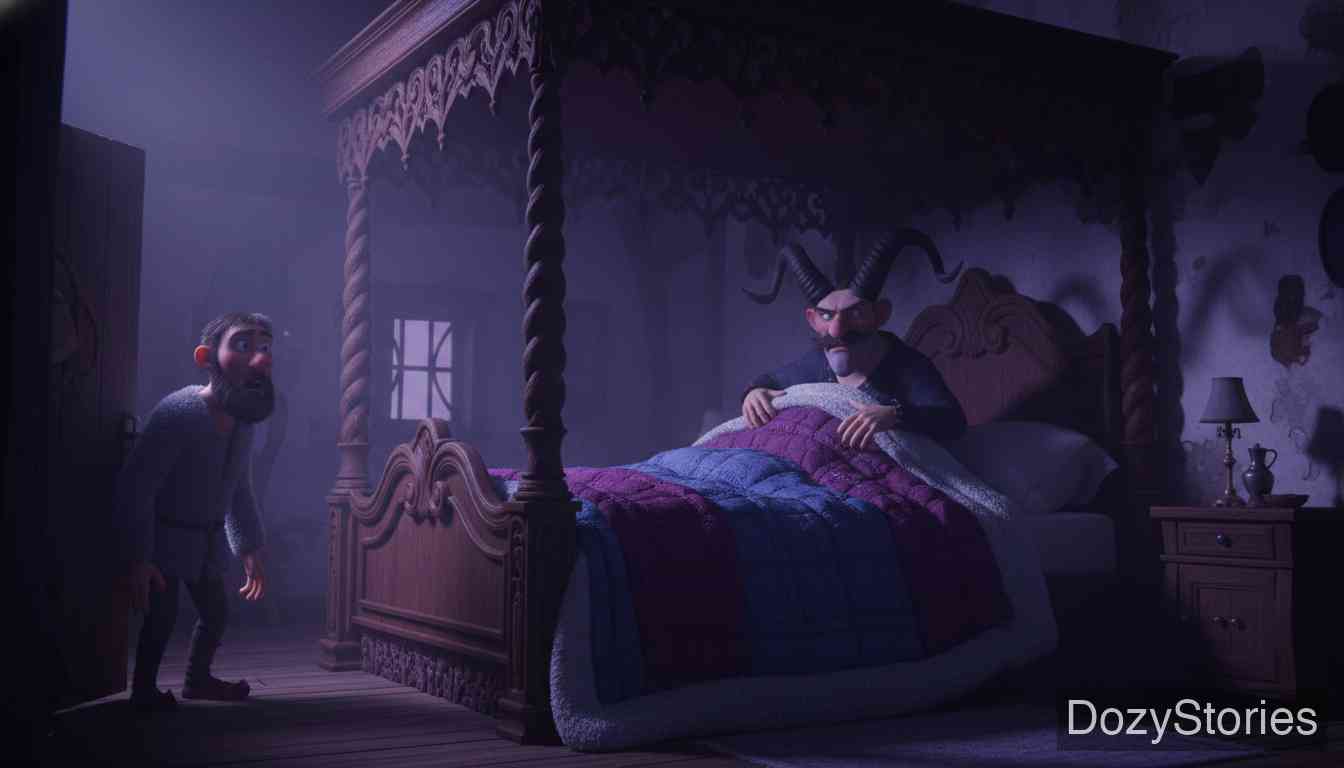
He put his eye to the keyhole.
他凑到锁孔前张望。
The hard pointed things that grow on the heads of some animals.
角;犄角。
There sat his godfather — and on his head grew a pair of long horns!
屋里坐着的正是教父,头上竟长着一对长长的角!
Took something quickly with the hand.
一把抓起;夺过。
The godfather snatched up the blanket and hid under it.
教父慌忙扯过被子,把自己蒙了个严严实实。
Silly; not wise.
愚蠢的;糊涂的。
"How foolish you are," said the godfather from under the blanket.
「你这人好不明白,」教父在被子里说。
Shook because of fear or cold.
(因害怕或寒冷而)发抖,打寒战。
The man shuddered, turned around, and ran out of the house as fast as he could, and he never came back.
穷人打了个寒战,转身就跑,一口气逃出了那宅子,从此再也没登过那宅子的门。
Reading Together & Learning More
The Moral
Do not let smooth words talk you out of what your own eyes have seen. When something feels wrong, trust that feeling and walk away — leaving in time is often the wisest choice of all.
Educational Value
Children learn that their own eyes matter more than smooth excuses, and that the inner voice which says "something is wrong" is a real protection, not a silly worry — knowing when to walk away is a life skill.
Tips for Parents
Read it like a game: let your child guess what strange thing waits on each floor before you turn the page. Afterwards, ask why the godfather keeps giving harmless names to terrible things, and praise your child for spotting the lie. If the story feels scary, point out that the godfather never hurt anyone — and that running away was the smart move.
Talk About It
- The poor man chose his godfather because of a dream. Would you make such an important decision because of a dream? Why or why not?
- The godfather calls dead fingers plant roots and dead heads cabbages. Why does he explain everything that way? Do his words make you calmer, or more worried?
- The story never says the godfather is the devil — it only shows his horns. Is it scarier when the writer leaves it unsaid? Why?
- The doctor can only save a patient when Death stands at the head of the bed. If you had the power to see how a story ends, would you want it?
- In the end, the poor man runs away without arguing. Was he right? Can you think of a time when leaving quickly is better than asking for an explanation?