The Fox and the Geese
Introduction
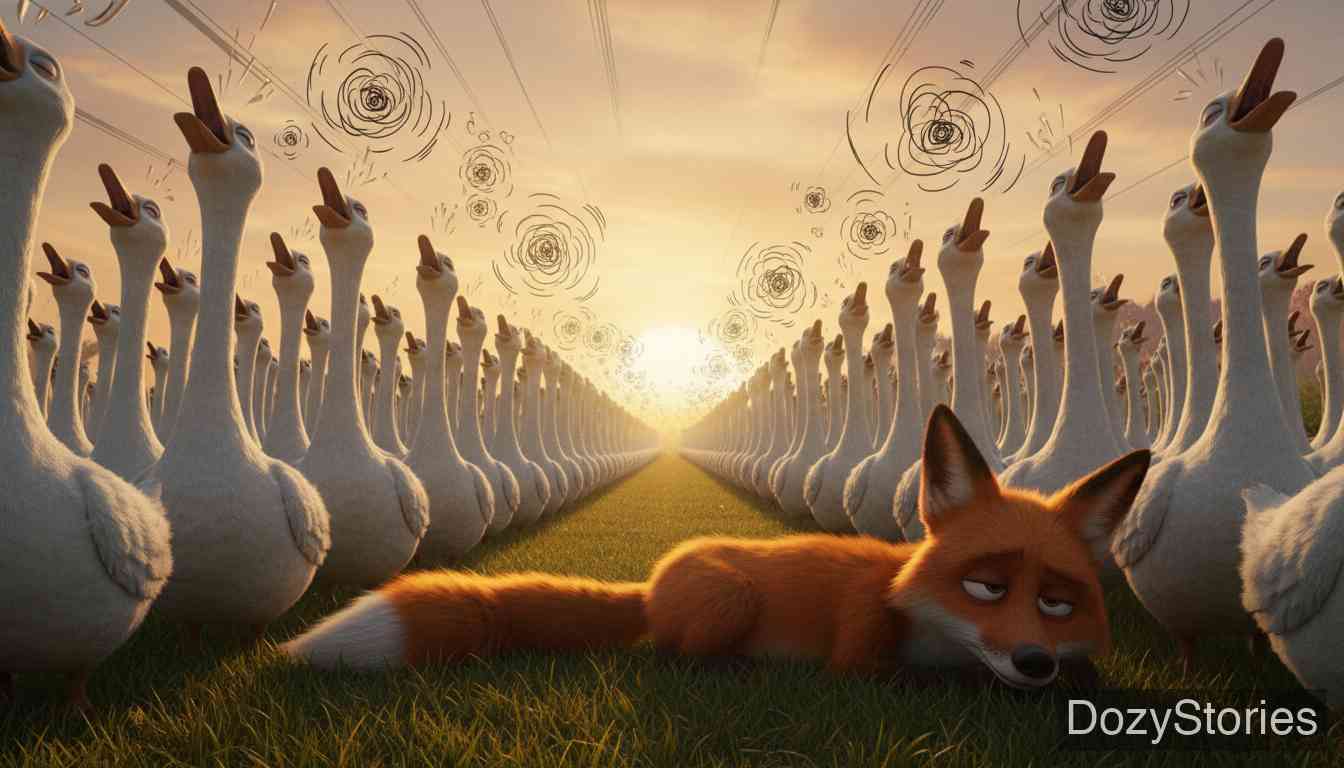
'The Fox and the Geese' is one of the shortest tales the Brothers Grimm ever collected, and one of the most playful. It belongs to an old folk form called the endless tale: the ending is designed never to arrive. The geese pray one after another without stopping, so the fox waits forever, and the story can never truly finish. Long ago, storytellers used such tales to tease children who kept asking for one more story. We retell it in the style of a Chinese fable because its bones are already those of a fable: it is short, its characters are clear at a glance, and its lesson hides inside the joke at the end. The geese cannot fight the fox with strength, so one of them asks for a final prayer — a gentle trick that buys time and wins the day. Chinese folk wisdom keeps the same idea in sayings like 'first be polite, then be firm' and 'the art of stalling': when an enemy is stronger, steady him first and find a way out slowly. When you read, pause at the end and ask your child whether the geese were ever eaten. Let them discover for themselves the delight of an open ending, and why a tale that never ends can still teach a lesson.
Vocabulary from "The Fox and the Geese"
12 key words from this story with definitions and original context sentences for language learners.
Ran with short, quick steps.
小跑;快步走。
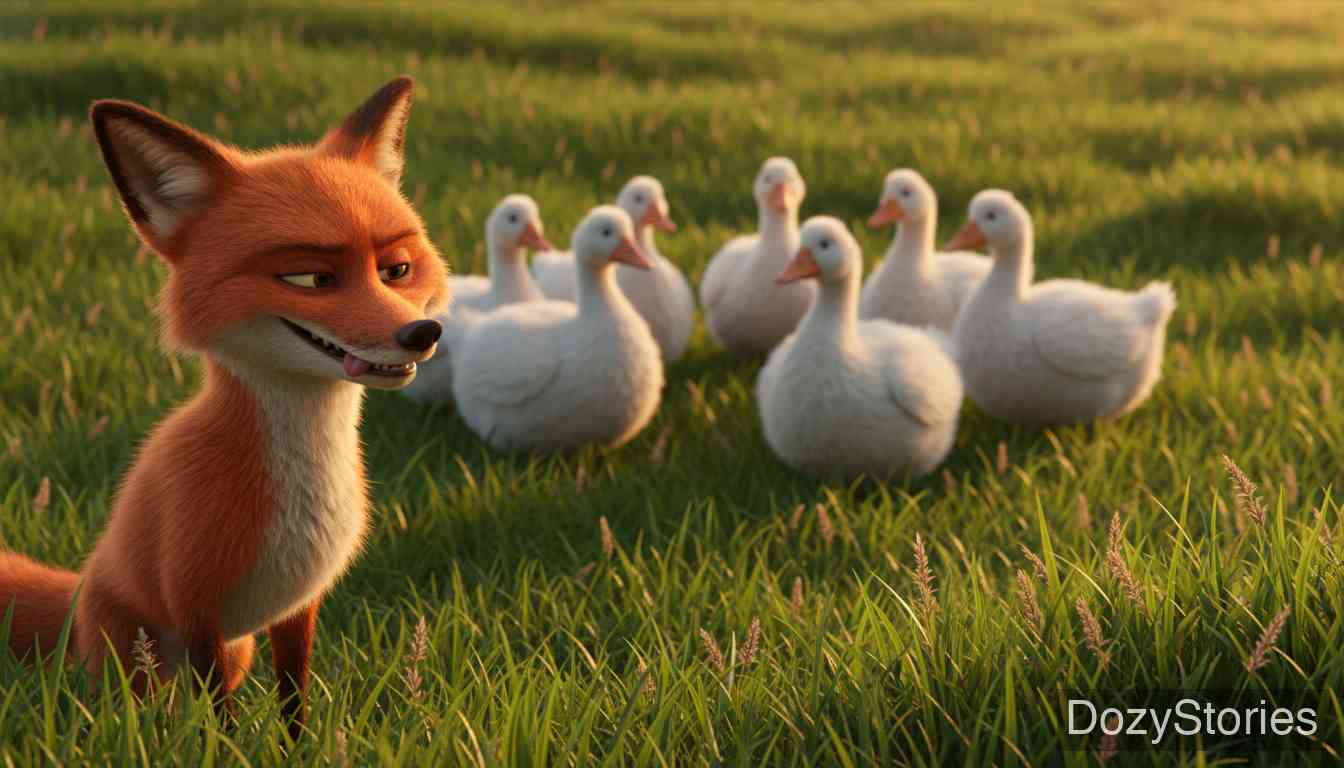
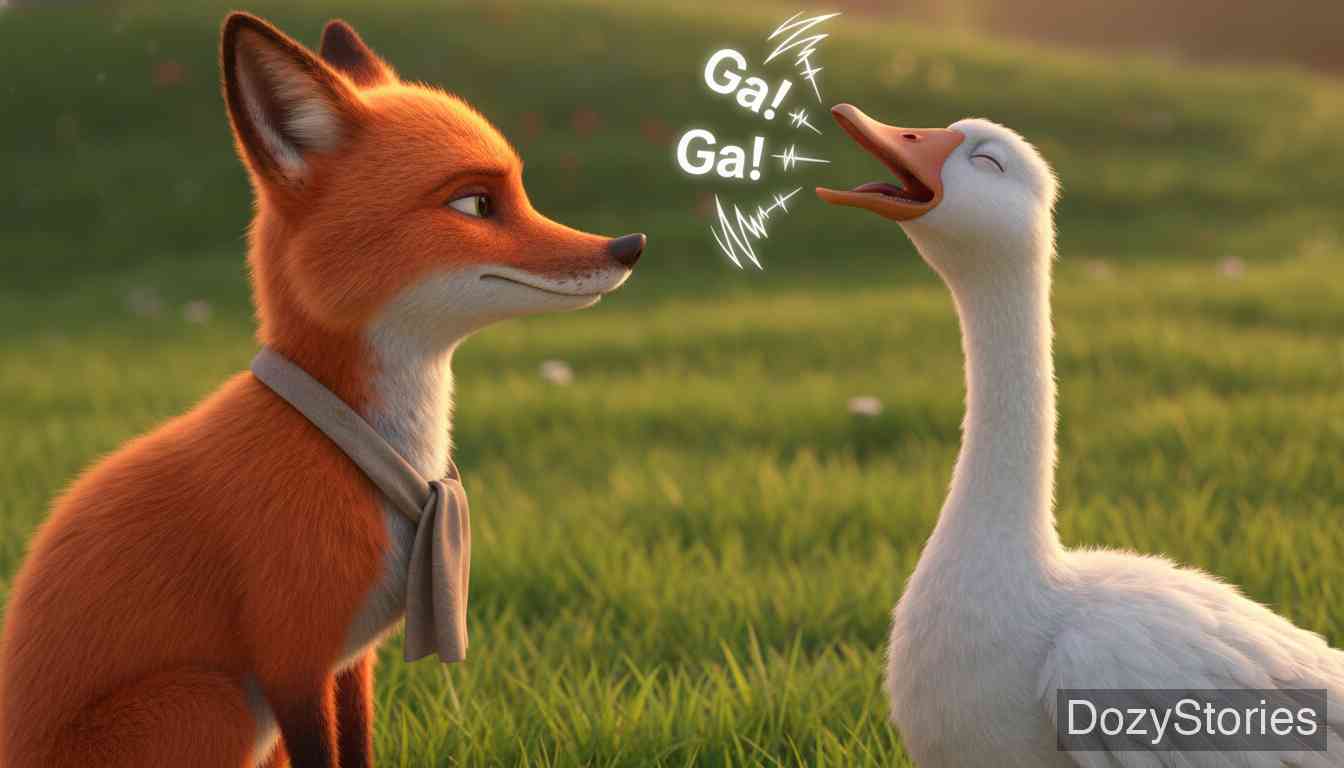
Long ago, a fox trotted into a meadow one day and came upon a flock of geese.
从前,有一只狐狸。这一日,他小跑着来到一片草地上,正撞见一群鹅。
A field covered with grass and wild flowers.
草地;草场。
Long ago, a fox trotted into a meadow one day and came upon a flock of geese.
从前,有一只狐狸。这一日,他小跑着来到一片草地上,正撞见一群鹅。
A group of birds or sheep that stay together.
(鸟或羊的)一群。
Long ago, a fox trotted into a meadow one day and came upon a flock of geese.
从前,有一只狐狸。这一日,他小跑着来到一片草地上,正撞见一群鹅。
Pleasantly round and fat.
丰满的;圆胖的。
They were plump and white, resting close together on the grass, without a care in the world.
那些鹅又白又肥,挤成一团,安心地歇在草地上。
Wanting more than you need, especially food.
贪婪的;嘴馋的。
The fox licked his lips and smiled a greedy smile.
狐狸见了,馋得直舔嘴唇,眯着眼笑道。
Kindness shown to someone you could punish.
慈悲;宽恕。
"There is no mercy here," he said.
“我这里没有慈悲二字。”
To get away from danger.
逃脱;躲开。
Not one of you will escape today.
今日你们一只也走不了。
To give someone what they ask for.
准许;应允。
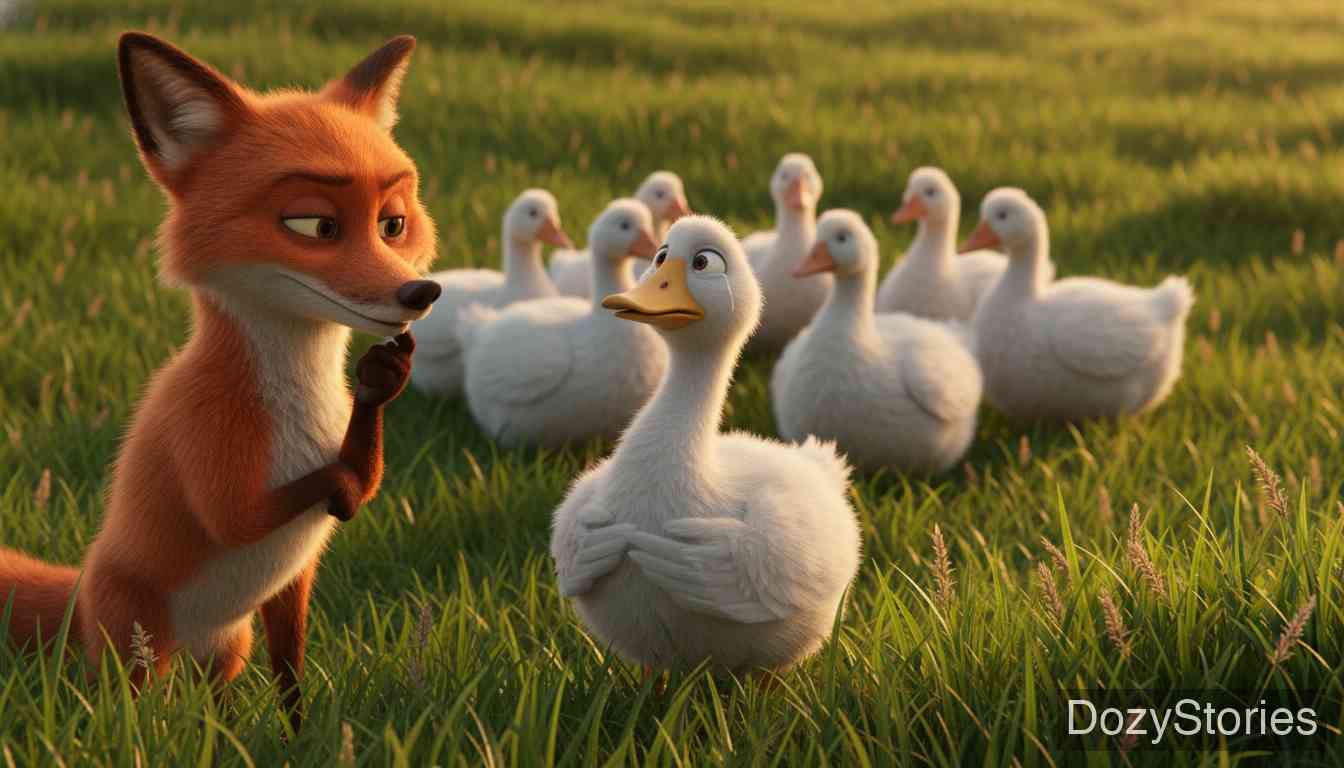
Grant us one thing only: let us say a prayer before we die, so we do not carry our sins with us.
只求应许一件事:让我们临死前做一回祷告,免得背着罪过上路。
Fair and sensible.
合情合理的。
"It is a reasonable prayer," he said.
“这请求合情合理,也算虔诚。”
Sudden fear that makes people act wildly.
惊慌;恐慌。
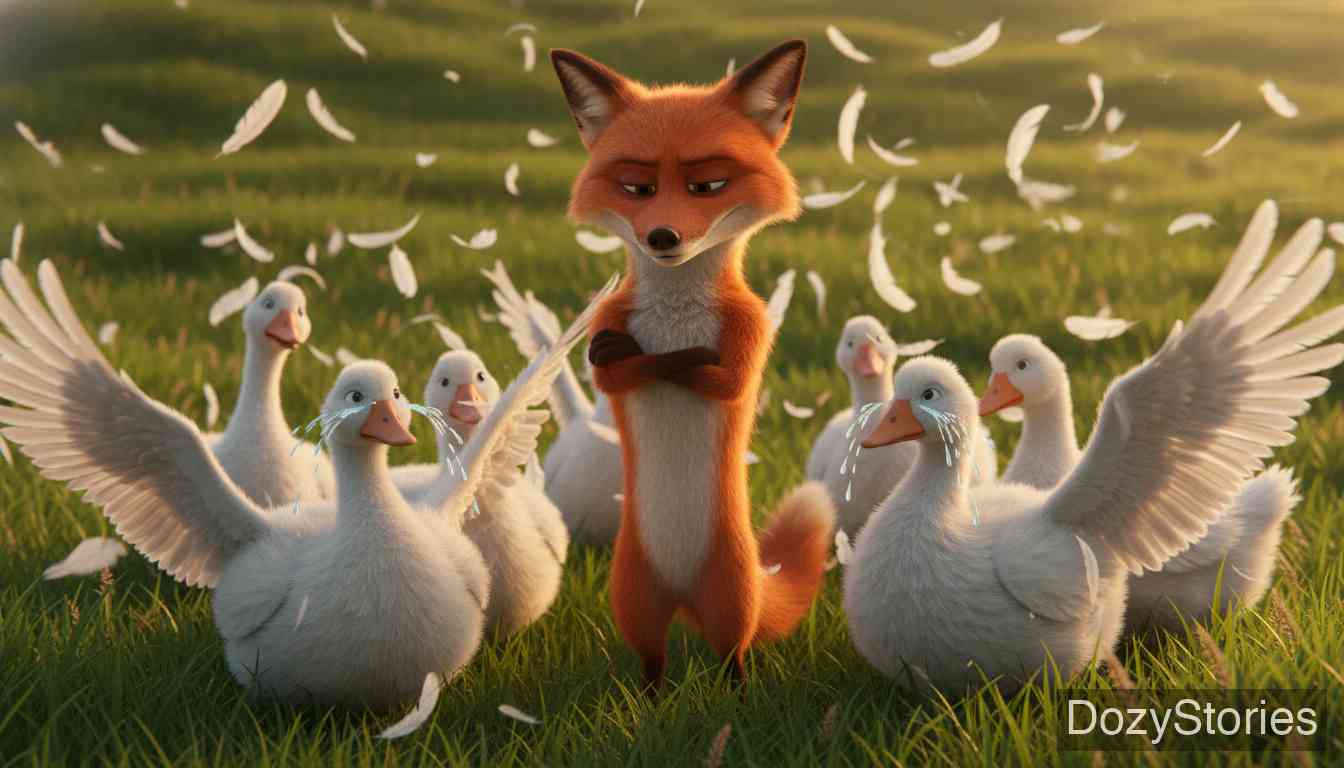
In the middle of the panic, one goose found her courage and stepped forward.
慌乱中,一只鹅壮起胆子,从同伴里走了出来。
Many voices making a sound at the same time.
合唱;齐声。
Then the third began, and the fourth, until the whole flock was honking together in one great feathered chorus.
第三只、第四只……到后来,整群鹅一齐开口,草地上响起一片羽毛做成的大合唱。
Covered with feathers.
长满羽毛的;羽毛做的。
Then the third began, and the fourth, until the whole flock was honking together in one great feathered chorus.
第三只、第四只……到后来,整群鹅一齐开口,草地上响起一片羽毛做成的大合唱。
Reading Together & Learning More
The Moral
When a stronger enemy threatens you, wit beats force — a clever mind can always buy itself more time.
Educational Value
Helps children feel the old wisdom that wit wins over force, enjoy the playful endless tale, and learn to look at problems with humour and creative thinking.
Tips for Parents
Pause at the end and ask your child whether the geese were ever eaten. Share the joke of the never-ending prayer together, then make up your own ending and decide how long the fox must keep waiting.
Talk About It
- The geese cannot beat the fox, yet they find a way to stay alive. What makes their trick clever?
- The story ends with the geese still praying. Do you think the fox ever eats them? Why?
- If you were the first goose to speak, what other trick could you use to keep the fox waiting?
- When you face someone stronger than you, is it better to use your wits or to fight with force?
- Why does the author let the prayer never end? What does that do to the story?