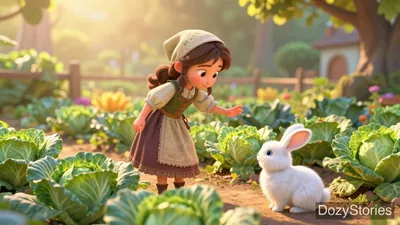
The Elves and the Shoemaker
Introduction
This fable of kindness and gratitude comes from one of the best-loved tales collected by the Brothers Grimm. In this retelling, the tiny elves are not just mysterious helpers — they stand for an old and simple idea: kindness always finds its way home. The shoemaker treats his work honestly, so the elves reward him in the night; the couple repay the elves with warm little clothes, so the elves leave content, dancing and singing. It is the same wisdom that lives in the Chinese saying “a drop of water in need shall be returned with a spring.” A kindness does not have to be grand, but it should be remembered and repaid with action. As you read, ask your child why the elves, who had done so much, were happy with a few little clothes. The answer is gentle: they never wanted payment. They only wanted to feel seen and valued. The story teaches two quiet lessons as well. For the giver: do good without seeking notice, like the elves sewing in the dark. For the receiver: turn your thanks into a gift, like the couple making tiny shirts and shoes. One gives, the other repays, and the circle of kindness keeps turning. Read slowly, let your child discover the elves' secret together with the shoemaker, and then talk about one small kindness your family could do for someone this week.
Vocabulary from "The Elves and the Shoemaker"
12 key words from this story with definitions and original context sentences for language learners.
Animal skin prepared for making shoes and bags.
皮革;皮子。
In the end, he had no more than enough leather for one pair of shoes.
到后来,家里只剩下够做一双鞋的皮子。
Very surprised, almost unable to believe what you see.
惊奇的;大为惊讶的。
At first they stood still, amazed.
起先他们愣住了。
People who pay money to get something.
买主;买家。
More and more buyers came, and soon he had money for four more pairs.
买鞋的人一个接一个,钱越赚越多,他很快又买回够做四双鞋的皮子。
To stay in a place where no one can see you.
躲藏;藏起来。
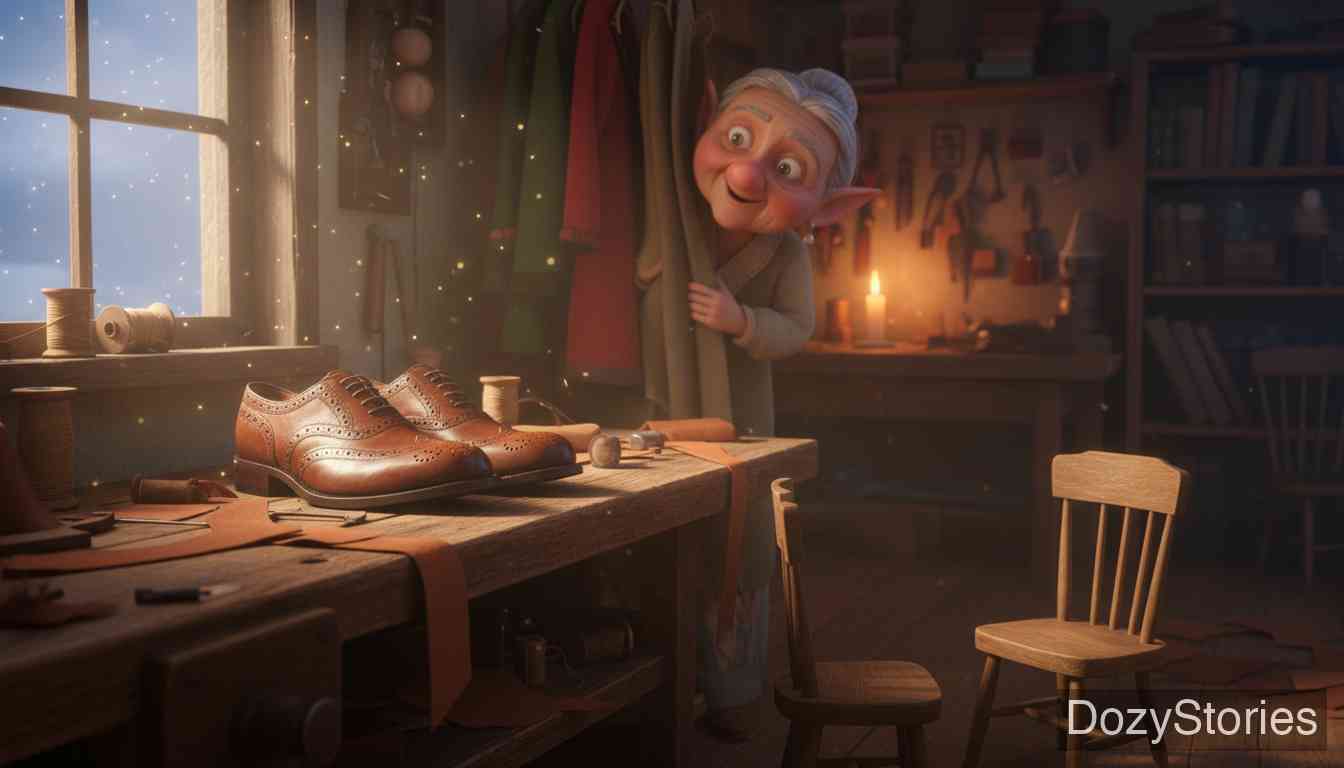
Let us stay awake tonight and hide in the room.
今夜咱们先别睡,躲在屋里看看。
Twelve o'clock at night; the middle of the night.
午夜;半夜十二点。
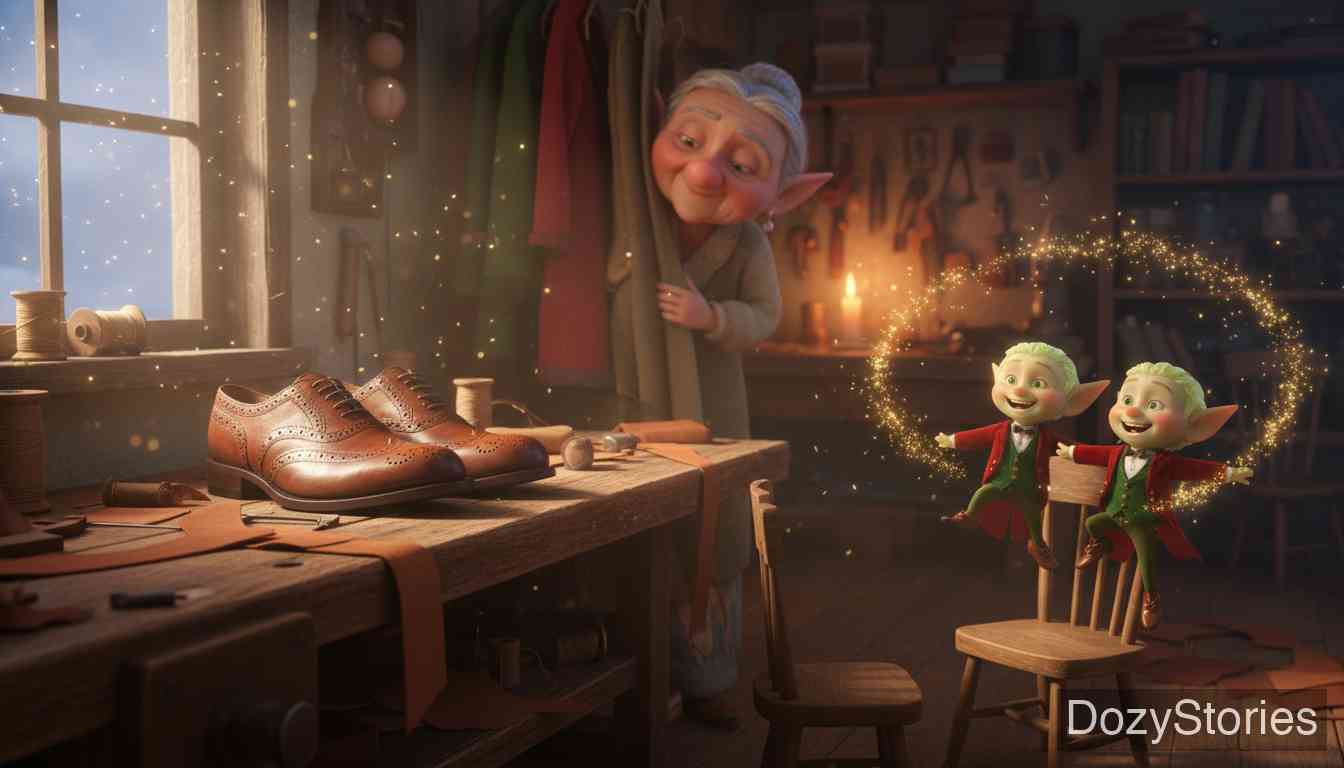
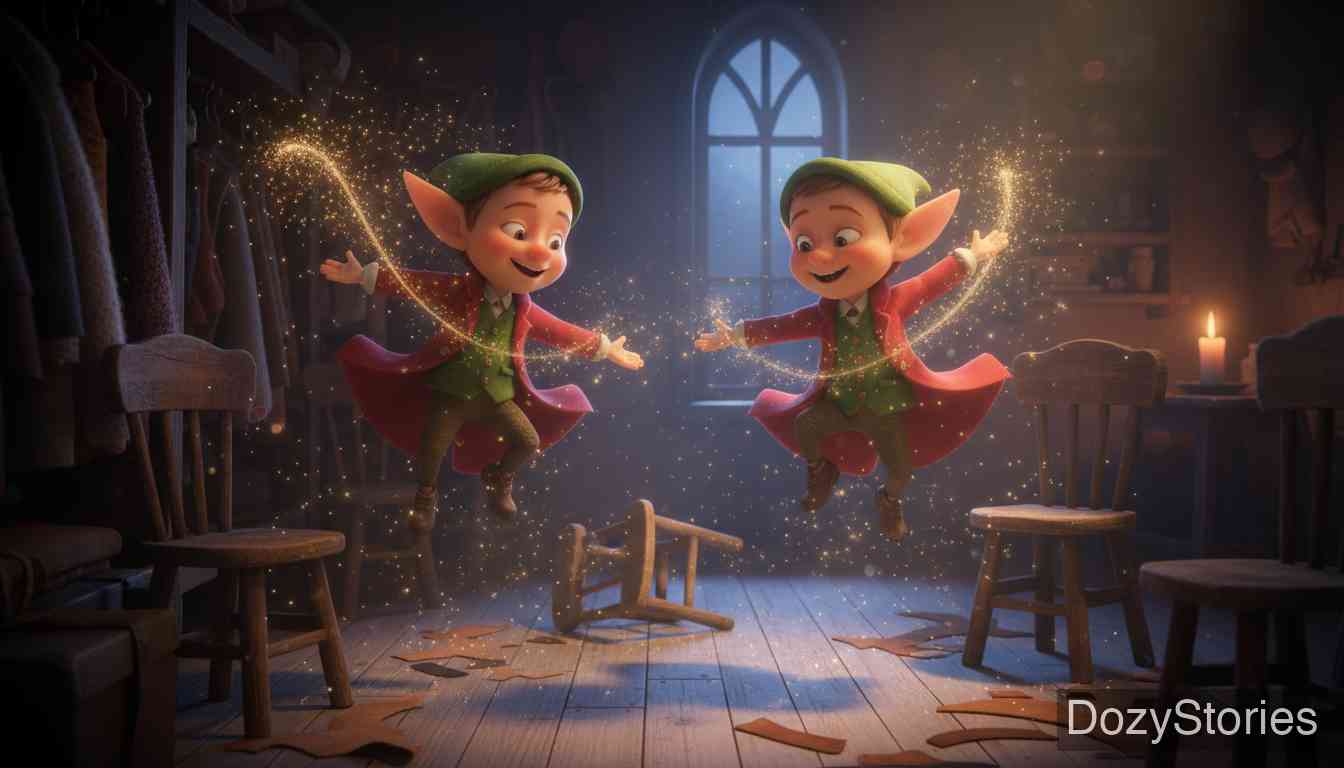
At midnight, two tiny men came in, wearing no clothes at all.
半夜时分,两个赤条条的小人儿轻手轻脚走进来。
To sew cloth or leather with a needle and thread.
缝;缝制。
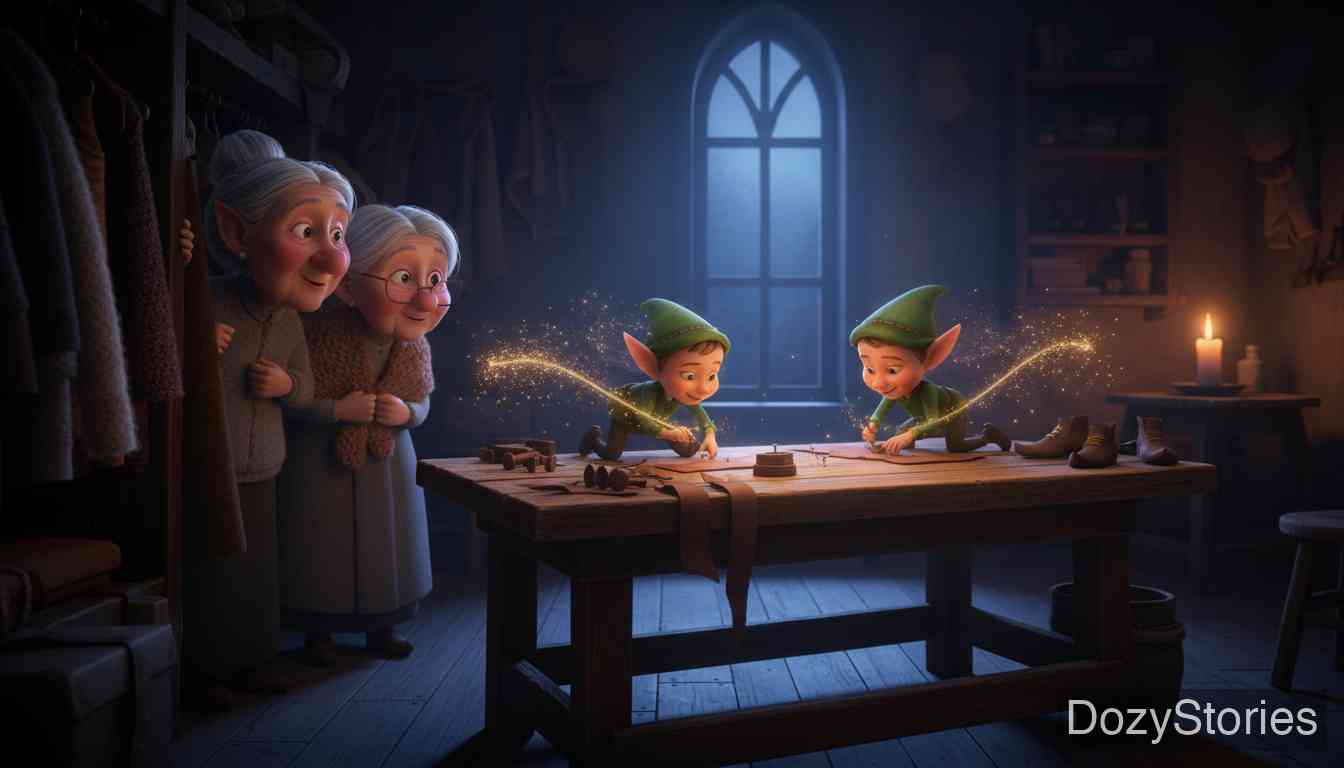
They sat down at the table, picked up the cut leather, and began to stitch and hammer.
他们坐到桌边,拿起裁好的皮子,穿针引线,缝的缝,敲的敲。
To hit something with a tool or with your hand, again and again.
敲打;锤打。
They sat down at the table, picked up the cut leather, and began to stitch and hammer.
他们坐到桌边,拿起裁好的皮子,穿针引线,缝的缝,敲的敲。
Almost not; only just.
几乎不;简直无法。
Their little fingers moved so fast that the shoemaker could hardly believe his eyes.
一双小手快得像翻飞,鞋匠看得眼睛都舍不得眨。
Feeling happy because someone was kind to you.
感激的;感谢的。
We must show them how thankful we are.
咱们可得好好谢他们。
To make clothes from wool by joining loops of thread with needles.
编织(毛衣、袜子等)。
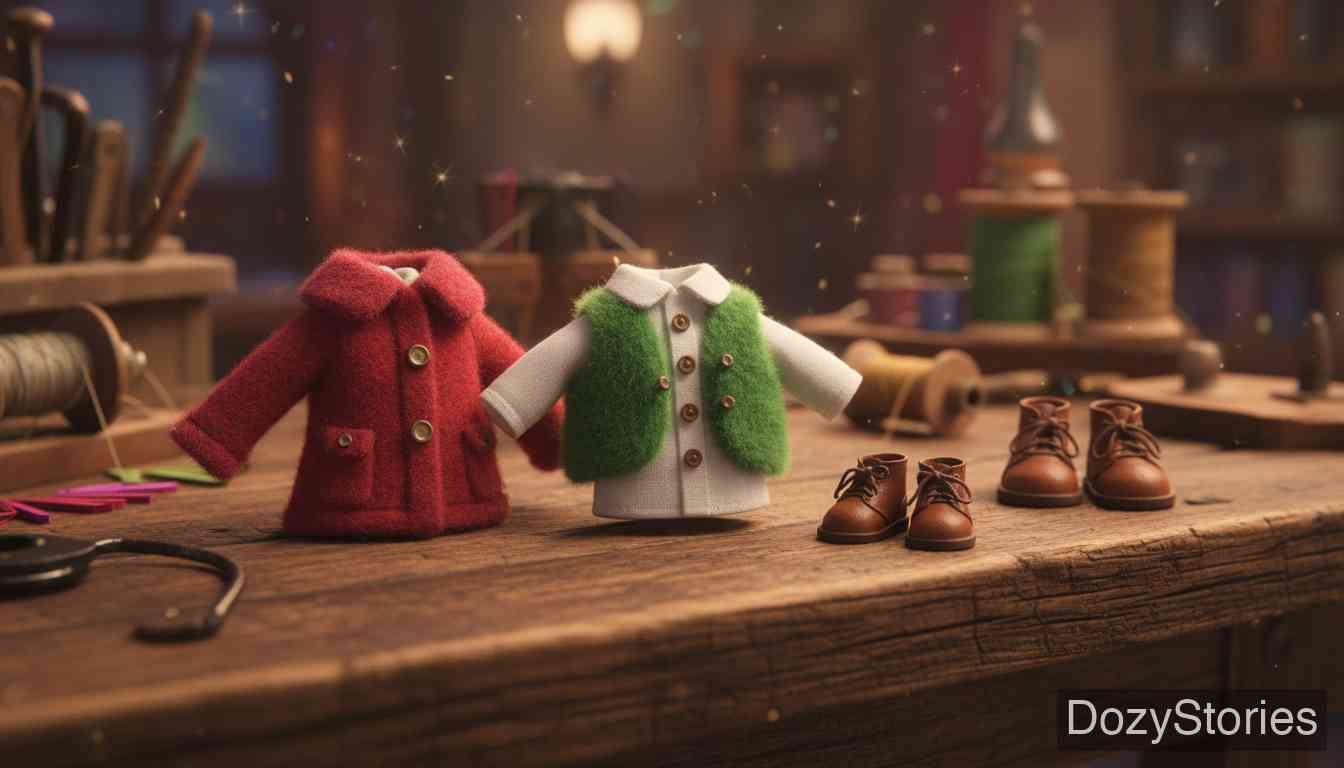
I will sew them little shirts, coats, waistcoats, and trousers, and knit each of them a pair of socks.
我给他们做小衬衫、小褂子、小背心、小裤子,再给他们各织一双袜子。
Became bright and happy, full of joy.
(脸)亮起来;变得容光焕发。
Then their faces lit up with joy.
随后两张小脸放出光来。
Became rich and successful; everything went well.
兴旺发达;日子红火。
But from that day on, the shoemaker prospered all his life.
可从那以后,鞋匠的日子一天比一天好,做什么成什么,一直富到老。
Reading Together & Learning More
The Moral
Good deeds bring good fortune. Be kind to others, and kindness will come back to you; remember a kindness you have received and repay it, and good luck will follow.
Educational Value
Helps children learn to be grateful and to repay kindness in their own way, and shows that helping others quietly, without seeking praise, is a precious virtue.
Tips for Parents
After reading, make a small thank-you gift together for someone who has helped your family; then ask your child how else we can turn our thanks into action, beyond just saying the words.
Talk About It
- The elves worked every night and never asked for pay. When they got the little clothes, they left happily. What do you think they really wanted?
- If the elves had never come back, would the couple's gifts still have been worth making? Why or why not?
- The couple turned their thanks into a gift. If someone helps you, what could you do to show your thanks besides saying the words?
- The elves always did good deeds in the dark, where no one could see. Why is quiet kindness more precious than kindness that everyone talks about?
- The story says good deeds bring good fortune. Do you believe that helping others brings a reward? Have you ever seen or heard of such a thing?