The Changeling
Introduction
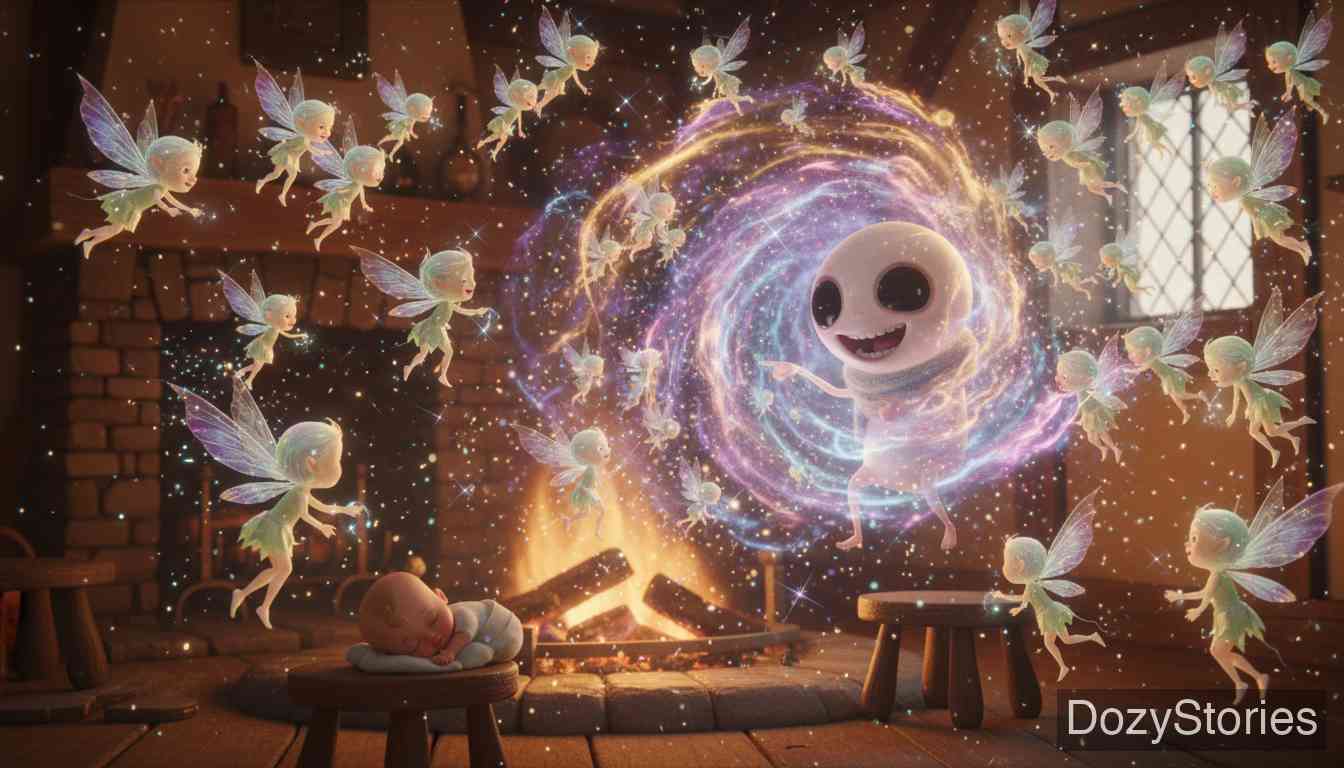
Why retell "The Changeling" as a fable? In the Brothers Grimm collection it is barely a story at all — a few lines of folk belief about elves stealing babies from their cradles. A fable, by contrast, wants a plain lesson at the end, and this little tale lends itself to one: when force cannot work, wit can. The egg-shell trick itself is very old, and not only in Germany; versions of it appear in British and Irish lore, where boiling water in egg-shells is the classic way to make a changeling give itself away. In spirit it is not far from Chinese folk wisdom — the same taste for brains over brawn that fills our own fables, from the clever fox to the crafty goose. This retelling keeps the European setting, the village by the forest and the warm kitchen hearth, but tells the tale in the plain, steady voice of a bedtime lesson. When you read it with your child, resist the urge to explain the trick in advance. Let them wonder why a mother would boil water in egg-shells with such a serious face. The moment the old imp bursts out laughing, the point lands by itself, and the lesson stays in the mind far longer than any lecture could.




Vocabulary from "The Changeling"
12 key words from this story with definitions and original context sentences for language learners.
Moved quietly so that nobody noticed.
悄悄溜进;神不知鬼不觉地移动。
One night, elves slipped into her home while everyone slept.
有一天夜里,精灵悄悄溜进了她家。
Stopped moving suddenly, as if turned to ice.
愣住了;一下子定住不动。
The next morning, the mother looked into the cradle and froze.
第二天清早,母亲俯身去看摇篮,顿时愣住了。
Looking with wide-open eyes, without turning away.
瞪着眼睛看的;直勾勾盯着的。
Its head was far too big for its little body, and its eyes were wide and staring.
那东西脑袋大得出奇,一双眼睛又圆又直地瞪着。
In old folk tales, a strange child left by elves in place of a stolen human baby.
(民间传说中)精灵偷走婴儿后留下的替换儿;换生灵。
The neighbours whispered a word she did not want to hear: changeling.
邻居们压低了嗓子,说出了一个她最不想听到的词:换生灵。
Moved gently back and forth, the way a baby's bed is moved to help it sleep.
轻轻摇动(摇篮、婴儿)。
For days, the mother rocked the strange child and hoped it would turn back into her own baby.
一连几天,母亲摇着这个陌生的孩子,盼着他变回自己的小婴儿。
Feeling so hopeless that you will try anything.
绝望的;走投无路的。
At last, worn out and desperate, she wrapped her shawl around her shoulders and walked down the lane to the old woman at the end of the village.
最后,她又累又绝望,披上披肩,沿着小路,去村头找那位老妇人。
Asked for something in a very earnest, humble way.
恳求;苦苦央求。
"Please," the mother begged, "I only want my own child home. Teach me a way."
“求求你,”母亲恳求道,“我只想我自己的孩子回家,教我个法子吧。”
Clever in a quiet, secret, slightly tricky way.
狡黠的;不动声色却已有主意的。
Then she smiled a small, sly smile.
末了,她露出一个狡黠的小小笑容。
The floor of a fireplace and the space in front of it.
壁炉;炉膛前的地面。
Carry the changeling into the kitchen and sit it beside the hearth.
把换生灵抱进厨房,让它坐在炉边。
The hard outer coverings of eggs.
蛋壳。
Then take two empty egg-shells, fill them with water, and set them over the flames, as if you meant to cook a whole family's dinner in them.
再拿两个空蛋壳,装满水,架到火上,装出一副要用它们给全家煮饭的样子。
Normal; not special or unusual.
寻常的;普普通通的。
Then she began to boil water in two egg-shells, calm as if this were the most ordinary cooking in the world.
她当真用两个蛋壳烧起水来,脸上不慌不忙,仿佛天底下天天都有人这么做饭。
Crying out in a very high, sharp voice.
尖声叫喊的;尖叫的。
They carried the shrieking changeling away, and they were gone up the chimney before she could speak a word.
他们架起尖叫的换生灵,一眨眼工夫,顺着烟囱走得无影无踪。
Reading Together & Learning More
The Moral
When a problem seems to have no answer, force and tears may fail, but a clever trick can break it open. A little wit is worth more than a lot of strength.
Educational Value
This fable teaches children that a hard problem often gives way to wit, not force, and that one surprising idea can break a deadlock. It also opens a door to the old folk belief in changelings, and to how people long ago used stories to make sense of what they could not understand.
Tips for Parents
Before reading, ask your child to guess why the mother boils water in egg-shells with such a serious face. After reading, act out the scene together and talk about how the mother wins by wit, not by force. Then ask: has a hard problem in your own life ever given way to a surprising idea?
Talk About It
- The mother does not fight or scold, but boils water in egg-shells with a serious face. Why do you think she chooses such a strange trick?
- The imp says it is older than the Wester forest, yet it has never seen anyone cook in an egg-shell. Why does a creature that has seen so much laugh at something so absurd?
- If the elves had not brought the real baby back that day, what other plan could the mother have tried? Invent one.
- The old woman says, "Do not smile." Why must the mother keep a straight face? Is it hard to do something silly without laughing?
- Is there a hard problem in your life that would not give way to force, but did give way to a surprising idea? Tell us about it.