The Singing, Springing Lark

Introduction

If you have read "Beauty and the Beast," you will recognise this tale as its long-lost German brother — a father whose errand (here, catching a bird) angers a beast, a youngest daughter who goes to the beast in her father's place, and a beast who turns out, by night, to be a handsome prince. Folklorists group this whole family of stories under the number ATU 425, and their common ancestor reaches all the way back to "Cupid and Psyche," written by the Roman author Apuleius almost two thousand years ago. Yet the Grimm version has a fascinating difference: in "Beauty and the Beast" Belle's task is largely done once she learns to love, but here the real trial only begins when a hair-thin ray of candlelight turns the husband into a dove. It is the wife who then wanders the whole world alone, questioning the Sun, the Moon, and the four Winds, striking a dragon with a reed, and finally buying her husband back with three magic gifts. A talking Sun and Moon, and Winds that hand out magical presents, are very ancient motifs — you meet them again in the Norwegian tale "East of the Sun and West of the Moon." As you read, notice with your child why, in the oldest stories, the rescuer is so often the one who seems weakest yet refuses to give up.

Font Size
Image Layout
1 / 35
Stopped
There was once on a time a man who was about to set out on a long journey, and on parting he asked his three daughters what he should bring back with him for them. Whereupon the eldest wished for pearls, the second wished for diamonds, but the third said, "Dear father, I should like a singing, soaring lark."
The father said, "Yes, if I can get it, you shall have it," kissed all three, and set out. Now when the time had come for him to be on his way home again, he had brought pearls and diamonds for the two eldest, but he had sought everywhere in vain for a singing, soaring lark for the youngest, and he was very unhappy about it, for she was his favorite child.
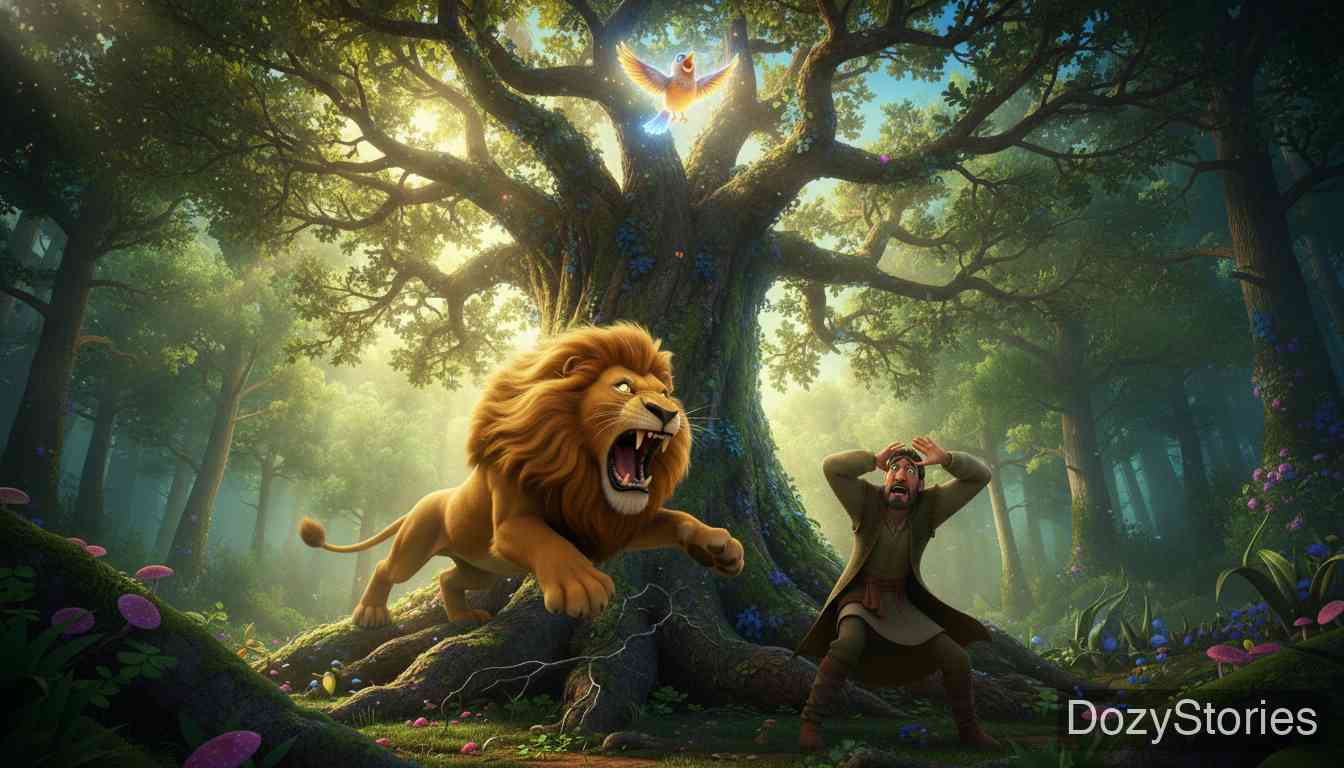
Then his road lay through a forest, and in the midst of it was a splendid castle, and near the castle stood a tree, but quite on the top of the tree, he saw a singing, soaring lark. "Aha, you come just at the right moment!" he said, quite delighted, and called to his servant to climb up and catch the little creature.
But as he approached the tree, a lion leapt from beneath it, shook himself, and roared till the leaves on the trees trembled. "He who tries to steal my singing, soaring lark," he cried, "will I devour."
Then the man said, "I did not know that the bird belonged to thee. I will make amends for the wrong I have done and ransom myself with a large sum of money, only spare my life." The lion said, "Nothing can save thee, unless thou wilt promise to give me for mine own what first meets thee on thy return home; and if thou wilt do that, I will grant thee thy life, and thou shalt have the bird for thy daughter, into the bargain."
But the man hesitated and said, "That might be my youngest daughter, she loves me best, and always runs to meet me on my return home." The servant, however, was terrified and said, "Why should your daughter be the very one to meet you, it might as easily be a cat, or dog?"
Then the man allowed himself to be over-persuaded, took the singing, soaring lark, and promised to give the lion whatsoever should first meet him on his return home. When he reached home and entered his house, the first who met him was no other than his youngest and dearest daughter, who came running up, kissed and embraced him, and when she saw that he had brought with him a singing, soaring lark, she was beside herself with joy.
The father, however, could not rejoice, but began to weep, and said, "My dearest child, I have bought the little bird dear. In return for it, I have been obliged to promise thee to a savage lion, and when he has thee he will tear thee in pieces and devour thee," and he told her all, just as it had happened, and begged her not to go there, come what might.
But she consoled him and said, "Dearest father, indeed your promise must be fulfilled. I will go thither and soften the lion, so that I may return to thee safely."
Next morning she had the road pointed out to her, took leave, and went fearlessly out into the forest. The lion, however, was an enchanted prince and was by day a lion, and all his people were lions with him, but in the night they resumed their natural human shapes.
On her arrival she was kindly received and led into the castle. When night came, the lion turned into a handsome man, and their wedding was celebrated with great magnificence. They lived happily together, remained awake at night, and slept in the daytime.
One day he came and said, "To-morrow there is a feast in thy father's house, because your eldest sister is to be married, and if thou art inclined to go there, my lions shall conduct thee." She said, "Yes, I should very much like to see my father again," and went thither, accompanied by the lions. There was great joy when she arrived, for they had all believed that she had been torn in pieces by the lion, and had long ceased to live.
But she told them what a handsome husband she had, and how well off she was, remained with them while the wedding-feast lasted, and then went back again to the forest. When the second daughter was about to be married, and she was again invited to the wedding, she said to the lion, "This time I will not be alone, thou must come with me."
The lion, however, said that it was too dangerous for him, for if when there a ray from a burning candle fell on him, he would be changed into a dove, and for seven years long would have to fly about with the doves. She said, "Ah, but do come with me, I will take great care of thee, and guard thee from all light."
So they went away together, and took with them their little child as well. She had a chamber built there, so strong and thick that no ray could pierce through it; in this he was to shut himself up when the candles were lit for the wedding-feast. But the door was made of green wood which warped and left a little crack which no one noticed.
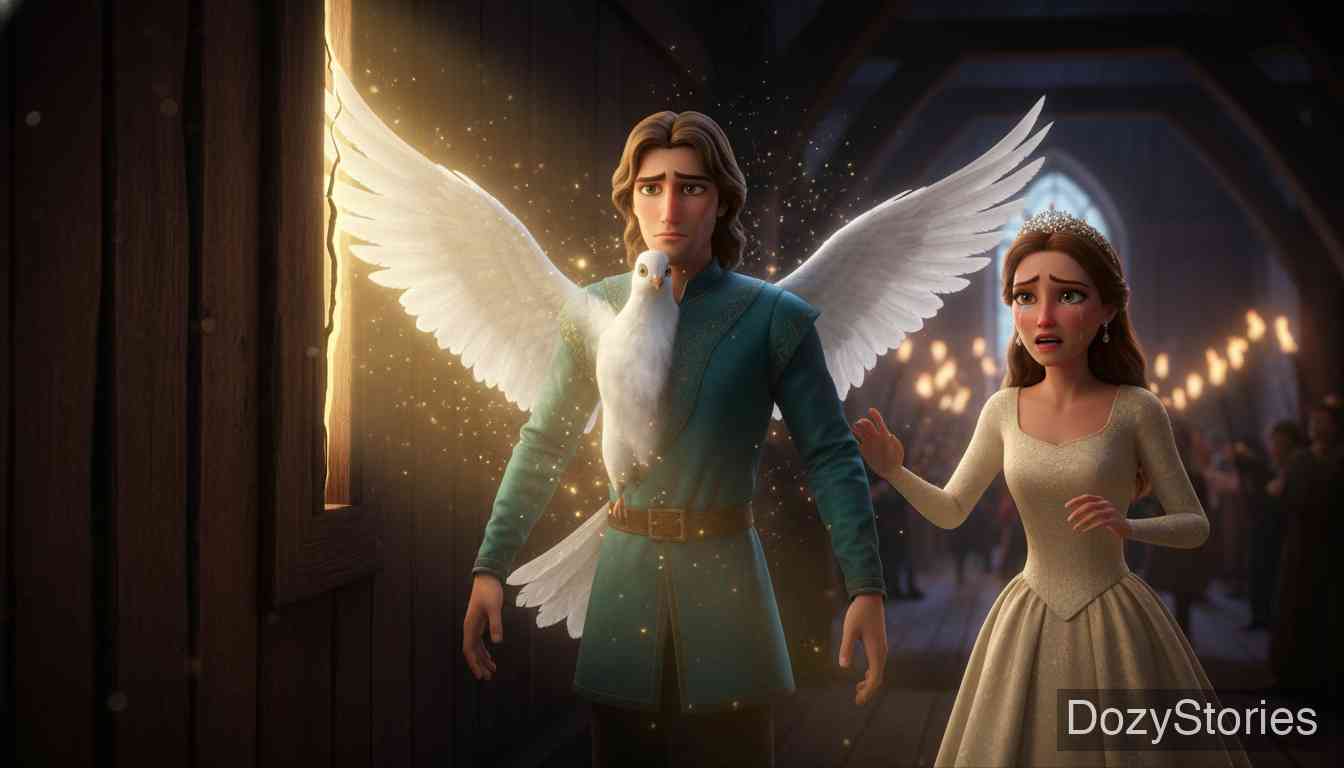
The wedding was celebrated with magnificence, but when the procession with all its candles and torches came back from church, and passed by this apartment, a ray about the bredth of a hair fell on the King's son, and when this ray touched him, he was transformed in an instant, and when she came in and looked for him, she did not see him, but a white dove was sitting there.
The dove said to her, "For seven years must I fly about the world, but at every seventh step that you take I will let fall a drop of red blood and a white feather, and these will show thee the way, and if thou followest the trace thou canst release me." Thereupon the dove flew out at the door, and she followed him, and at every seventh step a red drop of blood and a little white feather fell down and showed her the way.
So she went continually further and further in the wide world, never looking about her or resting, and the seven years were almost past; then she rejoiced and thought that they would soon be delivered, and yet they were so far from it! Once when they were thus moving onwards, no little feather and no drop of red blood fell, and when she raised her eyes the dove had disappeared.
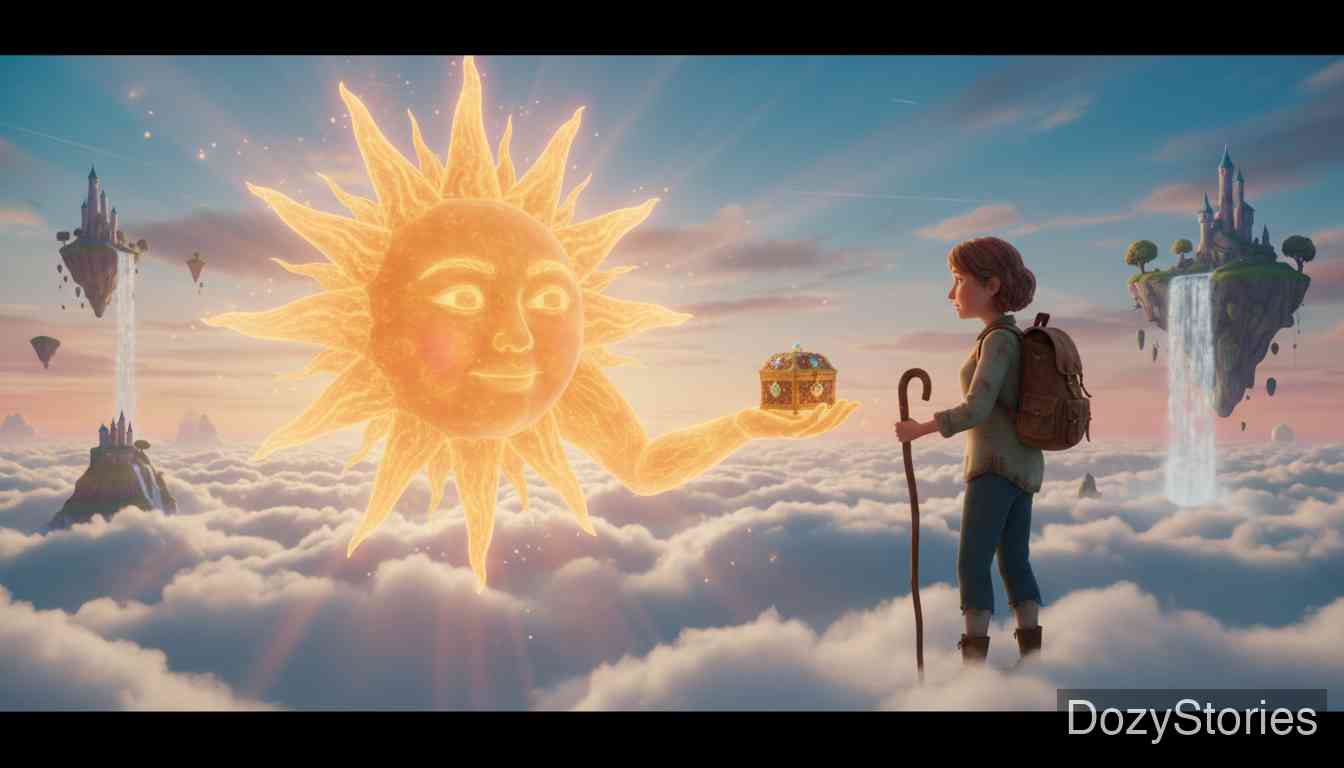
And as she thought to herself, "In this no man can help thee," she climbed up to the sun, and said to him, "Thou shinest into every crevice, and over every peak, hast thou not seen a white dove flying?" - "No," said the sun, "I have seen none, but I present thee with a casket, open it when thou art in sorest need."
Then she thanked the sun, and went on until evening came and the moon appeared; she then asked her, "Thou shinest the whole night through, and on every field and forest, hast thou not seen a white dove flying?" - "No," said the moon, "I have seen no dove, but here I give thee an egg, break it when thou art in great need."
She thanked the moon, and went on until the night wind came up and blew on her, then she said to it, "Thou blowest over every tree and under every leaf, hast thou not seen a white dove flying?" - "No," said the night wind, "I have seen none, but I will ask the three other winds, perhaps they have seen it."
The east wind and the west wind came, and had seen nothing, but the south wind said, "I have seen the white dove, it has flown to the Red Sea, where it has become a lion again, for the seven years are over, and the lion is there fighting with a dragon; the dragon, however, is an enchanted princess."
The night wind then said to her, "I will advise thee; go to the Red Sea, on the right bank are some tall reeds, count them, break off the eleventh, and strike the dragon with it, then the lion will be able to subdue it, and both then will regain their human form.
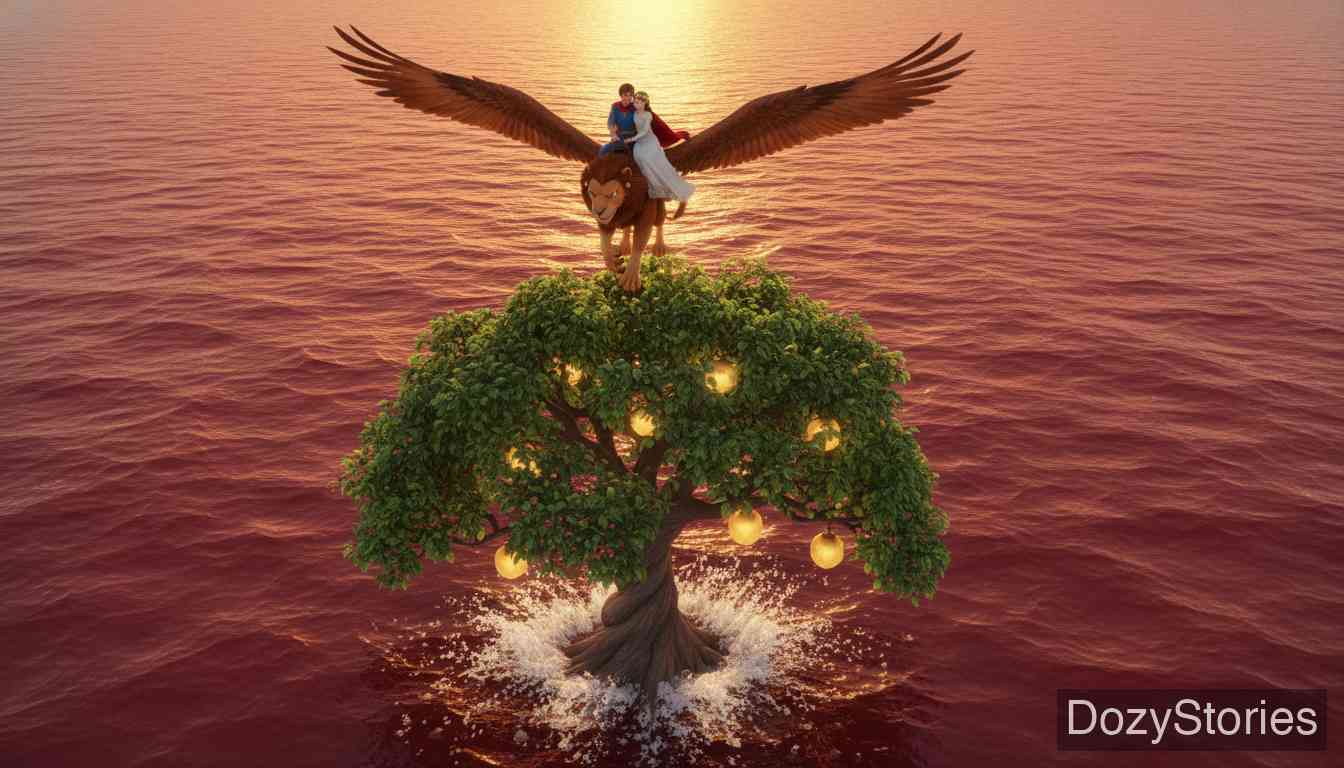
After that, look round and thou wilt see the griffin which is by the Red Sea; swing thyself, with thy beloved, on to his back, and the bird will carry you over the sea to your own home. Here is a nut for thee, when thou are above the center of the sea, let the nut fall, it will immediately shoot up, and a tall nut-tree will grow out of the water on which the griffin may rest; for if he cannot rest, he will not be strong enough to carry you across, and if thou forgettest to throw down the nut, he will let you fall into the sea."
Then she went thither, and found everything as the night wind had said. She counted the reeds by the sea, and cut off the eleventh, struck the dragon therewith, whereupon the lion overcame it, and immediately both of them regained their human shapes.
But when the princess, who had before been the dragon, was delivered from enchantment, she took the youth by the arm, seated herself on the griffin, and carried him off with her. There stood the poor maiden who had wandered so far and was again forsaken.
She sat down and cried, but at last she took courage and said, "Still I will go as far as the wind blows and as long as the cock crows, until I find him," and she went forth by long, long roads, until at last she came to the castle where both of them were living together; there she heard that soon a feast was to be held, in which they would celebrate their wedding,
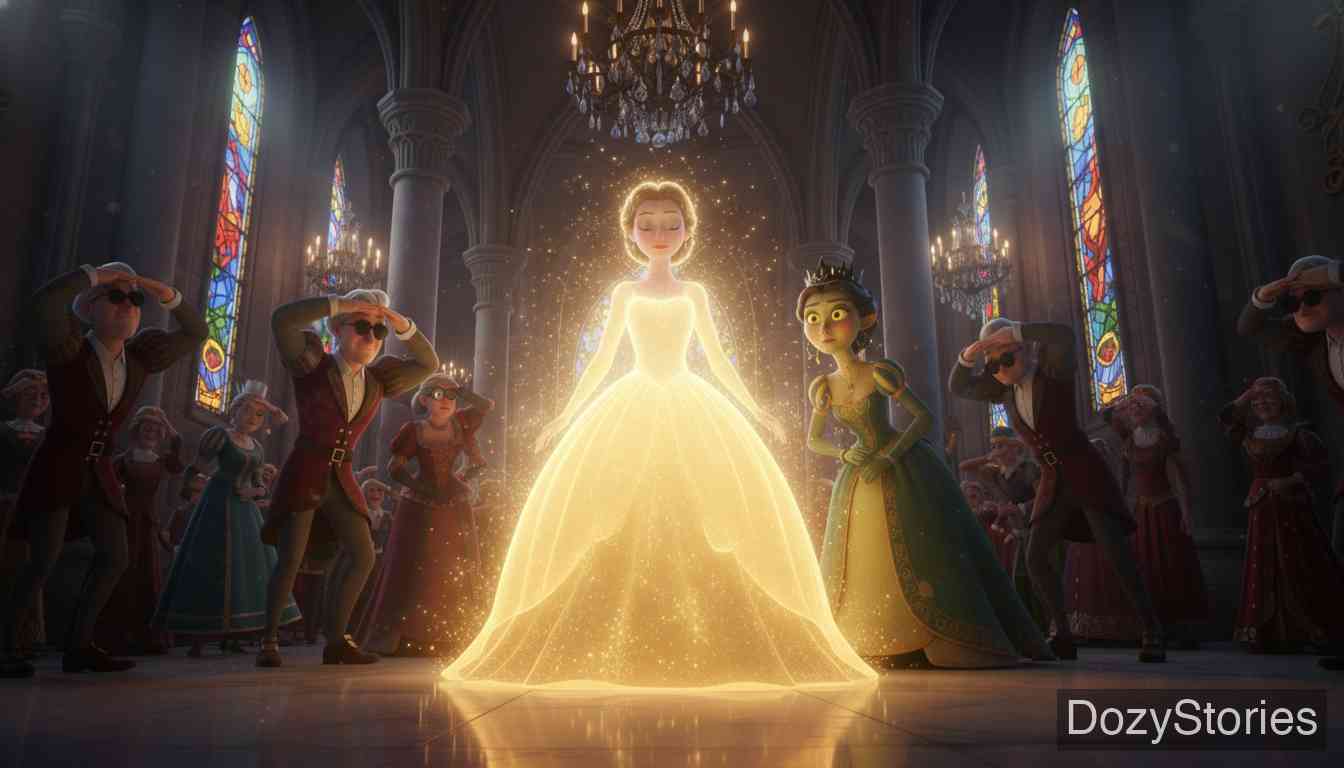
but she said, "God still helps me," and opened the casket that the sun had given her. A dress lay therein as brilliant as the sun itself. So she took it out and put it on, and went up into the castle, and everyone, even the bride herself, looked at her with astonishment. The dress pleased the bride so well that she thought it might do for her wedding-dress, and asked if it was for sale? "Not for money or land," answered she, "but for flesh and blood."
The bride asked her what she meant by that, so she said, "Let me sleep a night in the chamber where the bridegroom sleeps." The bride would not, yet wanted very much to have the dress; at last she consented, but the page was to give the prince a sleeping-draught.
When it was night, therefore, and the youth was already asleep, she was led into the chamber; she seated herself on the bed and said, "I have followed after thee for seven years. I have been to the sun and the moon, and the four winds, and have enquired for thee, and have helped thee against the dragon; wilt thou, then quite forget me?" But the prince slept so soundly that it only seemed to him as if the wind were whistling outside in the fir-trees.
When therefore day broke, she was led out again, and had to give up the golden dress. And as that even had been of no avail, she was sad, went out into a meadow, sat down there, and wept. While she was sitting there, she thought of the egg which the moon had given her; she opened it, and there came out a clucking hen with twelve chickens all of gold, and they ran about chirping, and crept again under the old hen's wings; nothing more beautiful was ever seen in the world!
Then she arose, and drove them through the meadow before her, until the bride looked out of the window. The little chickens pleased her so much that she immediately came down and asked if they were for sale. "Not for money or land, but for flesh and blood; let me sleep another night in the chamber where the bridegroom sleeps." The bride said, "Yes," intending to cheat her as on the former evening.
But when the prince went to bed he asked the page what the murmuring and rustling in the night had been? On this the page told all; that he had been forced to give him a sleeping-draught, because a poor girl had slept secretly in the chamber, and that he was to give him another that night. The prince said, "Pour out the draught by the bed-side."
At night, she was again led in, and when she began to relate how ill all had fared with her, he immediately recognized his beloved wife by her voice, sprang up and cried, "Now I really am released! I have been as it were in a dream, for the strange princess has bewitched me so that I have been compelled to forget thee, but God has delivered me from the spell at the right time."
Then they both left the castle secretly in the night, for they feared the father of the princess, who was a sorcerer, and they seated themselves on the griffin which bore them across the Red Sea, and when they were in the midst of it, she let fall the nut. Immediately a tall nut-tree grew up, whereon the bird rested, and then carried them home, where they found their child, who had grown tall and beautiful, and they lived thenceforth happily until their death.

Vocabulary from "The Singing, Springing Lark"

12 key words from this story with definitions and original context sentences for language learners.

soaring(soar)B2
/ˈsɔːrɪŋ/adj.

Flying or rising high into the air.

高飞的;翱翔的。

Quite on the top of the tree, he saw a singing, soaring lark.

就在树顶上,他看见了一只会唱会跳(高飞)的小百灵鸟。

devourB2
/dɪˈvaʊər/v.

To eat something eagerly and quickly, often like a hungry animal.

(尤指动物)狼吞虎咽地吃掉;吞食。

He who tries to steal my singing, soaring lark, will I devour.

谁敢偷我的会唱会跳的小百灵鸟,我就吞了谁。

amendsC1
/əˈmendz/n.

Something you do to make up for a wrong or harm you have caused.

赔偿;补偿;弥补(自己造成的过错)。

I will make amends for the wrong I have done and ransom myself with a large sum of money.

我会赔偿我犯下的错,用一大笔钱赎回我自己。

hesitated(hesitate)B1
/ˈhezɪteɪtɪd/v.

Paused before doing something because of doubt or worry.

犹豫;迟疑。

But the man hesitated and said, "That might be my youngest daughter, she loves me best."

但这人犹豫了,说:'那可能是我最小的女儿,她最爱我。'

consoled(console)B2
/kənˈsəʊld/v.

Comforted someone who was sad or worried.

安慰;抚慰(伤心或忧虑的人)。

But she consoled him and said, "Dearest father, indeed your promise must be fulfilled."

但她安慰他说:'最亲爱的爸爸,您的承诺确实必须履行。'

enchanted(enchant)B1
/ɪnˈtʃɑːntɪd/adj.

Placed under a magic spell.

被施了魔法的;中了魔咒的。

The lion, however, was an enchanted prince and was by day a lion.

那狮子其实是一个被施了魔法的王子,白天是狮子。

magnificenceB2
/mæɡˈnɪfɪsəns/n.

Great beauty, grandeur, or splendour.

壮丽;宏伟;盛大华美。

When night came, the lion turned into a handsome man, and their wedding was celebrated with great magnificence.

夜幕降临,狮子变成了一个英俊的男子,他们的婚礼举行得非常隆重。

warped(warp)C1
/wɔːrpt/v.

Became bent or twisted out of shape, especially wood.

(尤指木头)翘曲;变形;扭曲。

But the door was made of green wood which warped and left a little crack which no one noticed.

但这扇门是用新木头做的,发生了卷曲,留下了一道没人注意到的细缝。

creviceC1
/ˈkrevɪs/n.

A narrow crack or opening, especially in rock or a wall.

(岩石或墙壁上的)裂缝;缝隙。

Thou shinest into every crevice, and over every peak, hast thou not seen a white dove flying?

你照进每一条缝隙,照过每一座山峰,你没看见一只白鸽在飞吗?

casketB2
/ˈkɑːskɪt/n.

A small decorated box for holding jewels or precious things.

(盛珠宝等贵重物品的)小盒子;首饰盒。

I present thee with a casket, open it when thou art in sorest need.

我送你一个首饰盒,当你最需要的时候打开它。

subdueC1
/səbˈdjuː/v.

To bring under control by force; to overcome or defeat.

制服;征服;使屈服。

Strike the dragon with it, then the lion will be able to subdue it.

用它打那条龙,狮子就能制服它。

forsaken(forsake)C1
/fərˈseɪkən/adj.

Abandoned or left completely alone.

被抛弃的;被遗弃的。

There stood the poor maiden who had wandered so far and was again forsaken.

那位可怜的流浪了那么远的少女站在那里,又一次被遗弃了。

Reading Together & Learning More

The Moral

Faithful love and unwavering perseverance can break the deepest spell; when someone we love is lost, going out to search and to rescue is often more powerful than waiting to be saved.

Educational Value

Builds perseverance and a sense of responsibility, and shows what it means to keep a promise and never give up; the heroine's seven-year quest is a vivid lesson in problem-solving, courage, and loyalty.

Tips for Parents

Talk with your child: Was the father right to make a promise before he knew what it would cost? Why did the daughter choose to walk toward the lion instead of running away? What kind of strength does it take to keep going for seven years?

Talk About It

  1. The father promised to give the lion "the first creature that meets him at home" before he knew who it would be. Should such a promise be kept? What would you have done?
  2. The youngest daughter chose to go to the lion even though it might hurt her. Whose courage do you admire more — hers, or Belle's in "Beauty and the Beast"?
  3. The wife searched for a full seven years, and was left behind and forgotten several times along the way. What do you think kept her from giving up?
  4. The Sun, the Moon, and the Winds all help her and give her gifts. Why do old stories like to imagine nature as talking, helpful friends?
  5. In the end it is the wife who rescues the husband, not the other way around. What other stories do you know where the girl saves the boy?