Rumpelstiltskin
Introduction
Reading Rumpelstiltskin as a fable brings it back to the oldest job of storytelling: to teach a lesson in a few plain words. A fable does not linger over scenery. It sets its people up in one stroke — the boastful miller, the king who can never get enough gold, the clever little man who keeps raising his price, and the girl who is pushed into a corner again and again yet never breaks. In the Chinese tradition we say "disaster comes out of the mouth" and "the greedy snake swallows the elephant." This tale could be a living lesson for both sayings. One thing worth telling children is that the belief in the power of a true name is far older than the Brothers Grimm. It appears in folk tales from every corner of the world, for many peoples once believed that to know a spirit's name is to hold a rope around its neck. There is another surprise too: in the Grimms' first edition, the little man simply flew away on a cooking spoon; only in the later version does he tear himself apart in a rage. As you read, point out that the queen wins not with tears but with steady work — asking, listening, remembering, name by name. Afterwards, ask together: who lied, who was greedy, and who kept a cool head when the corner got tight? The story gives no easy answer, and that is exactly what makes it worth talking about.
Vocabulary from "Rumpelstiltskin"
12 key words from this story with definitions and original context sentences for language learners.
To talk about yourself proudly, often about things that are not true.
吹嘘;夸口说大话。
He loved to boast, and he loved to seem important.
他这人别的毛病没有,就是爱面子、好吹牛。
Blinded for a moment by a very bright light.
(被强光)晃得眼花;目眩。
At sunrise the king opened the door, and the gold light dazzled his eyes.
天亮后,国王推门一看,满屋金光晃得他睁不开眼。
Wanting much more of something than you need.
更贪心的(greedy 的比较级)。
He was glad, yet his gladness only made him greedier.
他又惊又喜,可这惊喜非但没让他满足,反倒勾起了更大的贪心。
A messy pile of things.
(乱糟糟的)一堆;堆。
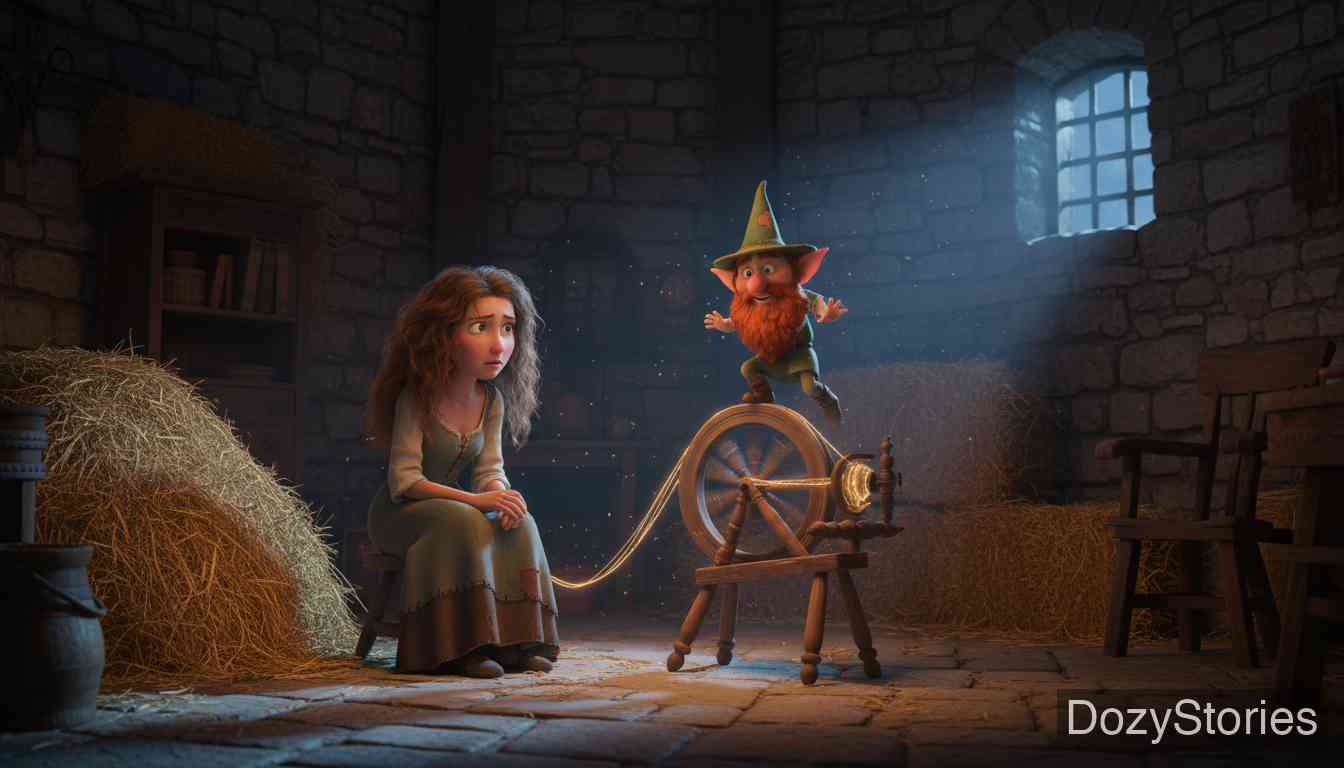
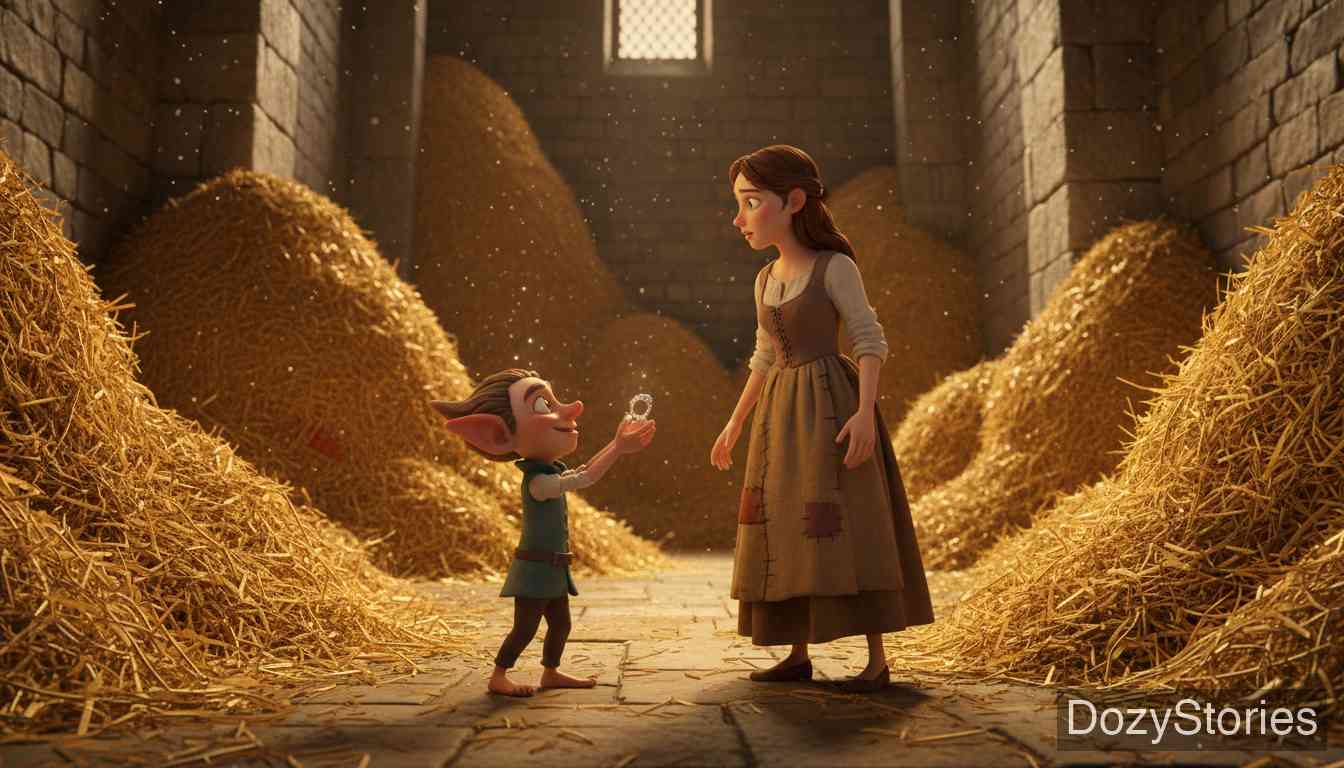
He moved the girl into a larger room, where the straw stood in a heap like a small hill.
他命人把姑娘挪进一间更大的屋子,那屋里的稻草堆得像座小山。
Asked for something in a very sad or urgent way.
恳求;哀求(beg 的过去式)。
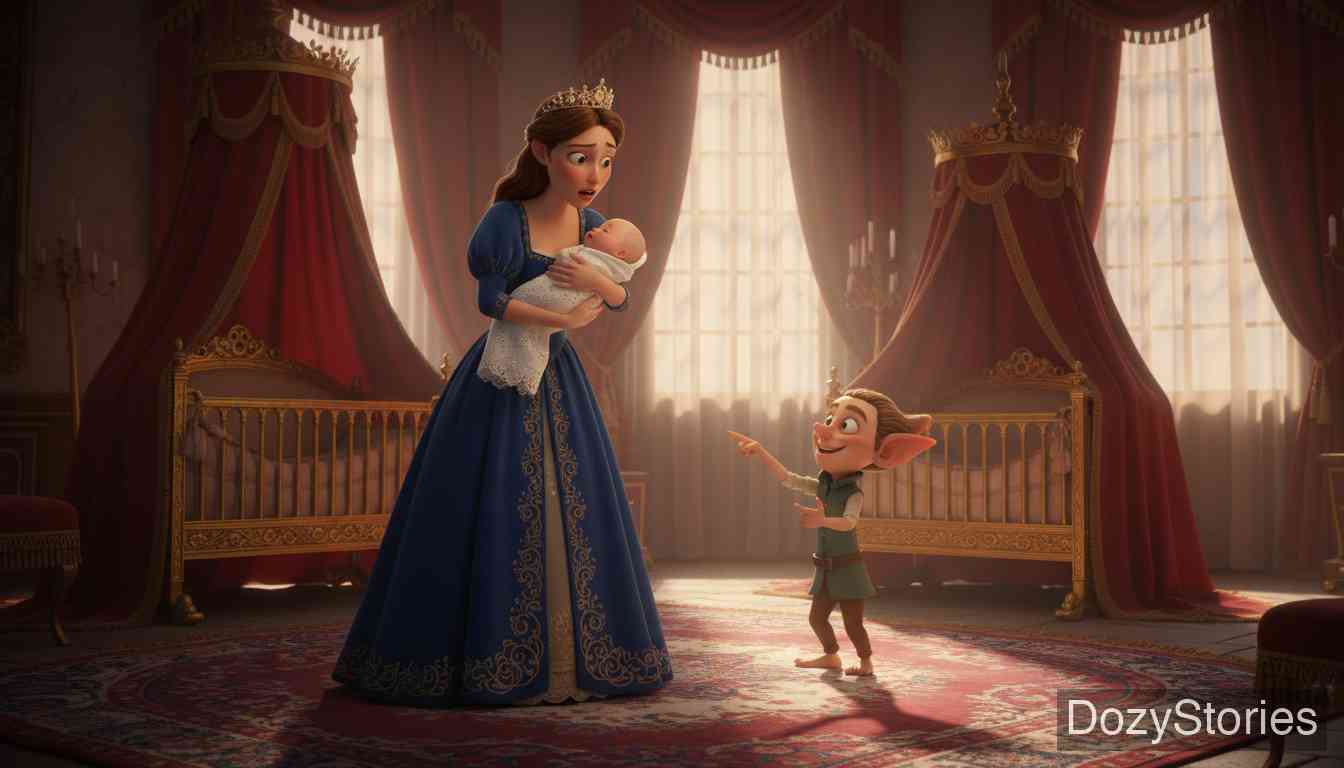
"Take all the gold and jewels in my palace," she begged.
“我把宫里所有的金银财宝都送给你,只求你放过我的孩子。”
Became gentler and less strict.
变软;心软下来。
The queen burst into tears, and her crying softened the little man's heart.
王后放声大哭,哭得小矮人心里发软。
People who carry news or letters for someone.
信使们(messenger 的复数);送信的人。
She thought of every name she had ever heard, and she sent messengers far and wide to gather more.
王后当夜没有合眼,把自己听过的名字想了一遍又一遍,又派信使走遍四方去打听。
The strangest or most unusual (superlative of odd).
最古怪的(odd 的最高级)。
On the second day, the messengers came back with the oddest names from the countryside.
第二天,信使们从乡间带回来一堆稀奇古怪的名字。
In a way that shows you are pleased about yourself or what you have done.
得意地;骄傲地。
A little while later the little man came in and said proudly, "Well, Your Majesty, do you know my name?"
过不多久,小矮人推门进来,得意地问:“王后陛下,可猜出我的名字了?”
Very strong, wild anger.
暴怒;狂怒。
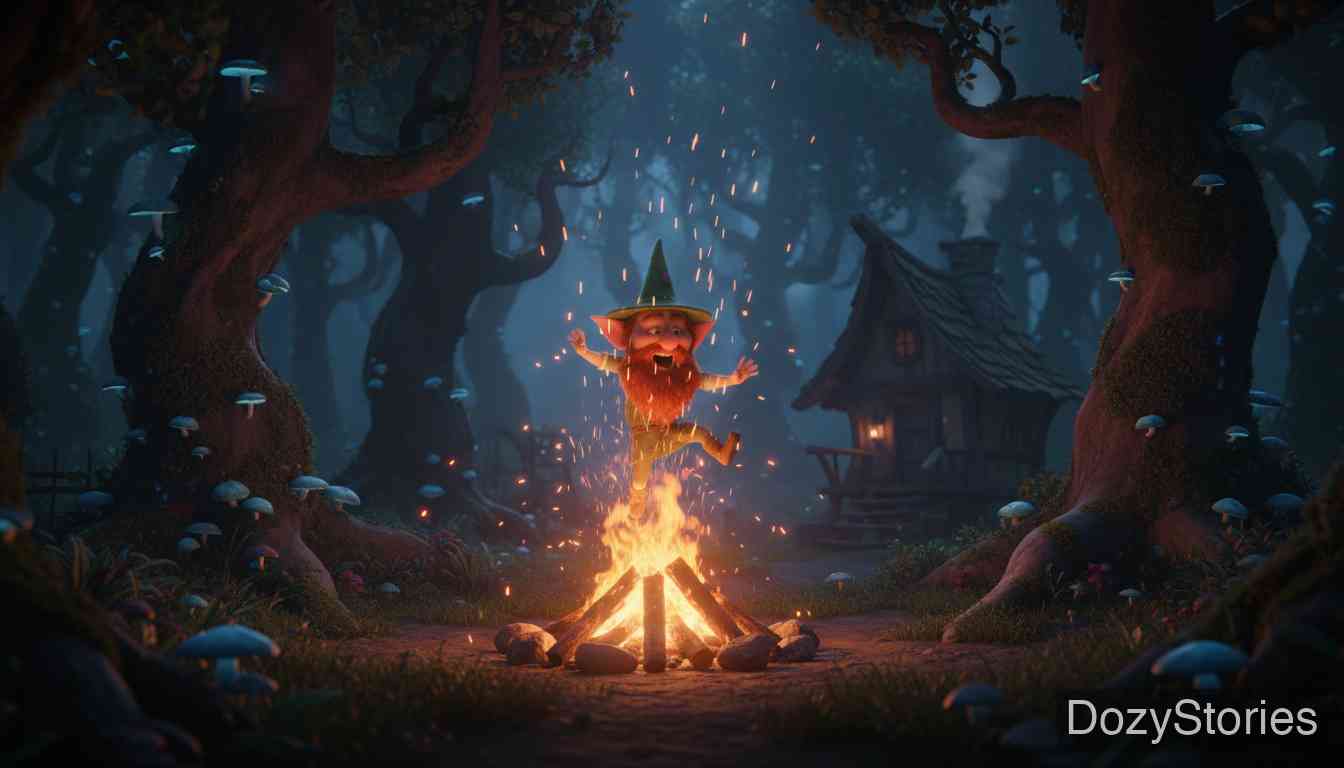
In a fury he stamped his right foot so hard that it sank into the ground past his knee.
小矮人气得哇哇大叫,抬起右脚狠狠往地上一跺,那只脚陷进土里,没过了膝盖。
Pulled something apart with force (past tense of tear).
撕开;扯裂(tear 的过去式)。
Shamed and mad with rage, he grabbed his left foot with both hands and tore himself in two.
他又羞又恼,双手抓住自己的左脚,猛地一使劲,竟把自己撕成了两半。
Gave out a bright light (past tense of shine).
闪闪发光(shine 的过去式)。
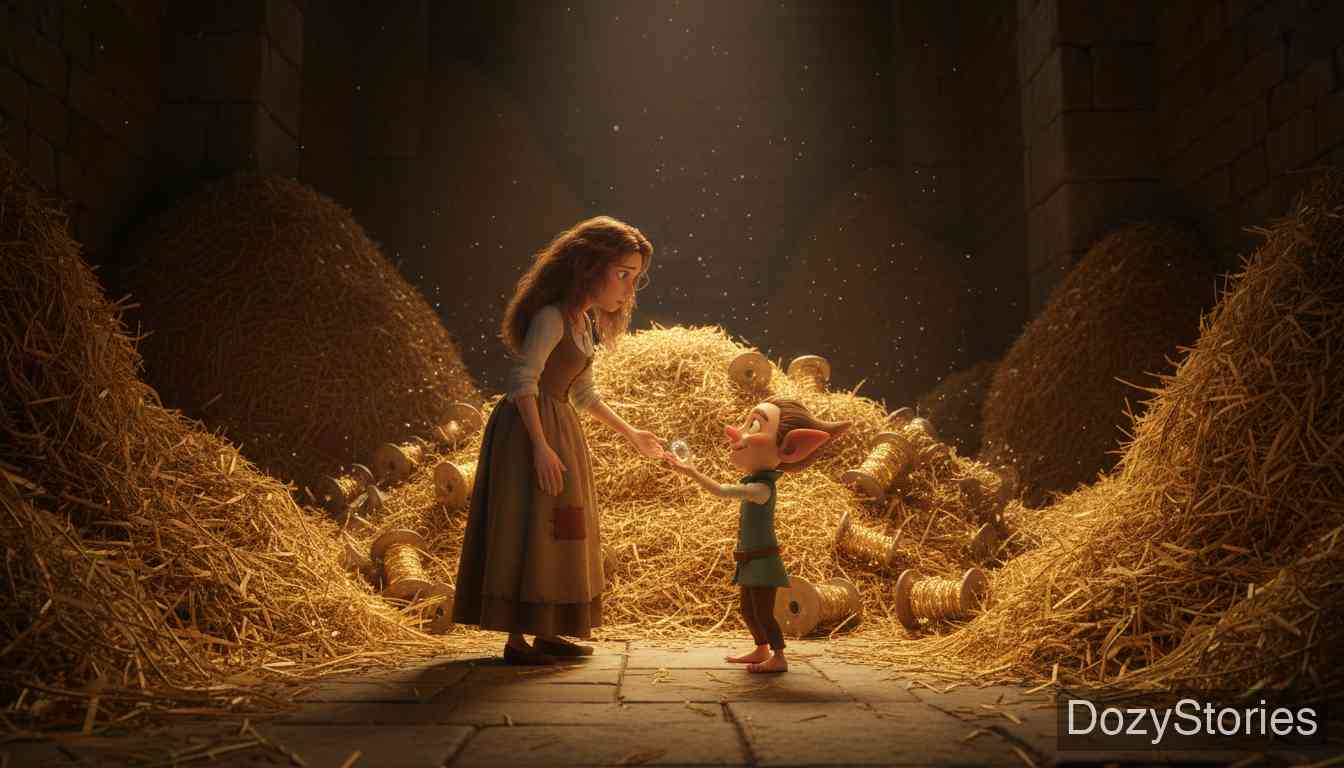
By morning, every stalk of straw shone like gold.
他就这样纺了一夜,天亮时,满屋稻草都成了亮闪闪的金子。
Reading Together & Learning More
The Moral
A boast may please for a moment, but trouble follows it; greed that never rests ends in nothing. Remember: the harder the corner, the steadier the head, and the sharper the mind.
Educational Value
Helps children see the cost of boasting and greed, and shows how patience and clear thinking — like the queen's name-guessing — can turn a hopeless corner.
Tips for Parents
Turn the name-guessing into a family game after reading. Then ask: if the little man came back tomorrow, what else could the queen do? It teaches that thinking beats crying in a tight spot.
Talk About It
- The miller boasted that his daughter could spin gold just to look important. How did his big talk push her into danger?
- The king had gold, yet he always wanted more, room after room. What do you think his greed brought him in the end?
- With no way out, the girl promised her future child to the little man. Should a promise made out of fear still count? Why or why not?
- The little man helped the girl three times, yet in the end he tore himself apart. Did he lose to the queen, or to his own temper?
- The queen won by guessing the name. If you had three days, how would you go about learning a stranger's secret name?