Rapunzel

Introduction

This tale was first collected by the Brothers Grimm from German folk tradition, and at its heart stands a tower without a door. We have retold it as a fable because it was a fable in disguise all along: the tower, the golden hair, and the tears are not real things but pictures of the heart. The tower stands for being cut off from the world; the hair is the one bridge to other people; the tears are true love made visible. This is exactly how Chinese fables teach through images. When the prince loses his sight and still walks on, we remember the old saying "sincere effort can split metal and stone": his faithful heart is finally repaid with light. Rapunzel herself is like the frog at the bottom of a well in the Chinese tale — she has seen only one window and one witch, so the first man she ever meets frightens her. Narrow seeing can make even good things look terrible. In the Grimms' first edition of 1812, Rapunzel gives away the secret by asking why her clothes are growing too tight; later editions softened that line for young readers, and Disney's Tangled turned the hair into glowing magic and dropped the blindness altogether. As you read, ask your child: what does a person lose when they never look beyond one window?
Font Size
1 / 23
Stopped
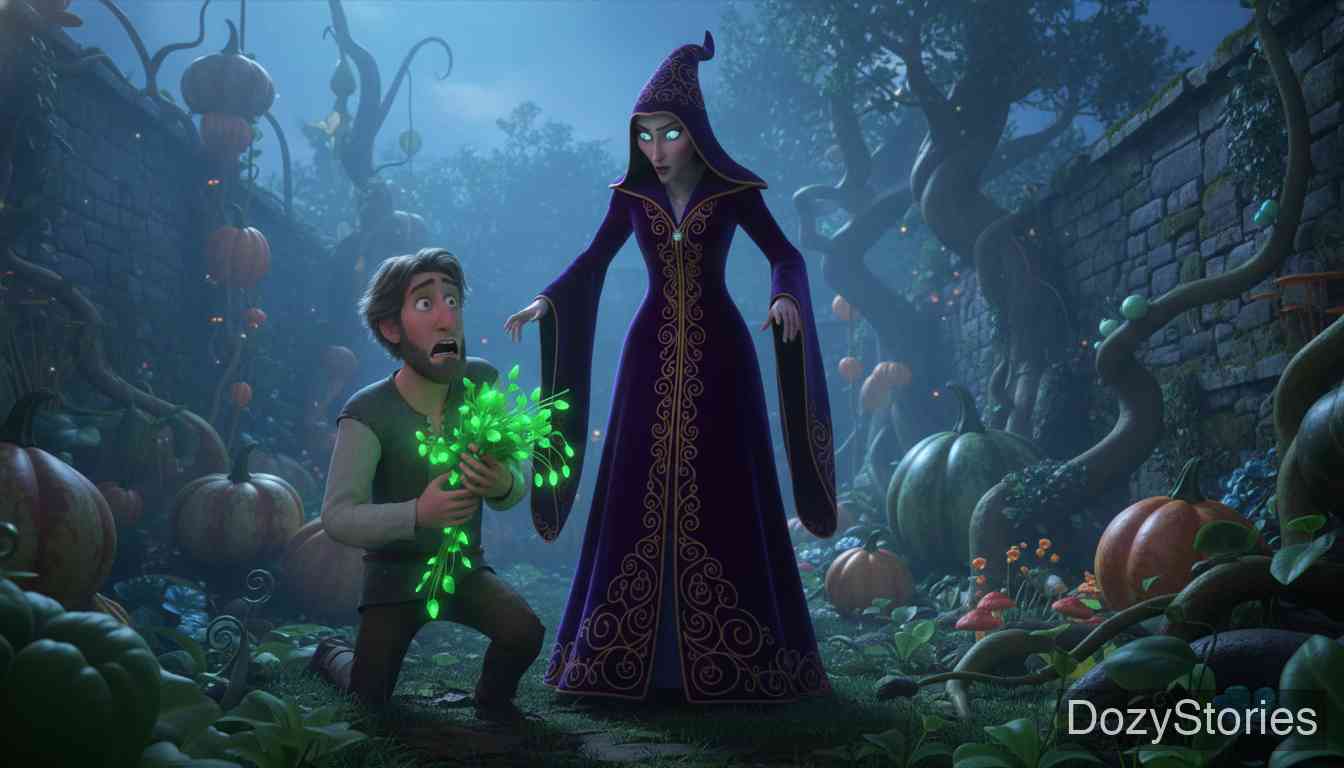
Rapunzel - A wife craves the witch's rampion; her husband steals it by night, is caught, and must trade his unborn child for mercy. - Scene Illustration 1
A wife craves the witch's rampion; her husband steals it by night, is caught, and must trade his unborn child for mercy.
Long ago, a man and his wife lived together. They had a good home, but no child. Behind their house stood a small window. Beyond it lay a fine garden, full of fresh herbs and bright flowers. A high wall ran all around it, and no one dared go near. The garden belonged to a witch, and the whole land feared her.
One day the wife looked out of the window. She saw a bed of wild rampion, thick and green. Her mouth watered for a taste of it. The wish grew into a sickness. She could not eat or sleep, and day by day she grew thin and pale. Her husband was worried. "Tell me what is wrong," he said. She sighed, "If I cannot eat that rampion from the garden, I shall not live long."
The man loved his wife dearly. He thought, "A wife is worth more than any fear." That night, at dusk, he climbed over the wall, picked a handful of rampion, and hurried home. His wife was as glad as if she had found a treasure. She made a salad at once and ate every leaf.
But the more she ate, the more she wanted. The next day she wished for it three times as hard. The man had no choice. He went over the wall again. This time the witch stood right in front of him. "How dare you steal from me!" she cried with angry eyes. The man shook with fear.
He fell to his knees and told her the whole truth. The witch thought for a moment. Then she said, "Take the rampion, but promise me one thing. The child your wife carries shall be mine. I will raise it as my own and never harm it." The man wanted to save his wife, so he agreed to everything.
When the baby was born, the witch came at once. She named the girl Rapunzel, after the rampion plant. Then she took the child in her arms and walked away.
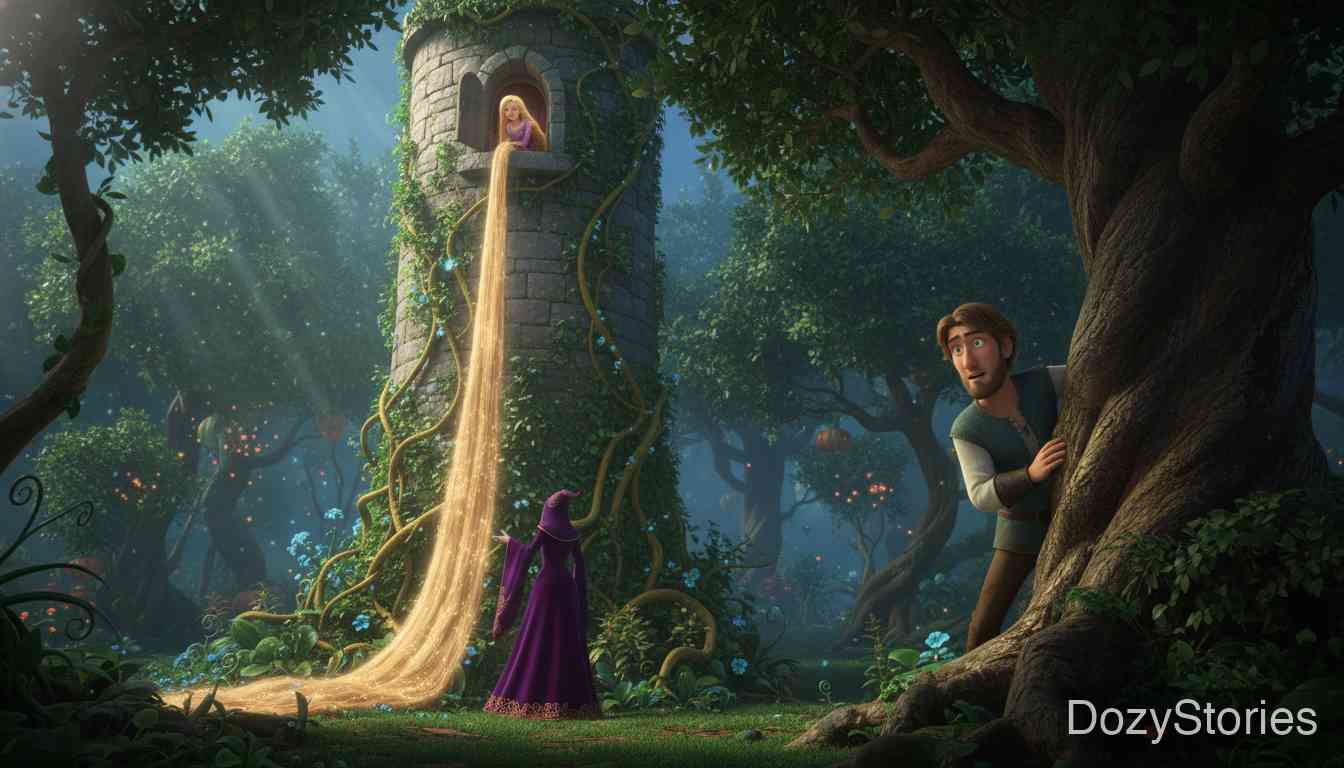
Rapunzel - Rapunzel is shut in a doorless tower deep in the forest, where a prince hears her song and learns the witch's secret way up. - Scene Illustration 2
Rapunzel is shut in a doorless tower deep in the forest, where a prince hears her song and learns the witch's secret way up.
Rapunzel grew up fairer than any flower. When she turned twelve, the witch led her deep into the forest and shut her in a tall tower. The tower had no stairs and no door, only one small window at the top. To get in, the witch stood below and called,
"Rapunzel, Rapunzel! Let down your hair!"
Rapunzel had hair like golden thread. When she heard the call, she pushed open the window and let her long braids fall all the way to the ground. The witch caught the braids and climbed up, step by step. So the girl lived in the tower, year after year, with only her songs for company.
One day a king's son rode through the forest and came to the tower. He heard a voice singing, sweet as honey, and he stopped to listen. He wanted to meet the singer, but he walked all around the tower and found no door at all.
So the prince rode home. But the song had taken root in his heart, and he came back every day to listen. Once he hid behind a tree and watched the witch arrive. He heard her call, "Rapunzel, Rapunzel! Let down your hair." He watched the girl drop her long hair and the witch climb up by it. He said to himself, "So that is the ladder. If she can climb it, so can I."
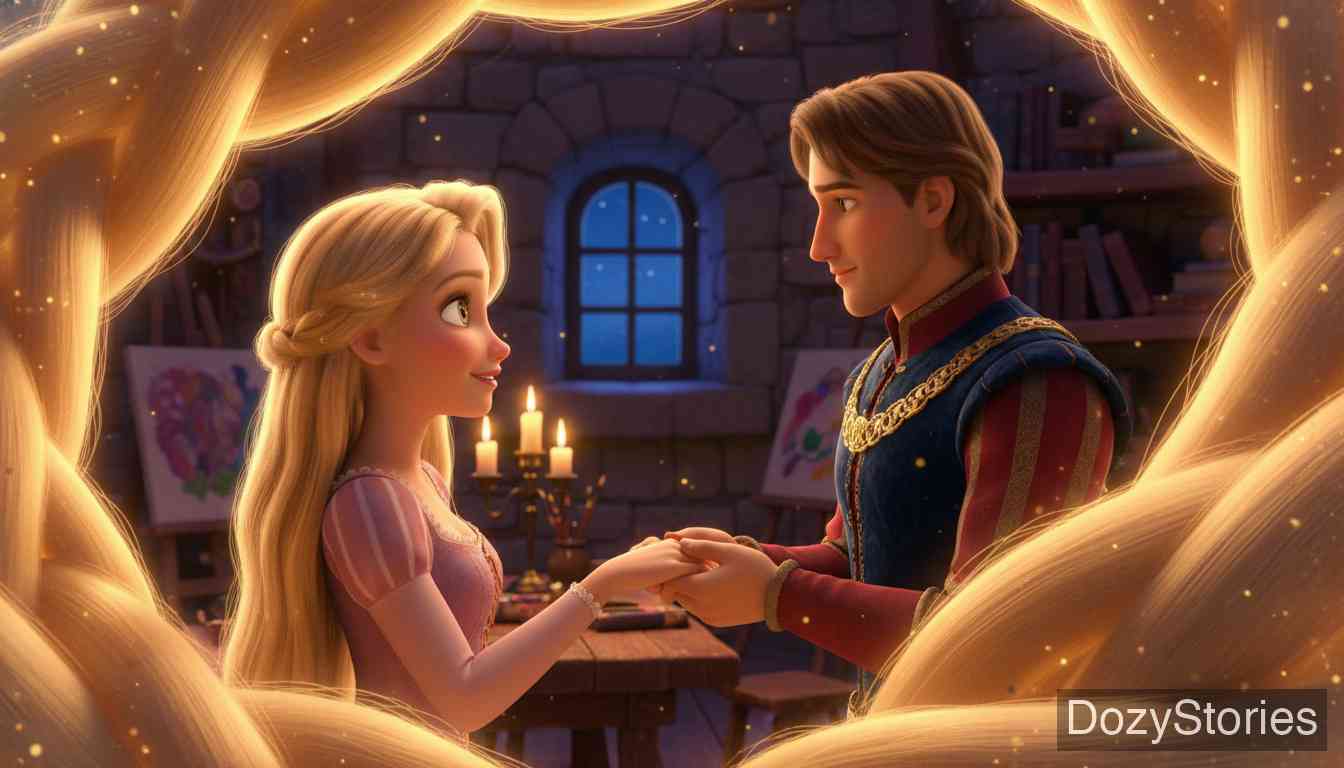
Rapunzel - The prince climbs the tower with the witch's words, wins Rapunzel's heart, and they plan a silk-rope ladder for her escape. - Scene Illustration 3
The prince climbs the tower with the witch's words, wins Rapunzel's heart, and they plan a silk-rope ladder for her escape.
The next evening, when dusk fell, the prince came to the tower. He called out in the witch's very words, "Rapunzel, Rapunzel! Let down your hair."
Down came the hair, and the prince climbed up. Rapunzel had never seen a man before, and she was afraid. But the prince spoke softly. He told her that her song had stolen his heart and given him no rest until he saw her. Little by little, her fear melted away.
Then he asked her to be his wife. Rapunzel saw that he was young and kind. She thought, "With him I could live, but in this tower I would only wait." So she said yes.
They made a plan to run away. She said, "Each time you come, bring a length of silk rope. I will weave it into a ladder. When the ladder is long enough, I will climb down, and you will carry me away on your horse." They agreed that he would come every evening, because the old witch always came by day.
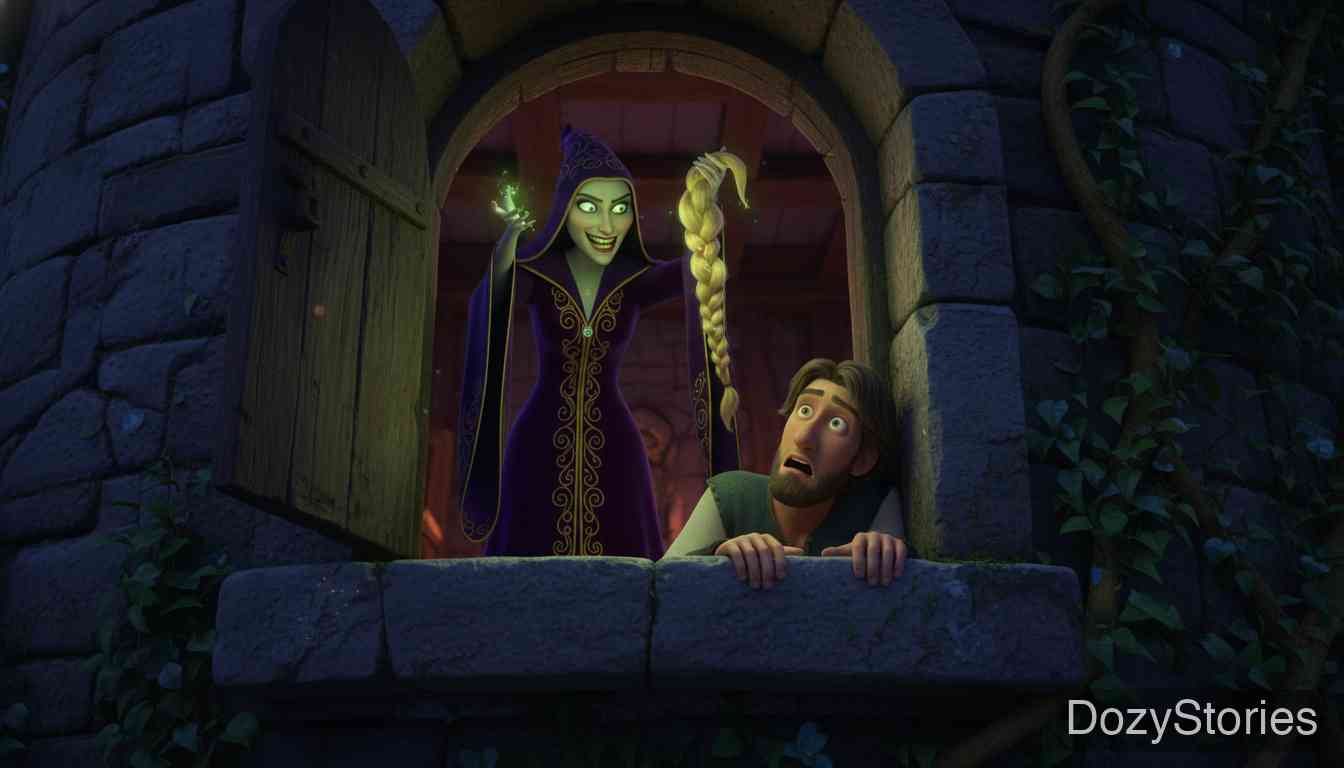
Rapunzel - A careless word betrays the secret; the witch cuts Rapunzel's hair and banishes her, and the prince falls from the tower into blindness. - Scene Illustration 4
A careless word betrays the secret; the witch cuts Rapunzel's hair and banishes her, and the prince falls from the tower into blindness.
Days passed. One day Rapunzel spoke without thinking. "Mother, why do you climb so slowly? The prince is by my side in a blink." The words left her mouth, and even she was surprised.
"You wicked girl!" the witch screamed, her face twisted with rage. She seized Rapunzel by the hair, hit her with one hand, and took up great shears with the other. Snip, snap — the two golden braids fell to the floor. The witch was still not satisfied. She carried Rapunzel to a lonely wasteland and left her there, alone and helpless.
That evening the witch went back to the tower. She tied the cut braids to the window hook and sat down to wait. The prince came and called as before, "Rapunzel, Rapunzel! Let down your hair."
Down came the hair, and the prince climbed up. But at the window there was no sweet girl to greet him. Only the witch stared back with cold eyes.
"Have you come for your darling?" she sneered. "The little bird has flown, and the nest is empty. The cat carried her off, and it will scratch out your eyes too. You will never see her again!" The prince lost all hope. He threw himself from the top of the tower. He did not die, but he fell into a thorn bush, and the thorns blinded him. After that he wandered in the forest, eating roots and wild berries, weeping day and night.
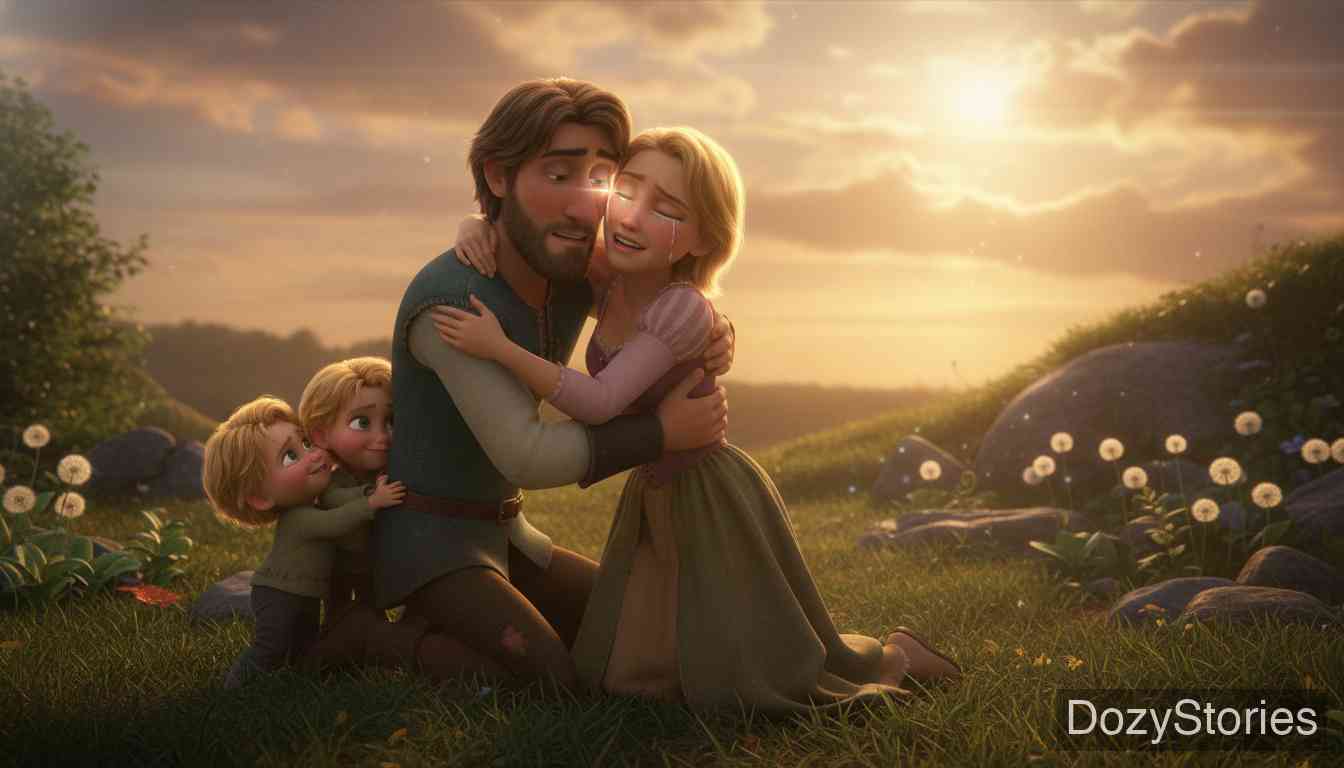
Rapunzel - Years later the blind prince finds Rapunzel and their twins in the wasteland; two loving tears restore his sight, and the family returns home in joy. - Scene Illustration 5
Years later the blind prince finds Rapunzel and their twins in the wasteland; two loving tears restore his sight, and the family returns home in joy.
The prince wandered in sorrow for years. At last he came to the wasteland, where he heard a voice that seemed familiar. He followed the sound, stumbling in the dark. Rapunzel saw him and knew him at once. She lived there with her two little children, a boy and a girl. She threw her arms around his neck and wept.
Two warm tears fell on the prince's eyes. Like mist in the morning sun, the darkness cleared away. He could see again — the light, the sky, and the girl who wept for him. They held each other, crying and laughing at once.
The prince took Rapunzel and the children back to his kingdom. The whole city welcomed them with joy. From that day on, the family was never parted. A tower can lock up a body, but it cannot lock up a heart. The faithful heart walks to the ends of the earth, and true love leads it home.

Vocabulary from "Rapunzel"

12 key words from this story with definitions and original context sentences for language learners.

rampionC1
/ˈræmpiən/n.

A garden plant with tender leaves that people once ate in salads.

野莴苣:一种叶子嫩绿、从前可拌沙拉吃的园中植物。

She saw a bed of wild rampion, thick and green.

她见园里一畦野莴苣又肥又绿。

duskB2
/dʌsk/n.

The time in the evening when it starts to get dark.

黄昏;天擦黑的时候。

That night, at dusk, he climbed over the wall, picked a handful of rampion, and hurried home.

当夜,他趁天擦黑翻过围墙,掐了一把野莴苣带回家。

treasureB2
/ˈtreʒə/n.

Something very precious that people keep with great care.

宝贝;非常贵重、让人珍惜的东西。

His wife was as glad as if she had found a treasure.

妻子见了,欢喜得像得了宝贝。

fairer(fair)B1
/ˈfeərə/adj.

More beautiful; prettier.

更美丽的;更好看的(fair 的比较级)。

Rapunzel grew up fairer than any flower.

拉庞泽尔一天天长大,出落得比花儿还好看。

weaveB2
/wiːv/v.

To make cloth or a rope by crossing threads or strands together.

编织:把丝线或细绳交错编在一起。

I will weave it into a ladder.

我把它编成梯子。

shearsC1
/ʃɪəz/n.

A large pair of scissors for cutting hair or cloth.

大剪刀:用来剪头发或布的大剪子。

She seized Rapunzel by the hair, hit her with one hand, and took up great shears with the other.

她一把揪住拉庞泽尔的头发,左手打她,右手操起一把大剪刀。

wastelandB2
/ˈweɪstlænd/n.

A wild, empty place where nothing grows or lives.

荒地;荒无人烟、寸草不生的旷野。

She carried Rapunzel to a lonely wasteland and left her there, alone and helpless.

她把她扔到一片荒无人烟的旷野,任她自生自灭。

sorrowB2
/ˈsɒrəʊ/n.

Deep sadness, especially after losing something dear.

悲伤;忧愁。

The prince wandered in sorrow for years.

就这样,王子在世上苦熬了好几年。

faithfulB2
/ˈfeɪθfəl/adj.

Always loyal and true, never giving up on someone.

忠贞的;一心一意、不离不弃的。

The faithful heart walks to the ends of the earth, and true love leads it home.

痴心的人走到天涯,真爱也会把他领回家。

wandered(wander)B1
/ˈwɒndəd/v.

Walked slowly with no fixed direction or goal.

流浪;漫无目的地走(wander 的过去式)。

After that he wandered in the forest, eating roots and wild berries, weeping day and night.

从此他只在林子里流浪,吃草根、啃野果,日日以泪洗面。

wept(weep)B1
/wept/v.

Cried; shed tears.

哭泣;流泪(weep 的过去式)。

She threw her arms around his neck and wept.

她扑上来搂住他的脖子,放声大哭。

blinded(blind)B2
/ˈblaɪndɪd/v.

Made unable to see.

弄瞎;使失去视力(blind 的过去式/过去分词)。

He did not die, but he fell into a thorn bush, and the thorns blinded him.

他命大没死,可摔进荆棘丛,双眼被刺瞎了。

Reading Together & Learning More

The Moral

A tower can lock a body, but it can never lock a heart. Be faithful and true, and love will bring you home at last.

Educational Value

Children learn that true love means setting free and finding, not locking up. They also see that a sincere, patient heart can overcome the hardest times, just like the old saying: sincere effort can split metal and stone.

Tips for Parents

After reading, ask your child whether the witch's tower was love or ownership. Talk about what kept the prince searching after he lost his sight, then help your child connect that patience to a small goal they are working on at home or at school.

Talk About It

  1. Rapunzel's parents promised their child to the witch for a few rampion plants. Should a promise made in fear be kept? What would you have done?
  2. The witch said she would raise Rapunzel "as her own," yet she locked her in a tower with no door. What is the difference between loving someone and owning someone?
  3. After he went blind, the prince wandered for years. What kept him going? Would you have given up?
  4. Rapunzel stepped back in fear when she first saw the prince. Why? What does a person lose when they never see the world outside one window?
  5. Two of Rapunzel's tears healed the prince's eyes. In this story, what do you think the tears stand for?