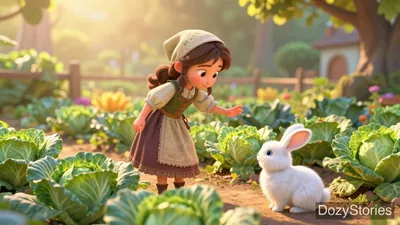
Mother Hulda
Introduction
Mother Hulda belongs to a story family that folklorists call 'the kind and the unkind girls.' Two girls walk the same road and hear the same pleas, yet one earns a fortune while the other is covered in shame. The tale works so well as a fable because its shape is already fable-shaped: flat characters, one clear test after another, and an ending that points a moral without preaching. Chinese readers will hear echoes of familiar folk wisdom. The old 'money tree' (摇钱树) promises wealth to the industrious and nothing to the idle, and the proverb 'fine on the outside, rotten within' (金玉其外,败絮其中) fits the lazy sister neatly — she dreams of treasure but will not lift a finger to earn it. The Brothers Grimm wrote down this story in central Germany, where country people said that snow fell whenever Mother Hulda shook out her feather bed. But the real magic lies closer to home: every plea on the road is a small choice, and small choices slowly add up to a destiny. When you read with your child, pause at each plea and let the child guess what the girl should do before you turn the page. Then ask: does a person's habit of helping — or refusing — show up even when nobody is watching? The story answers gently, and children usually see the answer before we do.
Vocabulary from "Mother Hulda"
12 key words from this story with definitions and original context sentences for language learners.
A woman whose husband has died.
寡妇;丈夫已经去世的女人。
Long ago, a widow had two daughters.
古时候有个寡妇,膝下两个女儿。
Marked or dirtied by something that leaves a colored mark.
沾上污迹的;染上颜色的。
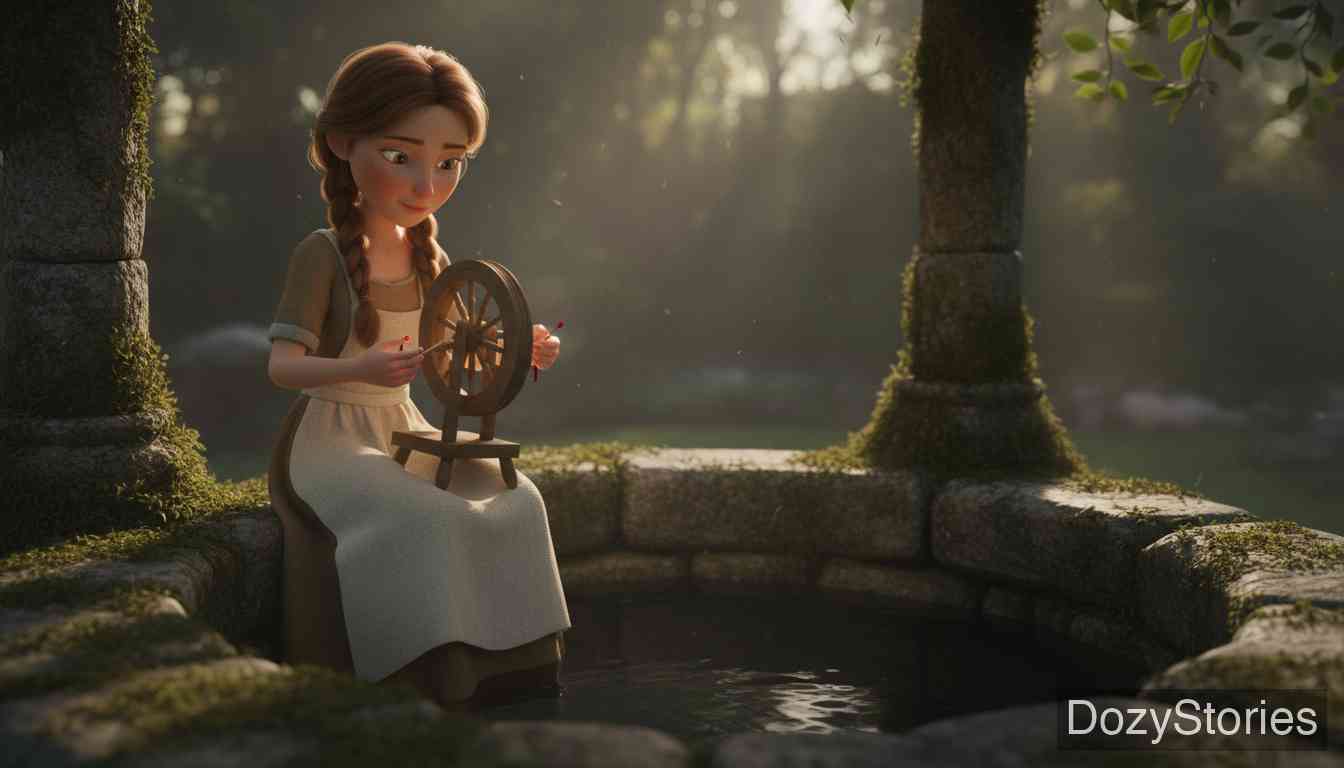
One day her spindle was stained with blood, so she dipped it into the well to wash it.
这一日,纺锤上染了血,姑娘拿到井边去洗。
Extremely angry.
极其生气的;勃然大怒的。
The widow was furious.
继母勃然大怒。
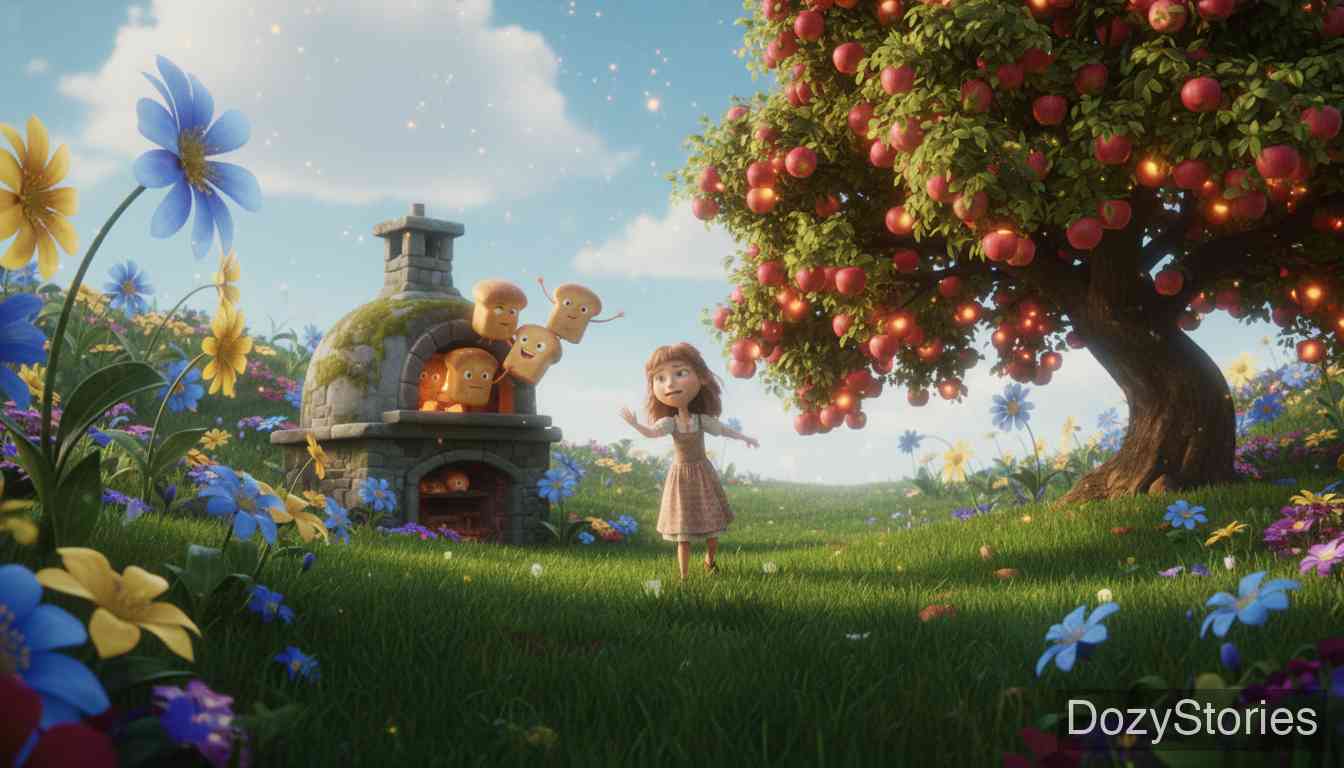
A field covered with grass and wild flowers.
草地;草场。
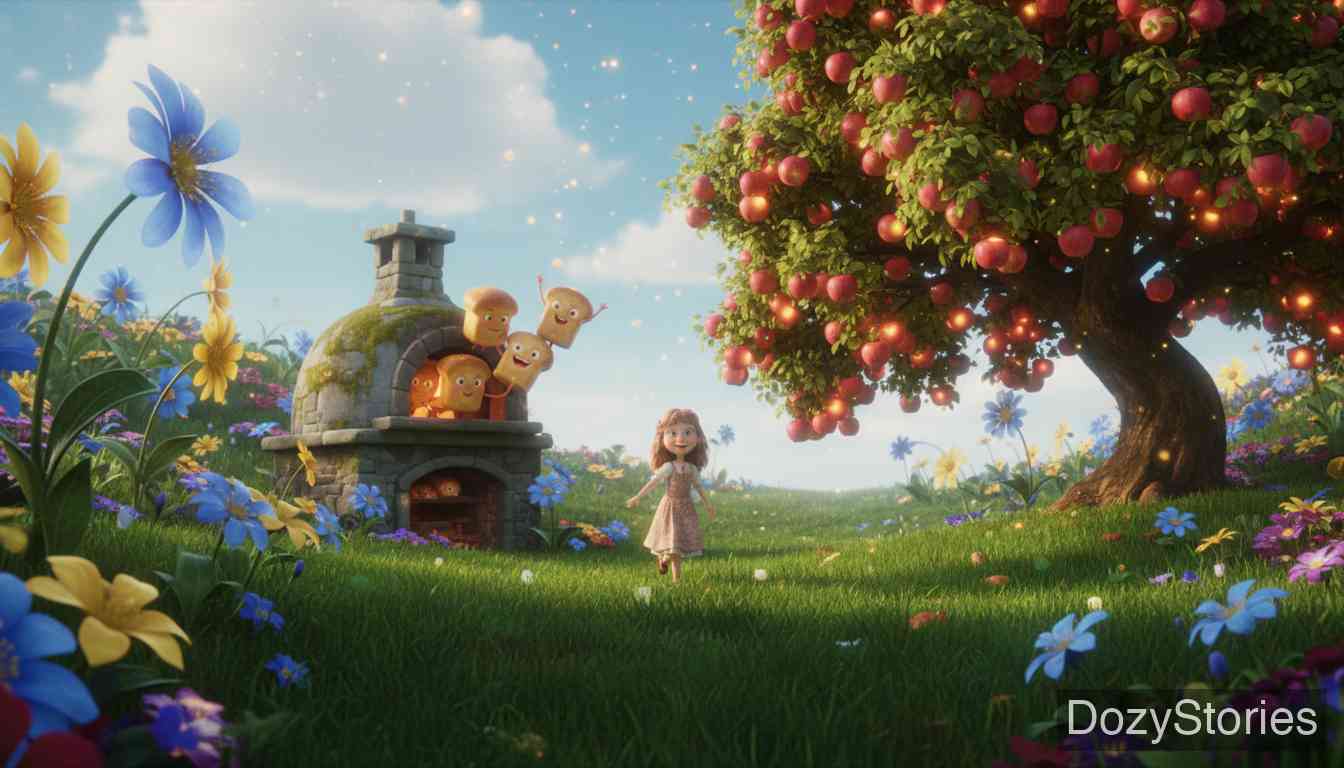
When she opened her eyes, she was lying in a lovely meadow.
等她再睁开眼,竟躺在一片鲜花盛开的草地上,阳光暖洋洋的,四野静悄悄。
Fully grown and ready to eat.
成熟的;熟透的。
All my apples are ripe!
树上的苹果个个都熟透了!
Tidy and carefully arranged.
整齐的;整洁的。
She shook until not one apple was left, then gathered them into a neat pile and walked on.
她摇到枝头一个不剩,又把落地的苹果拢成一堆,这才拍拍手,继续赶路。
In a loyal and reliable way, with full effort.
忠实地;尽心尽力地。
"You have served me faithfully," she said.
你伺候我尽心尽力,我该好好谢你。
Wanting too much, especially money or things.
贪婪的;贪心的。
When she heard the whole story, her eyes grew greedy.
听罢来龙去脉,母亲眼馋起来,便打发懒女儿也去井边纺线。
Very surprised, in a good way.
非常惊讶的;惊叹的。
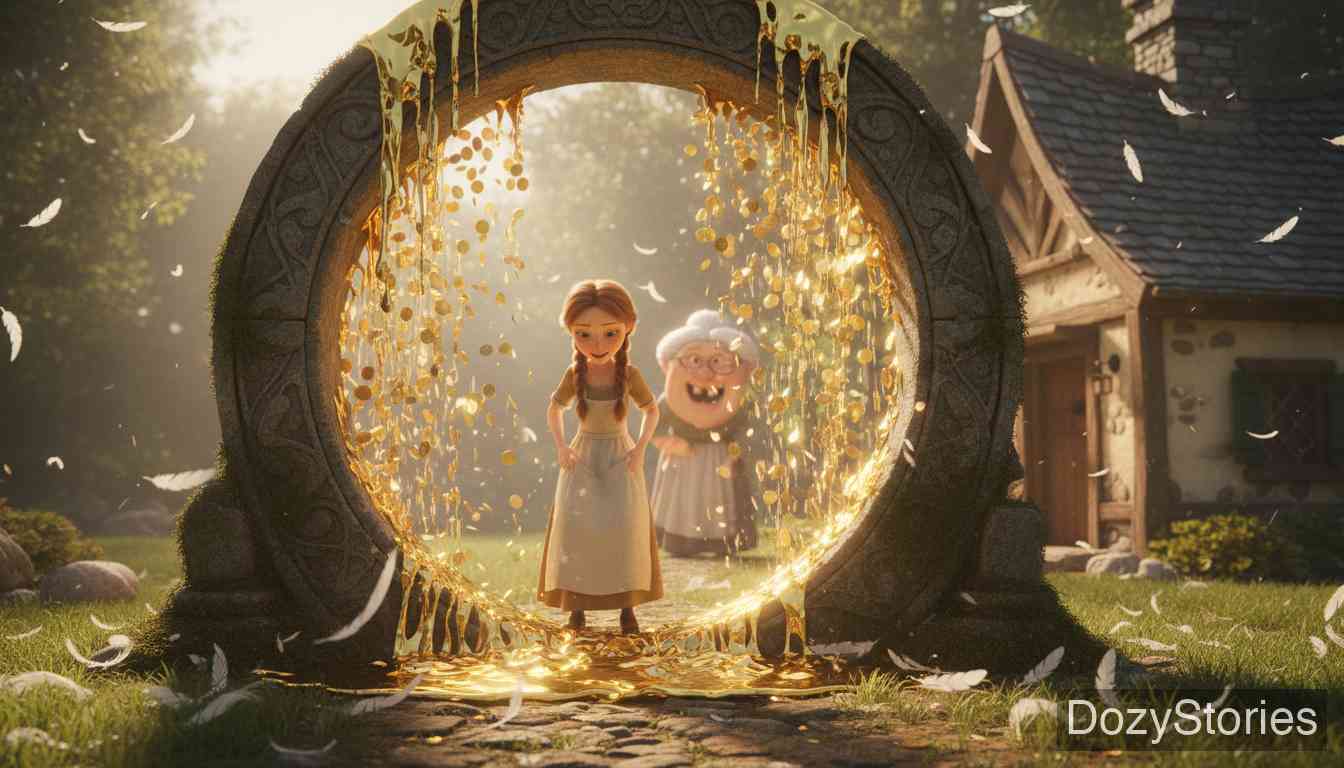
Her mother was amazed and hugged her tight.
姑娘一身金光进了家门,母亲又惊又喜,把她搂进怀里。
Made a short, loud sound through the nose to show you do not care.
哼了一声;从鼻子里发出不屑的声音。
She snorted, "What if an apple falls on my head?" and walked on again.
懒姑娘哼了一声:“万一苹果落下来砸了我的头,岂不冤枉?”说罢又走了。
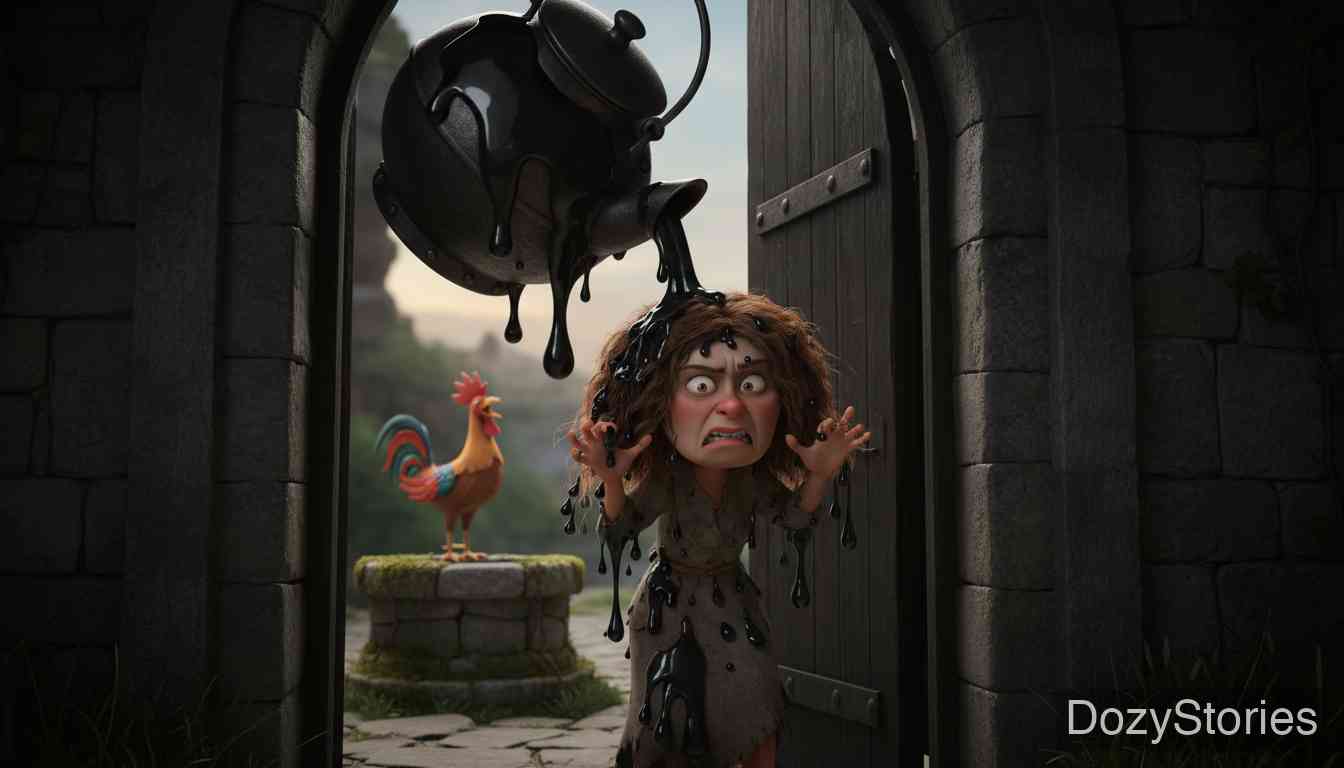
A thick, sticky, black liquid that is very hard to remove.
沥青;柏油(又黑又黏,很难洗掉)。
She stepped through — and down came not gold, but a whole pot of hot pitch over her head and body!
她一步跨出去——落下来的哪里是金子,是一整锅滚烫的沥青,浇了她满头满身!
Extremely happy.
欣喜若狂的;高兴极了。
The lazy girl was overjoyed.
懒姑娘一听,喜出望外,满心以为金雨就要落下来。
Reading Together & Learning More
The Moral
Good deeds are rewarded, and bad deeds are punished. Hard work and kindness are the truest treasure, while selfish shortcuts lead to a bitter end.
Educational Value
Children learn from the two sisters that helping others and working hard are never a loss — they build good fortune — and that you reap what you sow.
Tips for Parents
After reading, count with your child the good deeds the hard-working girl did along the way, and compare them with the lazy sister's excuses. Then ask about real life: "When someone in your class needs help, what would you do?"
Talk About It
- The two sisters met the same pleas on the same road. One helped and one walked away. What do you think made them different — only laziness, or something else?
- The lazy sister knew that her sister won gold by helping others and working hard. Why did she still refuse to help along the way?
- Mother Hulda never tested anyone face to face, yet she seemed to know everything. Can the things we do every day really stay hidden?
- Mother Hulda did not stop the hard-working girl from going home; she even rewarded her. If you were the girl, would you stay or go home? Why?
- The story says snow comes from Mother Hulda shaking her feather bed. Can you invent a fun story for thunder, rain, or a rainbow?