Mary's Child

Introduction

Why turn a Grimm tale into a fable? A fable is a story with one clear lesson at its heart, told in plain, short words — the way an elder speaks to a child by the fire. "Mary's Child" is one of the most religious tales the Brothers Grimm collected, yet behind its angels and miracles lies a very human lesson about honesty and lying. That lesson is older than any language, and Chinese storytelling holds the same belief: every tale should teach one truth. The girl's long silence calls to mind the old saying that paper can never wrap up fire — a secret grows heavier the longer it is kept. Her three denials, one after another, are like a small wound left untended: it only deepens. And her last-moment confession echoes the ancient wisdom that a lost sheep who finds the way home is worth more than a hundred safe ones. When you read this story with a child, point out one small thing: the girl's punishment begins not when she opens the door, but when she tells her first lie. Ask your child what would have happened if she had spoken the truth on the very first night. Once a child sees that, the value of truth-telling becomes clear without a single lecture.
Font Size
1 / 18
Stopped
Mary's Child - A poor woodcutter gives his little daughter to the Virgin Mary. The girl grows up happy in heaven, but curiosity makes her open the forbidden thirteenth door, and she denies it three times, so she is cast out. - Scene Illustration 1
A poor woodcutter gives his little daughter to the Virgin Mary. The girl grows up happy in heaven, but curiosity makes her open the forbidden thirteenth door, and she denies it three times, so she is cast out.
Long ago, a woodcutter and his wife lived beside a great forest. They were so poor that they had no bread for the day. They had one child, a little girl of three, and they did not know how to feed her. One morning the woodcutter went into the woods, heavy at heart. As he cut down a tree, a tall, beautiful woman stood before him. A crown of bright stars shone on her head. "I am Mary, the mother of the child Jesus," she said. "Your family is poor and cannot feed this child. Give her to me. I will take her and be a mother to her."
The woodcutter believed her words. He brought his child and put her into Mary's arms, and Mary carried the girl up to heaven. The girl had a happy life there. She ate sugar cakes, drank sweet milk, and wore clothes of gold. Little angels played with her every day. Fourteen years passed, and she grew into a lovely young woman. One day Mary called her and said, "Dear child, I must go on a long journey. I leave you the keys of the thirteen doors of heaven. You may open twelve of them and see the glory inside. But the thirteenth door is not for you. If you open it, great trouble will follow."
The girl promised to obey. As soon as Mary was gone, she began to look at the rooms of heaven, one door each day, and soon she had seen all twelve. In every room sat an Apostle in a great light. The girl was full of joy, and the little angels were glad with her. Only the forbidden door was left. Her heart itched with longing. "I will not go in," she said to the angels. "I will only turn the key and take one little look."
"No, no!" cried the little angels. "That is a sin. Mary said it is forbidden. Trouble will come." The girl said nothing, but the wish in her heart grew stronger and stronger. She thought of it day and night. One day all the angels were away, and only she was left. "Nobody will see me," she said to herself. "I will take one quick look."
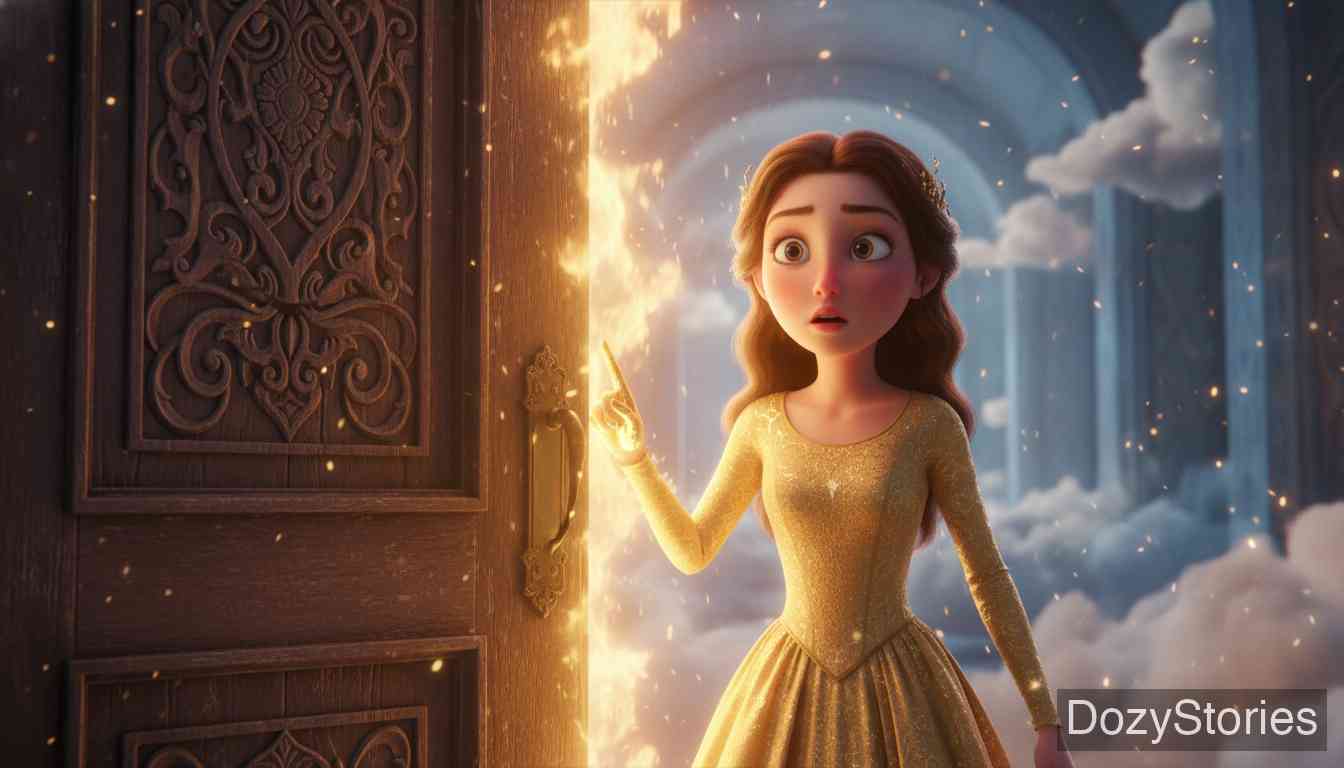
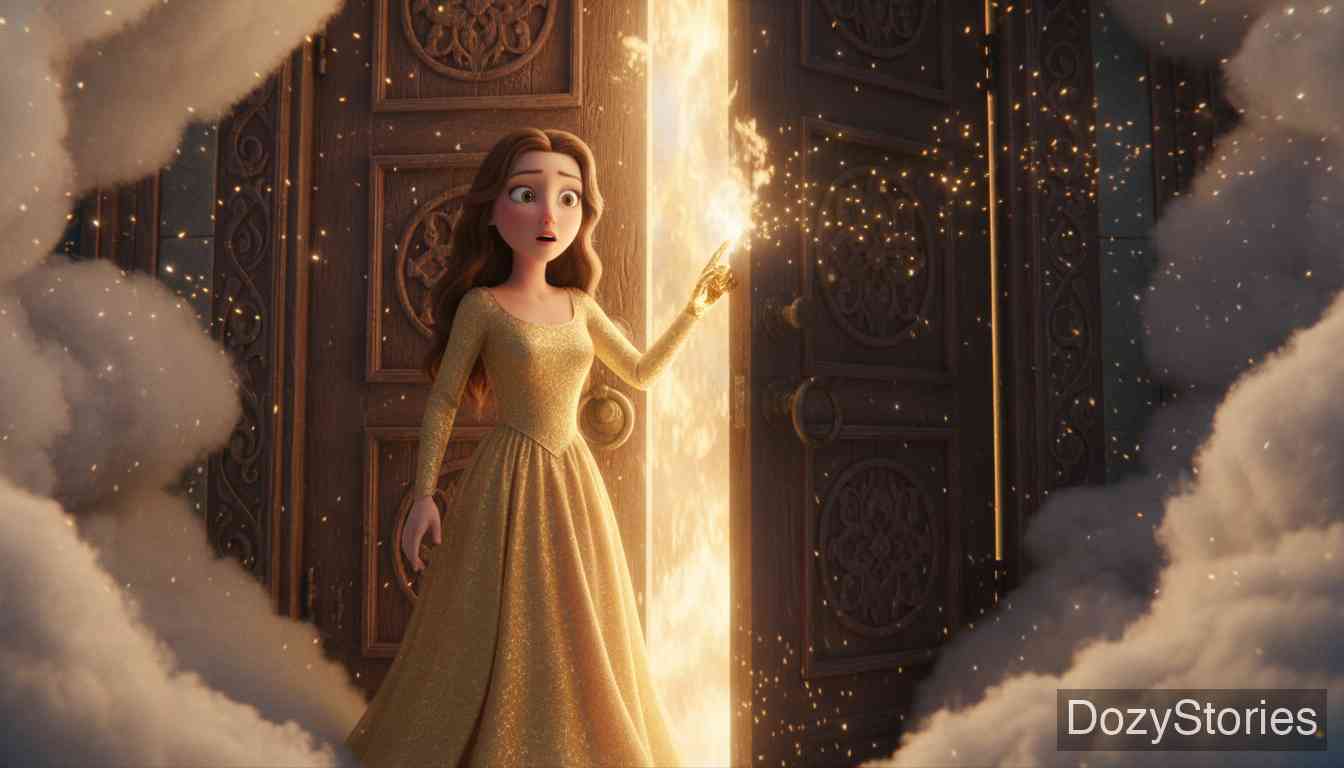
She found the key and turned it in the lock. The door flew open, and there sat the Holy Trinity in fire and glory. The girl stared in wonder. She reached out and touched the light, and her finger turned to gold at once. Fear seized her. She slammed the door and ran away. Her heart beat and beat and would not rest. The gold on her finger would not come off, though she rubbed and washed it again and again.
A few days later Mary came home and asked for the keys. As the girl gave them back, Mary looked into her eyes. "You did not open the thirteenth door, did you?" "No," said the girl. Mary laid a hand on her heart and felt it beating fast. She knew the girl had broken the rule, so she asked again, "Are you sure?" "Yes," said the girl, and she lied a second time. Then Mary saw the golden finger and asked a third time. "No," said the girl, and she lied again. Mary sighed and said, "You broke my word, and you lied three times. Heaven has no place for you now."
Mary's Child - The girl wakes in a wild land. She cannot speak, and thorns close her in, so she lives in a hollow tree. Years later a king finds the golden-haired maiden and takes her to his castle as his bride. - Scene Illustration 2
The girl wakes in a wild land. She cannot speak, and thorns close her in, so she lives in a hollow tree. Years later a king finds the golden-haired maiden and takes her to his castle as his bride.
The girl fell into a deep sleep. When she woke, she lay on the earth, in the middle of a wild land that stretched as far as the eye could see. She tried to call for help, but no sound came out of her mouth. She jumped up and ran, but thick walls of thorns closed her in on every side. An old tree stood there, hollow inside, and that became her home. By day she sat under it, and by night she crept into the hole to sleep. The wind and rain beat on her, and her days were cold and bitter. When she thought of her happy days in heaven and the little angels, tears ran down her face.
When she was hungry, she ate roots and wild berries, and she walked far to find them. In autumn she carried fallen nuts and dry leaves into the hollow tree, food for the long winter. When snow and ice came, she crept into the leaves like a small, poor animal, to keep warm. Before long her clothes wore out and fell away, piece by piece. When the sun grew warm again, she sat before the tree, and her long golden hair hung around her like a big cloak. So she sat, year after year, and tasted all the pain of the world.
One day the trees turned green again, and the king of the land came to hunt in the forest. He chased a deer, and the deer ran into a thick wall of bushes. The king jumped off his horse, pushed the branches apart, and cut a path with his sword. When he came through, he saw a girl of great beauty sitting under the tree, her golden hair covering her from head to foot. The king stopped and stared. "Who are you?" he asked. "Why do you sit alone in this wild place?"
The girl opened her mouth, but not one word would come. "Will you come with me to my castle?" asked the king. She gave a small nod. The king lifted her onto his horse and rode home with her. In the castle he gave her fine clothes and everything she could wish for. She could not speak, but she was beautiful and gentle, and the king loved her with all his heart. Before long he made her his queen.
Mary's Child - The queen bears two sons. Each time Mary comes by night: confess, and speech and child are yours; deny, and the child goes. The queen will not give in, so the children are taken, and the people whisper that she is a monster — but the king shields her. - Scene Illustration 3
The queen bears two sons. Each time Mary comes by night: confess, and speech and child are yours; deny, and the child goes. The queen will not give in, so the children are taken, and the people whisper that she is a monster — but the king shields her.
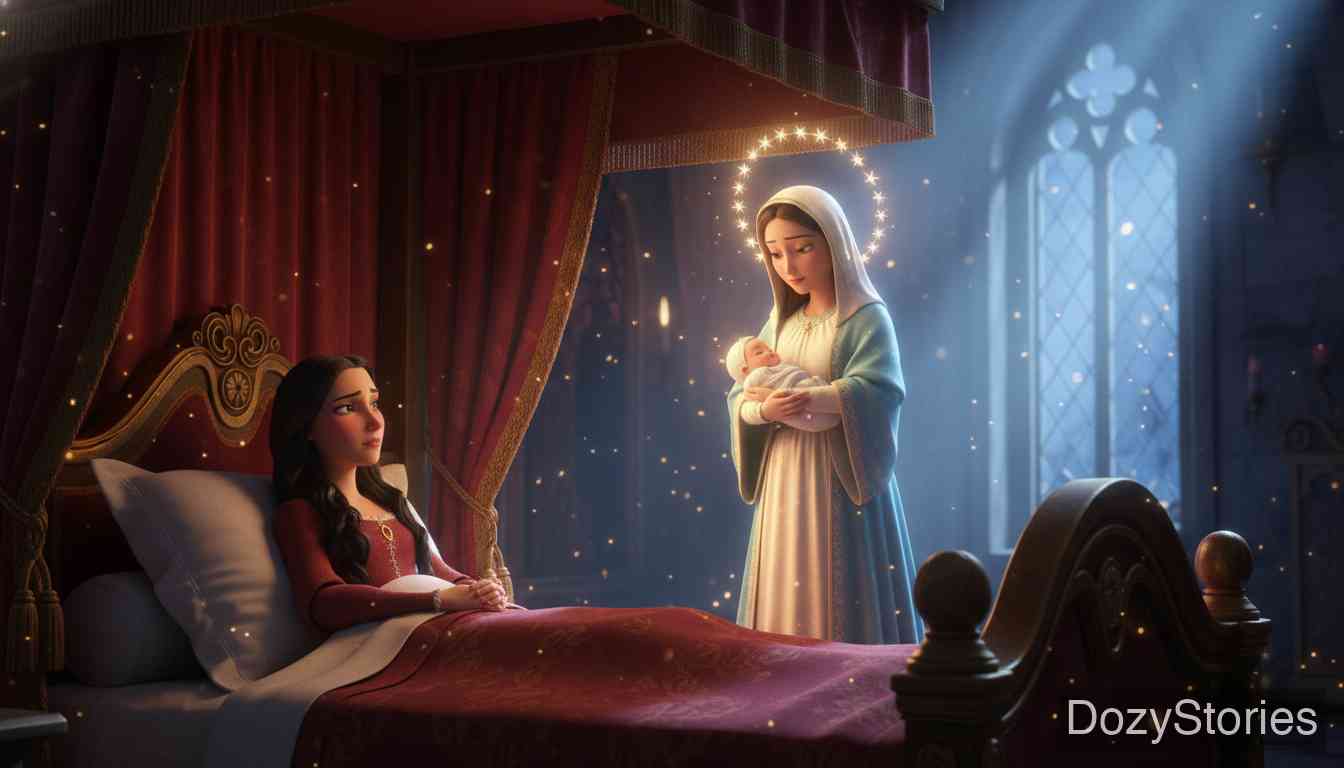
About a year later, the queen gave birth to a son. That night she lay alone in bed, and the Virgin Mary stood before her. "Tell the truth," said Mary. "Say that you opened the forbidden door, and I will give your voice back to you. But if you deny it, I will take your newborn son away." The queen opened her mouth, and her voice came back. But she said the same words: "I did not open that door." Mary sighed, lifted the baby from her arms, and vanished.
The next morning the child was gone. Whispers ran through the palace and the town. The people said the queen was a monster who had eaten her own child. The queen heard every word, but she could not say a thing to defend herself. The king, however, would not believe it, for he loved her far too much.
Another year passed, and the queen had a second son. In the night Mary came again. "Own your fault," she said, "and I will give back your child and untie your tongue. Stay stubborn, and I will take this son as well." The queen said the same words as before: "I did not open that door." So Mary lifted the child and carried him up to heaven.
The next morning this child was gone too. Now the people spoke out loud: the queen had eaten her child. The king's councilors fell on their knees and begged him to put her on trial. But the king loved his wife too well to listen. He told them that anyone who said such a thing again would be punished.
Mary's Child - The queen gives birth to a daughter. Mary takes her up to heaven to see her two sons, but the queen denies her fault a third time. The daughter is taken too, the people cry for justice, and the queen is condemned to the fire. - Scene Illustration 4
The queen gives birth to a daughter. Mary takes her up to heaven to see her two sons, but the queen denies her fault a third time. The daughter is taken too, the people cry for justice, and the queen is condemned to the fire.
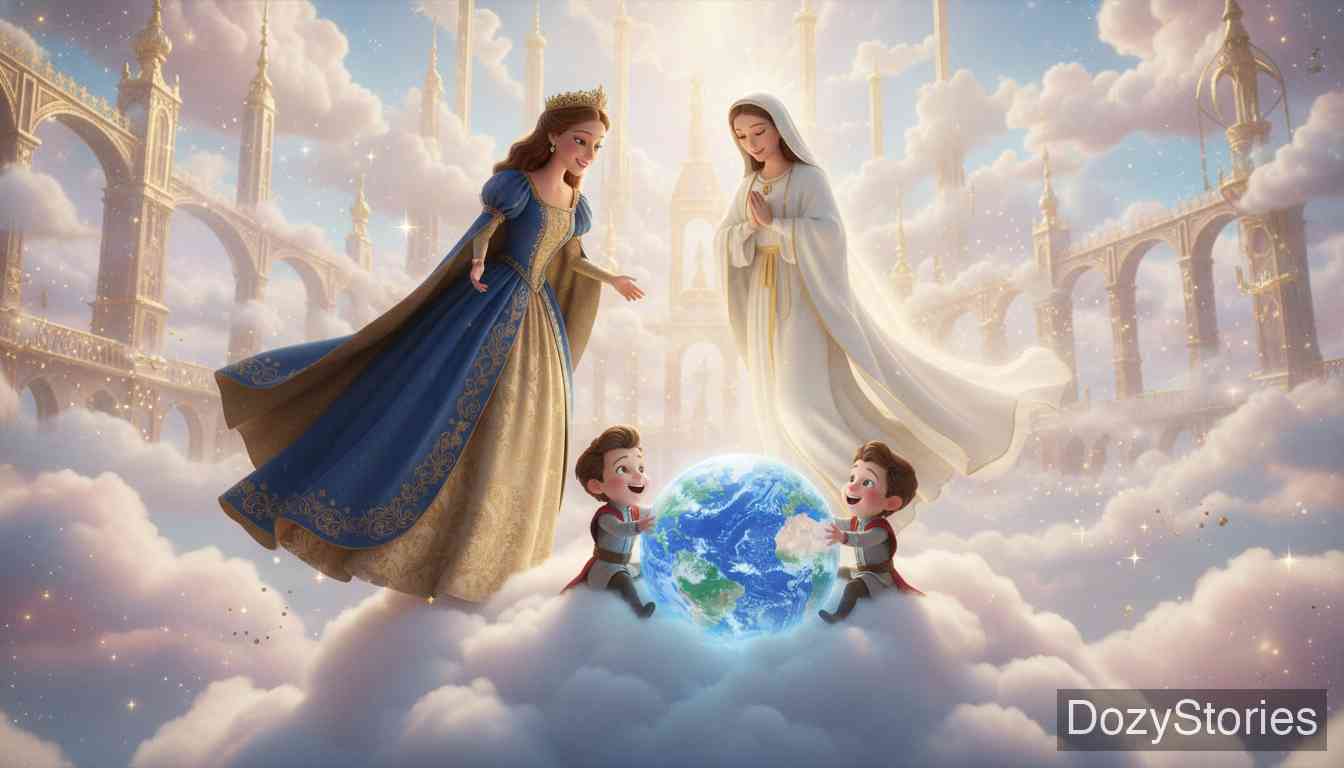
The next year the queen gave birth to a little daughter. In the night Mary came to her a third time. "Follow me," she said, and she took the queen's hand and led her up to heaven. There the queen saw her two sons. They smiled at their mother and played with a round ball — the whole world — rolling it between them. Joy filled the queen's heart. "Has your heart not softened yet?" asked Mary. "Say that you opened the door, and your two sons will be yours again."
But the queen said the old words for the third time: "I did not open that door." Then Mary let her fall back to earth, and she took the little daughter away too.
The next morning the little girl was gone. When the news spread, all the people cried out, "The queen is a monster! She must be judged!" The king could hold back his councilors no longer, so a trial was held. The queen could not answer, and she could not defend herself, so she was condemned to die in the fire.
Mary's Child - At the stake the fire rises, and at last the queen repents and tells the truth. Rain puts out the flames. Mary comes down with the three children, gives the queen back her voice and her joy — the honest heart is forgiven. - Scene Illustration 5
At the stake the fire rises, and at last the queen repents and tells the truth. Rain puts out the flames. Mary comes down with the three children, gives the queen back her voice and her joy — the honest heart is forgiven.
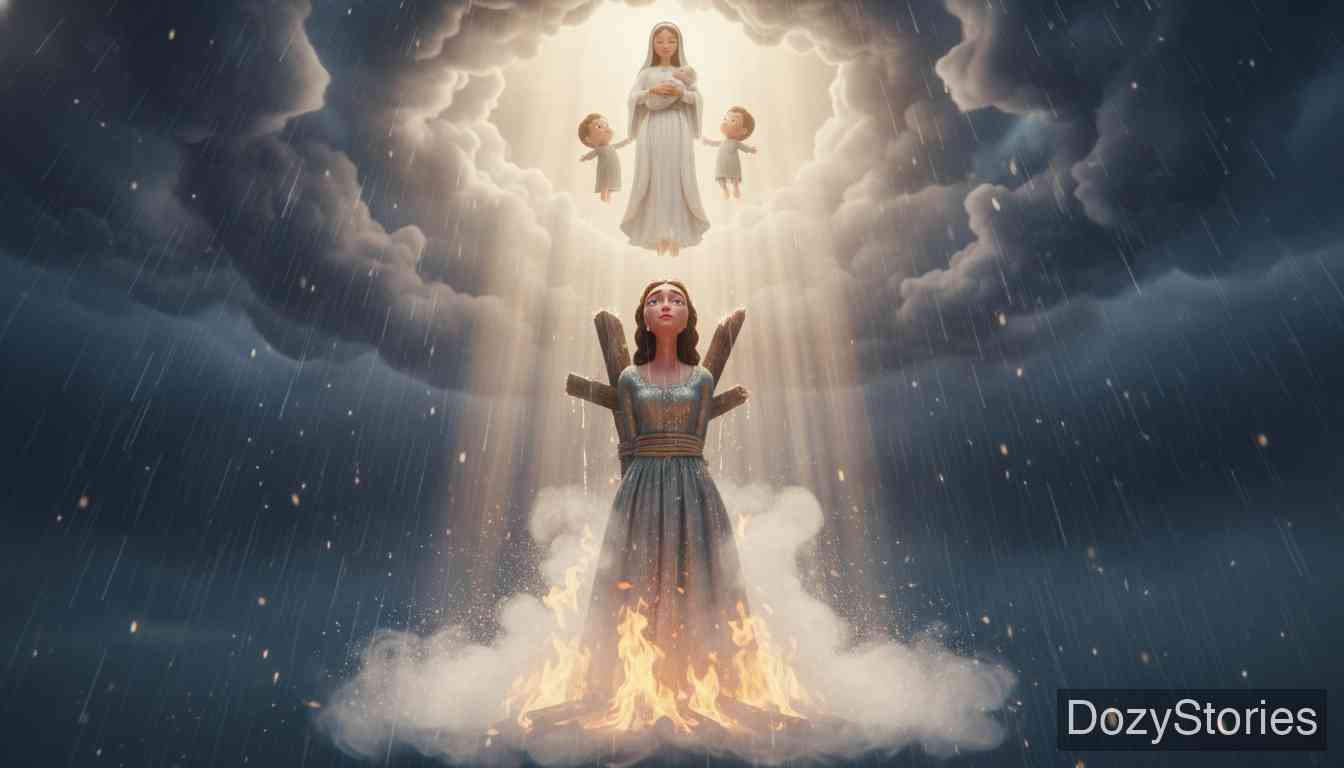
The wood was piled high. The people tied the queen to the stake, and the fire rose and crackled around her. At that moment the cold, hard ice in her heart melted at last, and sorrow flooded over her. "Before I die," she thought, "I wish I could confess that I opened that door." As the wish left her heart, her voice came back. She cried out as loud as she could, "Yes, Mary! It was I who opened it!" At once heavy rain fell from the sky and put out the fire. A bright light broke open above her, and the Virgin Mary came down from the clouds. Her two sons stood beside her, and her little daughter lay in her arms. Mary spoke to the queen in a gentle voice. "Whoever repents and owns his fault is forgiven." Then she gave the three children back to the queen, untied her tongue, and blessed her with a happy life. From that day on, the king, the queen, and their three children lived together in joy and never parted again. The queen often told her children, "Speak the truth, and even the biggest mistake can be mended."

Vocabulary from "Mary's Child"

12 key words from this story with definitions and original context sentences for language learners.

forbidden(forbid)B2
/fəˈbɪdn/adj.

Not allowed.

被禁止的;不许做的。

Only the forbidden door was left.

如今只剩那道禁门了。

longingB2
/ˈlɒŋɪŋ/n.

A strong wish for something.

渴望;心里痒痒的向往。

Her heart itched with longing.

她心里痒痒的,像有只小猫在挠。

slammed(slam)B2
/slæmd/v.

Closed with great force and a loud noise.

砰地关上;猛地撞上。

She slammed the door and ran away.

她吓得魂飞魄散,砰地关上门,扭头就跑。

hollowB2
/ˈhɒləʊ/adj.

Empty inside.

中空的;空心的。

An old tree stood there, hollow inside, and that became her home.

荒地上立着一棵老树,树心已经空了。

cloakB2
/kləʊk/n.

A long piece of clothing that covers the body.

斗篷;披风。

When the sun grew warm again, she sat before the tree, and her long golden hair hung around her like a big cloak.

等到太阳转暖,她就坐在树前,长长的金发披散下来,像一件大斗篷,把她从头到脚裹了个严实。

vanished(vanish)B2
/ˈvænɪʃt/v.

Disappeared from sight.

消失;一下子不见了。

Mary sighed, lifted the baby from her arms, and vanished.

圣母玛利亚叹一口气,从她怀里抱起婴儿,转眼不见了。

denyB2
/dɪˈnaɪ/v.

To say that something is not true.

否认;不承认。

But if you deny it, I will take your newborn son away.

你要是咬紧牙关不认,我这就带走你刚生的孩子。

stubbornB2
/ˈstʌbən/adj.

Refusing to change your mind.

固执的;不肯让步的。

Stay stubborn, and I will take this son as well.

你若要执迷不悟,这个孩子我也要带走。

councilorsC1
/ˈkaʊnsələz/n.

People who give advice to a king.

大臣;谋臣。

The king's councilors fell on their knees and begged him to put her on trial.

大臣们跪求国王,要把她拿去审问。

condemned(condemn)C1
/kənˈdemd/v.

Given a serious punishment by a court.

被判处(重刑)。

The queen could not answer, and she could not defend herself, so she was condemned to die in the fire.

王后答不出话,也辩不了白,被判处火刑,要活活烧死。

confessB2
/kənˈfes/v.

To admit that you did something wrong.

承认;坦白。

"Before I die," she thought, "I wish I could confess that I opened that door."

她心想:“临死之前,我真该认下那道门是我开的。”

repents(repent)C1
/rɪˈpents/v.

Feels truly sorry for a wrong deed.

悔过;悔改。

"Whoever repents and owns his fault is forgiven."

“真心悔过、肯认下过错的人,都会得到宽恕。”

Reading Together & Learning More

The Moral

A mistake is not the worst thing, but a lie to hide it is. It is never too late to tell the truth and be forgiven.

Educational Value

Helps children see that a mistake and a lie about it are two different things: denial only makes trouble worse, while honest words set the heart free.

Tips for Parents

Ask your child: was the girl punished for opening the door, or for lying three times? What if she had owned up the first time? You could agree at home that telling the truth early always earns a calm, kind talk.

Talk About It

  1. The girl knew that one honest word would save her children. Why do you think she kept lying instead of telling the truth?
  2. Opening the door was a mistake, and denying it was a lie. Which one made things worse? Why?
  3. The king heard many terrible rumors, yet he still trusted the queen. Was he right? What would you do?
  4. Telling the truth is often hard. Can you think of a way to make it easier for yourself or a friend?
  5. Mary forgave the queen at the end. Do you think true repentance should bring forgiveness? Are there any exceptions?