Hans Married
Introduction
In the Brothers Grimm collection this story carries the number 84, and in its homeland it was known as a Schwank — a short comic tale told at village firesides. The whole joke rests on a single word: 'patches.' In the region where the tale was told, the cloth patches sewn onto clothes and the small plots of land beside a farm shared the same name. So when the uncle slapped the patches on his trousers and boasted that his nephew had 'just as many patches as I do,' a father who thought only of money was led round in circles. We have retold this story as a fable because beneath the laughter lies an old and honest lesson: greed blinds the mind, and a person who sees only gain is the easiest to deceive. Chinese folk wisdom carries the same idea, in sayings about profit clouding a person's judgment, and this tale fits that spirit well. When you read with your child, put your attention on two things. First, play with the word 'patches': one word, two meanings, and a whole trick hidden inside. Second, ask why the rich farmer could not see the holes in the uncle's trousers. He was not unlucky; he was greedy. The ending is a famous folk-tale joke: the teller claims he went to the wedding in a hat of snow, a coat of cobwebs and shoes of glass, and of course all of them were ruined. Read those lines with a smile and a wink, and let the laughter do its work. The lesson will stay with your child long after the joke is over.

Vocabulary from "Hans Married"
12 key words from this story with definitions and original context sentences for language learners.
To have something that belongs to you.
拥有;占有(own 的过去式)。
But Hans owned almost nothing, and no girl would marry a poor man.
可汉斯家徒四壁,哪家姑娘肯嫁?
To put something into a liquid and take it out again.
蘸;浸。
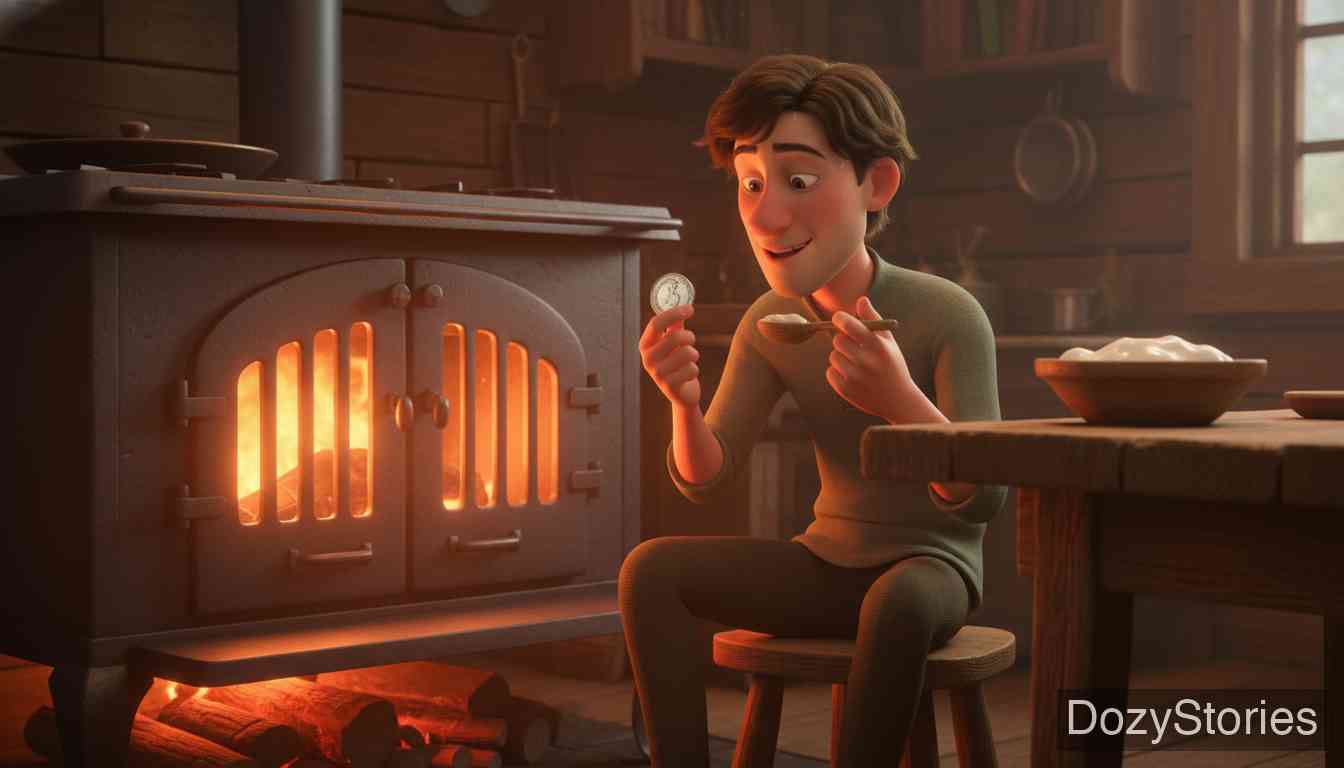
"Break the bread and dip it in the milk," he said.
“你把面包掰碎,泡进奶里慢慢吃。”
All the money and property that a person owns.
家产;财富。
"My nephew's fortune is safe and sound.
“我侄子的家产,安稳又牢靠。”
To hit something with the flat of your hand.
(用手掌)拍打(slap 的过去式)。
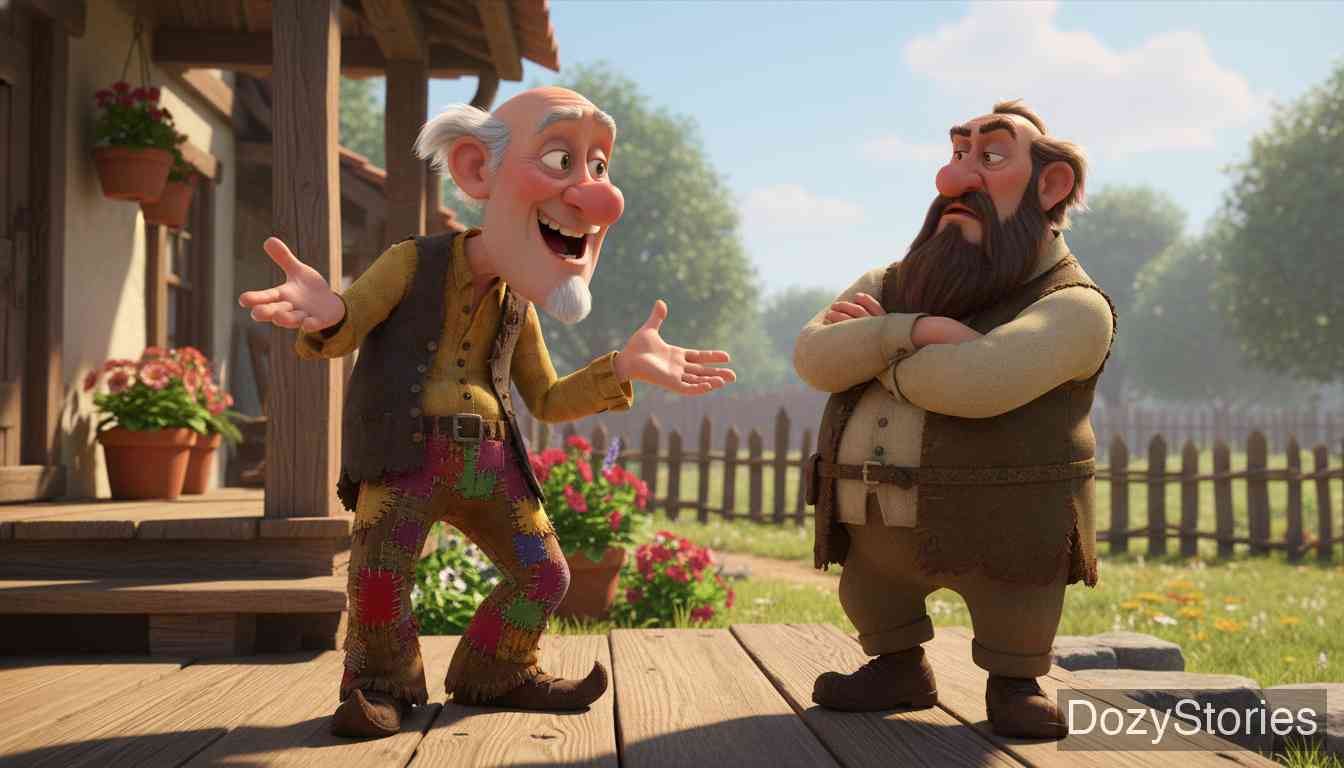
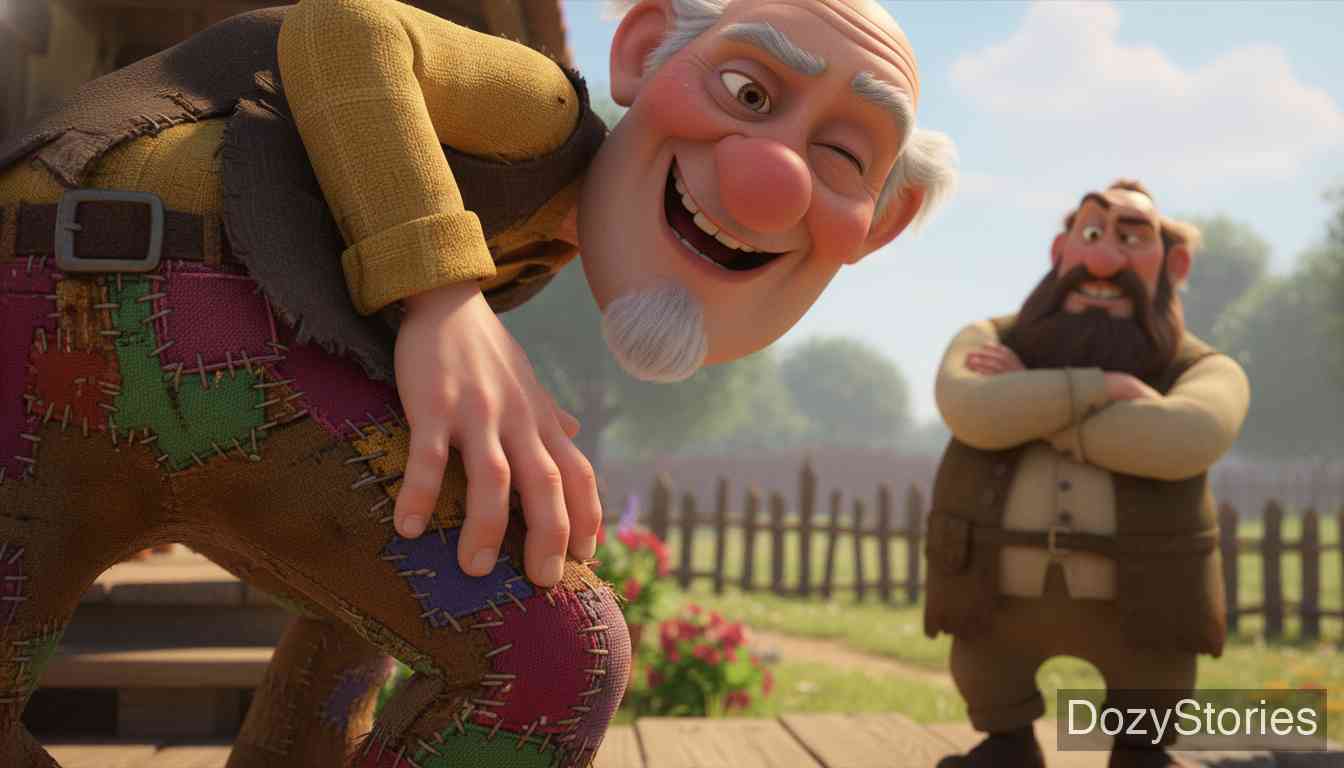
As he spoke, he slapped the patches on his trousers.
说着,他伸手拍了拍裤子上的补丁。
Mended with small pieces of cloth sewn on.
打满补丁的。
Hans took off his best coat and put on his old patched smock.
汉斯脱下自己最好的外套,换上打补丁的旧罩衫。
Wanting much more money or food than you need.
贪婪的;贪心的。
The greedy farmer heard the word "patches," and his eyes lit up.
富农一听“补丁”两个字,眼睛立刻亮了。
Careful with money; not wasteful.
节俭的;会过日子的。
His wife thought he was very thrifty.
妻子见了,还夸他会过日子。
The land and property that a person owns.
家业;产业。
A few days later, the young wife wanted to see her husband's estate.
过了些日子,新娘子想看看丈夫的家业。
A line that shows where one piece of land ends.
边界;地界。
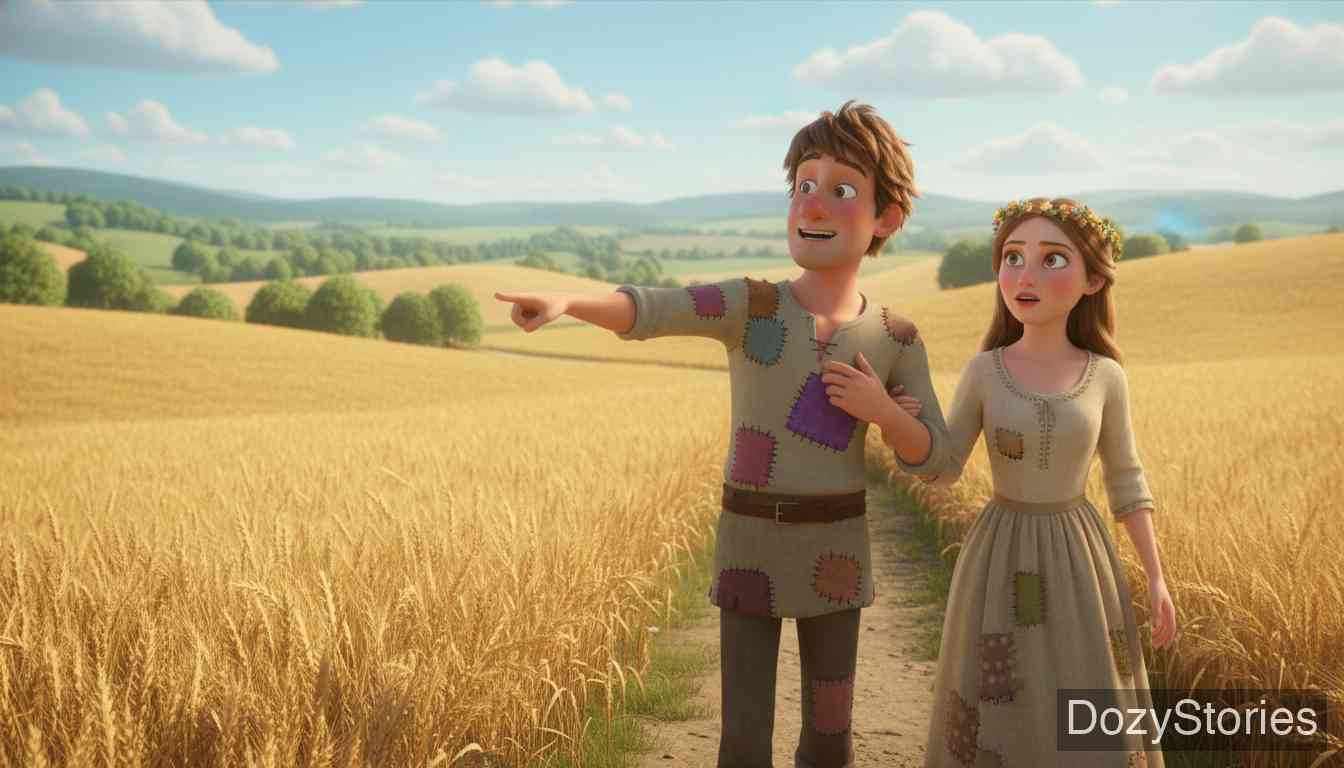
When Hans saw a boundary, he pointed at it.
汉斯望见一道地界,便伸手一指。
The fine nets that spiders make to catch insects.
蜘蛛网。
My coat was woven of cobwebs, and a thorn hedge tore it off my back.
我的外套是蛛网织的,被荆棘一扯就没了。
Made by crossing threads or thin pieces over and under each other.
编织成的(weave 的过去分词)。
My coat was woven of cobwebs, and a thorn hedge tore it off my back.
我的外套是蛛网织的,被荆棘一扯就没了。
Something useful or valuable that you get.
利益;好处;收获。
So the tale teaches us: a greedy heart sees only gain, and that is when a clever word can fool it.
这故事告诉我们:贪心的人,眼里只看得见好处,于是最容易被一句巧话牵着鼻子走。
Reading Together & Learning More
The Moral
A greedy heart sees only gain, so it is the easiest to fool. When money fills your eyes, you cannot even see the holes right in front of you.
Educational Value
This tale helps children enjoy wordplay: one word with two meanings can hide a whole trick. It also shows that greed blinds the mind, and that people who think only of gain are the easiest to deceive. The silly ending about snow, cobwebs and glass is a folk-tale joke that tells us not to take the story too seriously.
Tips for Parents
Before you read, ask your child to listen for the word 'patches.' Pause at the part where the uncle slaps his trousers and ask: does 'patches' mean cloth or land? After reading, talk about why the rich farmer was fooled so easily, and what your child would do in Hans's place. Read the snow hat, the cobweb coat and the glass shoes with a funny voice, then ask why the teller ends the story with something so impossible.
Talk About It
- The uncle says his nephew has 'just as many patches as I do.' Is that statement true or false? Can true words still be used to deceive someone?
- The rich farmer agrees to the wedding as soon as he hears the word 'patches.' Was he tricked by the uncle, or by his own greed?
- When Hans shows his wife his 'estate,' why does he tell her to look at the patches on his smock instead of the wide fields?
- If you were Hans's wife and found out that your husband owned almost nothing, what would you do?
- The teller says he went to the wedding in a snow hat, a cobweb coat and glass shoes. That is clearly impossible. Why do you think the story ends this way?