Hans in Luck
Introduction
Among all the tales the Brothers Grimm collected, "Hans in Luck" is an odd one. There is no magic, no witch, and no villain — just a good-hearted young man who, on his way home, trades a fortune down to nothing and still feels lucky. That makes it a perfect story to retell in the style of a fable. A fable is short and simple, with plain characters and one clear point, and every line pushes toward that point. Each of Hans's trades is like a comma in a long sentence that ends with a simple truth: a contented heart is richer than a full purse. Chinese readers will hear an echo of the old story of the old man at the border who lost his horse — loss may be good fortune, and good fortune may be loss, for the two turn into each other at any moment. Hans loses everything he owns, yet he calls himself the luckiest man alive. The lightness he finds is something many grown-ups never discover. When you read this story with a child, do not rush to say whether Hans is foolish or wise. Ask instead: "Why does he grow happier with every trade?" Let the child walk the whole road with Hans, and then look back — was it the gold that weighed him down, or the worry in his mind? For two hundred years readers have laughed at Hans or admired him, and there is no single right answer. That open question is exactly what makes this little tale so worth telling.
Vocabulary from "Hans in Luck"
12 key words from this story with definitions and original context sentences for language learners.
Money that you are paid for your work.
工钱;工资。
Give me my wages, and I will go home to my mother.
请把工钱结给我吧,我要回家看望年迈的母亲。
In a loyal and honest way, without cheating.
忠实地;诚心诚意地。
"You have served me faithfully for seven years, so your reward will be a good one."
"你伺候我七年,忠厚老实,工钱自然不能亏待你。"
A solid piece of something, without a clear shape.
(无定形的)一大块。
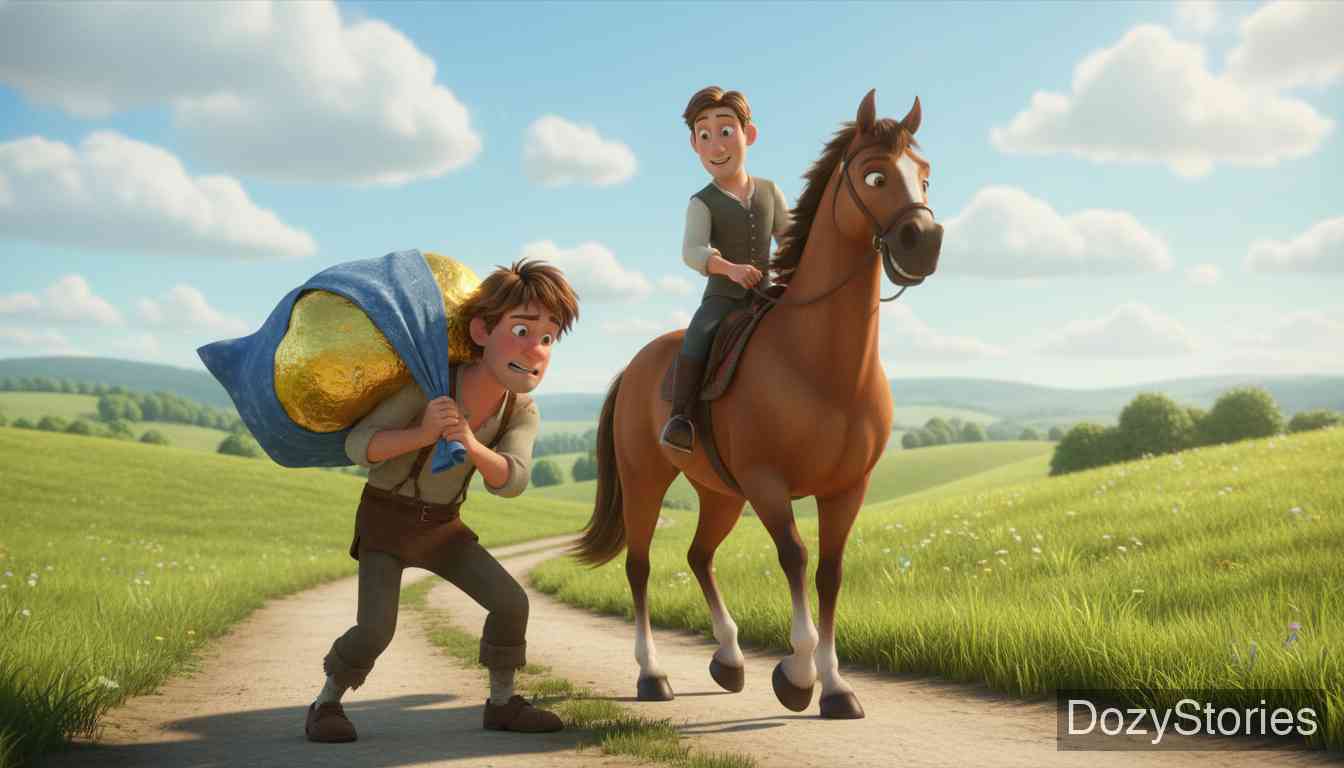
He gave Hans a lump of gold as big as his head.
他递给汉斯一块跟脑袋一般大的金子。
The straps you hold to guide and control a horse.
缰绳。
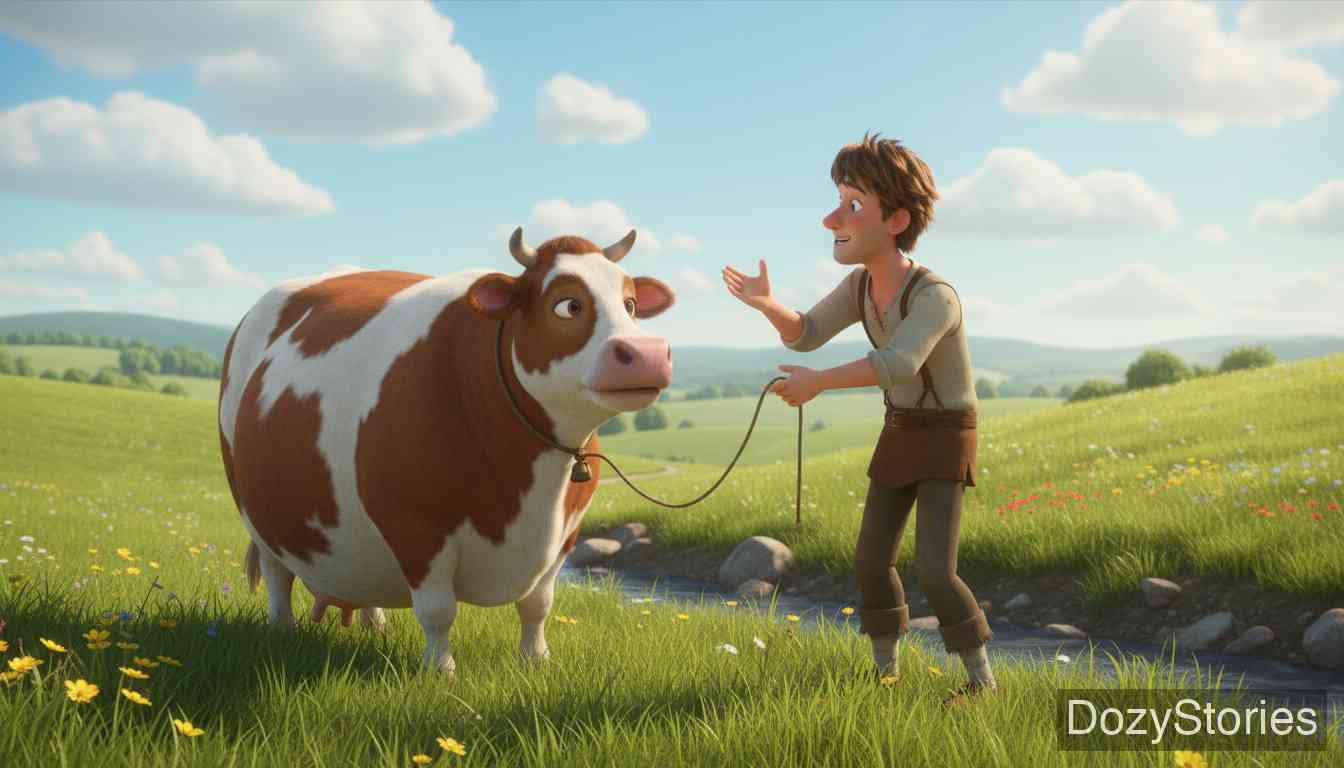
He helped Hans onto the horse and put the reins firmly into his hands.
他扶汉斯上了马背,把缰绳牢牢塞进他手里。
A long, narrow hole dug beside a road or field.
沟;路边的沟。
Hans shook left and right, lost his balance, and fell into a ditch beside the road.
汉斯在马上东摇西晃,坐也坐不稳,一个跟头摔进了路边的沟里。
Very pleased and happy about something.
非常高兴的;欣喜的。
Hans was delighted, and the farmer rode away on the horse as fast as he could.
汉斯喜出望外,农夫翻身上马,一溜烟跑远了。
A person whose job is to cut up and sell meat.
屠夫;卖肉的人。
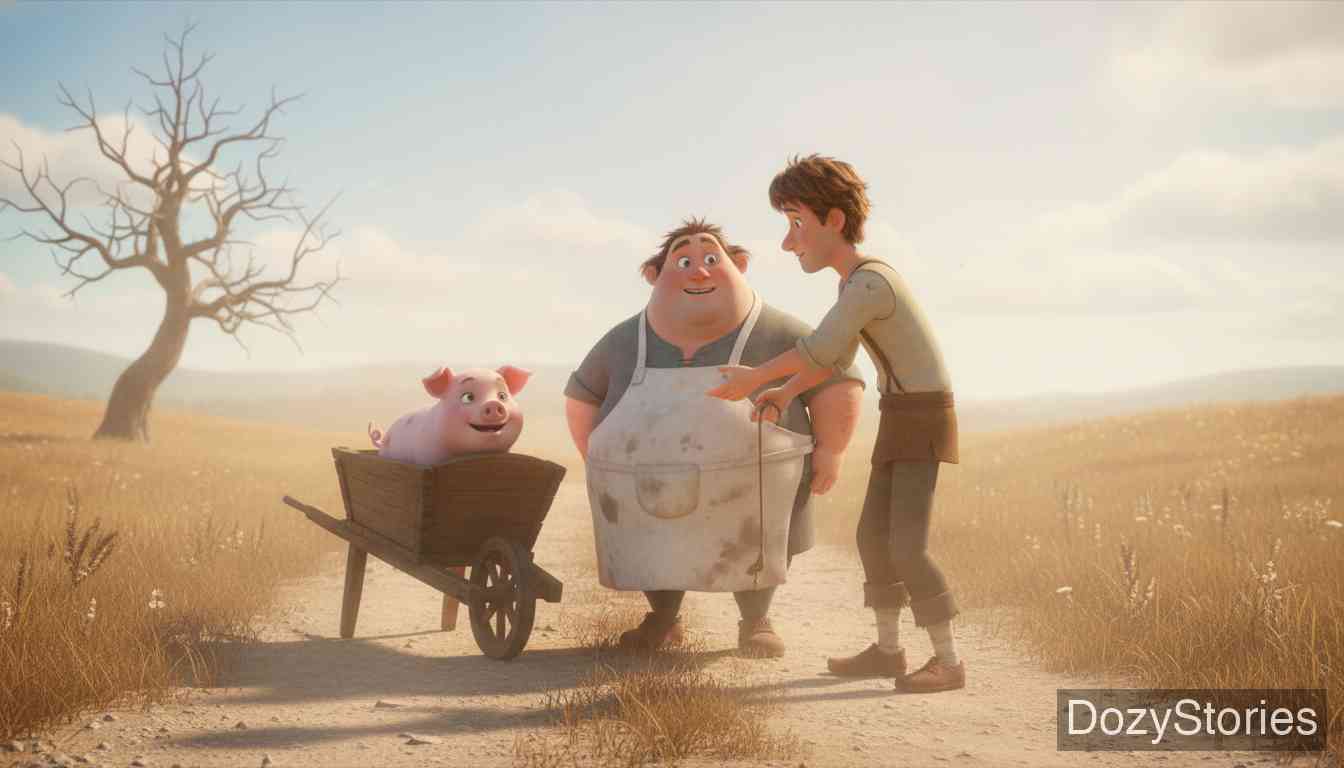
Luckily, a butcher came along the road just then, pushing a wheelbarrow with a young pig in it.
也是他命不该绝。这时,一个屠夫推着独轮车路过,车上躺着一头小猪。
A large, special meal for many people.
盛宴;宴席。
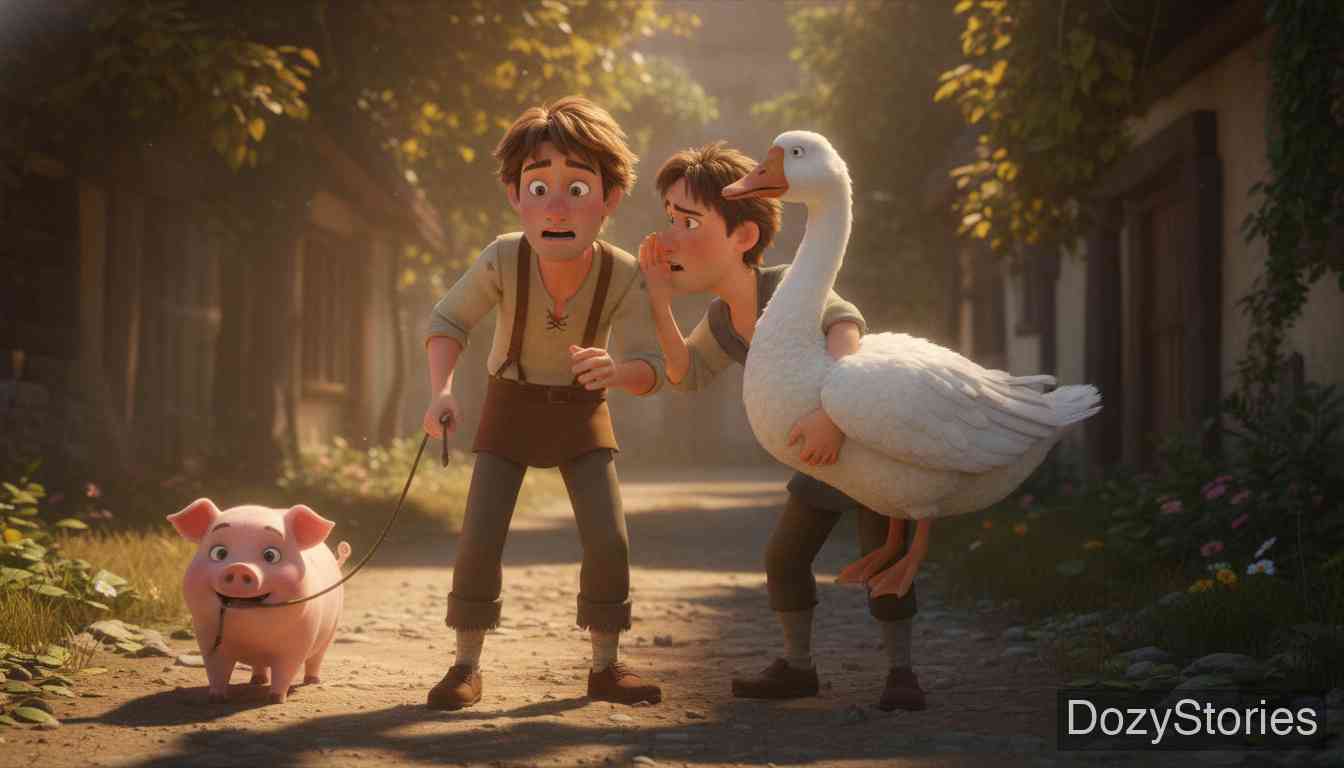
The young man said he was taking the goose to a feast.
小伙子说,他正要送这鹅去赴宴。
In a way that shows you do not trust someone or something.
怀疑地;疑神疑鬼地。
Then the young man looked around suspiciously and shook his head.
说着,小伙子东张西望,压低声音道。
A round stone that turns to sharpen knives and tools.
磨石;砂轮。
Nothing is needed for it but a grindstone; the rest follows by itself.
这行当别的都不要,只要一块磨石,其余自然就有了。
A heavy load, or something that makes you worried or tired.
重负;负担。
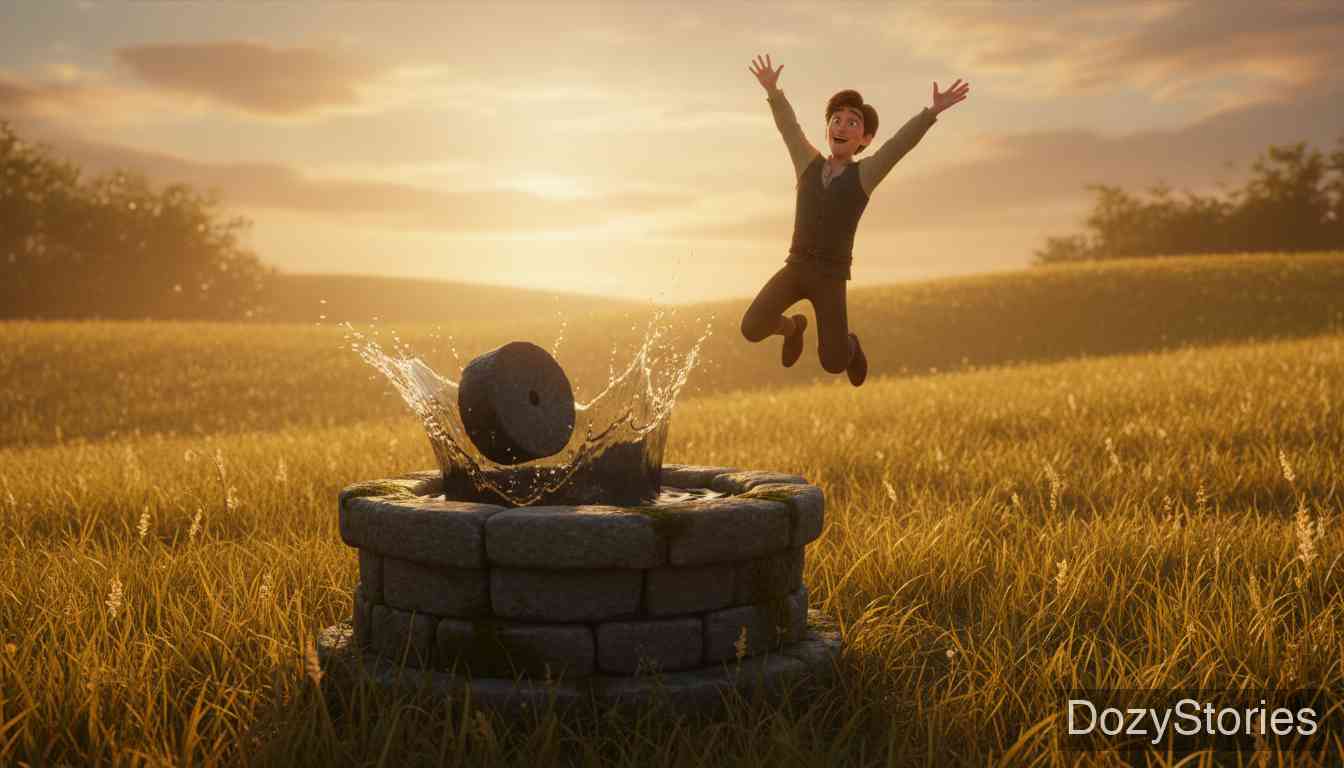
He was very tired, and the stones were a heavy burden.
他累得够呛,两块石头更是沉甸甸的负担。
Happy and satisfied with what you have.
心满意足的;知足的。
Hans walked home with the goose under his arm, contented and light of heart.
汉斯夹着鹅往家走,心满意足,浑身轻快。
Reading Together & Learning More
The Moral
A contented heart is a happy heart. A man weighed down by his own goods is never free, while a man with empty hands and a light mind can be happy anywhere.
Educational Value
Helps children see that owning more is not the same as being happy, and that it is wise to put down what is too heavy to carry. It also offers practice in retelling a chain of trades in the right order.
Tips for Parents
Ask your child whether Hans is clever or foolish, but let them give their reasons first. You can also play a small game: trade small objects back and forth, and talk about what is easy to give up and what is hard.
Talk About It
- With every trade Hans owns something smaller, yet he grows happier each time. Do you think he is foolish, or wise about life?
- If Hans had carried the gold all the way home, do you think he would have been as happy?
- If you had a lump of gold as big as your head, what would you do with it?
- Are "having a lot" and "feeling happy" the same thing? Can you give a small example from your own life?
- Hans says losing the stones felt like finding a treasure. Have you ever felt lighter after letting something go?