Hans and Grethel

Introduction

'Foolish Hans' is the 32nd tale in Grimm, and its German title, 'Der gescheite Hans,' literally means 'Clever Hans' — a thorough piece of irony, for the more it praises his cleverness the more it shows his folly, and the Chinese title 'Foolish Hans' rather nicely makes that irony plain. It belongs to what folklorists call type ATU 1696, 'What Should I Have Said?', the 'numskull tale' found the world over: a fool who always takes the lesson of 'what he should have done last time' and applies it, unchanged, to a completely different thing this time. Mother says pin the needle to your sleeve, so the next day he sticks a sharp knife in his sleeve; she says lead the goat with a rope, so he drags the bacon along on a rope (and feeds it to the dogs); she says carry the bacon on your head, so he sets a lively little calf on his head... he is forever half a beat behind, solving today's problem with yesterday's answer. This fault is one Chinese readers know well — the man of Chu 'carving the boat to find his sword,' the man of Song 'waiting by the stump for a hare,' are muddled in exactly the same way: clinging to an old rule and ignoring how the situation before them has already changed. The story is strung together with near-identical repeated dialogue (every section the same 'Whither away?' and 'Behave well'), rolling off the tongue like a tongue-twisting nursery rhyme; and its ever-more-preposterous, finally absurd ending is just the trademark tomfoolery of such numskull tales. Read it half for the laugh, and half to wonder: why does merely memorising rules end up ruining the task instead?

Font Size
Image Layout
1 / 11
Stopped
The mother of Hans said, "Whither away, Hans?" Hans answered, "To Grethel." - "Behave well, Hans." - "Oh, I'll behave well. Good-bye, mother." - "Good-bye, Hans." Hans comes to Grethel, "Good day, Grethel." - "Good day, Hans. What dost thou bring that is good?" - "I bring nothing, I want to have something given me." Grethel presents Hans with a needle. Hans says, "Good-bye, Grethel." - "Good-bye, Hans."
Hans takes the needle, sticks it into a hay-cart, and follows the cart home. "Good evening, mother." - "Good evening, Hans. Where hast thou been?" - "With Grethel." - "What didst thou take her?" - "Took nothing; had something given me." - "What did Grethel give thee?" - "Gave me a needle." - "Where is the needle, Hans?" - "Stuck it in the hay-cart." - "That was ill done, Hans. Thou shouldst have stuck the needle in thy sleeve." - "Never mind, I'll do better next time."
"Whither away, Hans?" - "To Grethel, mother." - "Behave well, Hans." - "Oh, I'll behave well. Good-bye, mother." - "Good-bye, Hans."
Hans comes to Grethel. "Good day, Grethel." - "Good day, Hans. What dost thou bring that is good?" - "I bring nothing; I want to have something given to me." Grethel presents Hans with a knife. "Good-bye, Grethel." - "Good-bye Hans." Hans takes the knife, sticks it in his sleeve, and goes home. "Good evening, mother." - "Good evening, Hans. Where hast thou been?" - "With Grethel." - "What didst thou take her?" - "Took her nothing, she gave me something." - "What did Grethel give thee?" - "Gave me a knife." - "Where is the knife, Hans?" - "Stuck in my sleeve." - "That's ill done, Hans, thou shouldst have put the knife in thy pocket." - "Never mind, will do better next time."
"Whither away, Hans?" - "To Grethel, mother. " - "Behave well, Hans." - "Oh, I'll behave well. Good-bye, mother." - "Good-bye, Hans."
Hans comes to Grethel. "Good day, Grethel." - "Good day, Hans. What good thing dost thou bring?" - "I bring nothing, I want something given me." Grethel presents Hans with a young goat. "Good-bye, Grethel." - "Good-bye, Hans." Hans takes the goat, ties its legs, and puts it in his pocket. When he gets home it is suffocated. "Good evening, mother." - "Good evening, Hans. Where hast thou been?" - "With Grethel." - "What didst thou take her?" - "Took nothing, she gave me something." - "What did Grethel give thee?" - "She gave me a goat." - "Where is the goat, Hans?" - "Put it in my pocket." - "That was ill done, Hans, thou shouldst have put a rope round the goat's neck." - "Never mind, will do better next time."
"Whither away, Hans,?" - "To Grethel, mother." - "Behave well, Hans." - "Oh, I'll behave well. Good-bye, mother." - "Good-bye, Hans." Hans comes to Grethel. "Good day, Grethel." - "Good day, Hans. What good thing dost thou bring?" - "I bring nothing, I want something given me." Grethel presents Hans with a piece of bacon. "Good-bye, Grethel." - "Good-bye, Hans." Hans takes the bacon, ties it to a rope, and drags it away behind him. The dogs come and devour the bacon. When he gets home, he has the rope in his hand, and there is no longer anything hanging to it. "Good evening, mother." - "Good evening, Hans." - "Where hast thou been?" - "With Grethel." What didst thou take her?" - "I took her nothing, she gave me something." - "What did Grethel give thee?" - "Gave me a bit of bacon." - "Where is the bacon, Hans?" - "I tied it to a rope, brought it home, dogs took it." - "That was ill done, Hans, thou shouldst have carried the bacon on thy head." - "Never mind, will do better next time."
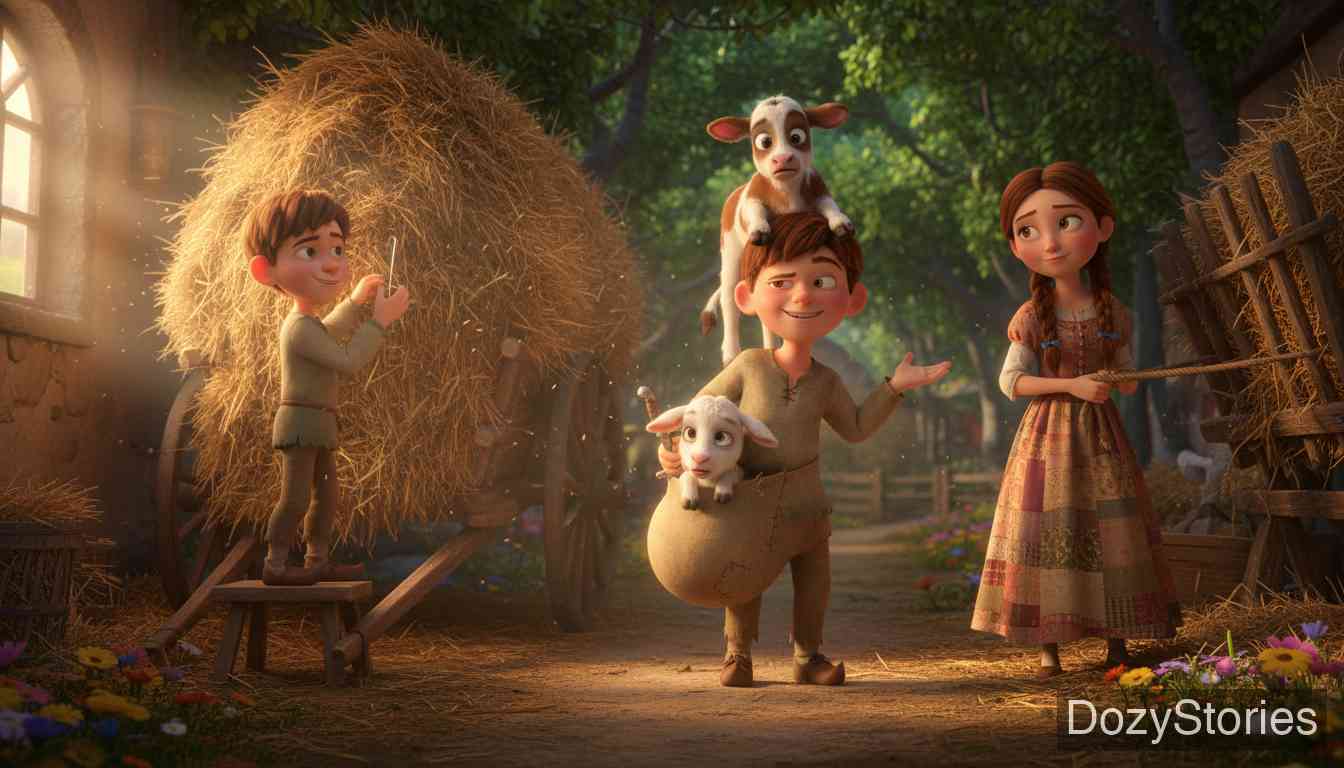
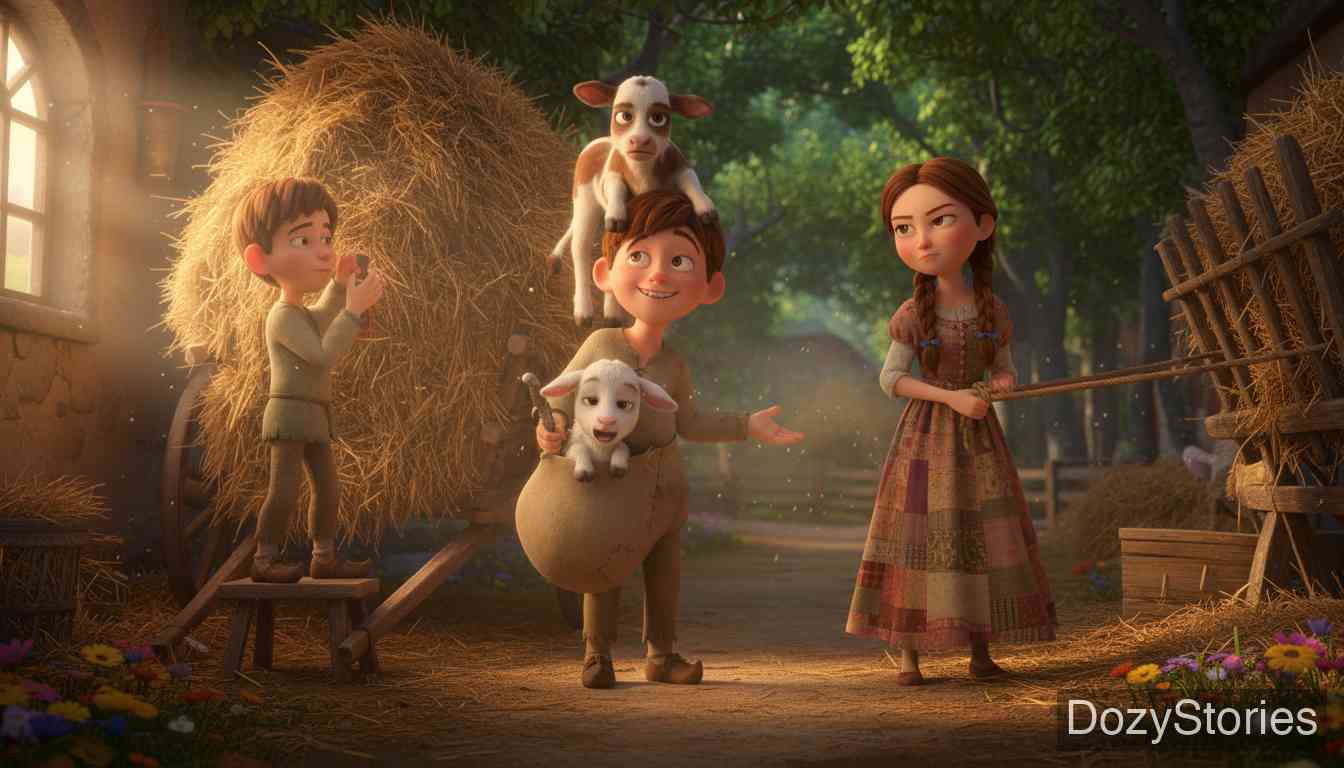
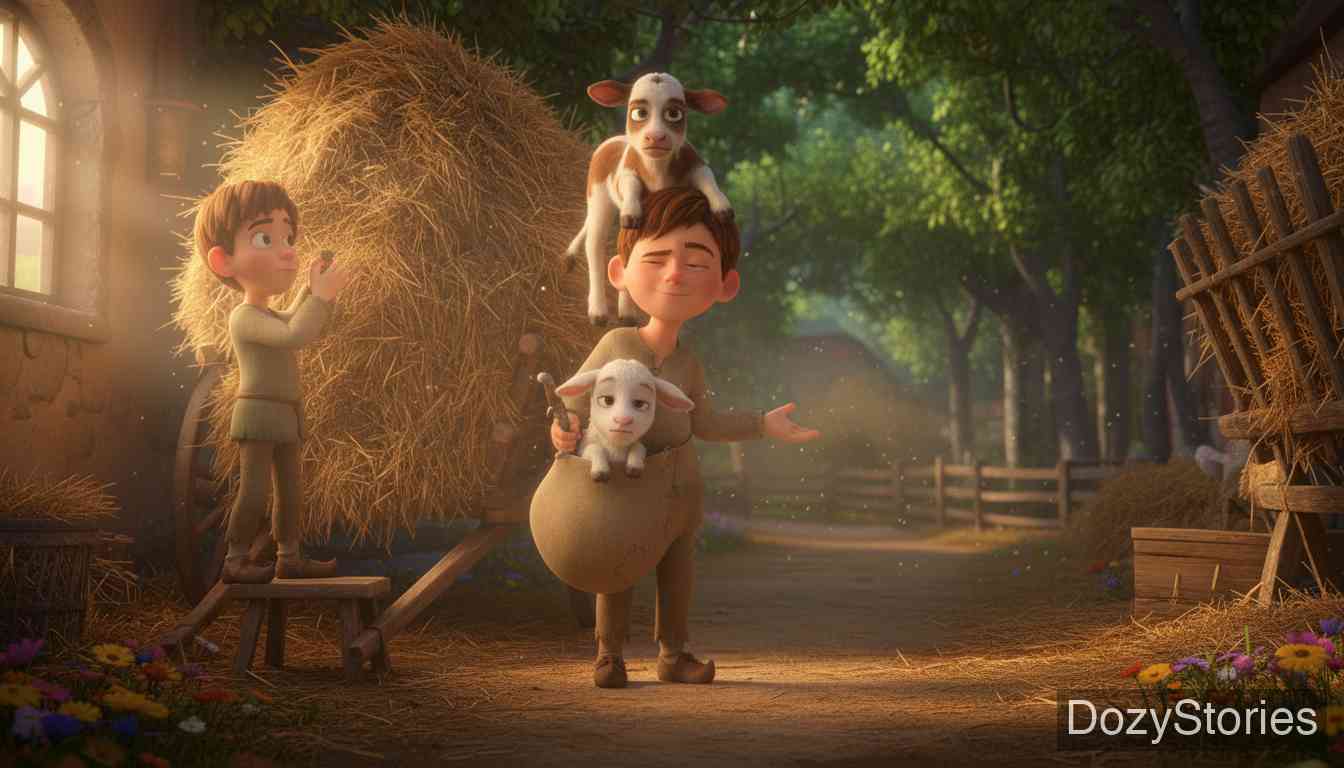
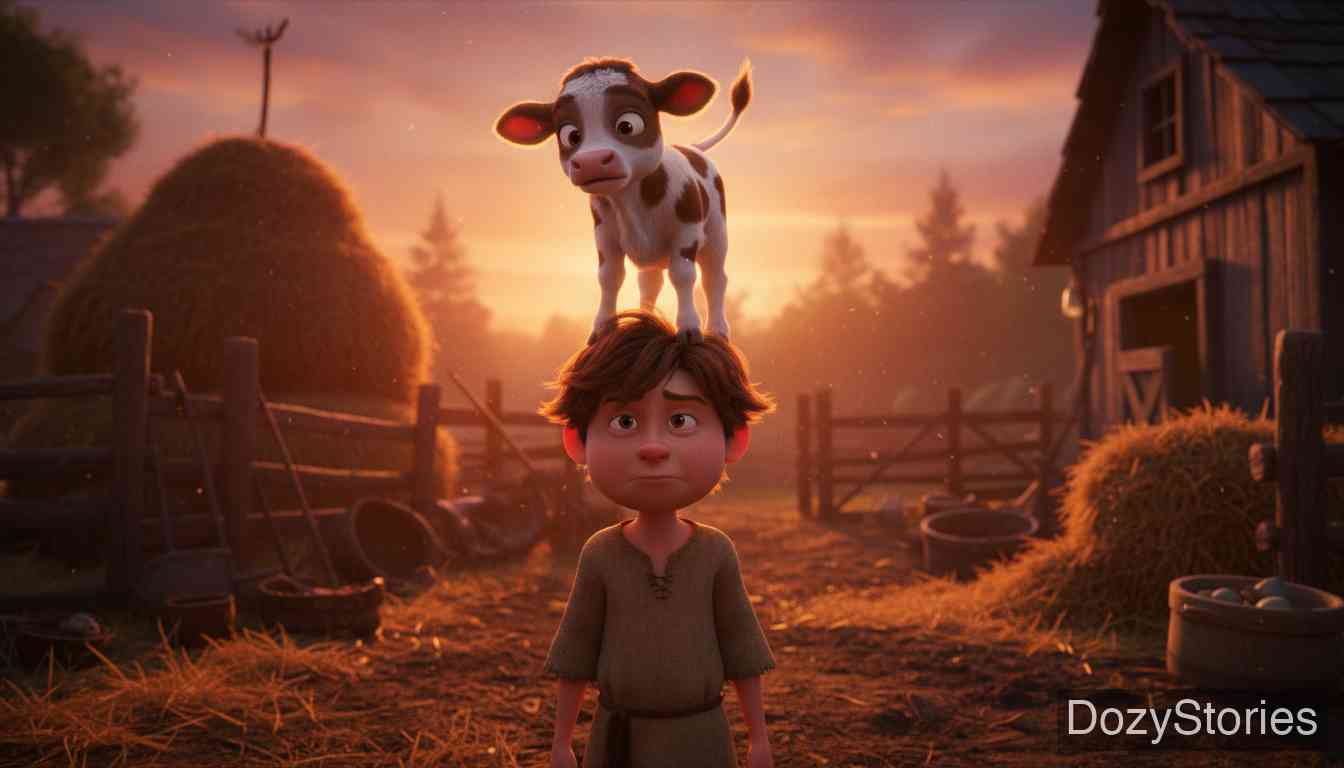
"Whither away, Hans?" - "To Grethel, mother." - "Behave well, Hans." - "I'll behave well. Good-bye, mother." - "Good-bye, Hans." Hans comes to Grethel. "Good day, Grethel." - "Good day, Hans." - "What good thing dost thou bring?" - "I bring nothing, but would have something given." Grethel presents Hans with a calf. "Good-bye, Grethel." - "Good-bye, Hans." Hans takes the calf, puts it on his head, and the calf kicks his face. Good evening, mother." - "Good evening, Hans. Where hast thou been?" - "With Grethel." - "What didst thou take her?" - "I took nothing, but had something given me." - "What did Grethel give thee?" - "A calf." - "Where hast thou the calf, Hans?" - "I set it on my head and it kicked my face." - "That was ill done, Hans, thou shouldst have led the calf, and put it in the stall." - "Never mind, will do better next time."
"Whither away, Hans?" - "To Grethel, mother." - "Behave well, Hans." - "I'll behave well. Good-bye, mother." - "Good-bye, Hans." Hans comes to Grethel. "Good day, Grethel." - "Good day, Hans. What good thing dost thou bring?" - "I bring nothing, but would have something given." Grethel says to Hans, "I will go with thee."
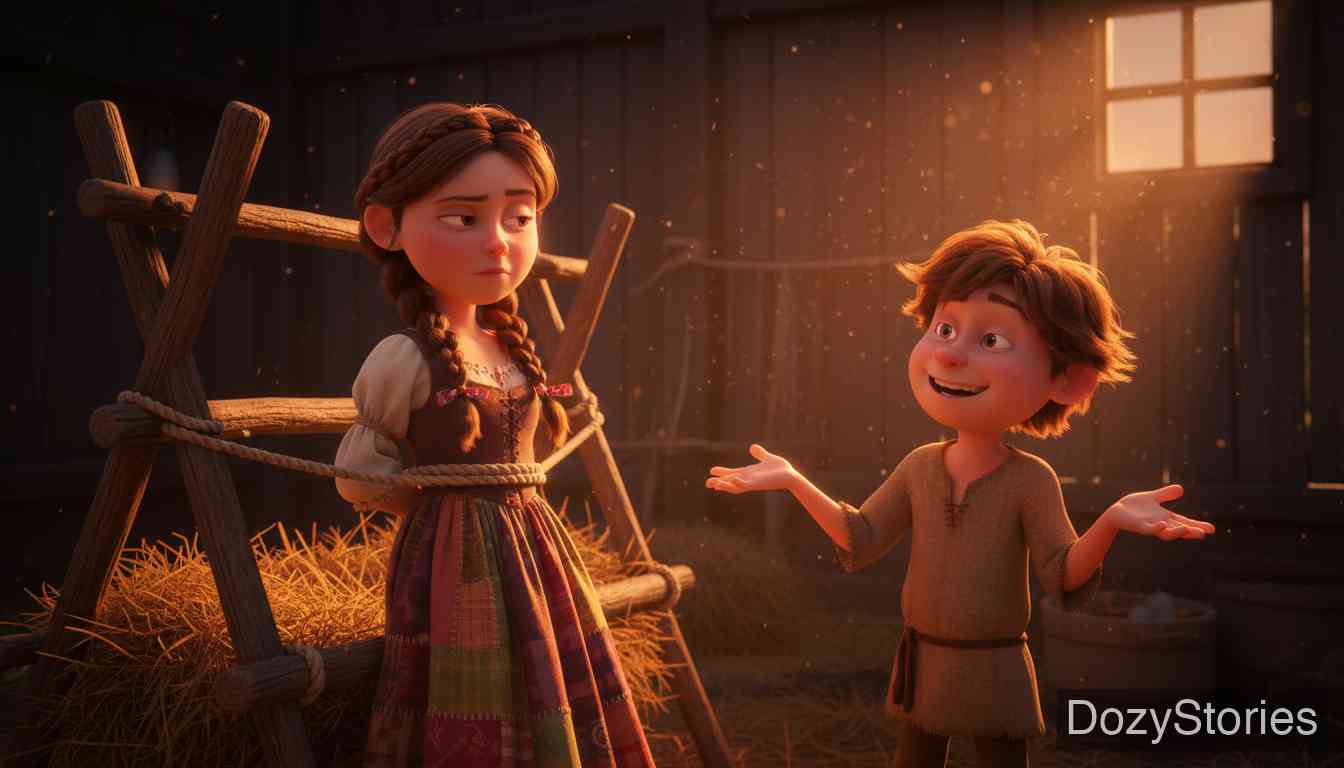
Hans takes Grethel, ties her to a rope, leads her to the rack and binds her fast. Then Hans goes to his mother. "Good evening, mother." - "Good evening, Hans. Where hast thou been?" - "With Grethel." - "What didst thou take her?" - "I took her nothing." - "What did Grethel give thee?" - "She gave me nothing, she came with me." - "Where hast thou left Grethel?" - "I led her by the rope, tied her to the rack, and scattered some grass for her." - "That was ill done, Hans, thou shouldst have cast friendly eyes on her." - "Never mind, will do better."
Hans went into the stable, cut out all the calves', and sheep's eyes, and threw them in Grethel's face. Then Grethel became angry, tore herself loose and ran away, and became the bride of Hans.

Vocabulary from "Hans and Grethel"

12 key words from this story with definitions and original context sentences for language learners.

behaveB1
/bɪˈheɪv/v.

To act in a good or proper way.

表现(乖);举止得体。

"Behave well, Hans." - "Oh, I'll behave well. Good-bye, mother."

"表现得乖一点,汉斯。"——"噢,我会表现得很好的。再见,妈妈。"

needleB1
/ˈniːdl/n.

A thin, pointed metal tool used for sewing.

缝衣针。

Grethel presents Hans with a needle.

格蕾特尔送给汉斯一根缝衣针。

hay-cart(cart)B1
/ˈheɪ kɑːt/n.

A cart used for carrying dried grass (hay).

干草车。

Hans takes the needle, sticks it into a hay-cart, and follows the cart home.

汉斯拿着针,把它插在一辆干草车上,跟着车子回了家。

sleeveB1
/sliːv/n.

The part of a piece of clothing that covers the arm.

衣袖;袖子。

"That was ill done, Hans. Thou shouldst have stuck the needle in thy sleeve."

"那做得可不好,汉斯。你应该把针别在袖子上。"

rackB2
/ræk/n.

A framework, here one for holding hay for animals.

架子;(喂牲口的)草料架。

Hans takes Grethel, ties her to a rope, leads her to the rack and binds her fast.

汉斯带上格蕾特尔,用绳子把她拴住,领到干草架前把她系牢。

suffocated(suffocate)C1
/ˈsʌfəkeɪtɪd/v.

Died because of being unable to breathe.

窒息(而死);憋死。

Hans takes the goat, ties its legs, and puts it in his pocket. When he gets home it is suffocated.

汉斯带走了山羊,捆住它的腿,把它揣进兜里。当他回到家时,山羊已经憋死了。

baconB1
/ˈbeɪkən/n.

Salted or smoked meat from the back or sides of a pig.

培根;咸猪肉。

Grethel presents Hans with a piece of bacon.

格蕾特尔送给汉斯一块培根。

devourC1
/dɪˈvaʊə/v.

To eat something quickly and greedily.

狼吞虎咽地吃;吞食。

The dogs come and devour the bacon.

一群狗跑来把培根吃光了。

calfB1
/kɑːf/n.

A young cow.

小牛;牛犊。

Grethel presents Hans with a calf.

格蕾特尔送给汉斯一只小牛犊。

stallB2
/stɔːl/n.

A space in a barn where one animal is kept.

(畜舍的)圈栏;牛栏。

"Thou shouldst have led the calf, and put it in the stall."

"你应该牵着牛犊,把它关进牛栏里。"

scattered(scatter)B2
/ˈskætəd/v.

Threw or spread things over a wide area.

撒;散布。

"I led her by the rope, tied her to the rack, and scattered some grass for her."

"我用绳子牵着她,把她拴在干草架上,还给她撒了些草。"

brideB1
/braɪd/n.

A woman on her wedding day, or just about to be married.

新娘。

Then Grethel became angry, tore herself loose and ran away, and became the bride of Hans.

格蕾特尔生气了,挣脱绳子跑掉了,并成为了汉斯的新娘。

Reading Together & Learning More

The Moral

Foolish Hans dutifully remembers his mother's words every time — but what he remembers is always 'what he should have done last time,' which he then applies, exactly, to a completely different thing this time: Mother says pin the needle to your sleeve, so next day he sticks a knife in his sleeve (and cuts himself); she says lead the goat with a rope, so he drags the bacon on a rope (and the dogs eat it)... and so he is always half a step behind, blundering every time. Beneath the laughter, the story makes a rather important point: memorising rules by rote is no use; what truly matters is 'understanding the thing in front of you.' Rules are fixed, but situations are alive — copying yesterday's method without thinking is often just the way to ruin today's task.

Educational Value

This is a classic example for meeting the 'numskull tale' (the comic story of a fool who applies good advice in the wrong place), a type found the world over. It's especially good for 'spot-the-mistake' with a child: each time, Hans copies his mother's advice from 'last time' onto 'this time,' but the situation has already changed — can you guess in advance how he'll bungle it next? This game lets a child feel the point that 'each problem must be judged on its own.' It illustrates the same fault as the Chinese sayings 'carving the boat to find the sword' and 'waiting by the stump for a hare': clinging to an old rule and ignoring the change before your eyes. The story's repetitive dialogue also rolls off the tongue, well suited to reading aloud in parts.

Tips for Parents

Amusingly, this story's German title is actually 'Clever Hans' — an ironic joke at the expense of a Hans who 'thinks he followed the advice but got it exactly backwards'; the Chinese title 'Foolish Hans' nicely lays that irony bare. As a whole it's a light, repetitive comedy, well suited to reading in parts with a child (mother's line, then Hans's line). One thing to mention: the ending is a touch absurd and odd — Hans cuts out the cattle's and sheep's eyes and throws them at Grethel — this is the 'ever-more-ridiculous' nonsense sign-off typical of old numskull tales, not to be taken seriously or dwelt on; just pass over it as an exaggerated joke. Afterwards, play a little game with your child: if you were Hans, and Mother said 'you should cast friendly eyes on her,' what would you do?

Talk About It

  1. Hans remembers his mother's words every time, so why does he still bungle it every time? Where exactly does his thinking go wrong?
  2. Mother says 'pin the needle to your sleeve,' and the next day Hans sticks a knife in his sleeve. Can you guess in advance how he'll misuse the advice each time?
  3. Hans's muddle is a lot like the people in 'carving the boat to find the sword' and 'waiting by the stump for a hare.' What fault do they all share?
  4. This story's German title is actually 'Clever Hans.' The author clearly wrote about a fool — so why name it 'Clever'?
  5. If you were Hans, and Mother said 'you should cast friendly eyes on Grethel,' what would you do? Why does Hans misunderstand it yet again?