Gambling Hansel
Introduction
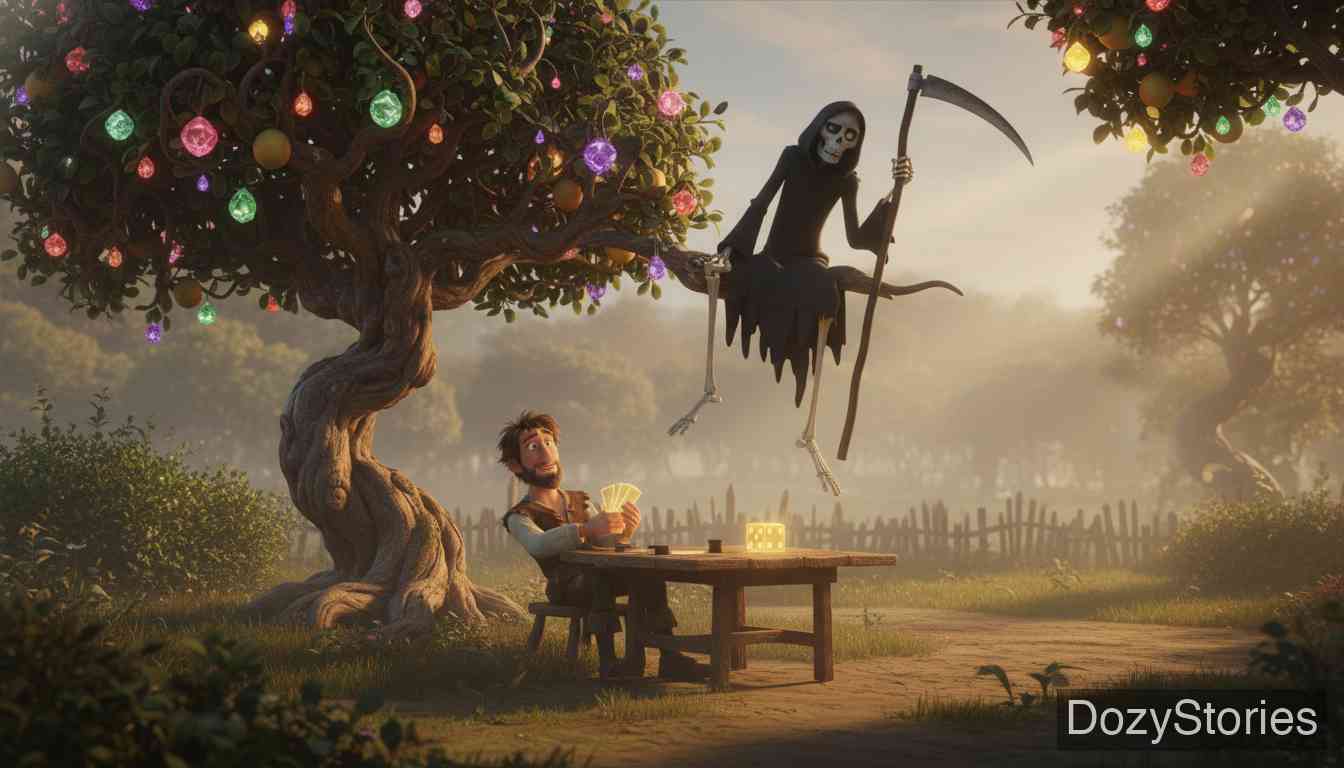
"Gambling Hansel" is a curious tale from the Brothers Grimm (in Low German, "De Spielhansl"), which folklorists place in the family of stories about a sly little nobody outwitting Death and Hell. We have retold it as a fable, not by changing the plot but by changing the voice. A fable speaks plainly: the characters are simple, the turns are quick, and the ending names the lesson. That suits this tale well, because underneath all the laughter it is really a warning about greed. It is the kind of lesson our own folk tales have told for centuries: what you crave can become your cage. Chinese readers will recognize the same spirit in the old saying "the snake that swallows an elephant dies of hunger" — the more it grabs, the more it destroys. There is also a scholarly curiosity here: some researchers believe stories of this type may be among the oldest in the world, passed down for thousands of years, perhaps since the Bronze Age. Yet children do not need to know that to enjoy it. They will laugh at how a gambler tricks Death into a tree and wins the devils' souls, and they will feel the sting of the ending, when a man who could win everything has nowhere to go. As you read together, ask your child why Hansel never asked for a warm home or a peaceful heart. The story never answers that question in words — it answers it with his fate, and it is a question worth carrying long after the book is closed.

Vocabulary from "Gambling Hansel"
12 key words from this story with definitions and original context sentences for language learners.
To risk money on a game of chance.
赌博;赌钱。
Long ago, there lived a man named Hansel who loved to gamble more than anything else in the world.
从前,有个叫汉赛尔的人,最爱赌钱,别的什么都不放在心上。
A place that keeps you safe from weather or danger.
栖身之所;遮风挡雨的地方。
One evening, two travelers came to his door and asked for shelter for the night.
有一天傍晚,两个赶路的客人来敲他的门,想借宿一晚。
To go and bring something back.
去取;去拿来。
So Saint Peter handed Hansel three coins and asked him to fetch some bread from the baker.
圣彼得便拿出三枚钱交给汉赛尔,叫他去面包房买些面包回来。
To act as if something is true when it is not.
假装;装作。
When he came home, he pretended that the money had fallen into the gutter.
回到家里,他撒谎说钱掉进了阴沟里。
The channel at the edge of a road that carries away water.
路边的水沟;阴沟。
When he came home, he pretended that the money had fallen into the gutter.
回到家里,他撒谎说钱掉进了阴沟里。
A room under a house, often used for storing wine.
地窖;酒窖。
But the Lord told him to go down to the cellar and look again.
主却叫他下到地窖里再找找。
To give someone what they ask for.
答应给予;允诺。
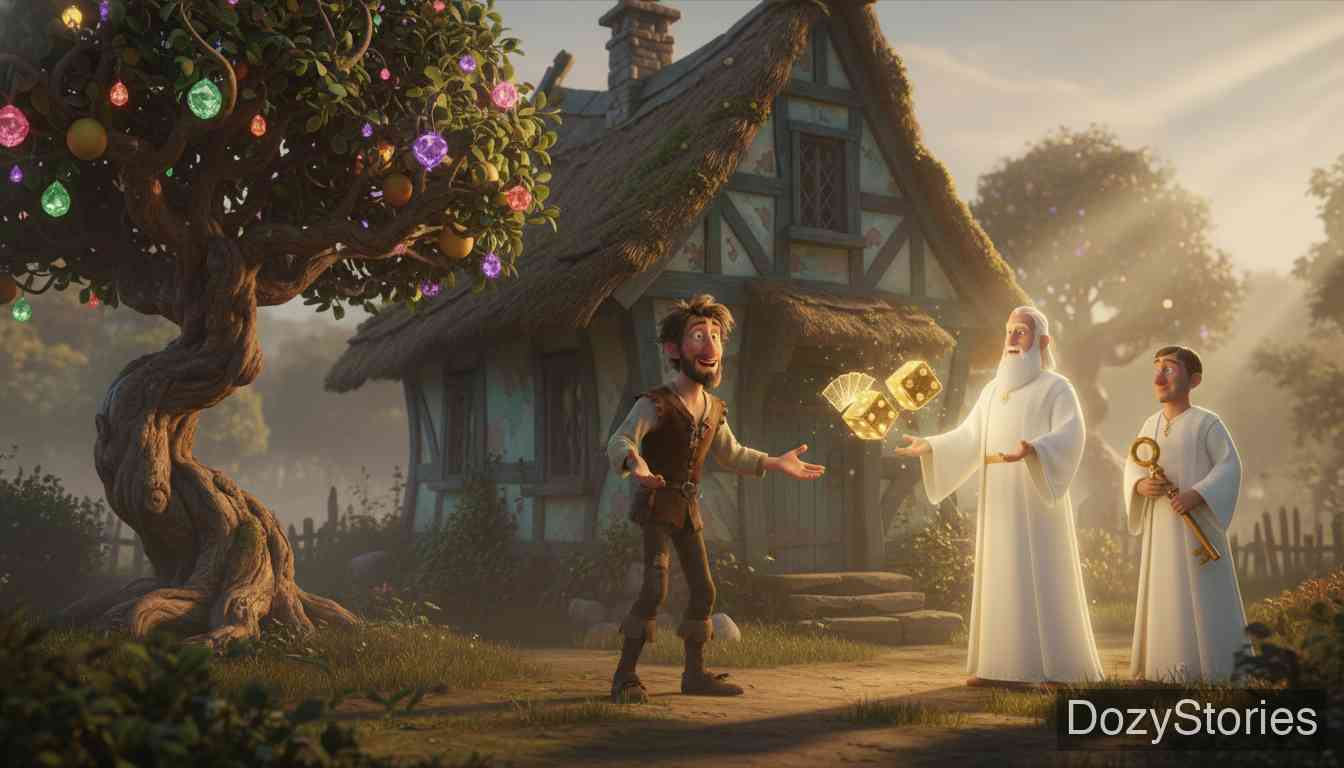
The next morning, the Lord said, "You have been kind to us, so I will grant you three wishes."
第二天清晨,主说:“你款待了我们,我要许你三个愿望。”
Small cubes with spots, thrown in games of chance.
骰子(掷出点数的赌具)。
Second, a pair of dice that always wins.
第二样,一副逢赌必赢的骰子。
Not straight; bent or twisted.
弯曲的;歪歪扭扭的。
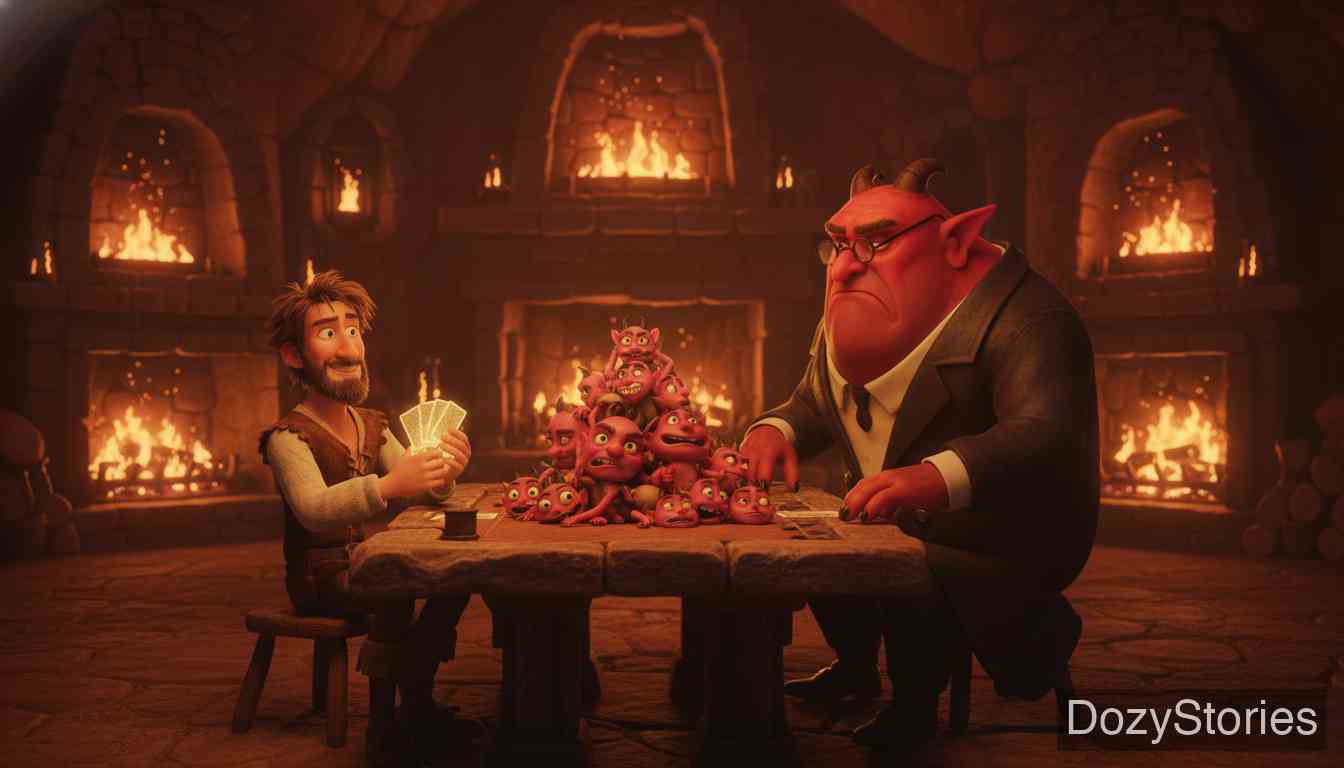
The great hall was almost empty, for only old Lucifer and a few crooked little devils were at home, resting after their wicked work on earth.
只见屋里冷冷清清,只有老路西法和一群歪七扭八的小鬼,它们刚从人间做完坏事回来。
To risk money on the result of a game.
下注;押赌注。
Lucifer had nothing left to wager but his devils, and with his magic cards Hansel won them one by one.
路西法除了一群小鬼再无别的可押,汉赛尔凭那副纸牌,把他们一个个全赢了过来。
To grab something suddenly and firmly.
一把抓住;擒住。
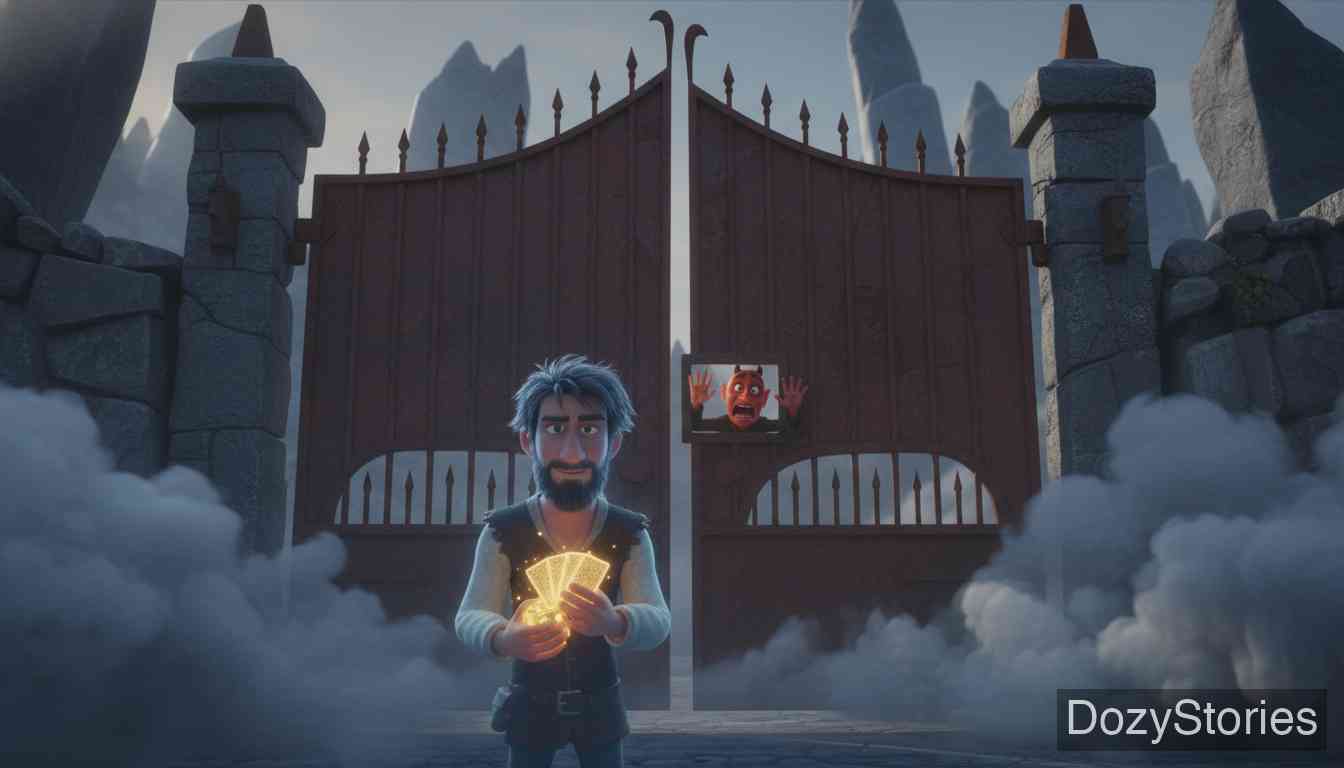
So they seized Hansel and flung him out of the gate, and his soul burst into a thousand pieces.
他们一把抓住汉赛尔,把他扔出大门,他的魂魄摔成万千碎片。
A strong wish to have more than you need.
贪心;贪婪。
Whoever lets greed and gambling rule his heart will lose everything in the end — even a place to call home.
一个人若被赌瘾迷了心窍,纵有通天的运气,到头来也落得无处容身。
Reading Together & Learning More
The Moral
A greedy heart is never satisfied, no matter how much it wins. When gambling rules a person's heart, even the greatest luck only feeds the craving, and in the end he is left with nowhere to belong.
Educational Value
Children can learn from this fable that a desire left unchecked can take control of a person and drag him deeper and deeper. It also opens a gentle talk about self-control, wise choices, and being content with what one has.
Tips for Parents
Before you start, tell your child this is not a story about how to gamble — it is an exaggerated mirror that shows how greed can ruin a life. Pause at the ending and ask: Hansel won half the world, so why was he left with nothing? After reading, you can look together for small everyday habits that grow and grow until they take over.
Talk About It
- God expects Hansel to ask for Heaven, but he only asks for winning cards and dice. What does that choice tell us about what he cares about most?
- Hansel wins half the world and even traps Death in a tree. So why does he end up with no place that will take him in?
- If Hansel had stopped to think before making his wishes, what else could he have asked for to make his life better?
- Death stays stuck in the tree for seven years, and nobody on earth dies. That sounds good at first — but what would the world be like if everyone lived forever?
- The story ends by saying Hansel's shattered soul became the gamblers of today. Why do you think the storyteller made up this "origin" for gamblers?