Frederick and Catherine

Introduction

Alongside princesses and dragons, the Grimms' collection holds a whole class of tales meant purely to make us laugh — the Germans call it a Schwank, and folklorists file these 'stories about foolish folk' between ATU 1380 and 1449. 'Frederick and Catherine' strings several such jokes into one chain: the beer left to run dry in the cellar, the gold bars traded away as 'toy counters' for clay pots, buttering the cart-ruts out of pity, tossing the cheeses down the hill one by one to 'call each other back,' lugging the house door up a tree… Stories that poke fun at being too literal-minded exist all over the world — England has 'The Three Sillies,' Greece its tales of the fools of a whole town. Catherine's charm is that she is always kind and always trying her best; she simply takes every instruction word-for-word — told to 'make the house safe,' she unhinges the door and carries it off. And her ever-repeated 'you should have told me' becomes the funniest refrain of the tale. By the way, the episode of frightening robbers by dropping things on them from a tree at night is a wandering scene that travels from story to story — you have met its cousin in 'The Bremen Town Musicians.'

Font Size
Image Layout
1 / 31
Stopped
There was once on a time a man who was called Frederick and a woman called Catherine, who had married each other and lived together as young married folks.
One day Frederick said, "I will now go and plough, Catherine; when I come back, there must be some roast meat on the table for hunger, and a fresh draught for thirst."
"Just go, Frederick," answered Kate, "just go, I will have all ready for you."
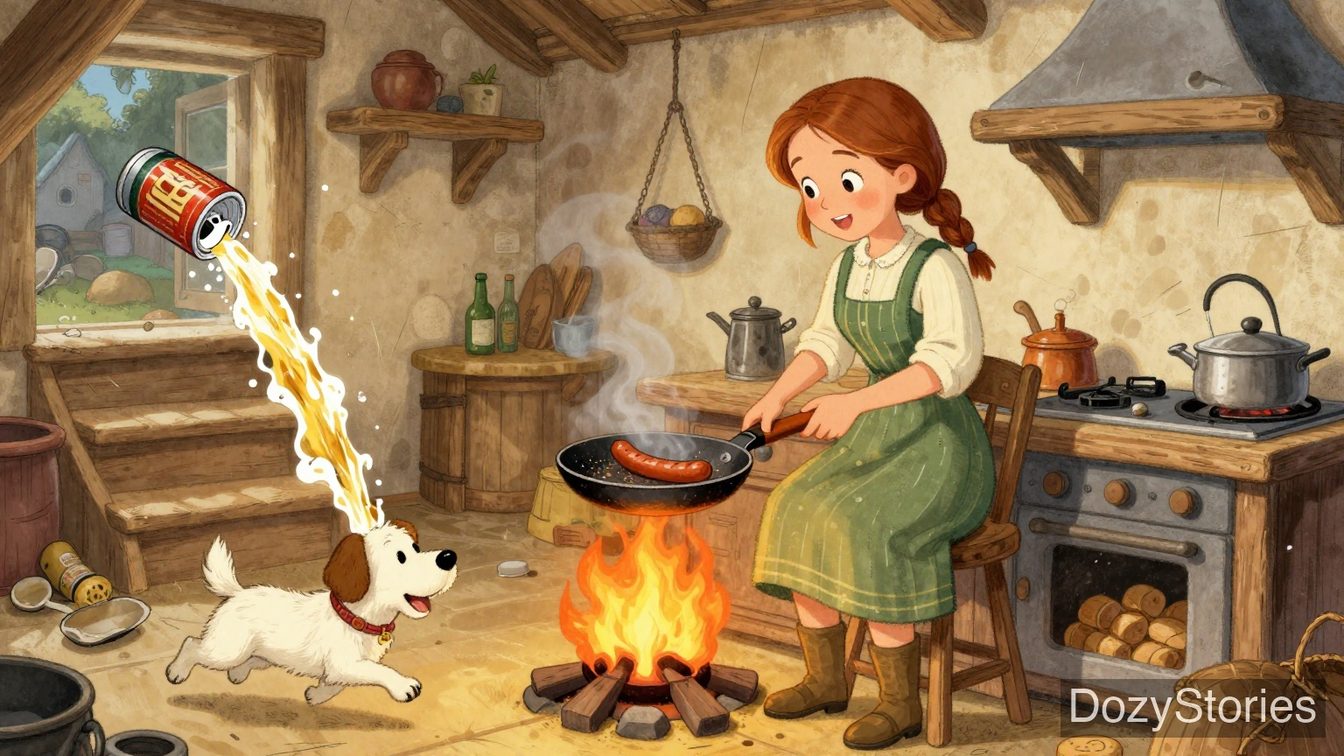
When dinner-time drew near she got a sausage out of the chimney, put it in the frying-pan, put some butter to it, and set it on the fire.
While the sausage was getting done, Catherine thought she could go into the cellar and draw beer. So she set the frying-pan safely on the fire and went down to the cellar.
As the beer ran into the can, Catherine remembered the dog was not fastened up and might get the sausage. She rushed upstairs, but the Spitz had the sausage already and trailed it away.
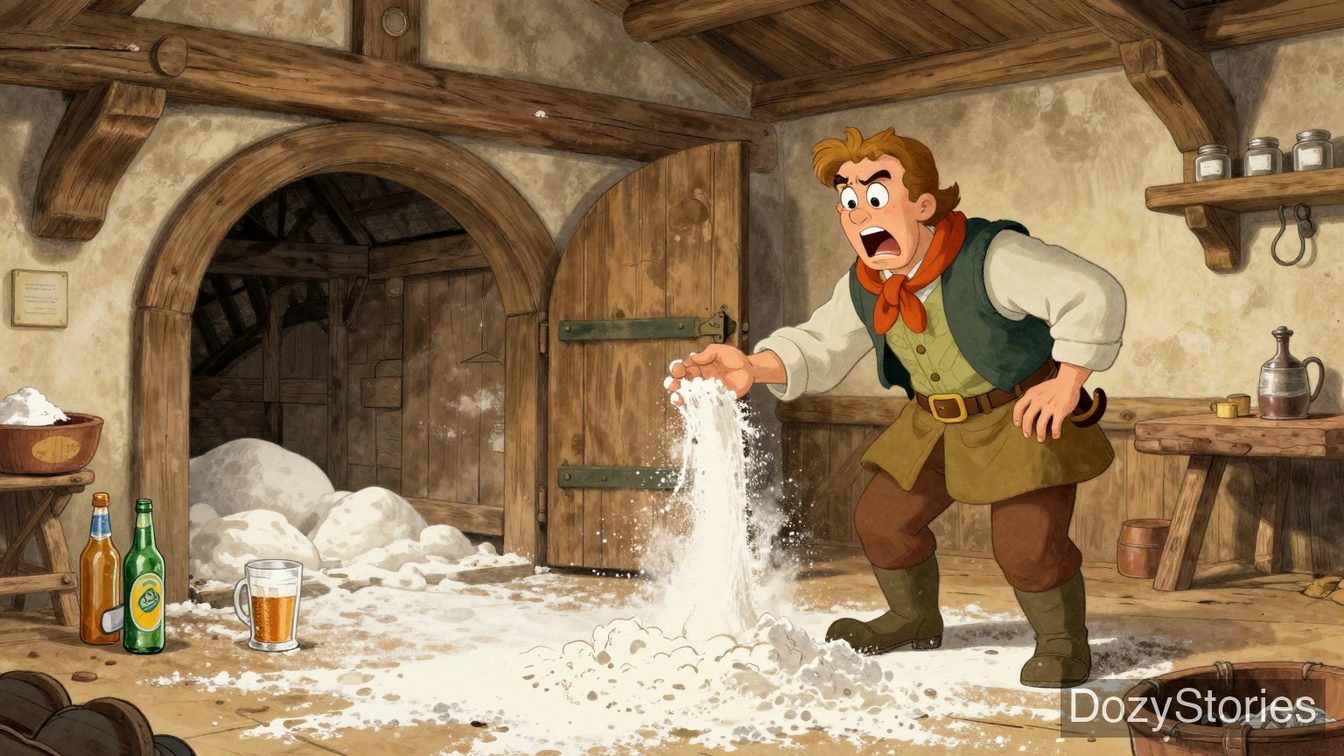
Catherine chased the dog far into the field but gave up. Meanwhile, the beer kept running until the whole cask was empty.
Catherine remembered a sack of wheat flour in the garret, fetched it down, and strewed it over the beer, knocking over the can and spreading meal over the whole cellar.
Frederick came home and scolded her, but Catherine said, "Indeed, Frederick, I did not know that, you should have told me."
Frederick changed his thalers into gold, buried them under the cow's manger, and told Catherine they were counters for playing games that she must not touch.
When Frederick was gone, pedlars came. Catherine traded the "yellow counters" for their earthen pots and bowls.
The rogues dug up the gold and ran away, leaving their pottery. Catherine knocked the bottom out of every pot and hung them on the paling as ornaments.
Frederick returned to find all their wealth gone and scolded her again. Catherine replied, "Indeed, Frederick, I did not know that, you should have forewarned me."
Catherine proposed they run after the thieves to get the gold back. Frederick agreed and told her to take butter and cheese for the journey.
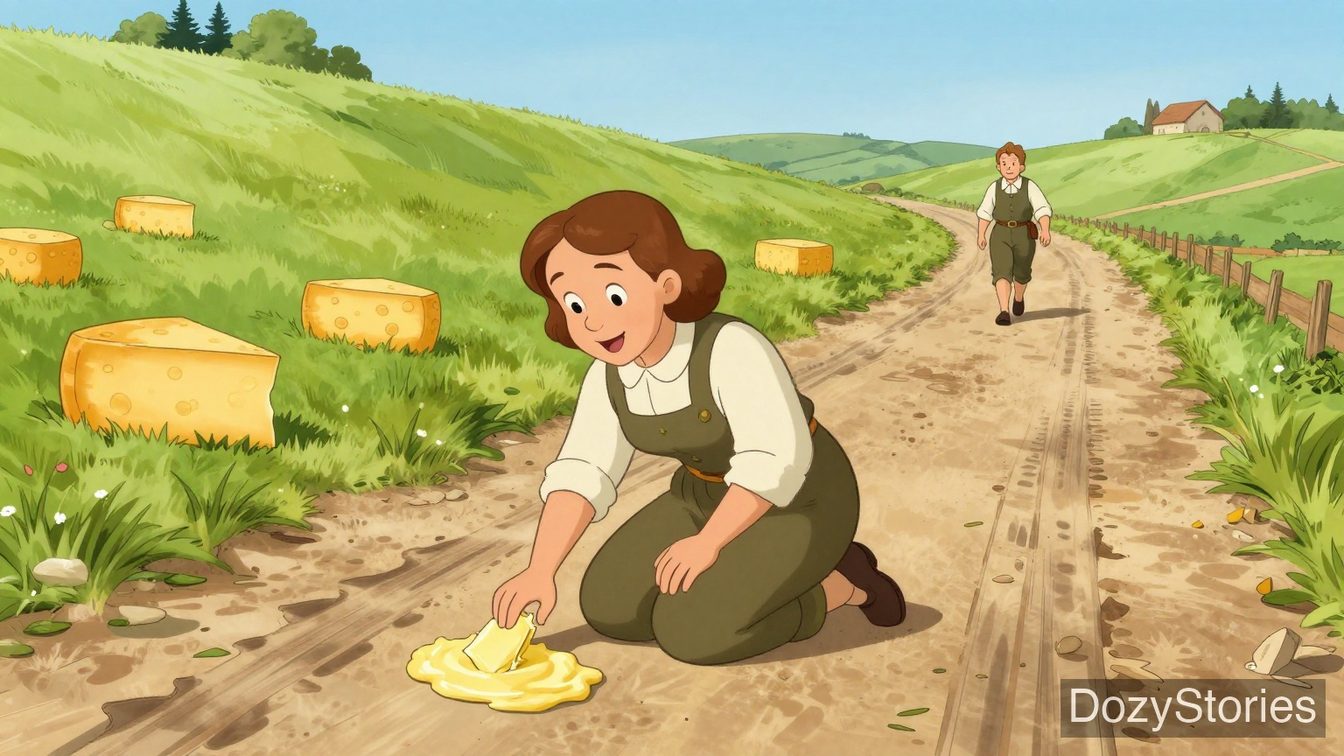
On the road, Catherine saw deep ruts and in her compassion smeared butter on both sides so the wheels wouldn't hurt the earth.
While bending down, a cheese rolled out of her pocket down the hill. Unwilling to go down, she sent another to fetch it back.
When the third and fourth cheeses didn't return either, Catherine angrily threw down the fifth and sixth as well.
By the time she caught up with Frederick, the butter was gone and all cheeses had rolled down the hill, leaving only dry bread.
Frederick scolded her again, and Catherine replied, "Really, Frederick, you should have told me."
Frederick sent Catherine back to make the house safe. She bolted the upper door but unhinged the lower door and carried it on her back.
She believed when the door was secure, the house must be safe. Frederick had no choice but to let her carry it farther.
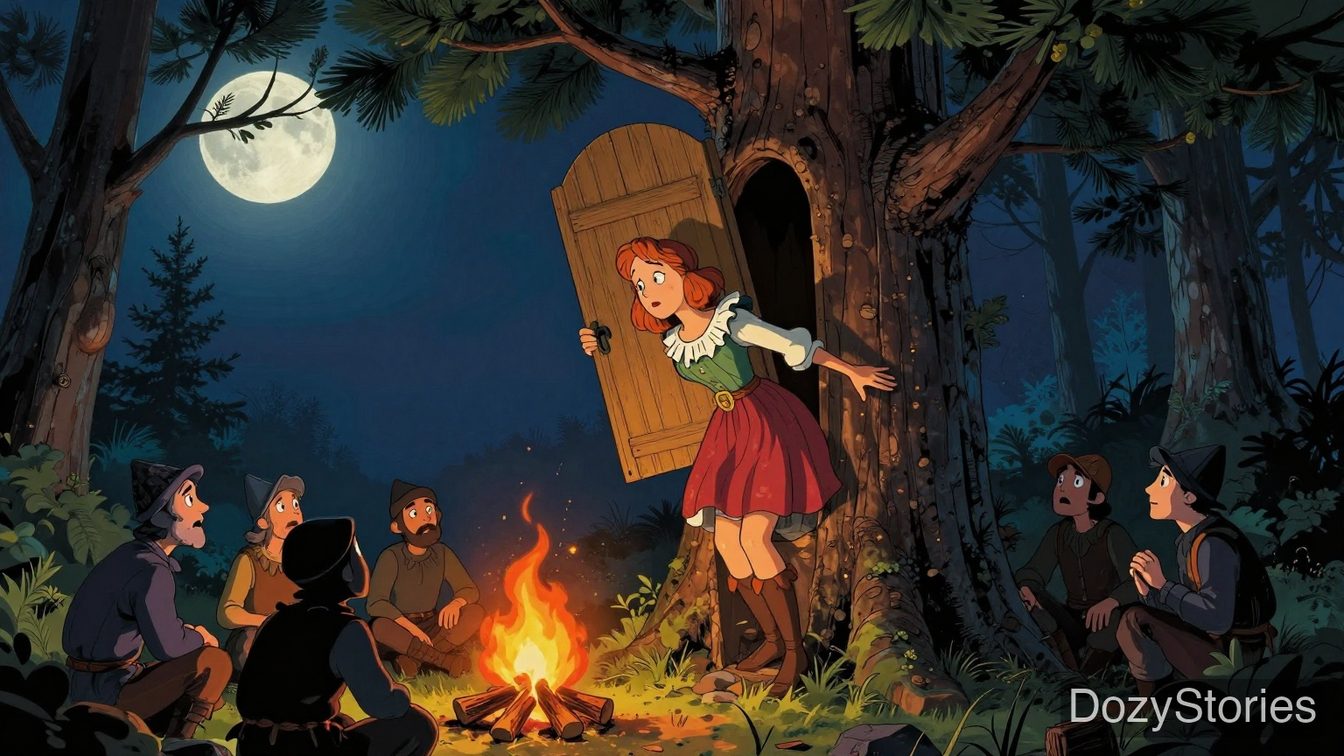
They didn't find the thieves in the forest and climbed a tree to spend the night. The rogues sat under the same tree to share their booty.
Catherine's door pressed heavily, so she threw down dried pears first. The thieves thought leaves were falling.
Then she poured out vinegar, which the thieves thought was dew. Finally she let the door fall with a violent clatter.
The thieves cried "The devil is coming down the tree!" and ran away, leaving everything. They recovered their gold and went home.
Back home, Frederick told Catherine to go cut corn in the field. She decided to eat first, but eating made her sleepy.
Half in a dream, she began to cut and cut all her clothes to pieces—her apron, gown, and shift. She woke half-naked.
Catherine said to herself, "Is it I, or is it not I? Alas, it is not I." At night she ran home and knocked at Frederick's window asking if Catherine was in.
Frederick replied she must be in and asleep. Catherine said, "'Tis well, then I am certainly at home already," and ran away.
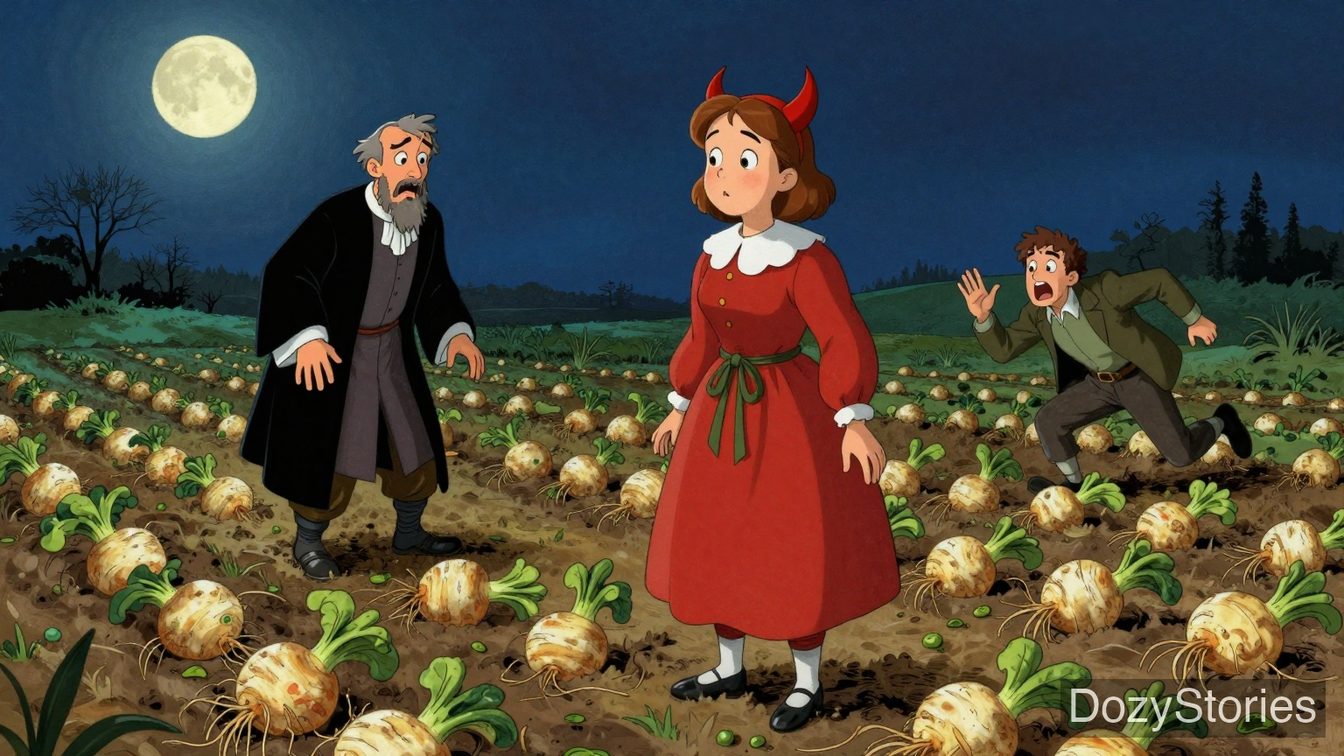
She found vagabonds going to steal and offered to help. They sent her to pull turnips from the pastor's field, but she cried out loudly announcing they were stealing.
A man saw her rooting in the turnips and thought it was the devil. He fetched the pastor, who fled in fright when Catherine stood up to her full height.

Vocabulary from "Frederick and Catherine"

12 key words from this story with definitions and original context sentences for language learners.

ploughB2
/plaʊ/v.

To turn over soil with a farming tool before planting.

犁地;耕田。

I will now go and plough, Catherine; when I come back, there must be some roast meat on the table.

凯瑟琳,我现在要去犁地了;我回来时,桌上要有烤肉。

cellarB1
/ˈselər/n.

An underground room, often used for storing food or drink.

地窖;地下室。

Catherine thought she could go into the cellar and draw beer.

凯瑟琳想去地窖打啤酒。

caskC1
/kɑːsk/n.

A large wooden barrel for holding liquids such as beer or wine.

(装啤酒、酒等的)大木桶。

Meanwhile, the beer kept running until the whole cask was empty.

与此同时,啤酒一直流,直到整桶啤酒都流光了。

garretC1
/ˈɡærət/n.

A small room at the very top of a house, just under the roof.

阁楼;顶楼小屋。

Catherine remembered a sack of wheat flour in the garret, fetched it down.

凯瑟琳想起阁楼上有袋小麦面粉,便把它搬下来。

scolded(scold)B2
/skəʊldɪd/v.

Told someone off angrily for doing something wrong.

责骂;训斥。

Frederick came home and scolded her, but Catherine said, "You should have told me."

弗雷德里克回来后责备了凯瑟琳,但凯瑟琳说:'你应该告诉我的。'

pedlars(pedlar)C1
/ˈpedlərz/n.

Travelling sellers who go from place to place with small goods.

(走街串巷的)小贩;货郎。

When Frederick was gone, pedlars came.

弗雷德里克走后,一些小贩来到村里。

rogues(rogue)C1
/rəʊɡz/n.

Dishonest or mischievous people; rascals.

无赖;骗子;恶棍。

The rogues dug up the gold and ran away, leaving their pottery.

小贩们(无赖们)挖出金条跑了,留下陶器。

ornaments(ornament)B1
/ˈɔːrnəmənts/n.

Objects used for decoration.

装饰品;饰物。

Catherine knocked the bottom out of every pot and hung them on the paling as ornaments.

凯瑟琳把每个锅的底部敲掉,挂在篱笆上当装饰品。

smeared(smear)B2
/smɪəd/v.

Spread a soft or greasy substance messily over a surface.

涂抹;胡乱涂上(油腻或软的东西)。

In her compassion she smeared butter on both sides so the wheels wouldn't hurt the earth.

她心生怜悯,用黄油涂抹车辙两边,希望车轮不会伤害地面。

bolted(bolt)B2
/ˈbəʊltɪd/v.

Fastened a door shut with a sliding metal bar.

闩上;用插销锁住(门)。

She bolted the upper door but unhinged the lower door and carried it on her back.

她只锁了上门,却把下门拆下来背在背上。

bootyC1
/ˈbuːti/n.

Goods taken by thieves or robbers; loot.

赃物;掠夺物;战利品。

The rogues sat under the same tree to share their booty.

小偷们恰好坐在同一棵树下准备分赃。

vinegarB1
/ˈvɪnɪɡər/n.

A sour liquid used in cooking and for flavouring food.

醋。

Then she poured out vinegar, which the thieves thought was dew.

接着她又倒出醋,小偷们以为是露水。

Reading Together & Learning More

The Moral

Thinking about why we are told to do something matters far more than just doing it word-for-word; a clear explanation and one extra question can save a great deal of trouble. Above all, though, this is a story to laugh at — and sometimes a good laugh is the whole point.

Educational Value

Amid easy laughter, it helps children feel the difference between grasping the intention behind words and clinging to their literal sense, and shows why communication must go both ways; it is also great material for retelling, predicting the next absurd turn, and enjoying humour.

Tips for Parents

This is pure numskull comedy — no need to hunt solemnly for a lesson; just laugh along with your child. Read and guess together: how will Catherine bungle the next good deed? Is there any truth to her catchphrase, 'you should have told me'? If your child enjoys this kind of silly tale, follow it up with the equally one-track-minded 'Clever Else' (clever-else).

Talk About It

  1. Every time Catherine causes trouble she says, 'you should have told me.' Is she completely wrong? Could Frederick have explained his instructions more clearly?
  2. Told to 'make the house safe,' she unhinges the door and carries it away. Can you find other examples of her taking words too literally?
  3. She throws the cheeses down the hill one by one, saying she is sending them to 'call the others back.' What makes that way of thinking so funny?
  4. Catherine is forever bungling things, but is she a bad person? How would you treat someone who is kind-hearted yet keeps getting things wrong?
  5. If you were Frederick, how would you explain a task to Catherine before leaving, so that nothing went wrong?