Faithful John

Introduction

Retelling a Brothers Grimm tale as a Chinese-style fable means giving an old European story the plain, unhurried voice of a village storyteller: short sentences, clear characters, and a lesson that lands at the end like a proverb. Faithful John is a perfect guest for this style, because at its heart it is not a story about magic but a fable about faithfulness. That word carries deep roots in Chinese tradition too. The minister Cheng Ying gave up his own son to save the orphan of the Zhao family, and the old saying runs, "A man will die for a friend who truly understands him." In this tale, John understands the language of birds. Three ravens foretell three disasters, and John knows that revealing the cure will turn him to stone. He saves his master anyway. That is the whole point, said in one plain line: "I shall save my master, though it be the ruin of me." The story keeps its European setting — the castle, the ship, the palace of the Golden Princess — but the telling grows shorter, warmer, and more direct, as a fable should be. Two things are worth watching as you read. First, notice how each disaster arrives exactly as the ravens said: the story keeps its promise, and so does John. Second, watch the young king. He cannot understand John's strange deeds, yet he defends him again and again. That small thread of trust is what makes the happy ending possible at all. A note for parents: the tale includes a man turned to stone and children given up in sacrifice, though all is restored in the end. It suits older children, and it is best to keep the talk on loyalty and gratitude rather than the dark details. Before reading, ask your child: why would a man do good deeds that make everyone think he is wicked? The whole story is an answer to that question.
Font Size
1 / 16
Stopped
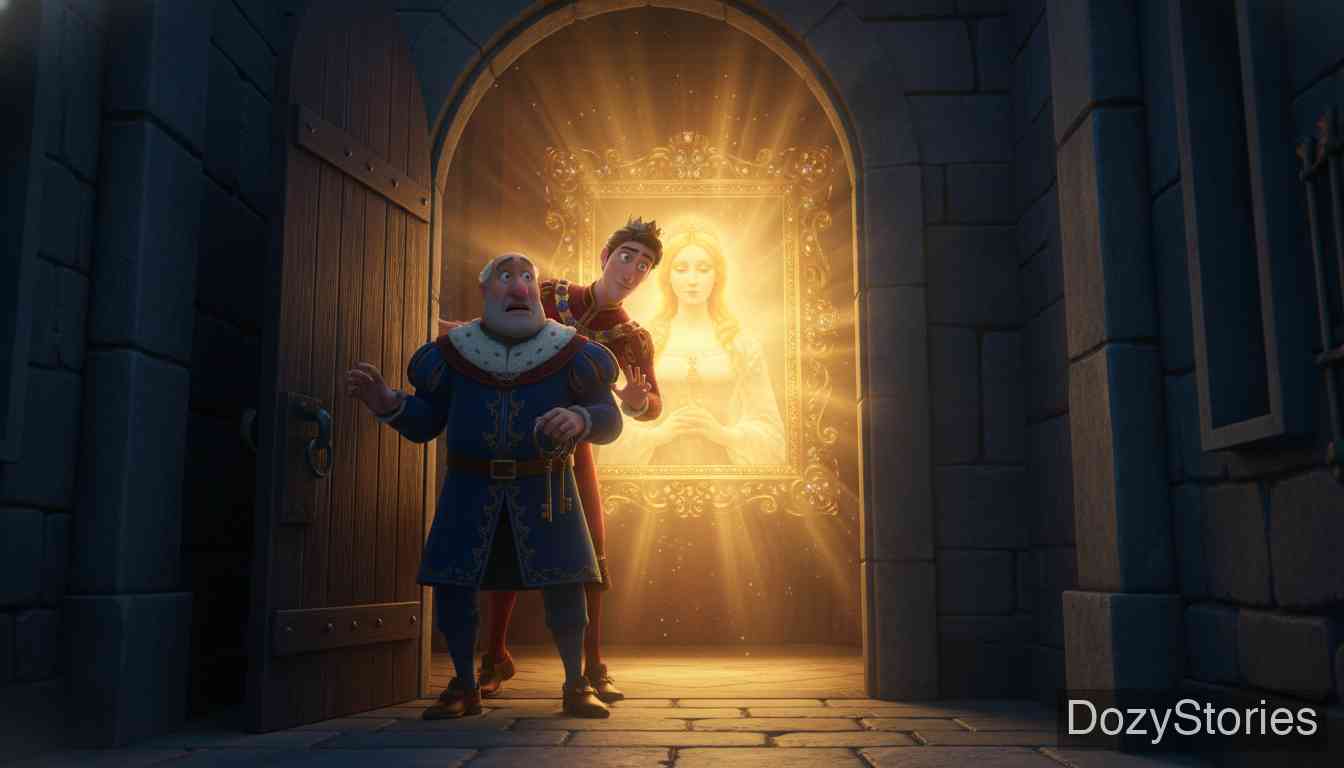
Faithful John - A dying king entrusts his son to faithful John. Curious to a fault, the young king forces open the forbidden door, sees the portrait of the Golden Princess, and falls in love at first sight. - Scene Illustration 1
A dying king entrusts his son to faithful John. Curious to a fault, the young king forces open the forbidden door, sees the portrait of the Golden Princess, and falls in love at first sight.
Long ago, an old king grew weak with illness and knew that his end was near. One day he called his most faithful servant, John, to his bedside. "John," he said, "I have seen everything in this life and enjoyed everything too. My only worry is my young son. He is still young and does not yet know how to steer himself. If no one is there to guide him, he will surely come to harm. Promise me you will teach him and guard him like a father. Otherwise I cannot close my eyes in peace." John knelt by the bed. "I served you truly while you lived," he said, "and I will guard your son with my very life." The old king felt a little calmer. "When I am gone," he said, "show him every room in the castle, and let all the gold and treasures be his. But never open the last room at the end of the long hall. The picture of the Princess of the Golden Dwelling hangs there. If he sees her face, he will love her too deeply, and trouble will follow him all his days. You must keep him from that room." John gave his word. The old king nodded and closed his eyes in peace.
After the old king was buried, John spoke to the young king of the promise he had made at the deathbed. "From this day on, your cause is my cause," he said. "I will follow you through water and fire." Then he led the young king up and down the whole castle, showing him every hall and every treasure. But he always walked past the door at the end of the long hall. The young king was full of curiosity and soon noticed. "John," he asked, "why do you never open that room for me?" John warned him. "What is inside would only bring you harm. It is better not to look." But the young king would not listen. "I have seen the whole castle," he said. "How can I rest while one room stays hidden from me? I will not move from this spot until the door is open." John saw that he could not hold him back. With a long sigh, he took the great bunch of keys and found the right one with shaking hands.
The door swung open. John stepped in first, meaning to hide the picture with his body. But the young king rose on tiptoe and looked over John's shoulder. The lady in the picture was very beautiful, shining with gold and precious light, as if she stood alive inside the frame. One look, and the young king fell to the floor in a faint. John lifted him at once, carried him back to his bed, and brought him around with wine. The king opened his eyes, and his first words were, "Who is the lady in that picture?" "The Princess of the Golden Dwelling," said John. The king gave a long sigh. "I will marry her or die," he said. "John, you are the one I trust most in this world. This time, you must help me."
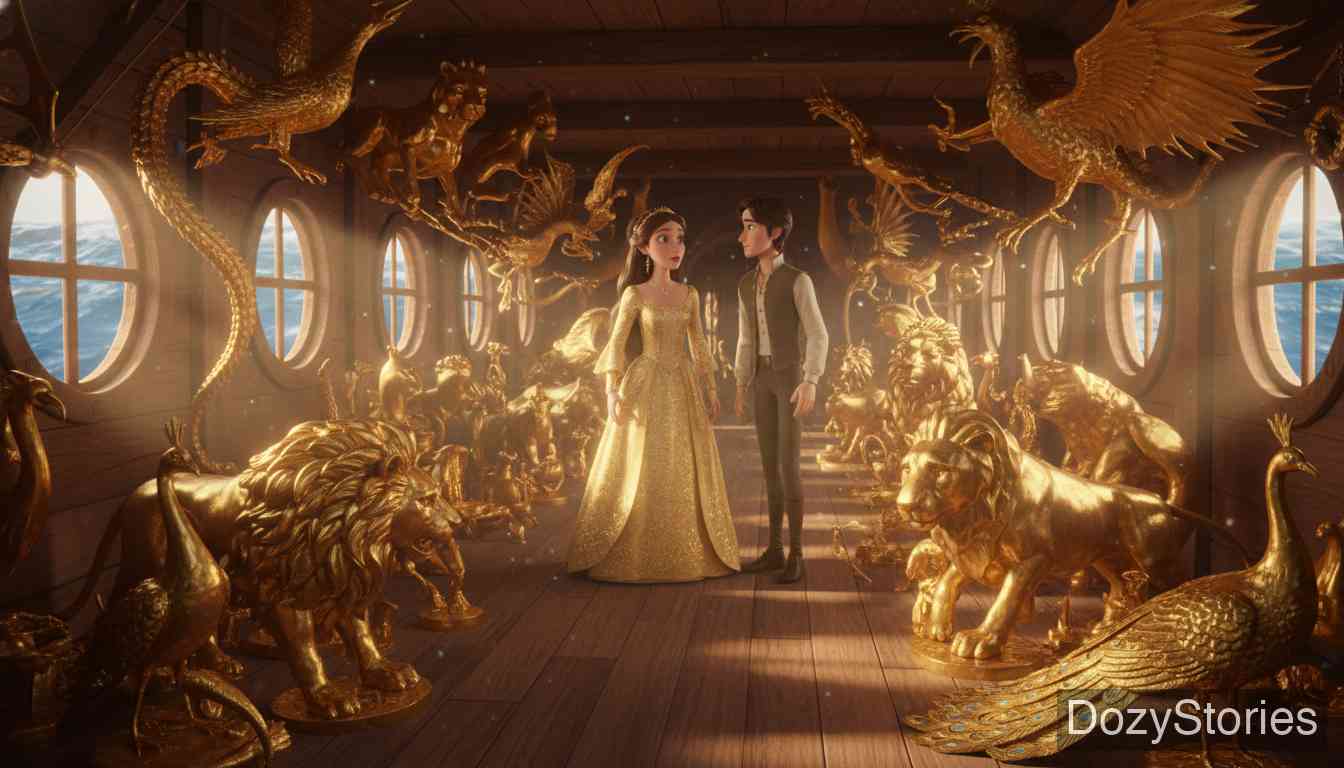
Faithful John - John plans a golden trick: five tons of gold become treasures, master and servant sail across the sea as merchants, and the princess is lured aboard while the ship sails away. - Scene Illustration 2
John plans a golden trick: five tons of gold become treasures, master and servant sail across the sea as merchants, and the princess is lured aboard while the ship sails away.
John turned the matter over in his mind for three days and three nights. At last a plan came to him. "I have asked around," he told the king. "In the palace of the Golden Princess, even the tables, the cups, and the bowls are made of gold. You have five tons of gold in your treasury. Why not let the finest craftsmen of the kingdom shape it into fine vessels, little birds, beasts, and strange creatures — just the things she would love? We will dress as merchants and carry these treasures across the sea to try our luck." The king agreed at once and ordered the goldsmiths to work day and night. They dared not be slow, and soon the wares stood ready, shining with beauty, the birds and beasts so lifelike they seemed to breathe. When all was loaded on a ship, John dressed as a merchant, and the king put on plain clothes so that no one could know him. They raised the sails, crossed the sea with a fair wind, and came to the city where the Golden Princess lived.
The ship stopped outside the city. John told the king to stay aboard. "Lay out the golden vessels," he said, "and make the ship bright and splendid. Wait for me to bring the princess here." Then he filled his apron with gold, walked into the city, and went straight to the royal palace. At the well in the courtyard, a pretty waiting-maid was drawing water with two golden buckets. "Who are you?" she asked the stranger. John opened his apron and smiled. "A merchant passing through," he said, "with some rare goods." The maid looked down, and her eyes grew wide. "Oh, what lovely gold things!" she cried. "The princess will be delighted. She will buy everything you have." She took his hand and led him up the stairs. The princess looked at the wares one by one and loved them more and more. "They are so finely made," she said, "that I will buy them all." But John shook his head. "I am only my master's servant," he said. "What I have here is nothing beside what he keeps on the ship. Those are treasures the world has never seen. Spread out, they would fill the whole palace." The princess's curiosity flared up like fire. "Take me to the ship," she said. "I want to see your master's treasures with my own eyes."
John was glad at heart, and he led the princess aboard with great respect. In the cabin the king waited for her, and when he saw her with his own eyes, he knew she was even lovelier than her picture. His heart beat fast. He showed her the golden vessels and the birds and beasts one by one, while John stayed at the front of the ship and quietly told the pilot, "Raise every sail and set off!" The princess was so lost in the treasures that she did not notice the ship moving. Hours passed. When she had seen the last piece, she thanked the merchant and turned to go home. But all around her was open sea, and the land had fallen far behind. The princess was shocked and angry. "I have been tricked!" she cried. "You have carried me off to the sea. I would rather die than bear this shame!" The king took her hand and said gently, "I am no merchant. I am a king, and my birth is no lower than yours. I loved you at first sight when I saw your picture, and that is why I used this trick. If you will come home with me, I will treat you with the honor due to a queen." The princess looked into his honest eyes. Her anger slowly faded, and with a shy nod she agreed.
Faithful John - On the voyage home, three ravens foretell three deadly dangers: the chestnut horse, the poisoned garment, and the swooning queen. The cure costs the teller his life, yet John resolves to save his master. - Scene Illustration 3
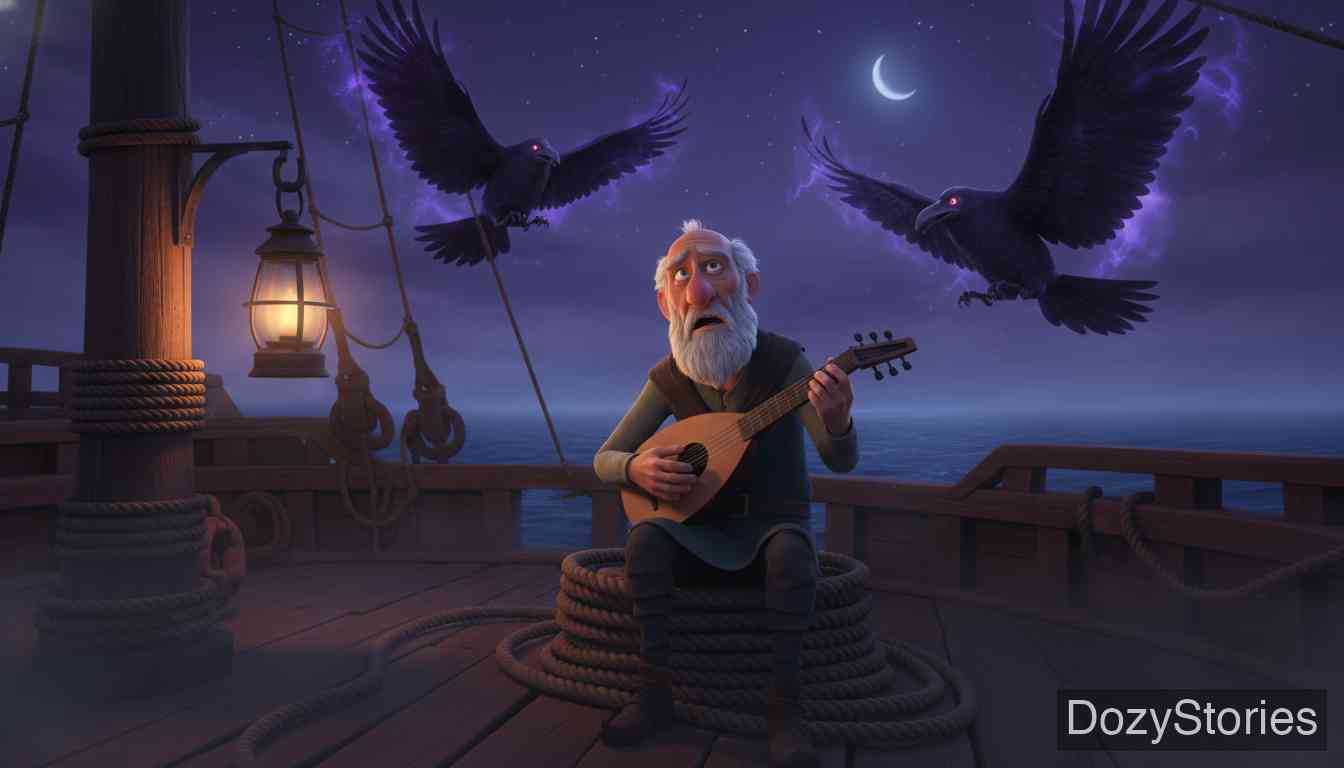
On the voyage home, three ravens foretell three deadly dangers: the chestnut horse, the poisoned garment, and the swooning queen. The cure costs the teller his life, yet John resolves to save his master.
The ship pushed on through the deep sea. One day John sat at the front, playing his flute to pass the time. Three ravens flew toward him across the sky. He stopped playing and listened closely, for he understood the language of birds. "Look," said the first raven, "there he goes, carrying the Golden Princess home." "So what?" said the second. "She is not his yet." "She will be," said the third. "She is sitting beside him this very moment." The first raven spoke again. "And what good will that do him? When they reach the shore, a chestnut horse will run up to meet them. The prince will want to ride it. The horse will carry him up into the sky, and he will never see the princess again." "Is there no cure?" asked the second. "There is one," said the first. "If someone else jumps on the horse first, draws the pistol from the holster, and shoots it dead, the prince is saved. But whoever dares to tell this secret will turn to stone from the toes to the knees."
The second raven went on. "That is not the worst of it. There is a second danger. When the two reach the castle, a golden wedding garment will lie on a plate. It will look rich, as if woven of gold and silver thread. But it is really made of sulphur and pitch. Whoever puts it on will burn to ashes, bone and all." "Can that be cured too?" asked the third. "Yes," said the second. "Let someone put on gloves, seize the garment, and throw it into the fire. Then the prince is saved. But whoever tells this secret will turn to stone in half his body, from the knees to the heart." The third raven took up the tale. "What you say is true, but there is a third danger. After the wedding, the dancing will begin. The queen will be dancing when her face turns white and she falls to the ground as if dead. Unless someone lifts her up, draws three drops of blood from her right side, and spits them out, she cannot live. But let anyone who knows this secret speak of it, and he will turn to stone from the top of his head to the tips of his hair." When the ravens had said all this to one another, they flapped their wings and flew away.
John heard every word and kept them all in his heart. A heavy stone seemed to press on his chest. If he kept the secret, his master would meet three great disasters. If he told it, he would lose his life at once. He thought all through the night. When morning came, he said to himself, "My life belongs to my master. If I can save him, I will gladly turn to stone."
Faithful John - John breaks the three dangers one by one, but the king, seeing only strange deeds, condemns him. At the gallows John tells the truth — and turns to stone. - Scene Illustration 4
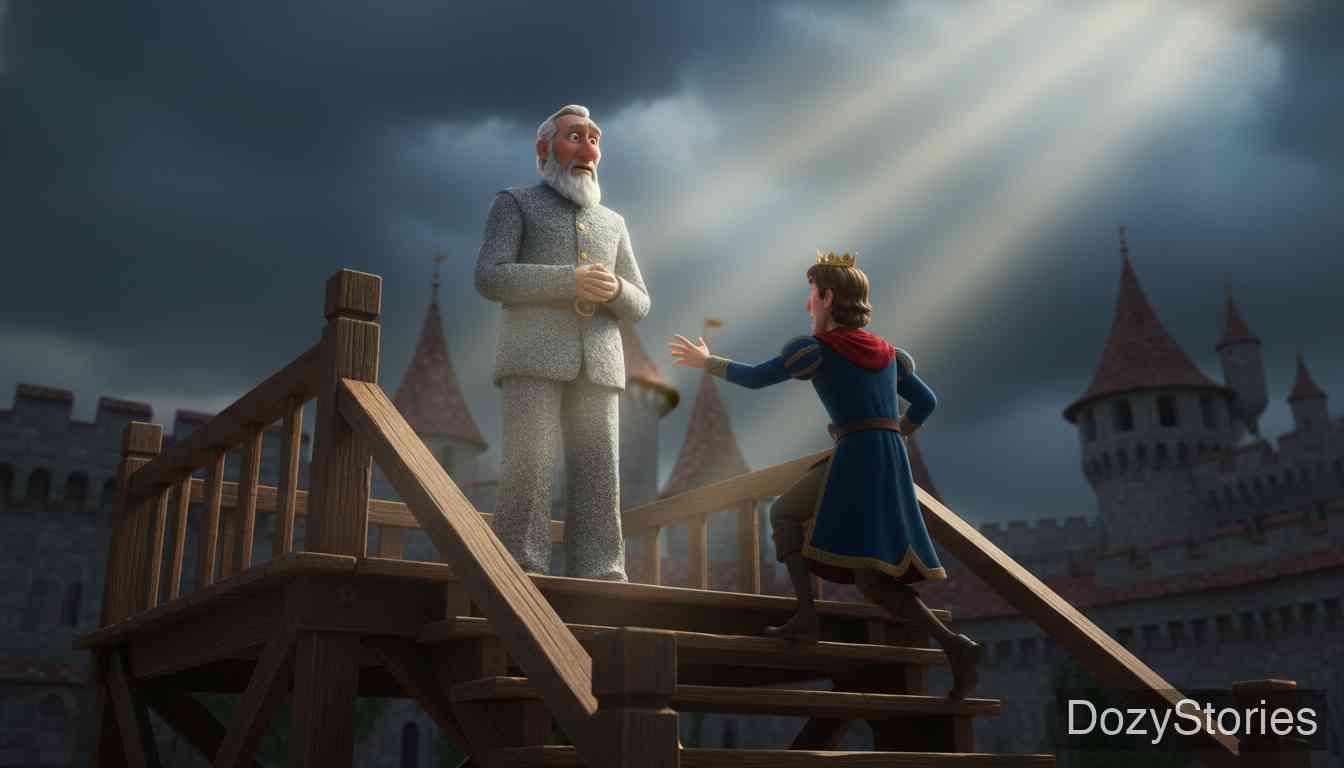
John breaks the three dangers one by one, but the king, seeing only strange deeds, condemns him. At the gallows John tells the truth — and turns to stone.
The ship reached the shore, and sure enough, a fine chestnut horse came neighing up to meet them. "What a fine horse!" said the king gladly. "It shall carry me home." He raised his foot to mount. But John jumped on the horse first, drew the pistol from the holster, and shot it dead with a bang. The servants stared, open-mouthed, and grumbled loudly. "What a waste of a fine horse!" they cried. "Where is the justice in that?" But the king said in a firm voice, "Silence. John is my most faithful servant. He must have his reasons." They entered the palace. In the hall, a golden wedding garment lay on a plate, shining with light. The king reached out for it. John pushed him aside with his shoulder, put on thick gloves, seized the garment, and threw it into the fire. He watched it burn to ashes. The servants were in an uproar again. "The king's own wedding garment, and he dares to burn it! Has he lost his mind?" But the king said again, "Let him be. He is my trusted John."
After the wedding, the dancing began. The queen was dancing happily when her face suddenly turned white, and she fell to the ground as if dead. The guests cried out in alarm. John rushed forward, carried the queen into a side room, laid her down gently, knelt, and drew three drops of blood from her right side. He spat them on the ground. The queen drew a long breath, color came back to her cheeks, and she opened her eyes. But the king had seen everything, and he did not understand why John had done such a thing to his own queen. Shocked and angry, he shouted, "Throw this wicked servant into the dungeon!" The next morning, John was condemned and led out to the gallows.
Before the execution, John stood on the high platform of the gallows and begged, "Every man who must die is allowed one last word. May I claim that one word?" The king granted it. John said, "I am innocent. I have always been true to you, with all my heart." Then he told the whole story of how he had heard the ravens speak out at sea: the chestnut horse, the golden garment, and the queen's faint — three great dangers, and he had broken them one by one, at the cost of his own life. The king's heart was torn. "My faithful John!" he cried in a broken voice. "Pardon! Pardon! Set him free!" But even as the words left his mouth, John stood still and stiff, his eyes empty. He had turned to stone, standing there on the gallows.
Faithful John - The king mourns before the stone. Years later it speaks: only the blood of his twin sons can restore John. The king gives up his dearest; John returns, restores the boys, and the family is whole again. - Scene Illustration 5
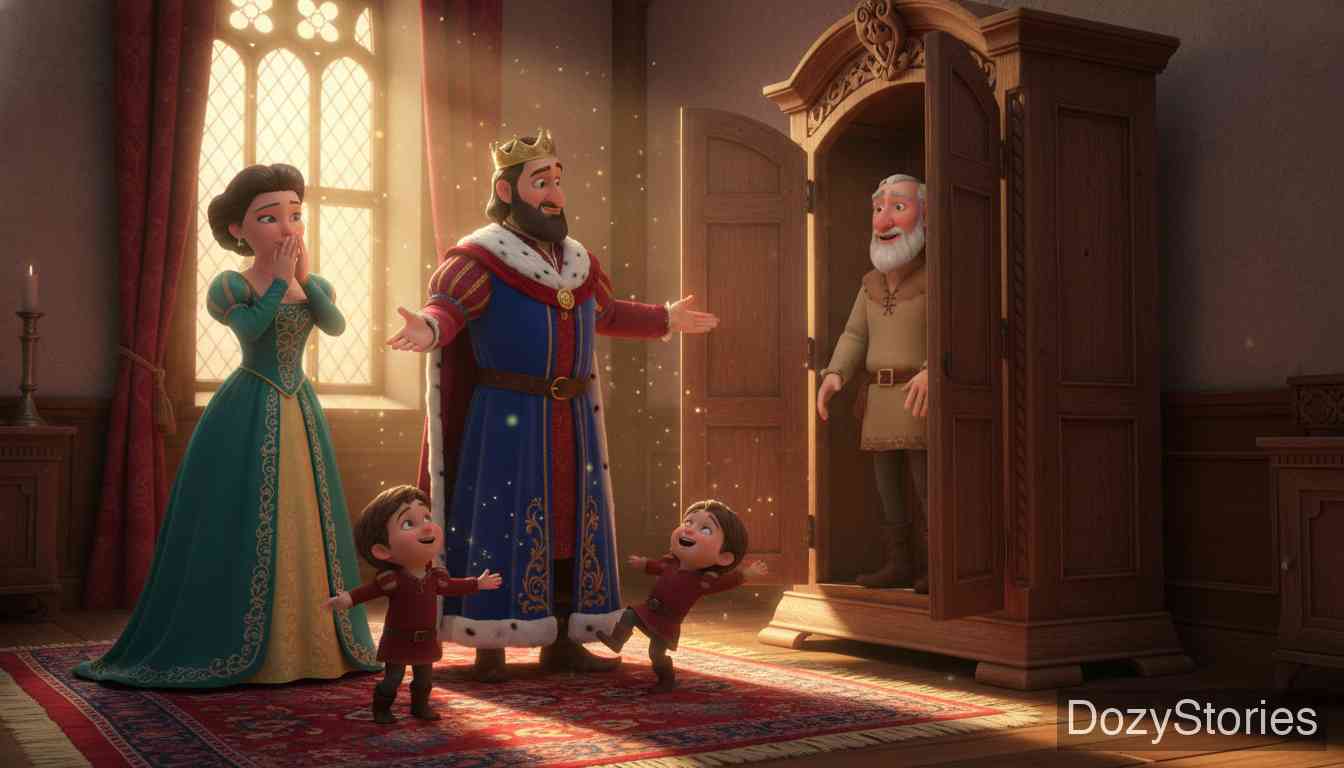
The king mourns before the stone. Years later it speaks: only the blood of his twin sons can restore John. The king gives up his dearest; John returns, restores the boys, and the family is whole again.
The king held the stone statue and could not lift his head for weeping. "John, my John," he said, "you gave your life for me, and I repaid you like this!" He had the statue carried into his bedroom and set it beside his bed. Day after day he looked at it with tears and said again and again, "My faithful John, if only I could bring you back to life. I would give anything." The days went by. The queen gave birth to twin sons, and the two boys were plump, lively, and dear to their parents' hearts. One day the queen went to church to pray, and the boys played beside their father. The king looked at the statue and gave a long sigh. "John," he said, "when will I ever see your face again?"
At that very moment the statue spoke. "To bring me back to life is easy," it said. "You need only give up what is dearest to you in all the world." The king was surprised and overjoyed. "I would give anything I have!" he cried. The statue said slowly, "If you take the lives of these two children with your own hand and spread their blood on me, I will live again." The king felt as if he had been struck by lightning, and for a long while he could not speak. But he remembered all that John had done for him, and the last words John had spoken before he turned to stone. At last he drew his sword and, with tears, did this sad deed. When the blood touched the statue, life came back into the stone, little by little, and John stood before him again, whole and well.
The first thing John did when he came back to himself was to pick up the two children. He rubbed their wounds with their blood, and at once the boys came back to life, jumping and playing as if they had only woken from a sleep. The king was overjoyed and was about to thank him when he saw the queen coming home. He quickly hid John and the two children in a great cupboard and asked the queen calmly, "Did you pray in the church?" "I did," said the queen. "But all the way home, my heart kept thinking of John, and of the kindness we owe him." The king asked again, "If we must sacrifice our two sons to bring John back to life, could you bear it?" The queen's face turned pale, and then she nodded firmly. "I could," she said. "John has been so true to us. We owe it to him."
The king's heart was full, half sour and half warm. He went to the cupboard, opened it, and John stepped out, leading the two children with a smile. The king told the queen the whole story from beginning to end, and the two of them held each other, laughing and crying at once. From that day on, the family lived in peace and joy until their hair turned white. This tale reminds us: treat others with a faithful heart, and faithfulness will come back to you. What you give up for loyalty is never truly lost.

Vocabulary from "Faithful John"

12 key words from this story with definitions and original context sentences for language learners.

faithfulB1
/ˈfeɪθfəl/adj.

Always true and loyal to someone.

忠实的;忠诚的。

One day he called his most faithful servant, John, to his bedside.

这一日,他把最忠心的仆人约翰唤到床前。

guardB1
/ɡɑːd/v.

To protect someone from danger.

守护;保护。

I will guard your son with my very life.

小主人跟前,我必以性命相护。

treasuryB2
/ˈtreʒəri/n.

The place where a king keeps his gold and money.

国库;宝库。

You have five tons of gold in your treasury.

你库里有五吨黄金,何不让全国的能工巧匠把它打成各色精巧的器皿。

wares(ware)C1
/weəz/n.

Goods that are offered for sale.

货物;货色。

The princess looked at the wares one by one and loved them more and more.

公主一件一件赏玩,越看越爱。

curiosity(curious)B2
/ˌkjʊəriˈɒsəti/n.

A strong wish to know or see something.

好奇心。

The princess's curiosity flared up like fire.

公主的好奇心像火苗一样蹿起来。

pistolB1
/ˈpɪstl/n.

A small gun held in one hand.

手枪。

But John jumped on the horse first, drew the pistol from the holster, and shot it dead with a bang.

约翰却抢先一步跨上马背,从鞍囊里抽出手枪,砰的一声,结果了马命。

grumbleB2
/ˈɡrʌmbl/v.

To complain in a low, unhappy voice.

嘟囔;抱怨。

The servants stared, open-mouthed, and grumbled loudly.

随从们看得目瞪口呆,七嘴八舌地嚷起来。

dungeonB2
/ˈdʌndʒən/n.

A dark underground prison in a castle.

地牢。

Shocked and angry, he shouted, "Throw this wicked servant into the dungeon!"

他又惊又怒,喝道:“把这逆仆押进大牢!”

gallowsC1
/ˈɡæləʊz/n.

A wooden frame once used to punish criminals by hanging.

绞刑架。

The next morning, John was condemned and led out to the gallows.

第二天一早,约翰就被判了罪,押上了绞架。

sacrificeB2
/ˈsækrɪfaɪs/v.

To give up something precious for someone else.

牺牲;献出。

If we must sacrifice our two sons to bring John back to life, could you bear it?

若要用这两个孩儿去换约翰活过来,你舍得么?

firmly(firm)B1
/ˈfɜːmli/adv.

In a strong and certain way.

坚定地。

The queen's face turned pale, and then she nodded firmly.

王后脸色一白,随即坚定地点了点头。

stiffB2
/stɪf/adj.

Hard and not able to move.

僵硬的。

But even as the words left his mouth, John stood still and stiff, his eyes empty.

可是话音未落,约翰已经僵立不动,双目失神。

Reading Together & Learning More

The Moral

Treat others with a faithful heart, and faithfulness will come back to you. What you give up for loyalty is never truly lost.

Educational Value

Helps children understand loyalty and gratitude: true friendship means doing what is right even when no one understands, and giving what is dearest when a friend is in need.

Tips for Parents

This tale has heavy moments — a servant turned to stone and children given up — though all ends well, so it suits older children. Keep the talk on loyalty and gratitude, not the grim details. Start with: why did no one understand John's three deeds? Then ask: have you ever kept doing the right thing while others misunderstood you?

Talk About It

  1. John shot the horse, burned the garment, and drew blood from the queen's side, and no one understood him — they thought he meant harm. Why did he let himself be misunderstood instead of telling the truth?
  2. If you could understand the ravens, and you knew that telling the truth would turn you to stone, would you still save your king? Why or why not?
  3. The king could not understand John's deeds, yet he said again and again, "Let him be. He is my trusted John." Was that trust important? What did it bring in the end?
  4. To bring John back to life, the king had to give up his two sons with his own hand. Why did he do it? If you were the king, what would be the hardest thing for you to give up?
  5. John understood the language of birds, and that saved him from three disasters. If you could understand one kind of animal, which one would you choose?