Doctor Know-all

Introduction

This is a rare pure comedy among the Grimm tales — no magic, no darkness, just a chain of hilarious coincidences and misunderstandings. It belongs to the worldwide 'lucky fool / man who pretends to be clever' type (ATU 1641). The poor peasant Crabb has no skill or knowledge at all; he simply nails up a sign reading 'Doctor Know-all,' yet solves a theft through one lucky accident after another: he counts the serving-men — 'that is the first, the second' — and the guilty servants think he is naming them, 'the first thief, the second thief'; unable to guess what is under a covered dish, he sighs 'poor Crabb' (Krebs is German for 'crab'), and the dish happens to hold crabs. Almost every laugh rests on puns and misunderstandings, making it a perfect way to show children how wordplay works. There is also something worth discussing: Crabb ends up taking both the lord's reward and the thieves' hush-money — he is lovably clever, but hardly a role model. As you read, ask: does he really 'know all,' or is he just lucky — and is 'seeming to know' the same as truly knowing?

Font Size
Image Layout
1 / 15
Stopped
There was once on a time a poor peasant called Crabb, who drove with two oxen a load of wood to the town, and sold it to a doctor for two thalers.
When the money was being counted out to him, it so happened that the doctor was sitting at table, and when the peasant saw how daintily he ate and drank, his heart desired what he saw, and he would willingly have been a doctor too.
So he remained standing a while, and at length inquired if he too could not be a doctor. "Oh, yes," said the doctor, "that is soon managed." - "What must I do?" asked the peasant.
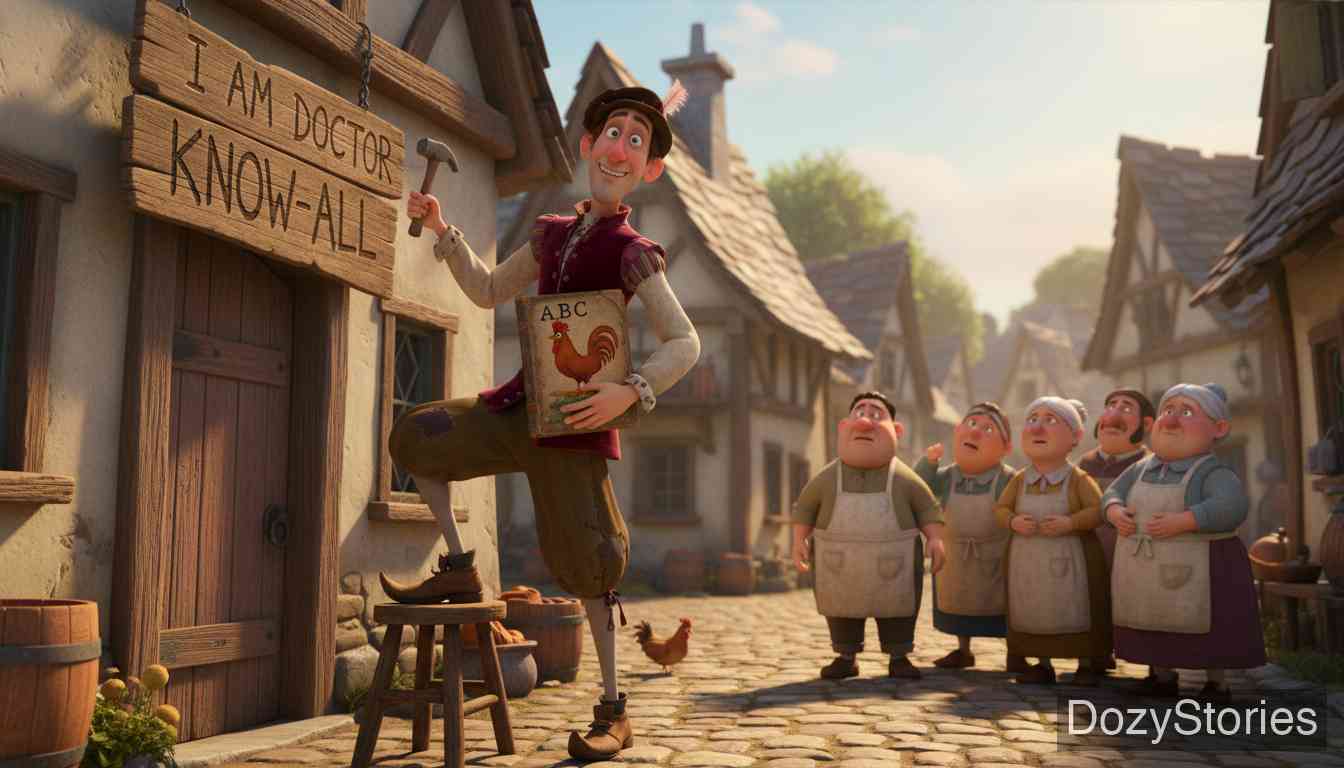
"In the first place buy thyself an A B C book of the kind which has a cock on the frontispiece: in the second, turn thy cart and thy two oxen into money, and get thyself some clothes, and whatsoever else pertains to medicine; thirdly, have a sign painted for thyself with the words, "I am Doctor Knowall," and have that nailed up above thy house-door." The peasant did everything that he had been told to do.
When he had doctored people awhile, but not long, a rich and great lord had some money stolen. Then he was told about Doctor Knowall who lived in such and such a village, and must know what had become of the money.
So the lord had the horses put in his carriage, drove out to the village, and asked Crabb if he were Doctor Knowall? Yes, he was, he said. Then he was to go with him and bring back the stolen money.
"Oh, yes, but Grethe, my wife, must go too." The lord was willing and let both of them have a seat in the carriage, and they all drove away together.
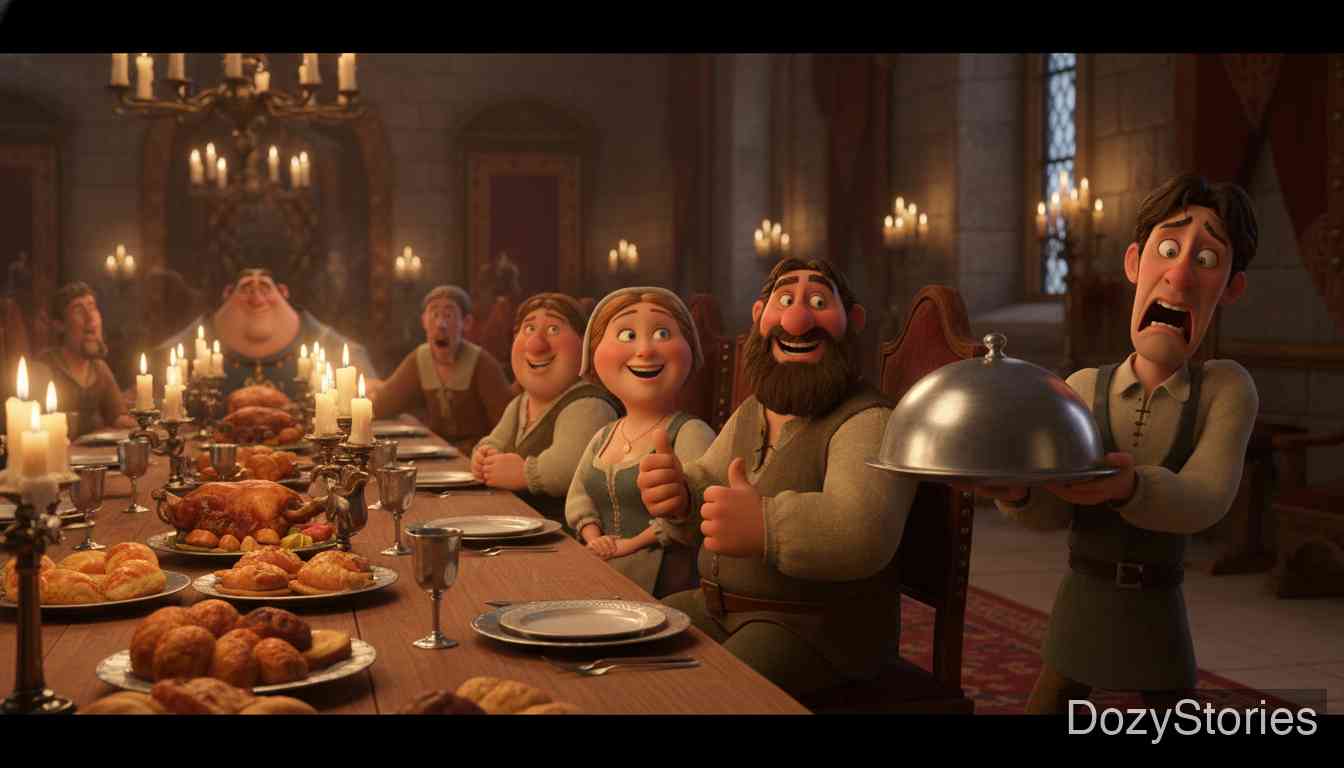
When they came to the nobleman's castle, the table was spread, and Crabb was told to sit down and eat. "Yes, but my wife, Grethe, too," said he, and he seated himself with her at the table.
And when the first servant came with a dish of delicate fare, the peasant nudged his wife, and said, "Grethe, that was the first," meaning that was the servant who brought the first dish. The servant, however, thought he intended by that to say, "That is the first thief," and as he actually was so, he was terrified, and said to his comrade outside, "The doctor knows all: we shall fare ill, he said I was the first."
The second did not want to go in at all, but was forced. So when he went in with his dish, the peasant nudged his wife, and said, "Grethe, that is the second." This servant was just as much alarmed, and he got out. The third did not fare better, for the peasant again said, "Grethe, that is the third."
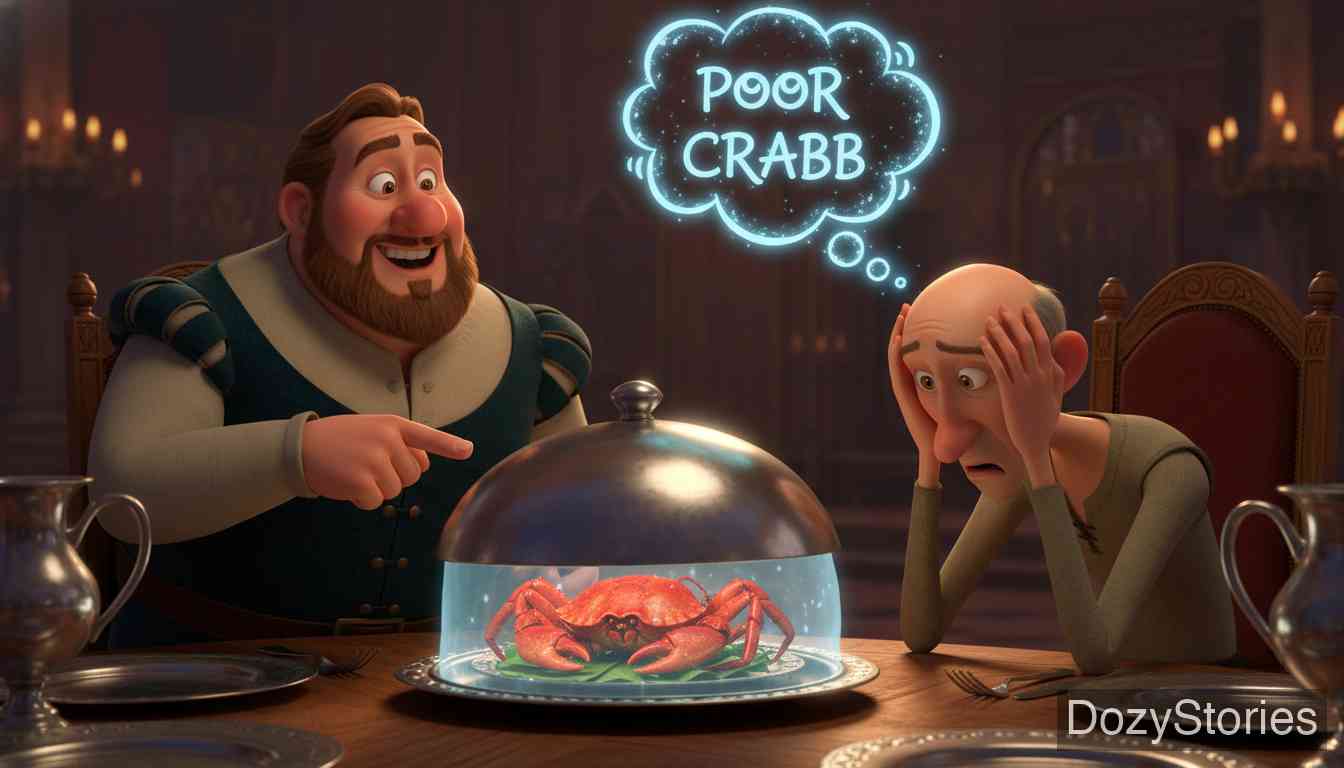
The fourth had to carry in a dish that was covered, and the lord told the doctor that he was to show his skill, and guess what was beneath the cover. The doctor looked at the dish, had no idea what to say, and cried, "Ah, poor Crabb." When the lord heard that, he cried, "There! he knows it, he knows who has the money!"
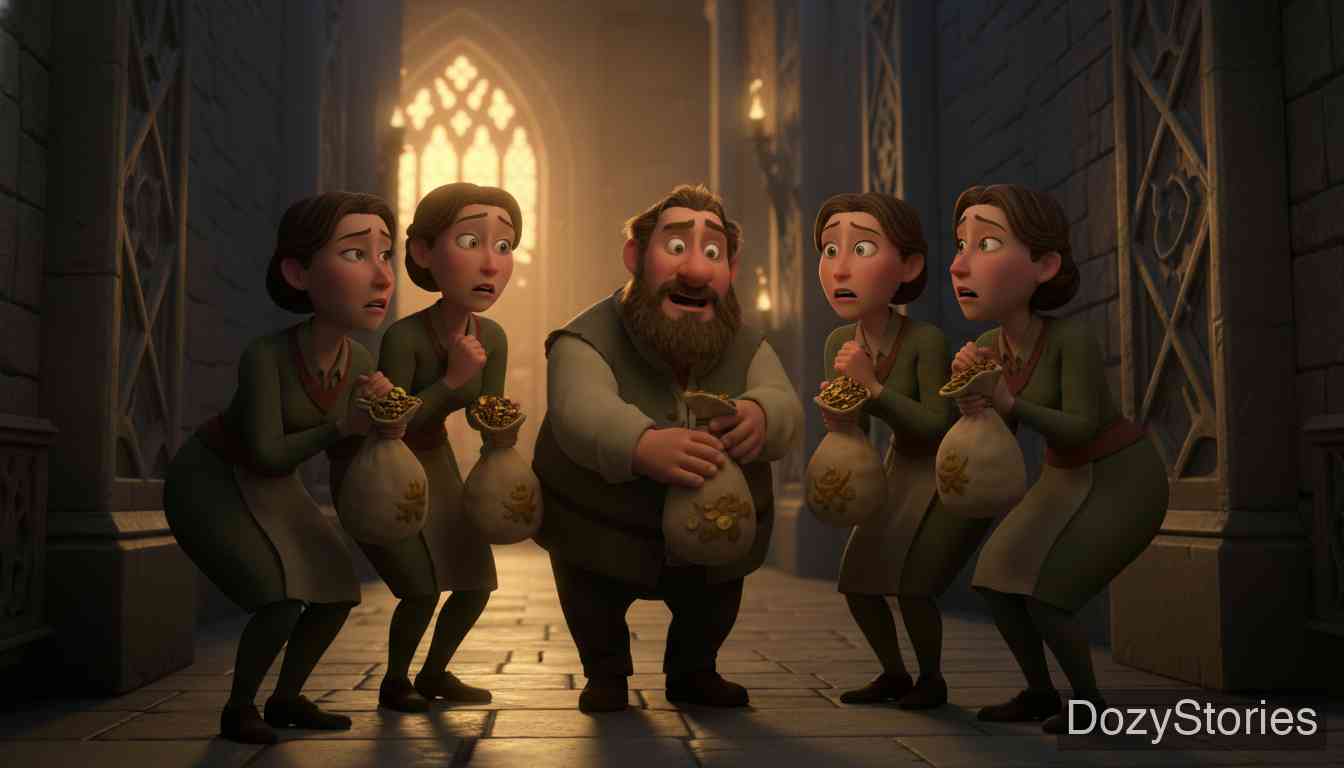
On this the servants looked terribly uneasy, and made a sign to the doctor that they wished him to step outside for a moment. When therefore he went out, all four of them confessed to him that they had stolen the money, and said that they would willingly restore it and give him a heavy sum into the bargain, if he would not denounce them, for if he did they would be hanged. They led him to the spot where the money was concealed.
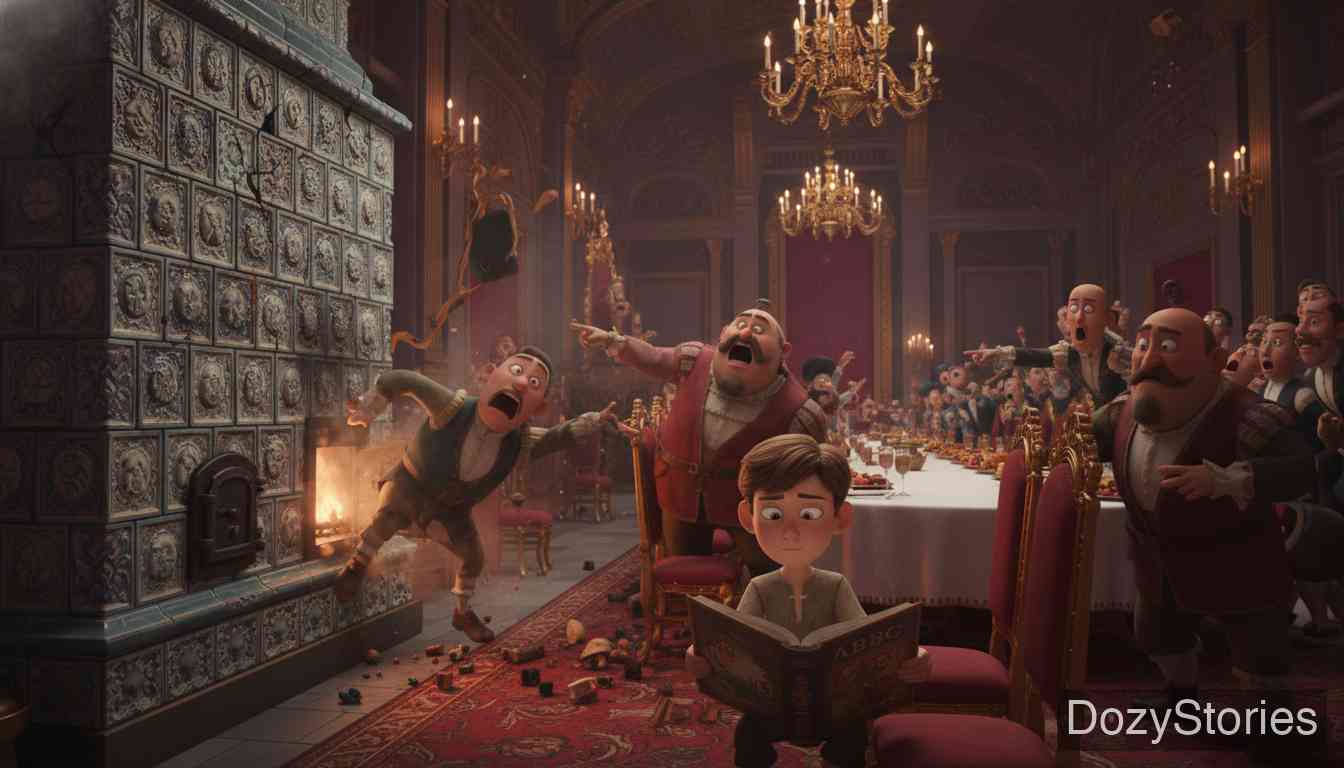
With this the doctor was satisfied, and returned to the hall, sat down to the table, and said, "My lord, now will I search in my book where the gold is hidden." The fifth servant, however, crept into the stove to hear if the doctor knew still more.
The Doctor, however, sat still and opened his A B C book, turned the pages backwards and forwards, and looked for the cock. As he could not find it immediately he said, "I know you are there, so you had better show yourself."
Then the fellow in the stove thought that the doctor meant him, and full of terror, sprang out, crying, "That man knows everything!" Then Dr. Knowall showed the count where the money was, but did not say who had stolen it, and received from both sides much money in reward, and became a renowned man.

Vocabulary from "Doctor Know-all"

12 key words from this story with definitions and original context sentences for language learners.

peasantB2
/ˈpeznt/n.

A poor farmer or farm worker, especially in former times.

农民;农夫;乡下人。

There was once on a time a poor peasant called Crabb, who drove with two oxen a load of wood to the town.

从前有个贫穷的农民叫克拉布,他赶着两头牛拉的一车木头进城。

oxen(ox)B2
/ˈɒksn/n.

Cattle used for pulling heavy loads (the plural of 'ox').

牛;耕牛(ox 的复数)。

He drove with two oxen a load of wood to the town, and sold it to a doctor for two thalers.

他赶着两头牛拉的一车木头进城,以两个塔勒的价格卖给了一位医生。

daintilyC1
/ˈdeɪntɪli/adv.

In a delicate, refined, and careful way.

精致地;讲究地;斯文地。

When the peasant saw how daintily he ate and drank, his heart desired what he saw.

农民看到医生吃喝得那么讲究,心里很是羡慕。

inquired(inquire)B2
/ɪnˈkwaɪəd/v.

Asked about something.

询问;打听。

He remained standing a while, and at length inquired if he too could not be a doctor.

他站了一会儿,终于开口问自己是不是也能当个医生。

frontispieceC1
/ˈfrʌntɪspiːs/n.

A picture at the very front of a book, facing the title page.

(书籍的)卷首插图;扉页画。

Buy thyself an A B C book of the kind which has a cock on the frontispiece.

给自己买一本卷首画着公鸡的识字课本。

nudged(nudge)B2
/nʌdʒd/v.

Gently pushed someone, usually with the elbow, to get their attention.

(用肘)轻推;碰一碰。

The peasant nudged his wife, and said, Grethe, that was the first.

农民碰了碰他的妻子,说:'格蕾特,这是第一个。'

comradeB2
/ˈkɒmreɪd/n.

A companion or fellow member of a group.

同伴;伙伴;同伙。

He was terrified, and said to his comrade outside, The doctor knows all: we shall fare ill.

他吓坏了,对外面的同伙说:'那大夫全都知道,我们要倒霉了。'

alarmed(alarm)B2
/əˈlɑːmd/adj.

Suddenly worried or frightened.

惊慌的;担忧的;受惊的。

This servant was just as much alarmed, and he got out.

这个仆人也同样被吓坏了,赶紧退了出去。

confessed(confess)B2
/kənˈfest/v.

Admitted to having done something wrong.

坦白;承认(做了错事)。

All four of them confessed to him that they had stolen the money.

这四个人全都向他承认是他们偷了钱。

denounceC1
/dɪˈnaʊns/v.

To publicly accuse or inform against someone.

告发;检举;公开谴责。

They would willingly restore it, if he would not denounce them, for if he did they would be hanged.

如果他不举报他们,他们愿意把钱归还,因为如果他举报了,他们就会被绞死。

crept(creep)B2
/krept/v.

Moved slowly and quietly, close to the ground.

蹑手蹑脚地移动;爬行;悄悄溜。

The fifth servant, however, crept into the stove to hear if the doctor knew still more.

第五个仆人钻进了火炉里,想听听大夫是不是还知道更多。

renownedC1
/rɪˈnaʊnd/adj.

Famous and admired for something.

著名的;有声望的。

He received from both sides much money in reward, and became a renowned man.

他从双方都得到了许多钱作为奖赏,成了一个有名的人。

Reading Together & Learning More

The Moral

Luck and boldness can bring a moment of success, but 'seeming to know' is not the same as truly knowing — real ability comes from real learning.

Educational Value

Through laughter, lets children enjoy puns and misunderstandings, and think about the difference between real knowledge and pretending, and the value of honesty.

Tips for Parents

This is a light comedy whose laughs all rest on puns and misunderstandings — hunt for them and act them out with your child. You can also discuss whether Crabb's 'taking from both sides' was really okay.

Talk About It

  1. Crabb actually knows nothing and is simply very lucky. Do you think he really 'has skill,' or is it 'pure luck'?
  2. Most of the laughs come from misunderstandings and puns (like 'Crabb' also meaning 'crab'). What other fun puns or wordplay do you know?
  3. In the end Crabb takes both the lord's reward and the thieves' hush-money. Do you think 'taking from both sides' like this was right?
  4. Is 'seeming to know' the same as truly knowing? What problems might come from just nailing up a sign and calling yourself an expert?