Cinderella

Introduction

Everyone knows Cinderella, but the version the Brothers Grimm wrote down in 1812 is quite different from the Disney film. There is no fairy godmother waving a magic wand. Instead, Cinderella's help comes from a hazel tree that grows on her mother's grave, and from the white birds that live in its branches. We have retold this old tale in the style of a Chinese fable: short scenes, plain speech, and one clear lesson at the end. A fable does not wander. It goes straight to the point, the way an elder tells a story by lamplight. This way of telling stories has deep roots in Chinese tradition — think of sayings like "you reap what you sow". Cinderella sows kindness, and the birds repay her; the stepsisters sow greed and lies, and they reap blindness. The fable style also lets us keep the old story's sharp edges: the sisters cut off parts of their own feet to fit the golden slipper, and no happy ending can hide that. When you read this version with your child, point out the small details: why does the father never truly protect his daughter? Why do the pigeons sing the same warning twice? And what makes the prince finally certain of the true bride? These questions turn a familiar tale into a fresh conversation about honesty, patience, and what it really means to be beautiful.
Font Size
1 / 20
Stopped
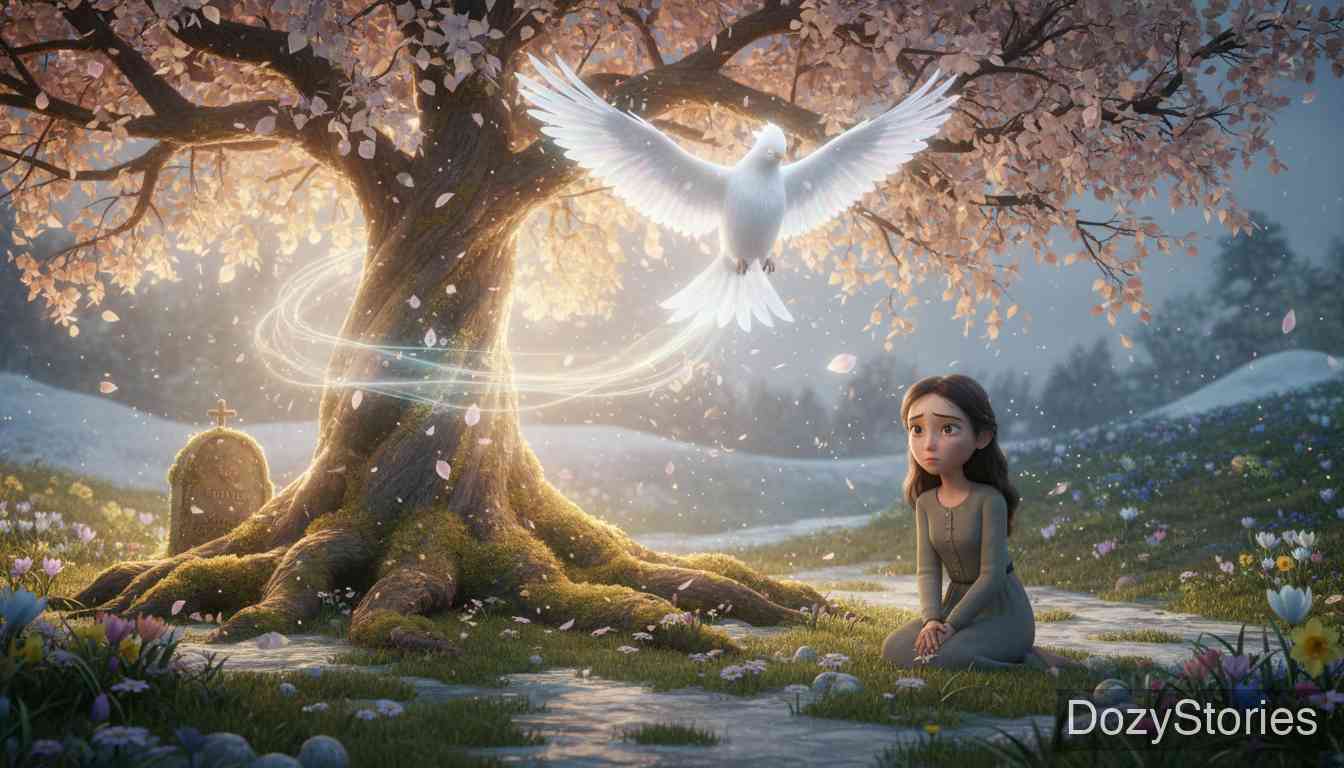
Cinderella - A dying mother's last words teach kindness and honesty; after the stepmother arrives, Cinderella suffers in the kitchen, then plants a hazel twig on her mother's grave, which grows into a tree served by a wish-granting bird. - Scene Illustration 1
A dying mother's last words teach kindness and honesty; after the stepmother arrives, Cinderella suffers in the kitchen, then plants a hazel twig on her mother's grave, which grows into a tree served by a wish-granting bird.
Long ago, a rich man's wife fell gravely ill. Knowing that her days were few, she called her only daughter to her bedside. "Dear child," she said, "remember two things: keep a kind heart and stay an honest girl. Hold to these, and Heaven will watch over you. From above, your mother will watch you too and never leave you." With those words she closed her eyes and died. The girl kept her mother's words in her heart. Every day she went to the grave and wept there, and every day she stayed kind and honest. Winter came and spread a white blanket of snow over the grave. When the spring sun melted it away, her father married a new wife that very spring.
The new wife brought two daughters of her own. Their faces were pretty, but their hearts were black as soot. From the very first day they found Cinderella a burden. "Why should she sit in our room?" they cried. "Whoever eats must work. Send her to the kitchen!" They tore off her pretty dresses, threw her an old grey smock and wooden shoes, and mocked her: "Look at the proud princess now, in this outfit!" From that day Cinderella was driven into the kitchen, and her easy days were over.
From that day she rose before dawn and slept long after midnight, carrying water, lighting fires, cooking meals and scrubbing floors from morning till night. Whenever they could, the sisters tormented her. They scattered peas and lentils into the ashes and made her pick them out one by one. At night, worn out with the day's toil, she had no bed of her own, so she lay down by the hearth among the ashes. Because she was always grey with dust, everyone in the house called her Cinderella.
One day the father rode to town to visit the fair, and he asked his two stepdaughters what they wished for. "Fine clothes!" said one. "Pearls and jewels!" said the other. "And you, Cinderella?" asked the father. "The first branch that brushes against your hat on the way home," she answered, "please bring it to me." He bought clothes and jewels for his two stepdaughters, and on the way back, as he rode down a leafy lane, a hazel branch swept across his hat. He broke it off and carried it home. The stepdaughters got what they wanted, and Cinderella got her branch. She planted it on her mother's grave and wept so bitterly that her tears soaked the roots. The branch took root and grew into a fine little tree. Three times a day Cinderella knelt beneath it and prayed, and each time a white bird flew down from its branches. Whatever wish she spoke aloud, the bird brought to her.
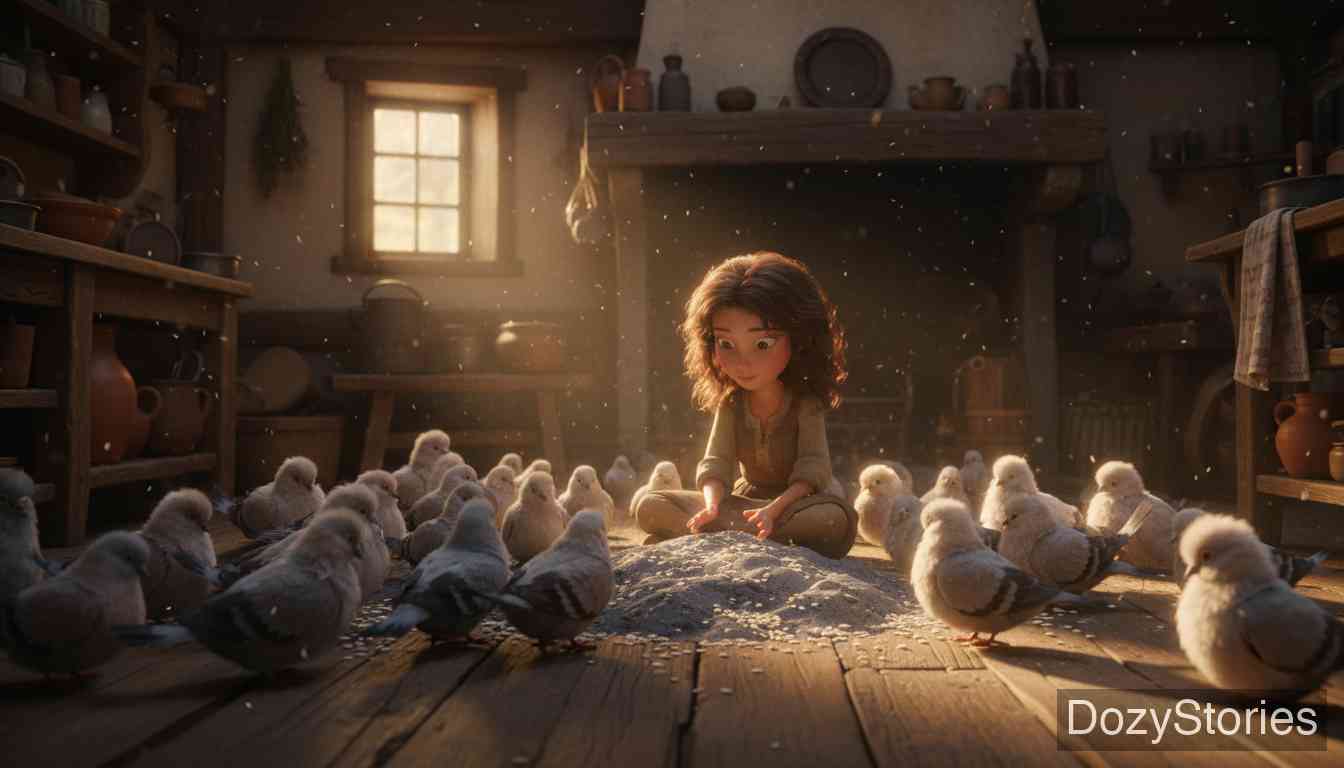
Cinderella - The king's feast draws near, but the stepmother blocks Cinderella with lentil tasks; the birds help her twice, yet she is still left behind. - Scene Illustration 2
The king's feast draws near, but the stepmother blocks Cinderella with lentil tasks; the birds help her twice, yet she is still left behind.
One day the king sent out a royal order. He would hold a grand feast for three days and three nights, and every pretty young woman in the land was invited, so that the prince could choose a bride. When the two stepsisters heard that their names were on the list, they were overjoyed. "Comb our hair!" they ordered Cinderella. "Polish our shoes! Fasten our buckles! We are going to the feast at the royal castle!" Cinderella's heart ached as she listened, for she longed to dance too. Holding back her tears, she went to beg her stepmother.
The stepmother looked her up and down. "You? Dusty little Cinderella, going to a feast? No gown, no dancing shoes — what would you dance in?" But the girl begged and begged, until the stepmother said, "I have tipped a dish of lentils into the ashes. Pick them all out within two hours, and you may come." Cinderella went out through the back door into the garden and called aloud: "Come, doves, come, every bird that flies! The lentils in the ash need clever, quick eyes. Good ones to the dish, bad ones for your prize!"
Two white doves flew down to the kitchen window, turtle-doves followed, and in the blink of an eye birds from every corner of the sky came chirping down among the ashes. The doves bobbed their heads and pecked, peck peck, peck peck, and all the other birds pecked with them. Within an hour not a single bad lentil was left in the dish. Cinderella carried the full dish to her stepmother, her heart full of hope. But the stepmother frowned. "No. You have nothing fit to wear, and you cannot dance. You would only be laughed at." Cinderella wept with disappointment. Then the stepmother said she might go after all, if she could pick two whole dishes of lentils out of the ashes — sure in her heart that no one could ever do it.
The stepmother truly emptied two dishes of lentils into the ashes. Once more Cinderella went out through the back door and called the birds, and once more they came in flocks. Within half an hour the two dishes were sorted, grain by grain. But when she carried them in, the stepmother would not even look at her. "None of this helps you," she said coldly. "No proper clothes, no dancing, and you would only shame us in front of everyone." With that she turned and swept away with her two proud daughters.
Cinderella - Cinderella wishes three times, dances three nights in magic gowns, and on the last night flees so fast that one golden slipper is left stuck in the pitch. - Scene Illustration 3
Cinderella wishes three times, dances three nights in magic gowns, and on the last night flees so fast that one golden slipper is left stuck in the pitch.
When the house was empty, Cinderella went alone to her mother's grave and whispered to the little tree: "Little tree, little tree, shake your branches, and rain silver and gold down over me." The white bird flew down with a gown of gold and silver and a pair of slippers stitched with silver thread. Cinderella dressed as fast as she could and hurried away to the feast at the royal castle.
At the feast, neither her stepmother nor her two sisters recognised her. In her golden gown she shone like a queen, and the guests took her for a princess from some far country. No one thought of Cinderella — they imagined her at home, picking lentils out of the ashes. The prince came forward, took her hand, and asked her to dance. All evening he danced with no one but her, and to every man who came to claim her he answered, "She is my partner."
When night grew deep, Cinderella wanted to go home. The prince insisted on walking with her, for he was eager to see where the beautiful stranger lived. But she slipped free of his hand and vanished into the pigeon house by the road. The prince waited until her father came and told him the girl had jumped inside. "It cannot be Cinderella," the father thought to himself, but he called for axes and had the pigeon house pulled down. It was empty. When they all came back into the house, there sat Cinderella in her old grey clothes by the ashes, with a small oil lamp burning dimly. She had been quick: out of the pigeon house, back to the little tree, out of the gown, which the bird carried away, and into her grey smock again.
On the second day, the moment the family left, Cinderella went to the little tree and made her wish again. The bird sent down a gown even finer than the first. When she walked into the hall, every head turned. The prince had been waiting only for her. He took her hand and danced with no one else. When night came and she wanted to go home, the prince followed quietly, hoping to see which house was hers. Cinderella slipped away, ran into the garden behind the house, and climbed a tall pear tree, light as a squirrel. The prince lost sight of her. When her father came, he called for an axe and cut the pear tree down — but there was nobody in it. In the kitchen sat Cinderella among the ashes as usual, for she had slid down the far side of the tree, given the gown back to the bird, and put on her old smock.
On the third day, once the others had set off, Cinderella made her wish at the grave again. This time the bird sent down a gown so splendid that nothing like it had ever been seen, and slippers of pure gold. When she appeared, the whole hall was struck dumb with wonder. The prince danced with her alone, as before. When night fell and Cinderella turned to leave, the prince could not catch her — but he had laid his plan. Every step of the staircase had been spread with sticky pitch, and as she hurried down, her left golden slipper was caught fast and left behind. The prince picked it up. It was gold, small and narrow. Early the next morning he came in person to her father's house and announced before everyone: "The girl whose foot fits this golden slipper is the bride I will marry."
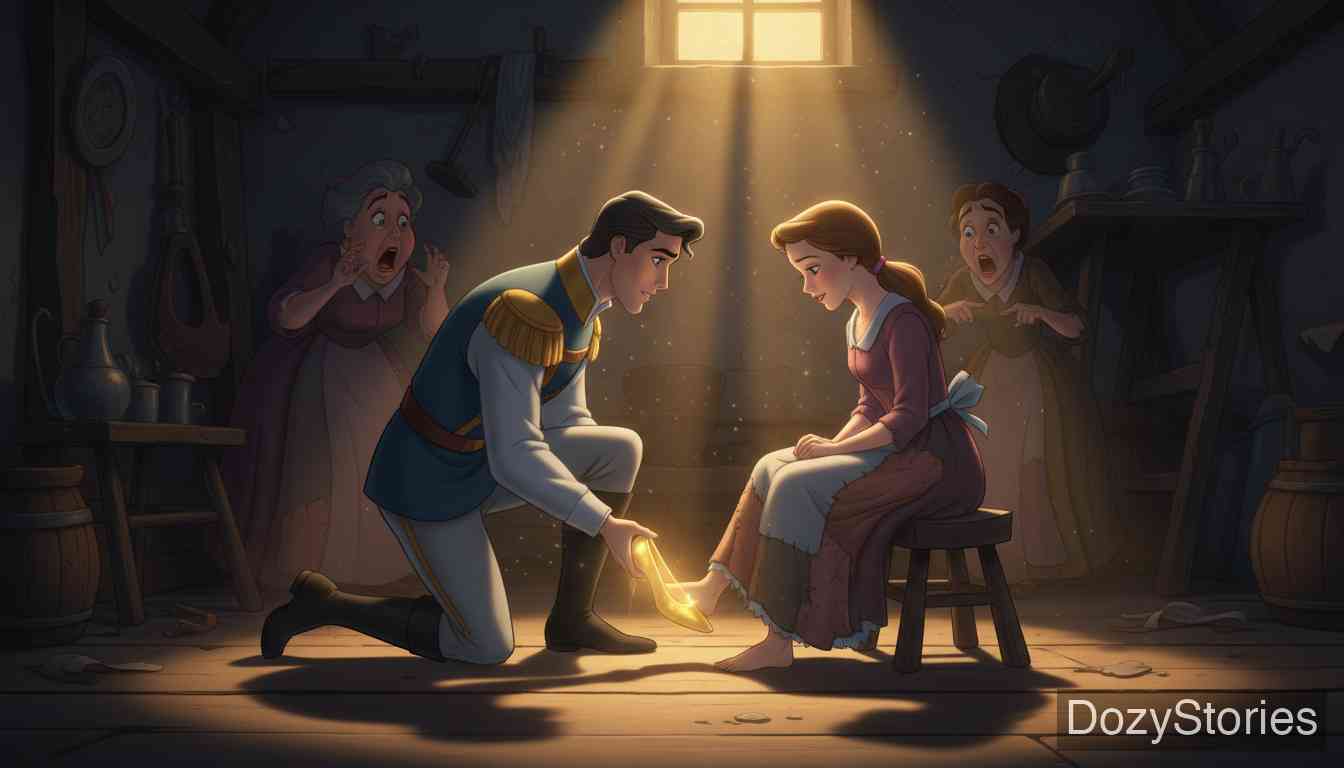
Cinderella - The sisters cut their feet to force the slipper on, and the pigeons sing out the blood; Cinderella's foot fits perfectly, and the prince carries the true bride away. - Scene Illustration 4
The sisters cut their feet to force the slipper on, and the pigeons sing out the blood; Cinderella's foot fits perfectly, and the prince carries the true bride away.
The two sisters were overjoyed, for both of them had neat feet. The elder took the golden slipper into her room to try it on, with her mother standing by. But her big toe would not go in, for the slipper was too small. The stepmother handed her a knife. "Cut a piece off your toe. Once you are queen, will you ever lack a road to walk on?" The elder cut off her toe, forced her foot into the slipper, hid the pain, and went down to the prince. He lifted her onto his horse and rode away with her as his bride.
As the horses passed the grave, two pigeons sat in the hazel tree and sang together: "Watch them ride, watch them ride! Blood in the slipper, the foot too wide — the prince has taken the wrong bride!" The prince looked down and saw blood seeping out of the slipper. At once he turned his horse round, carried the false bride back, and said the other sister must try.
The younger sister went into the room. Her toes slipped in easily, but her heel stuck fast. The stepmother handed her the knife again. "Cut a piece off your heel. Once you are queen, will you ever lack a road to walk on?" The younger sliced off part of her heel, forced her foot into the slipper, hid the pain, and went down to the prince. He set her before him on his horse and rode away. As they passed the hazel tree, the two pigeons sang again: "Watch them ride, watch them ride! Blood in the slipper, the foot too wide — the prince has taken the wrong bride!" The prince looked at her foot and saw the blood soaking through her white stocking. He turned his horse round once more and carried the second false bride home.
"Neither of these is the one," said the prince. "Do you have no other daughter?" "None," said the father, "only a poor thin child my dead wife left behind. She could never be a bride." The prince ordered them to fetch her, but the stepmother hurried to stop it. "No, no! She is covered in dirt and cannot be seen!" The prince insisted. Cinderella washed her face and hands, came in, and made a polite bow to the prince. He held out the golden slipper. She sat down, drew her foot out of the heavy wooden clog, and slid it into the slipper — not too big, not too small, a perfect fit.
When she stood up, the prince looked at her face and knew her at once as the girl who had danced with him for three nights. "This is the true bride!" he cried. The stepmother and her two daughters went pale with anger, but the prince had already lifted Cinderella onto his horse and was riding away. As they passed the hazel tree, the two white pigeons sang: "Watch them ride, watch them ride! No blood in the slipper, the foot is just right — the prince has taken the true bride!" When the song was done, the birds flew down, one settling on her right shoulder and one on her left, and there they stayed from that day on.
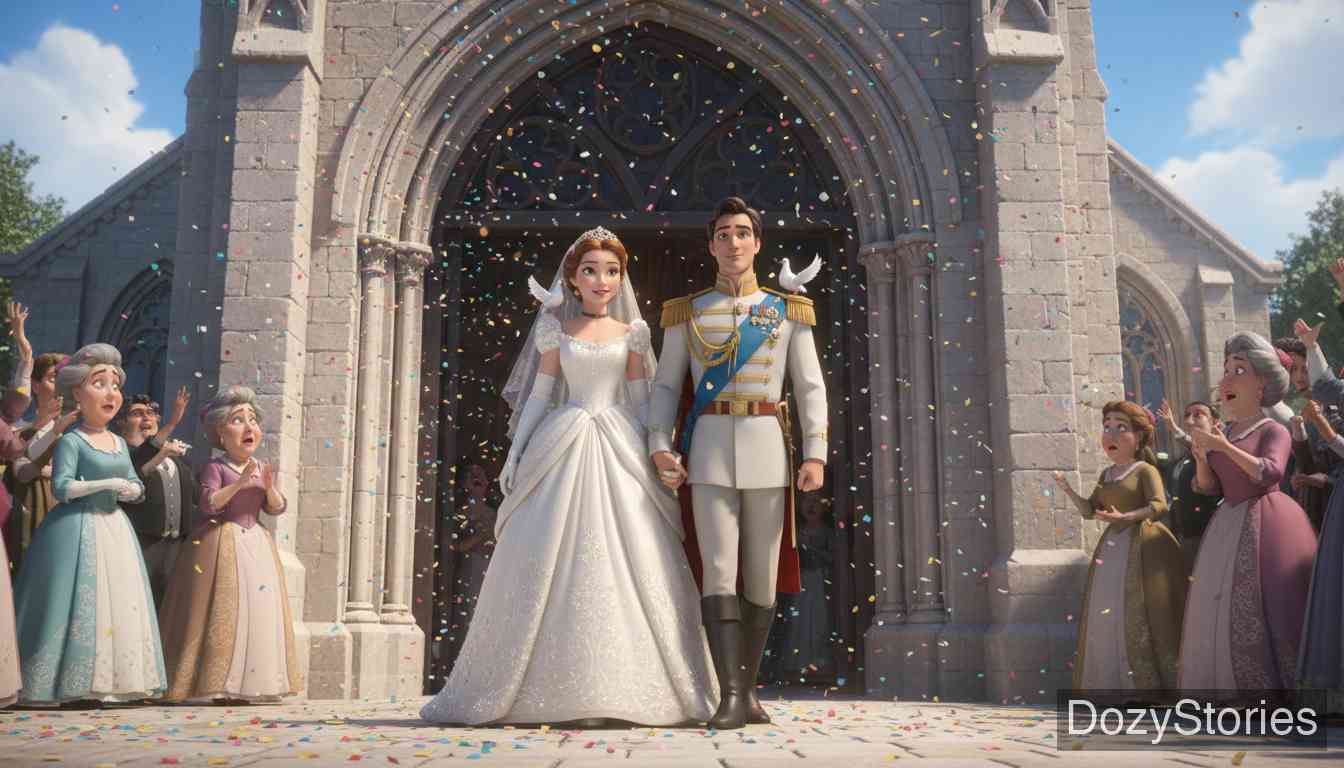
Cinderella - At the wedding the white pigeons blind the sisters — cruelty and lies always reap their own reward. - Scene Illustration 5
At the wedding the white pigeons blind the sisters — cruelty and lies always reap their own reward.
On the day of the wedding, the two false-hearted sisters also came to the feast, hoping to win a little favour and share in the joy. As the bridal procession walked towards the church, the elder walked on the right and the younger on the left, and the two white pigeons flew down and pecked out one eye from each of them.
On the way back, the elder moved to the left and the younger to the right, and the pigeons pecked out the remaining eye of each. Because their hearts were cruel and their mouths full of lies, the two sisters were left blind for the rest of their lives. The old saying holds true: kindness is repaid with kindness, and cruelty with cruelty. Nothing false can hide for long, and nothing true stays hidden. And that is the lesson the story still teaches, at lamplight, from mother to child, even today.

Vocabulary from "Cinderella"

12 key words from this story with definitions and original context sentences for language learners.

tormented(torment)B2
/tɔːˈmentɪd/v.

Made someone suffer on purpose, again and again.

折磨;百般作践。

Whenever they could, the sisters tormented her.

两个姐姐得了空便作践她,把豌豆、扁豆撒进炉灰里,逼她一颗颗捡出来。

scattered(scatter)B2
/ˈskætəd/v.

Threw small things here and there, not in one place.

撒开;散落(把东西撒得到处都是)。

They scattered peas and lentils into the ashes and made her pick them out one by one.

她们把豌豆、扁豆撒进炉灰里,逼她一颗颗捡出来。

hearthC1
/hɑːθ/n.

The floor of a fireplace, and the area right in front of it.

炉膛;灶膛前的地面(灰姑娘夜夜睡在这里)。

At night, worn out with the day's toil, she had no bed of her own, so she lay down by the hearth among the ashes.

夜里她累得浑身散架,连张床也没有,只好在灶膛边的灰堆上和衣躺下。

overjoyedB2
/ˌəʊvəˈdʒɔɪd/adj.

Extremely happy about something.

喜出望外;高兴极了。

When the two stepsisters heard that their names were on the list, they were overjoyed.

两个继姐听说自己榜上有名,欢喜得眉开眼笑,支使灰姑娘梳头擦鞋。

longed(long)B1
/lɒŋd/v.

Wanted something very much, deep in your heart.

渴望;非常想要。

Cinderella's heart ached as she listened, for she longed to dance too.

灰姑娘在一旁听着,心里酸酸的——她也想去跳舞。

disappointmentB1
/ˌdɪsəˈpɔɪntmənt/n.

The sad feeling you get when something you hoped for does not happen.

失望;扫兴。

Cinderella wept with disappointment.

灰姑娘哭得伤心,继母又说,若能把两整盘扁豆从灰里捡干净,倒还可以商量。

recognised(recognise)B1
/ˈrekəɡnaɪzd/v.

Knew who someone was because you had seen them before.

认出;辨认出。

At the feast, neither her stepmother nor her two sisters recognised her.

宴会上,继母和两个姐姐谁也没有认出她来。

vanished(vanish)B2
/ˈvænɪʃt/v.

Disappeared suddenly, as if into thin air.

消失;一转眼不见了。

But she slipped free of his hand and vanished into the pigeon house by the road.

灰姑娘却挣脱他的手,一闪身钻进了路边的鸽舍。

splendidB2
/ˈsplendɪd/adj.

Extremely beautiful and impressive to look at.

华美的;光彩夺目的。

This time the bird sent down a gown so splendid that nothing like it had ever been seen, and slippers of pure gold.

这一回,白鸟送下的礼服华美得世所未见,还有一双纯金舞鞋。

stickyB1
/ˈstɪki/adj.

Covered with something that holds on to things, like glue or honey.

黏黏的;发黏的。

Every step of the staircase had been spread with sticky pitch, and as she hurried down, her left golden slipper was caught fast and left behind.

台阶上每一级都涂了黏黏的沥青。灰姑娘快步跑下,左脚那只金鞋被牢牢粘住,留在了台阶上。

seeping(seep)C1
/ˈsiːpɪŋ/v.

Flowing slowly through small openings, drop by drop.

渗出;慢慢往外流。

The prince looked down and saw blood seeping out of the slipper.

王子低头一看,血正从鞋里渗出来。

processionB2
/prəˈseʃn/n.

A line of people walking together as part of a ceremony.

队列;行进的队伍(如迎亲队伍)。

As the bridal procession walked towards the church, the elder walked on the right and the younger on the left, and the two white pigeons flew down and pecked out one eye from each of them.

迎亲的队伍走向教堂时,大姐走在右边,二姐走在左边,两只白鸽振翅飞下,啄去了她们每人一只眼睛。

Reading Together & Learning More

The Moral

Kindness is repaid with kindness, and cruelty with cruelty. Clothes grow old and beauty fades, but a good heart can never be hidden or faked.

Educational Value

Children learn that true beauty lives in the heart, not in fine clothes, and that lies and pretence are always found out, while kindness and honesty last.

Tips for Parents

After reading, ask your child what kept Cinderella going through her hard days, and what the sisters lost while chasing a crown. Then connect the lesson to small everyday choices — telling the truth, helping others, and being kind when no one is watching.

Talk About It

  1. The stepmother sets impossible tasks, yet the birds help Cinderella every time. Why do you think the birds are willing to help her?
  2. The sisters cut off their own toes and heels to fit the golden slipper. Is it worth hurting yourself and lying to others just to get what you want?
  3. Cinderella suffers so much but never thinks of revenge. Could you do the same? How would you calm the anger inside you?
  4. The prince finds his bride by the size of a slipper. But a slipper measures a foot, not a heart. What should the prince really be looking for?
  5. At the end, the pigeons peck out the sisters' eyes. Do you think that ending is too cruel? Why do old stories make the wicked taste the fruit of their own deeds?