Cat and Mouse in Partnership
Introduction
This tale stands second in the whole Brothers Grimm collection, right after 'The Frog King.' In truth it is an ancient animal fable, told across Europe for centuries and kin to Aesop and to the sly tricks of Reynard the Fox. We retell it in the style of a Chinese fable because its bones are already fable-shaped. The characters are types: a greedy cat, a trusting mouse, each summed up in one line. The plot moves in a straight line—three excuses, three names, one pot of fat. Chinese readers will hear an old echo here. Our saying 'honey on the lips, a sword in the heart' fits this cat to the letter, and the mouse reminds us of the man who waits by a tree stump for another hare. Note, too, that the Grimms kept the cold ending on purpose: unlike many fairy tales that were softened for children, this one lets the mouse pay the price, and that is exactly what makes it a fable rather than a sweet dream. A fable, our elders say, does not dazzle with its plot; it stays with you for its lesson. So turn the three odd names into a guessing game, and count together the chances the mouse let slip. When the tale ends, your child will carry away more than the ending: a truth worth keeping for life—judge people by their deeds, not by their words.
Vocabulary from "Cat and Mouse in Partnership"
12 key words from this story with definitions and original context sentences for language learners.
To like and respect someone very much.
钦佩;欣赏。
He poured out sweet words by the basketful, saying how much he admired her and wished to keep her company.
他把甜话说了一箩筐,说自己最敬重她,最想同她做伴。
The long stiff hairs that grow near a cat's mouth.
(猫、鼠等的)胡须。
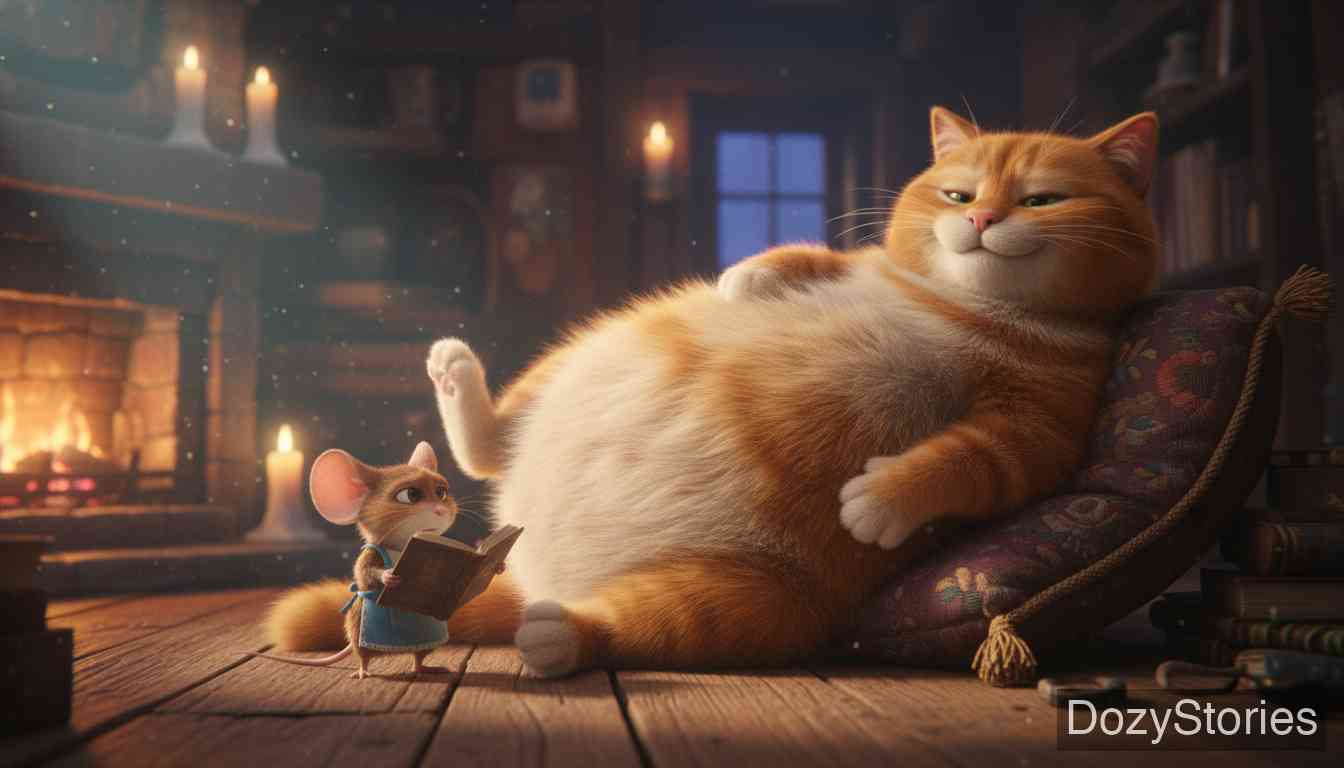
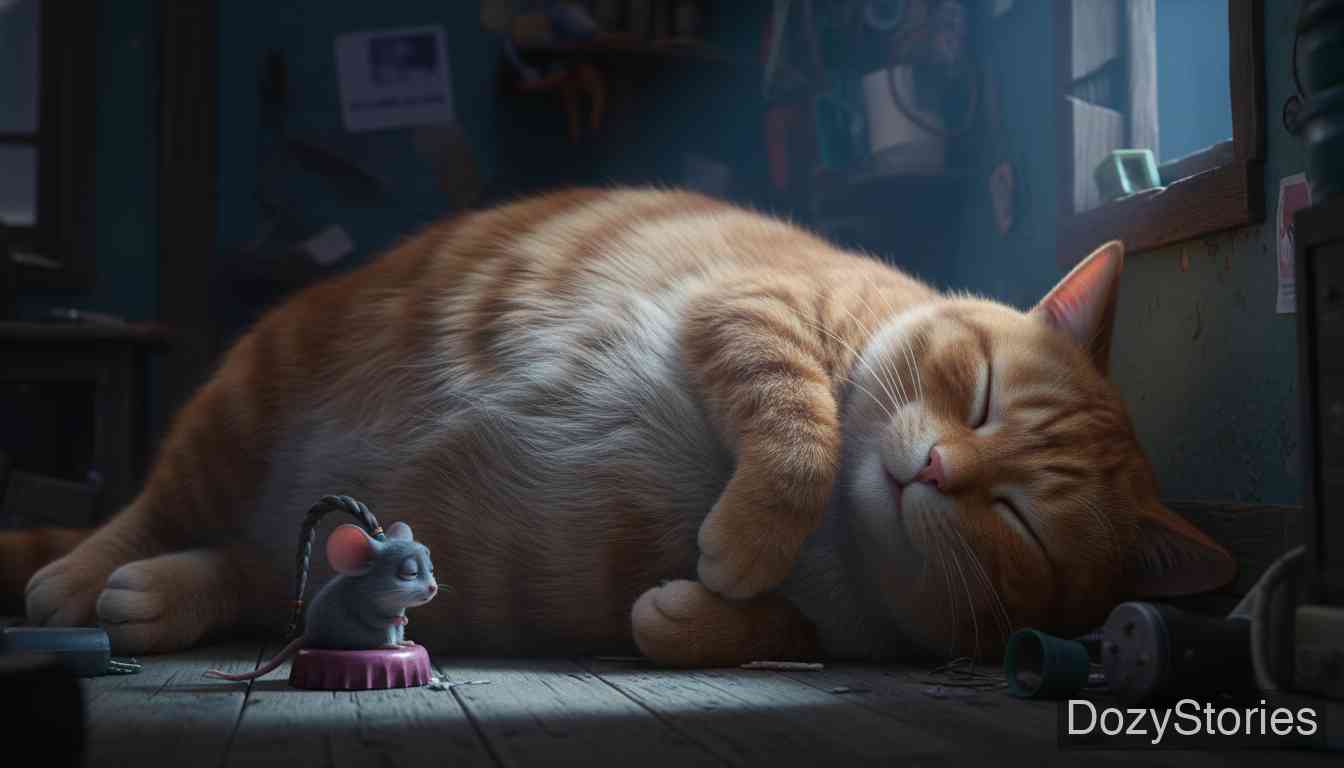
Then he lay on the roof in the sun, licking his whiskers and feeling very pleased with himself.
然后躺在屋顶上晒太阳,一边晒一边舔胡子,心里好不得意。
Asked for something very strongly, like pleading.
恳求;央求。
He begged the mouse, "They have asked me to be godfather once more. Please watch the house for me one more day."
他央求老鼠:「人家又请我去当教父,这回的娃娃脖子上有一圈白毛,我推辞不得。你再看一天家吧。」
To go and bring something back.
去取;去拿。
Let us push the pot under the altar and fetch it when winter comes.
我们把罐子塞在祭坛底下,等冬天来了再取。
Strange ideas or imaginary thoughts.
奇思怪想;胡思乱想。
You never go out in the daylight, so your head fills with odd fancies.
你白日不出门,脑子里自然尽装些胡思乱想。
Moved slowly and quietly so nobody would notice.
悄悄爬行;蹑手蹑脚地走。
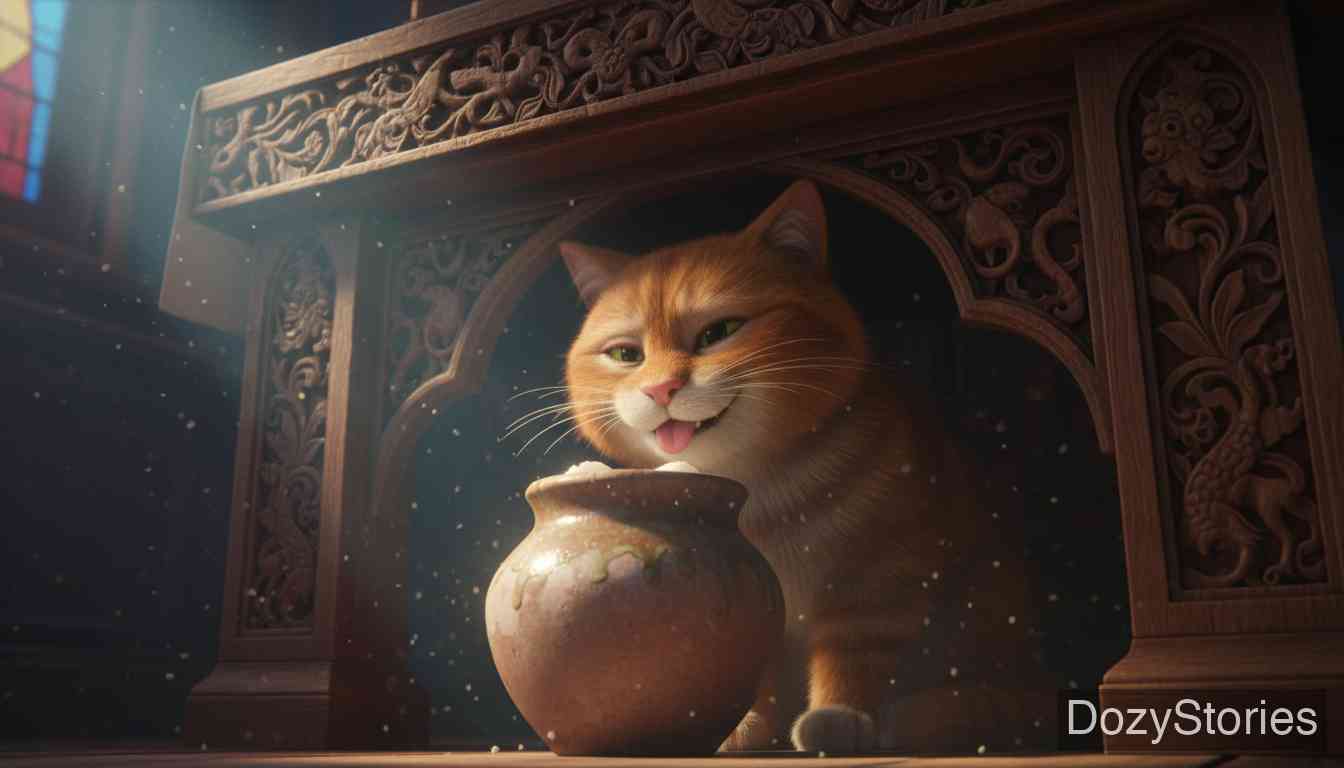
The cat, though, crept into the church and scraped up the very last bit of fat.
猫却钻进教堂,把罐底最后一点油也刮了个精光,直到天黑才挺着肚子回家。
Making you feel afraid or uneasy.
令人不安的;叫人心慌的。
The mouse shook her head in surprise and said it was the most worrying name of all.
老鼠惊得直摇头,说这名字听着最叫人心慌。
Loyal and true, always keeping promises.
忠实的;忠诚的。
Now I see you clearly, my true and faithful friend!
我如今才算看清,你真是个知心知意的『好朋友』!
Pushing something out or into a place.
伸出;戳。
You will enjoy it, just as you enjoy poking your thin tongue out of the window into the wind.
你自然会喜欢,就像你喜欢把那条细舌头伸到窗外吹风一样。
Showing something that is usually hidden, such as teeth.
露出;使显露(如露出牙齿)。
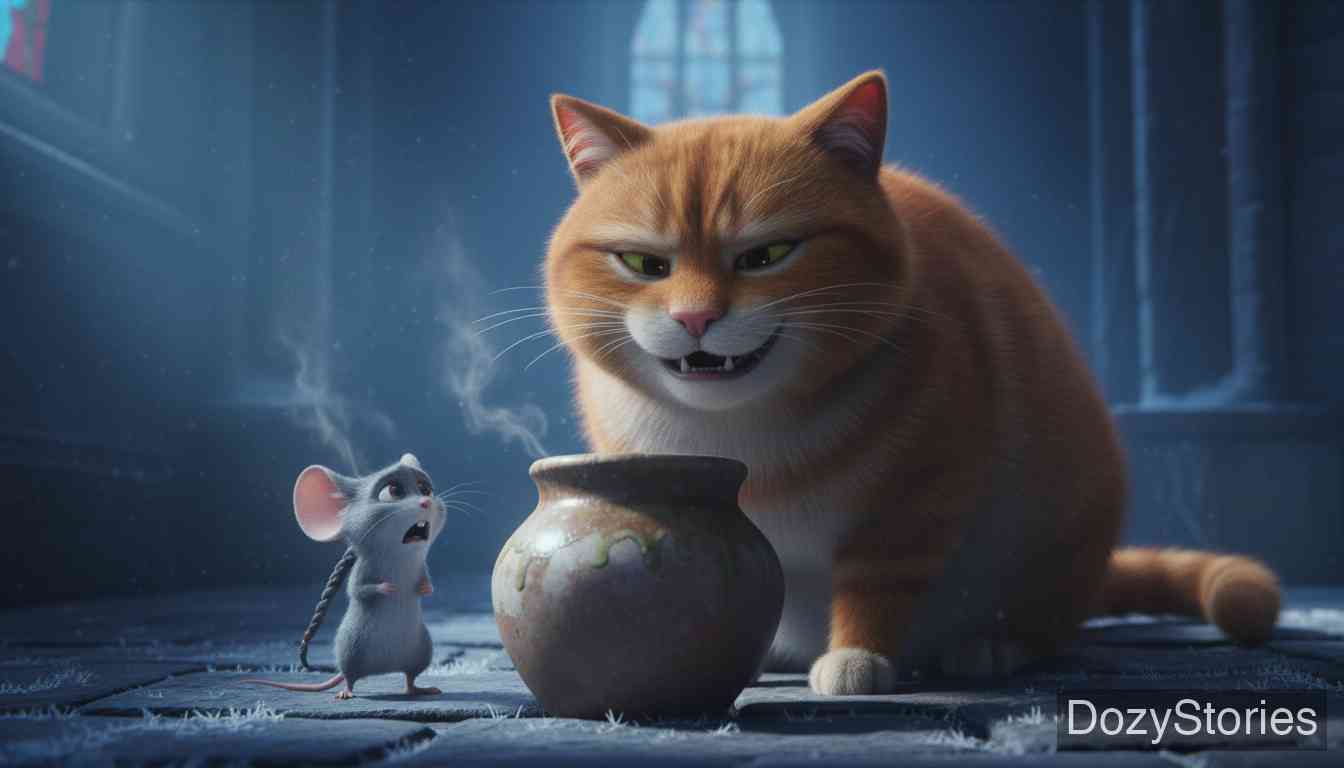
"Be quiet!" cried the cat, baring his sharp teeth.
「住口!」猫龇出尖牙,喝道,「你再多说一个字,我连你也一起吃了。」
Made food go down the throat into the stomach.
吞下;咽下。
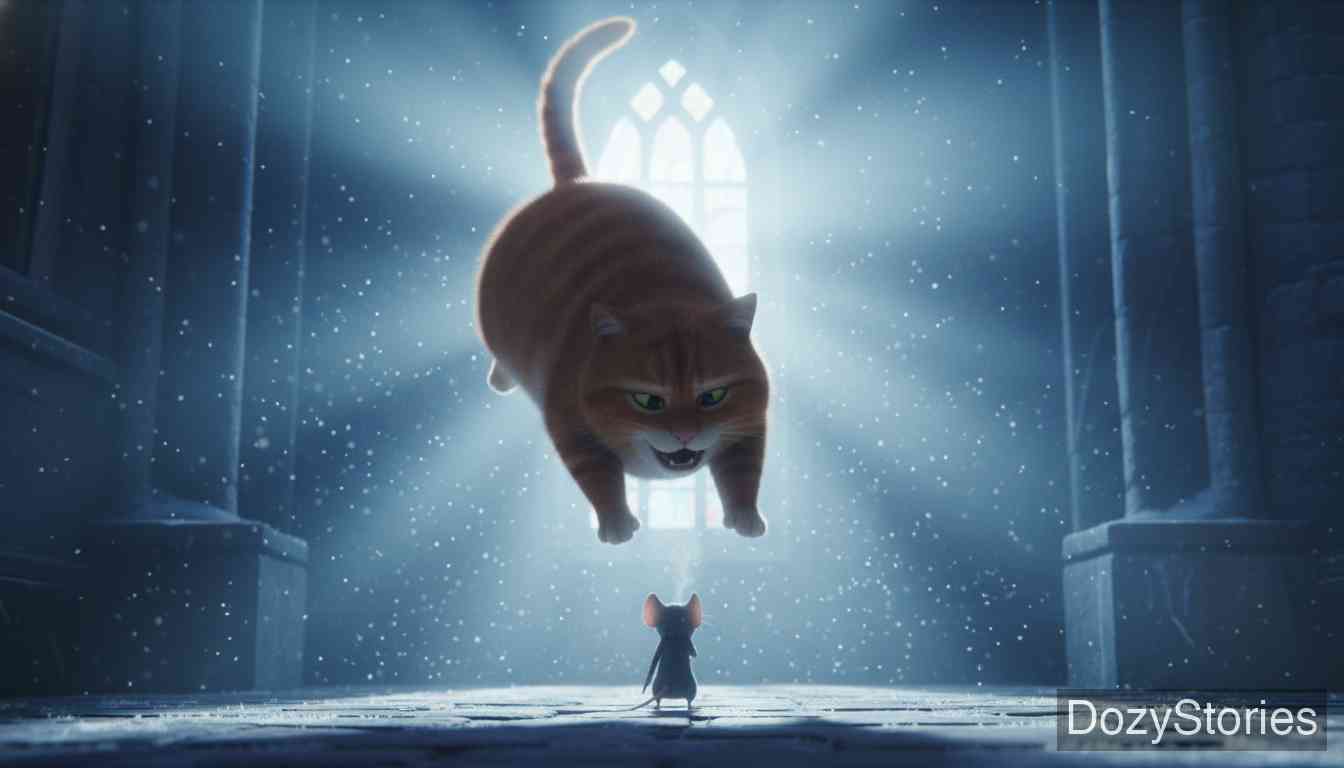
Before the sound had died away, the cat sprang on her, caught her in one bite, and swallowed her whole.
话音未落,猫猛地扑上前,一口叼住她,整个吞了下去。
Having nothing inside at all, like an empty egg or nut.
空空如也;像空壳一样什么都没有。
But it was empty, empty as a shell, scraped clean to the bottom.
可里面空空如也,连底都被刮得干干净净。
Reading Together & Learning More
The Moral
Sweet words can hide a greedy heart. When warning signs keep appearing, watch what a friend does, not what he says.
Educational Value
Helps children tell pretty words from real deeds and stay alert when warning signs appear; guessing the three odd names is also a fine game of logic and language.
Tips for Parents
Pause at each odd name and let your child guess what it hides. After reading, ask: how many chances did the mouse have to grow suspicious, and how can we watch for such signs in real life?
Talk About It
- The cat makes up a 'godfather' excuse every time he goes out. The mouse had several chances to grow suspicious—why do you think she never looked on the dark side?
- Lid-Off, Half-Jar, Empty-Jar: what are these three names secretly telling us?
- The cat and mouse agreed to share food through the winter, but the cat never meant to keep his word. Was this 'partnership' fair from the very start?
- If the mouse had doubted the cat when she first heard 'Lid-Off,' how might the story have gone? What should she have done?
- If a 'friend' in real life keeps taking advantage of you when you are not looking, how would you find out, and what would you do?