Brother Lustig
Introduction
Chinese fables often warn that small greed brings big losses, and "Brother Lustig" reads like such a fable in a western coat. When Saint Peter divides the gold into three piles and leaves one "for whoever ate the lamb's heart," the trick echoes an old Chinese saying: the louder a man protests his innocence, the more he gives himself away. Brother Lustig swears a lamb has no heart, yet he is the first to cry, "I ate it!" — proof that a lie can never be hidden for long. Why retell a Grimm tale as a fable? A fable shapes each character with one clear trait, turns each scene into one sharp step of the plot, and keeps the lesson for the end, spoken in a sentence or two. That suits Brother Lustig, a man of many faults and one great gift: he gives away his last bread to strangers, and that kindness keeps saving him. The Grimms' original is full of earthy, funny details — the ninth devil escapes the hammering with a black eye, and the old soldier finally wishes himself into his own knapsack to sneak into heaven. Children will laugh at the tricks, and then, with a little help, notice the questions underneath: Is he clever or dishonest? Must a person be perfect to be kind? Let your child decide — that is the point of a fable.



Vocabulary from "Brother Lustig"
12 key words from this story with definitions and original context sentences for language learners.
Happy to give or share with others.
慷慨的;乐于分享的。
"Here is a generous man," he thought.
圣彼得见他方才连讨饭的都肯分,心里暗暗点头:这人毛病不少,心地倒不坏。
Walked slowly from place to place, with no fixed aim.
漫游;四处游荡。
Brother Lustig wandered on, and he wasted his money as before.
快乐老兄接着游荡,钱还是留不住。
Very, very afraid.
吓坏了的;惊恐万分的。
It was the ninth devil, and he was terrified of the knapsack.
他上前敲门,看门的探出头来,一见他就吓得魂飞魄散——那正是当年躲过铁锤、带着满身青紫逃走的第九个魔鬼。
To move a little.
动一动;挪动。
Three times he called, and the bones did not stir.
他连唤三声,白骨一动不动;再唤三声,还是纹丝不动。
Clothes or a look that hides who you really are.
伪装;乔装。
He did not know that the beggar was Saint Peter in disguise.
他哪里知道,这讨饭的原是圣彼得乔装改扮的。
The act of making a sick person well again.
医治;治疗。
"I know something of healing," he went on.
“老兄,我略懂些医道,”陌生人对他说,“你跟我同行,我挣着什么,就分你一半,保你饿不着。”
To say that something is true, especially something you hid.
承认(自己隐瞒的事)。
" Saint Peter strode across, and the water came only to his knee. Then Brother Lustig started across too, but the water grew deeper and rose to his throat. Will you admit that you ate the heart? "
圣彼得回头问他:“羊心可是你吃的?”他硬着头皮说:“不是我吃的。”
Telling the truth about a fault or a wrong act.
坦白;招认。
cried Brother Lustig, and he swept the gold into his arms, confessing in a hurry.
“是我吃的!是我吃的!”快乐老兄慌忙把金子拢进怀里。
To order someone not to do something.
禁止;不许。
Did I not forbid you to take anything?
“我不是不许你拿东西么?”他赔笑道:“人家硬要装,我有什么法子?”
A messy, confused state.
一团乱;杂乱无章。
But he did not know the order of the bones, and he set them down all wrong, in a muddle.
可他不记得骨头的次序,摆得七零八落,手忙脚乱,心里直打鼓。
Cleverness used to trick others.
机巧;狡黠的算计。
But by hints and cunning he made the king fill his knapsack with gold.
快乐老兄不敢开口讨赏,却连使眼色带打暗语;国王还当是他的本事,连连称谢,又命人把他的背囊装满了金子。
A bag carried on the back.
背囊;背包。
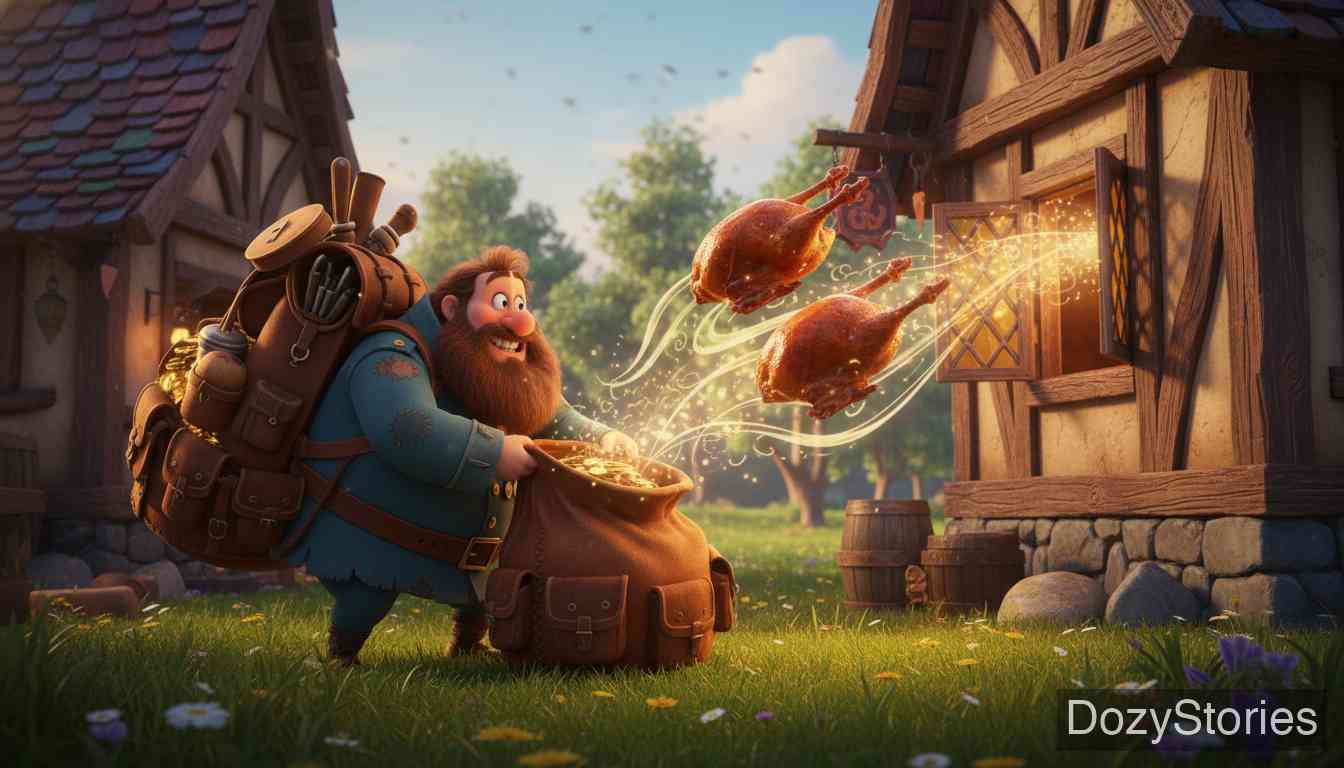
"I wish those two roast geese to be in my knapsack," he said.
他走出门外,悄悄念叨:“我要那两只烤鹅进我的背囊。”
Reading Together & Learning More
The Moral
A lie grows bigger the harder you try to hide it, and in the end it speaks for itself; but the bread he shared with strangers kept saving him. Honesty wears well, and kindness never goes to waste.
Educational Value
Children can learn from Brother Lustig that lies and greed never stay hidden, while honest words and a generous heart bring their own rewards when you least expect them.
Tips for Parents
After reading, ask with a smile: Brother Lustig clearly ate the heart, so why does he refuse to admit it? And why is Saint Peter's trick of leaving one pile of gold "for whoever ate the heart" so clever? Then bring it home: have you ever told a lie, and how was it found out? (A gentle note: boiling bones and the gates of heaven are just an old tale's imagination — enjoy the joke, do not overthink it.)
Talk About It
- Brother Lustig clearly ate the lamb's heart, yet he swears "a lamb has no heart." Saint Peter leaves one pile of gold "for whoever ate the heart," and Brother Lustig gives himself away at once. What makes this trick so clever?
- Saint Peter helps Brother Lustig many times but never lets him take a reward. What do you think Saint Peter is trying to teach him? Does he ever learn the lesson?
- Brother Lustig is greedy, dishonest and careless with money, yet he always shares his last bread with strangers. Is he a good person or a bad one? Must a person be perfect to be good?
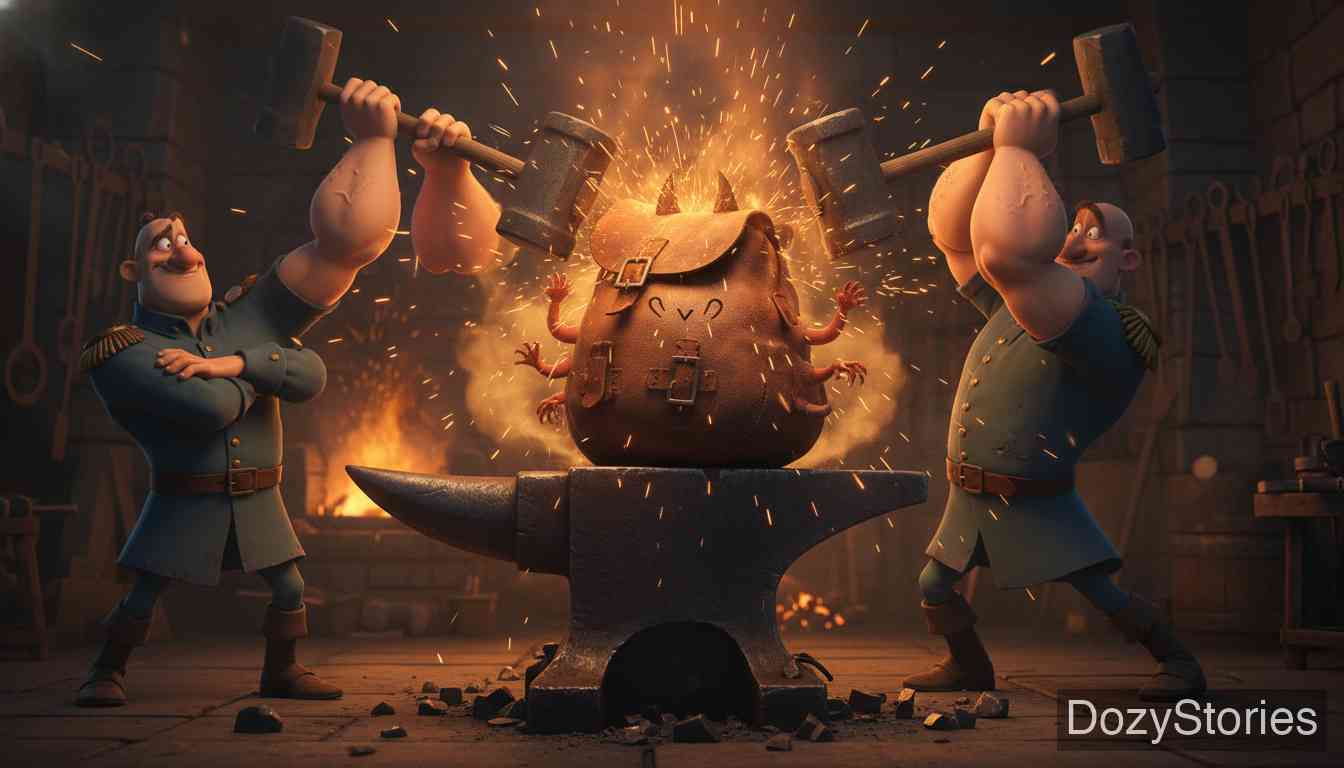
- He packs the devils into his knapsack for the smiths to hammer, then uses the same bag to sneak into heaven. Where is the line between being clever and cheating? If you had a magic knapsack, what would you use it for?
- Saint Peter warns Brother Lustig not to try such tricks again, yet he forgets the warning at once. Have you ever done something you knew you should not do? What happened then?