The Almond Tree

Introduction

This may be the most famous, and the most heart-stopping, of all the Grimms' tales. It was first told in the Low German dialect of northern Germany and written down by the painter Philipp Otto Runge, and the Grimms printed his version almost word for word — which is why it reads with such rare poetry: the opening passage that moves slowly through nine months, and the song the little bird sings again and again, are as beautiful as verse. The poet W. H. Auden called it 'one of the greatest of all fairy tales.' Folklorists catalogue it as ATU 720, and its title is that chilling refrain itself: 'My mother slew me, my father ate me.' Many of its elements echo elsewhere: the opening wish for a child 'red as blood and white as snow' is also the beginning of 'Snow White'; the murdered child's bones becoming something that sings out the truth belongs to the same ancient 'bones tell the truth' motif as this site's 'The Singing Bone'; and the tree upon the grave that brings rebirth recalls the hazel on the mother's grave in 'Cinderella.' In many old cultures the bird is a symbol of the soul, and trees and graves are places of rebirth — this story weaves those deepest images together. It is dark, but for that very reason it gives the most powerful answer a fairy tale can give to the question of whether love can overcome death.

Font Size
Image Layout
1 / 31
Stopped
Long time ago, perhaps as much as two thousand years, there was a rich man, and he had a beautiful and pious wife, and they loved each other very much, and they had no children, though they wished greatly for some, and the wife prayed for one day and night.
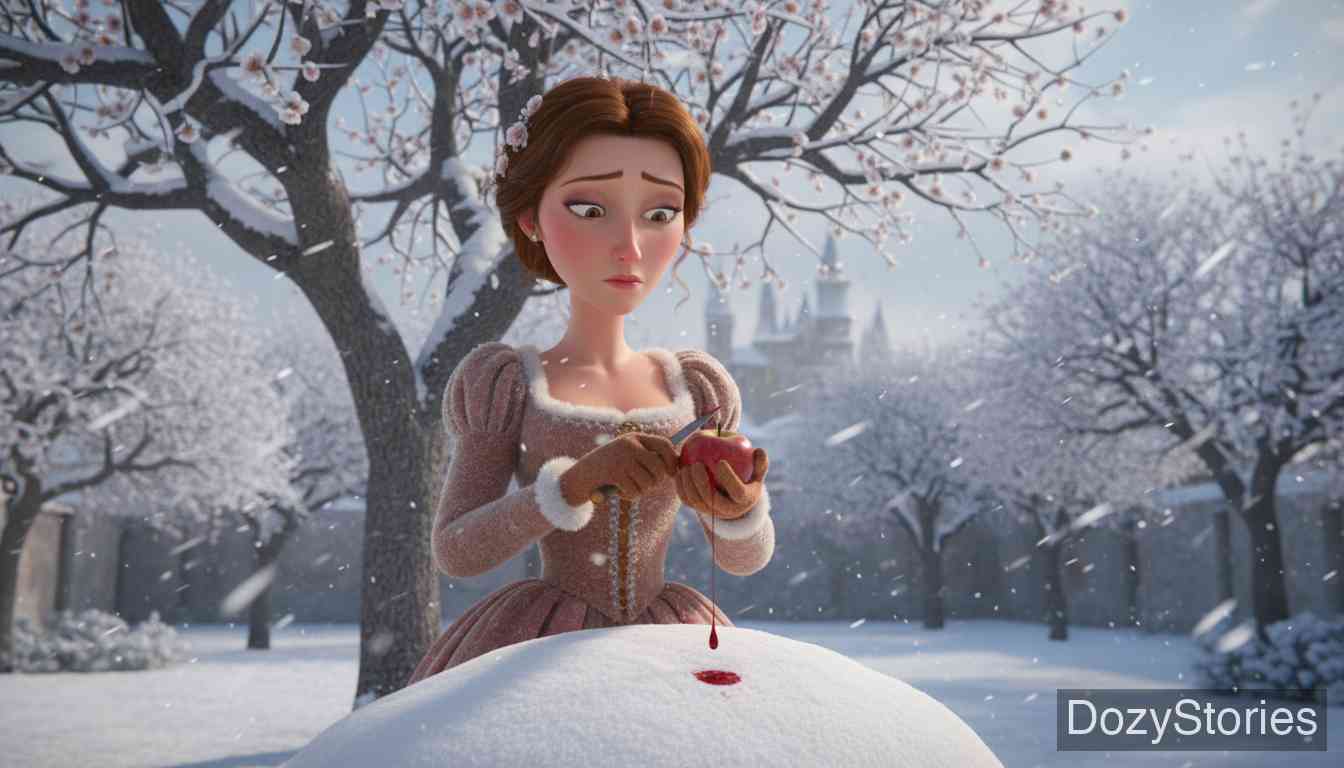
Now, in the courtyard in front of their house stood an almond tree; and one day in winter the wife was standing beneath it, and paring an apple, and as she pared it she cut her finger, and the blood fell upon the snow.
"Ah," said the woman, sighing deeply, and looking down at the blood, "if only I could have a child as red as blood, and as white as snow!" And as she said these words, her heart suddenly grew light, and she felt sure she should have her wish.
So she went back to the house, and when a month had passed the snow was gone; in two months everything was green; in three months the flowers sprang out of the earth; in four months the trees were in full leaf, and the branches were thickly entwined; the little birds began to sing, so that the woods echoed, and the blossoms fell from the trees; when the fifth month had passed the wife stood under the almond tree, and it smelt so sweet that her heart leaped within her, and she fell on her knees for joy; and when the sixth month had gone, the fruit was thick and fine, and she remained still; and the seventh month she gathered the almonds, and ate them eagerly, and was sick and sorrowful; and when the eighth month had passed she called to her husband, and said, weeping, "If I die, bury me under the almond tree."
Then she was comforted and happy until the ninth month had passed, and then she bore a child as white as snow and as red as blood, and when she saw it her joy was so great that she died.
Her husband buried her under the almond tree, and he wept sore; time passed, and he became less sad; and after he had grieved a little more he left off, and then he took another wife.
His second wife bore him a daughter, and his first wife's child was a son, as red as blood and as white as snow. Whenever the wife looked at her daughter she felt great love for her, but whenever she looked at the little boy, evil thoughts came into her heart, of how she could get all her husband's money for her daughter, and how the boy stood in the way; and so she took great hatred to him, and drove him from one corner to another, and gave him a buffet here and a cuff there, so that the poor child was always in disgrace; when he came back after school hours there was no peace for him.
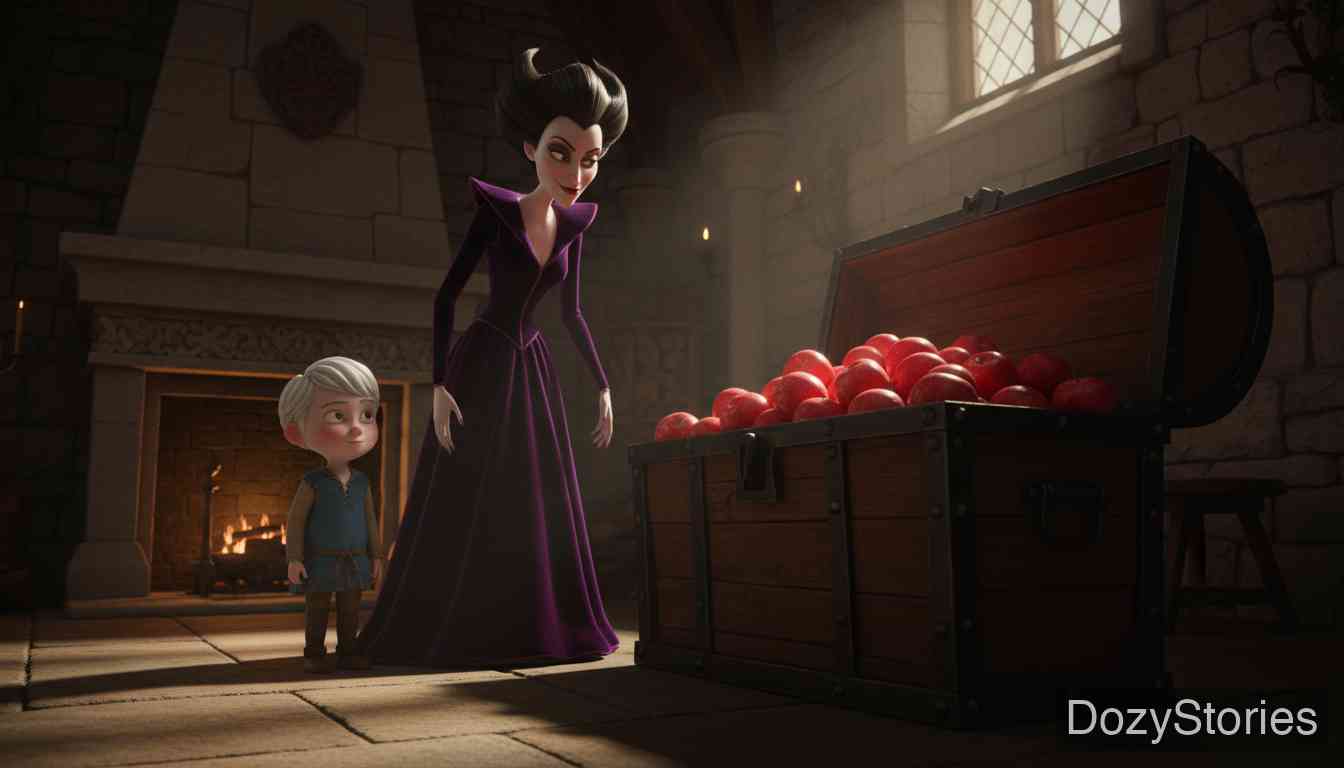
Once, when the wife went into the room upstairs, her little daughter followed her, and said, "Mother, give me an apple." - "Yes, my child," said the mother, and gave her a fine apple out of the chest, and the chest had a great heavy lid with a strong iron lock. "Mother," said the little girl, "shall not my brother have one too?" That was what the mother expected, and she said, "Yes, when he comes back from school."
And when she saw from the window that he was coming, an evil thought crossed her mind, and she snatched the apple, and took it from her little daughter, saying, "You shall not have it before your brother." Then she threw the apple into the chest, and shut to the lid.
Then the little boy came in at the door, and she said to him in a kind tone, but with evil looks, "My son, will you have an apple?" - "Mother," said the boy, "how terrible you look! yes, give me an apple!" Then she spoke as kindly as before, holding up the cover of the chest, "Come here and take out one for yourself." And as the boy was stooping over the open chest, crash went the lid down, so that his head flew off among the red apples.
But then the woman felt great terror, and wondered how she could escape the blame. And she went to the chest of drawers in her bedroom and took a white handkerchief out of the nearest drawer, and fitting the head to the neck, she bound them with the handkerchief, so that nothing should be seen, and set him on a chair before the door with the apple in his hand.
Then came little Marjory into the kitchen to her mother, who was standing before the fire stirring a pot of hot water. "Mother," said Marjory, "my brother is sitting before the door and he has an apple in his hand, and looks very pale; I asked him to give me the apple, but he did not answer me; it seems very strange." - "Go again to him," said the mother, "and if he will not answer you, give him a box on the ear."
So Marjory went again and said, "Brother, give me the apple." But as he took no notice, she gave him a box on the ear, and his head fell off, at which she was greatly terrified, and began to cry and scream, and ran to her mother, and said, "O mother! I have knocked my brother's head off!" and cried and screamed, and would not cease. "O Marjory!" said her mother, "what have you done? but keep quiet, that no one may see there is anything the matter; it can't be helped now; we will put him out of the way safely."
When the father came home and sat down to table, he said, "Where is my son?" But the mother was filling a great dish full of black broth, and Marjory was crying bitterly, for she could not refrain. Then the father said again, "Where is my son?" - "Oh," said the mother, "he is gone into the country to his great-uncle's to stay for a little while."
"What should he go for?" said the father, "and without bidding me good-bye, too!" - "Oh, he wanted to go so much, and he asked me to let him stay there six weeks; he will be well taken care of." - "Dear me," said the father, "I am quite sad about it; it was not right of him to go without bidding me good-bye."
With that he began to eat, saying, "Marjory, what are you crying for? Your brother will come back some time." After a while he said, "Well, wife, the food is very good; give me some more." And the more he ate the more he wanted, until he had eaten it all up, and be threw the bones under the table.
Then Marjory went to her chest of drawers, and took one of her best handkerchiefs from the bottom drawer, and picked up all the bones from under the table and tied them up in her handkerchief, and went out at the door crying bitterly. She laid them in the green grass under the almond tree, and immediately her heart grew light again, and she wept no more.
Then the almond tree began to wave to and fro, and the boughs drew together and then parted, just like a clapping of hands for joy; then a cloud rose from the tree, and in the midst of the cloud there burned a fire, and out of the fire a beautiful bird arose, and, singing most sweetly, soared high into the air; and when he had flown away, the almond tree remained as it was before, but the handkerchief full of bones was gone. Marjory felt quite glad and light-hearted, just as if her brother were still alive. So she went back merrily into the house and had her dinner.
The bird, when it flew away, perched on the roof of a goldsmith's house, and began to sing, ''It was my mother who murdered me; It was my father who ate of me; It was my sister Marjory Who all my bones in pieces found; Them in a handkerchief she bound, And laid them under the almond tree. Kywitt, kywitt, kywitt, I cry, Oh what a beautiful bird am I!"
The goldsmith was sitting in his shop making a golden chain, and when he heard the bird, who was sitting on his roof and singing, he started up to go and look, and as he passed over his threshold he lost one of his slippers; and he went into the middle of the street with a slipper on one foot and-only a sock on the other; with his apron on, and the gold chain in one hand and the pincers in the other; and so he stood in the sunshine looking up at the bird. "Bird," said he, "how beautifully you sing; do sing that piece over again." - "No," said the bird, "I do not sing for nothing twice; if you will give me that gold chain I will sing again." - "Very well," said the goldsmith, "here is the gold chain; now do as you said." Down came the bird and took the gold chain in his right claw, perched in front of the goldsmith, and sang the song again.
Then the bird flew to a shoemaker's, and perched on his roof, and sang the same song. When the shoemaker heard, he ran out of his door in his shirt sleeves and looked up at the roof of his house, holding his hand to shade his eyes from the sun. "Bird," said he, "how beautifully you sing!" Then he called in at his door, "Wife, come out directly; here is a bird singing beautifully; only listen." Then he called his daughter, all his children, and acquaintance, both young men and maidens, and they came up the street and gazed on the bird, and saw how beautiful it was with red and green feathers, and round its throat was as it were gold, and its eyes twinkled in its head like stars.
"Bird," said the shoemaker, "do sing that piece over again." - "No," said the bird, "I may not sing for nothing twice; you must give me something." - "Wife," said the man, "go into the shop; on the top shelf stands a pair of red shoes; bring them here." So the wife went and brought the shoes. "Now bird," said the man, "sing us that piece again." And the bird came down and took the shoes in his left claw, and flew up again to the roof, and sang.
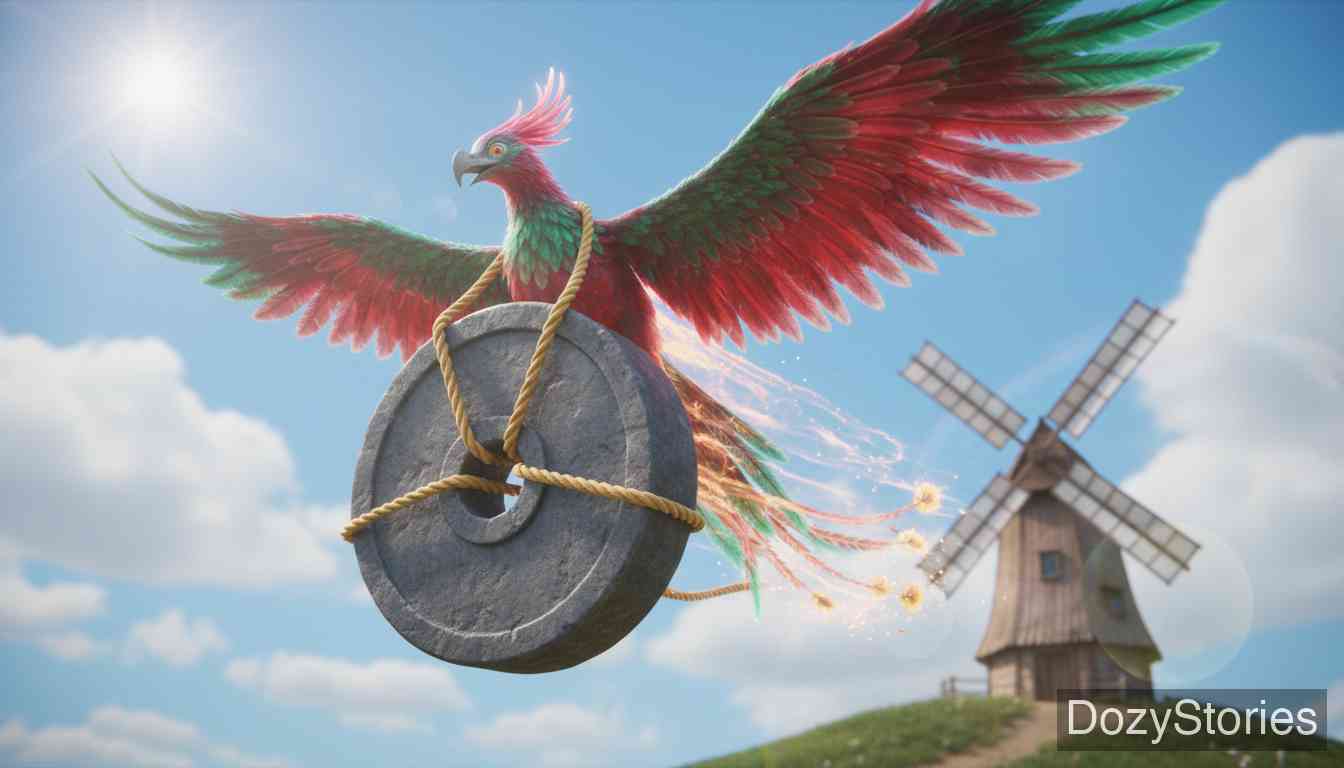
And when he had finished he flew away, with the chain in his right claw and the shoes in his left claw, and he flew till he reached a mill, and the mill went "clip-clap, clip-clap, clip-clap." And in the mill sat twenty millers-men hewing a millstone- "hick-hack, hick-hack, hick-hack," while the mill was going "clip-clap, clip-clap, clip-clap." And the bird perched on a linden tree that stood in front of the mill, and sang, "It was my mother who murdered me; " Here one of the men looked up. "It was my father who ate of me;" Then two more looked up and listened. "It was my sister Marjory " Here four more looked up. "Who all my bones in pieces found; Them in a handkerchief she bound," Now there were only eight left hewing. "And laid them under the almond tree." Now only five. "Kywitt, kywitt, kywitt, I cry," Now only one. "Oh what a beautiful bird am I!" At length the last one left off, and he only heard the end.
"Bird," said he, "how beautifully you sing; let me hear it all; sing that again!" - "No," said the bird, "I may not sing it twice for nothing; if you will give me the millstone I will sing it again." - "Indeed," said the man, "if it belonged to me alone you should have it." - "All right," said the others, "if he sings again he shall have it." Then the bird came down, and all the twenty millers heaved up the stone with poles - "yo! heave-ho! yo! heave-ho!" and the bird stuck his head through the hole in the middle, and with the millstone round his neck he flew up to the tree and sang.
And when he had finished, he spread his wings, having in the right claw the chain, and in the left claw the shoes, and round his neck the millstone, and he flew away to his father's house.
In the parlour sat the father, the mother, and Marjory at the table; the father said, "How light-hearted and cheerful I feel." - "Nay," said the mother, "I feel very low, just as if a great storm were coming." But Marjory sat weeping; and the bird came flying, and perched on the roof "Oh," said the father, "I feel so joyful, and the sun is shining so bright; it is as if I were going to meet with an old friend." - "Nay," said the wife, "I am terrified, my teeth chatter, and there is fire in my veins," and she tore open her dress to get air; and Marjory sat in a corner and wept, with her plate before her, until it was quite full of tears.
Then the bird perched on the almond tree, and sang, '' It was my mother who murdered me; " And the mother stopped her ears and hid her eyes, and would neither see nor hear; nevertheless, the noise of a fearful storm was in her ears, and in her eyes a quivering and burning as of lightning. "It was my father who ate of me;'' "O mother!" said the-father, "there is a beautiful bird singing so finely, and the sun shines, and everything smells as sweet as cinnamon. ''It was my sister Marjory " Marjory hid her face in her lap and wept, and the father said, "I must go out to see the bird." - "Oh do not go!" said the wife, "I feel as if the house were on fire." But the man went out and looked at the bird.
"Who all my bones in pieces found; Them in a handkerchief she bound, And laid them under the almond tree. Kywitt, kywitt, kywitt, I cry, Oh what a beautiful bird am I!"
With that the bird let fall the gold chain upon his father's neck, and it fitted him exactly. So he went indoors and said, "Look what a beautiful chain the bird has given me." Then his wife was so terrified that she fell all along on the floor, and her cap came off. Then the bird began again to sing, "It was my mother who murdered me;" - "Oh," groaned the mother, "that I were a thousand fathoms under ground, so as not to be obliged to hear it." - "It was my father who ate of me;" Then the woman lay as if she were dead. "It was my sister Marjory " - "Oh," said Marjory, "I will go out, too, and see if the bird will give me anything." And so she went. "Who all my bones in pieces found; Them in a handkerchief she bound," Then he threw the shoes down to her. "And laid them under the almond tree. Kywitt, kywitt, kywitt, I cry, Oh what a beautiful bird am I!"
And poor Marjory all at once felt happy and joyful, and put on her red shoes, and danced and jumped for joy. "Oh dear," said she, "I felt so sad before I went outside, and now my heart is so light! He is a charming bird to have given me a pair of red shoes." But the mother's hair stood on end, and looked like flame, and she said, "Even if the world is coming to an end, I must go out for a little relief."
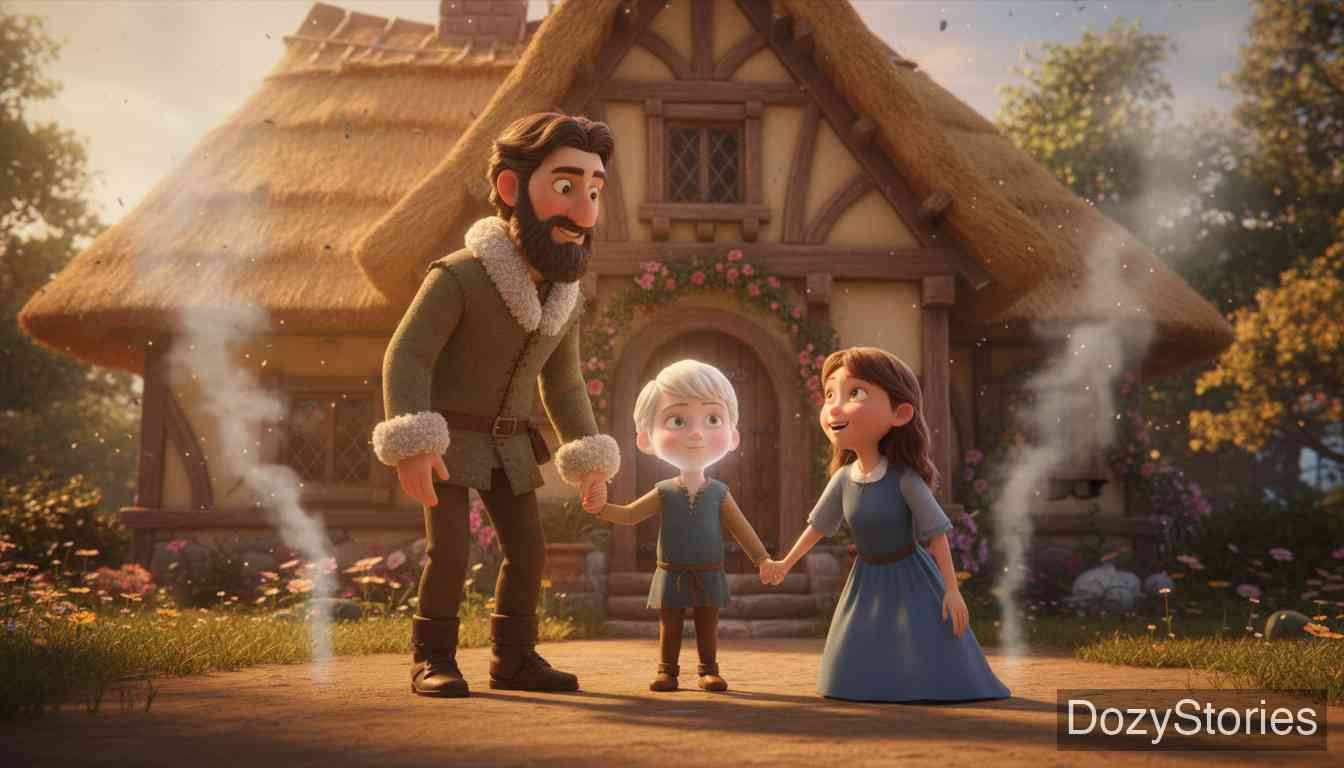
Just as she came outside the door, crash went the millstone on her head, and crushed her flat. The father and daughter rushed out, and saw smoke and flames of fire rise up; but when that had gone by, there stood the little brother; and he took his father and Marjory by the hand, and they felt very happy and content, and went indoors, and sat to the table, and had their dinner.

Vocabulary from "The Almond Tree"

12 key words from this story with definitions and original context sentences for language learners.

piousB2
/ˈpaɪəs/adj.

Deeply religious and devout.

虔诚的;笃信宗教的。

There was a rich man, and he had a beautiful and pious wife.

有一个富人,他有一位美丽而虔诚的妻子。

paring(pare)C1
/ˈpeərɪŋ/v.

Cutting away the outer skin or edges of something, such as fruit.

削(去…的皮);修剪(边缘)。

The wife was standing beneath it, and paring an apple, and as she pared it she cut her finger.

妻子站在树下削苹果,削着削着,不小心切到了手指。

entwined(entwine)C1
/ɪnˈtwaɪnd/v.

Twisted or wound closely together.

缠绕在一起的;交织的。

The trees were in full leaf, and the branches were thickly entwined.

树木枝繁叶茂,枝条交织。

blossoms(blossom)B2
/ˈblɒsəmz/n.

The flowers of a tree or plant.

花;(尤指树上的)花朵。

The little birds began to sing, so that the woods echoed, and the blossoms fell from the trees.

小鸟开始歌唱,森林里回荡着歌声,花瓣从树上飘落。

disgraceB2
/dɪsˈɡreɪs/n.

The loss of respect and honour; shame.

耻辱;丢脸;不光彩的处境。

She gave him a buffet here and a cuff there, so that the poor child was always in disgrace.

她这里打一拳,那里给一掌,这可怜的孩子总是处于羞辱之中。

paleB1
/peɪl/adj.

Having little colour in the face, often from illness or fear.

苍白的;(脸色)发白的。

My brother is sitting before the door and he has an apple in his hand, and looks very pale.

哥哥坐在门前,手里拿着一个苹果,脸色苍白。

brothB2
/brɒθ/n.

A thin soup made by boiling meat or vegetables.

肉汤;清汤。

The mother was filling a great dish full of black broth.

母亲正端上一大盘黑肉汤。

refrainC1
/rɪˈfreɪn/v.

To hold oneself back from doing something.

克制;忍住(不做某事)。

Marjory was crying bitterly, for she could not refrain.

玛乔丽却忍不住痛哭流涕。

boughs(bough)C1
/baʊz/n.

The main branches of a tree.

大树枝;主枝。

The almond tree began to wave to and fro, and the boughs drew together and then parted.

杏树开始摇曳,枝条合拢又分开。

hewing(hew)C1
/ˈhjuːɪŋ/v.

Cutting or shaping something hard, such as stone or wood, with heavy blows.

砍;凿;劈(石头、木头等)。

In the mill sat twenty millers-men hewing a millstone.

磨坊里坐着二十个磨坊工人在凿磨盘。

cinnamonB1
/ˈsɪnəmən/n.

A sweet-smelling brown spice used in cooking.

肉桂(一种香料)。

The sun shines, and everything smells as sweet as cinnamon.

阳光普照,一切闻起来都像肉桂一样香甜。

veins(vein)B2
/veɪnz/n.

The tubes that carry blood through the body.

静脉;血管。

I am terrified, my teeth chatter, and there is fire in my veins.

我很害怕,牙齿打颤,血管里像着了火。

Reading Together & Learning More

The Moral

This is an ancient story about crime and punishment, loss and rebirth. In almost song-like language it tells children that even the deepest darkness holds the power to make things whole again — the murdered child becomes a singing bird, the truth is sung out at last, and those who love him (his sister, his father) are reunited with him. It also states, without flinching, that cruelty carries a price.

Educational Value

One of the most literary of all the tales, best read by older children with a parent alongside, to feel how folk stories tell themselves through a repeated refrain and images of the turning seasons. Use it to discuss justice, family love, and courage (little Marjory's kindness is the light of the whole tale) — but adult help is needed to process its dark events.

Tips for Parents

Important note: this is one of the darkest of all the Grimms' tales, containing extremely disturbing events — a stepmother murdering a child, a father unknowingly eating him, and a beheading. It is not suitable for young or sensitive children; we suggest ages 10+ and reading together with a parent. As you read, steer your child toward the 'light' side: Marjory's love and courage, the rebirth symbolised by the almond tree and the bird, and the family's reunion at the end. You can also explain that these frightening events are symbolic, the imaginings of centuries ago, and that what truly matters is that kindness is rewarded and the truth cannot be buried forever.

Talk About It

  1. Throughout the story, little Marjory stays kind, honest, and brave. Do you think the brother could have 'come back' without her?
  2. The murdered brother becomes a singing bird who sings the truth to the whole world. Why do so many old stories believe that 'the truth will be told in the end'?
  3. The bird gives the goldsmith a chain and the shoemaker a pair of shoes, but saves the millstone for the stepmother. Why does it treat them so differently?
  4. The mother's opening wish for a child 'red as blood and white as snow' is exactly like 'Snow White.' What other likenesses to other fairy tales can you find in this story?
  5. This is a very dark story, yet at the end the brother comes back to life and the family is reunited. Why do you think old tales are willing to tell so many frightening things first, and then give a warm ending?