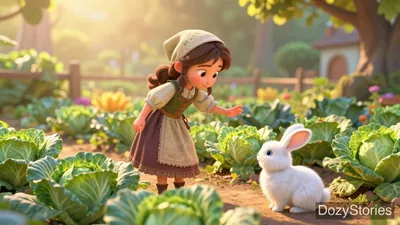
Old Hildebrand
Introduction
"Old Hildebrand" is one of the Brothers Grimm's oldest village comedies. Folklorists call it a tale of type ATU 1360C, and European villagers told it for hundreds of years: a comic story in which the tricksters are caught by their own trick. In this version, we retell it as a fable, in the plain, pointed manner of Chinese storytellers who have passed down wisdom tales for thousands of years. We cut the long descriptions, keep only the two turns — the plot and the unmasking — and end with an old saying: paper cannot wrap fire. It carries the same idea as the Chinese proverb, "if you do not want anyone to know, do not do it at all." The best part to enjoy with your child is the singing match at the end. Each person sings out what is really in their heart, and the lie falls apart in the song — a far cleverer way to expose a lie than a quarrel. Before you read, ask your child to guess what trick the egg merchant will use so that the farmer can see the truth with his own eyes. After you read, talk about trust: why it is easy to lose and hard to win back.
Vocabulary from "Old Hildebrand"
12 key words from this story with definitions and original context sentences for language learners.
A priest who leads a village church.
牧师;乡村教区里主持教堂的神职人员。
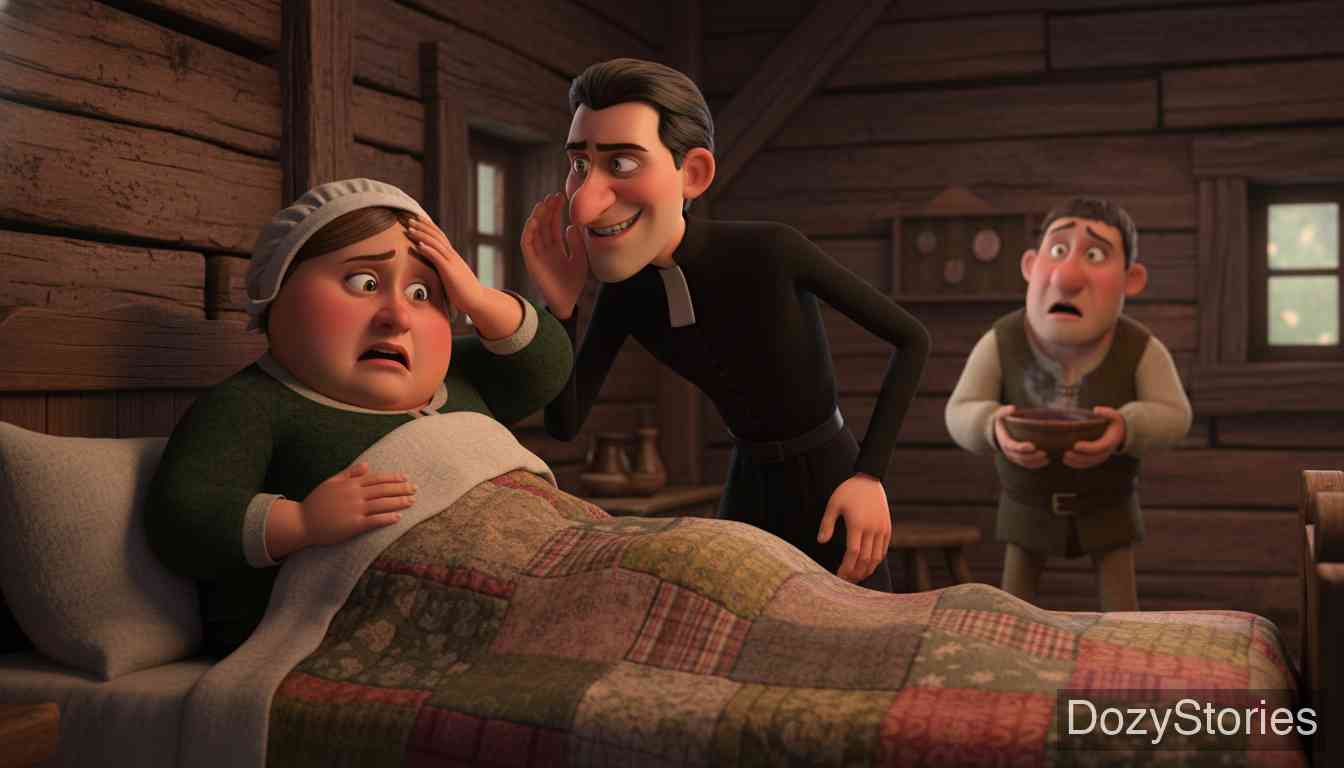
The village parson liked the farmer's wife, and he wanted a whole day alone with her.
村里的牧师看上了农夫的妻子,一心盼着能和她单独待上一天。
A talk about religion that a priest gives in church.
布道;牧师在教堂里讲道。
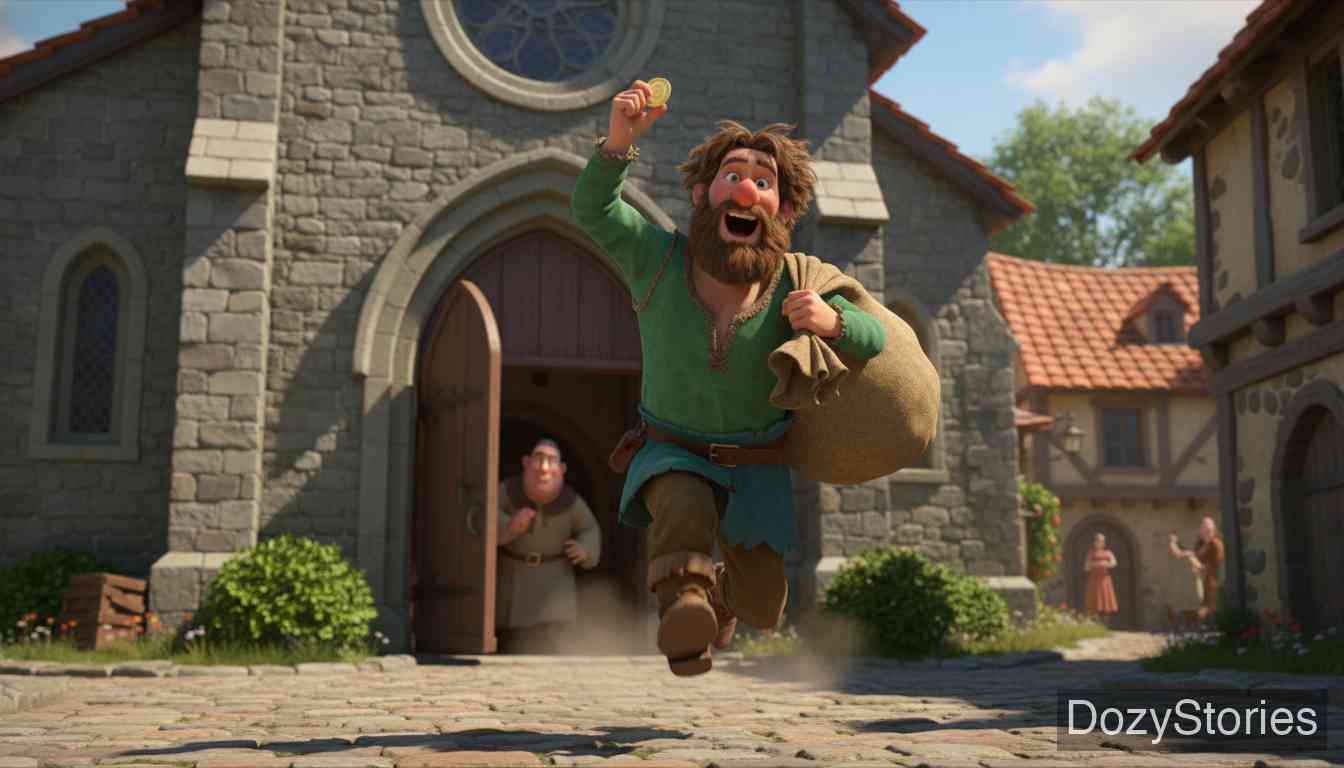
The farmer went to the church, and the parson gave his sermon.
农夫进了教堂,竖起耳朵听讲道。
A long journey made to a holy place.
朝圣之旅;为求心愿而远行。
Then your husband will go on a long pilgrimage, and we can enjoy our day together.
你丈夫听了,定会替你去朝圣,到那时,咱们俩就能清清静静过一天快活日子了。
A person who buys and sells things to make money.
商人;做买卖、贩卖货物的人。
On the road, Hildebrand met an old friend, an egg merchant.
半道上,他遇见一位老相识——一个刚从集市上回来的卖蛋人。
A short trip to do a small job for someone.
差事;替别人跑腿办的小事。
He sent you on this errand to get you out of the way.
牧师这是想支开你,好和你媳妇单独待上一天。
Not convenient; causing difficulty or embarrassment.
尴尬的;不合时宜、让人难办的。
"You come at an awkward time," said the wife.
妻子说:“你来得可真不凑巧。”
An evergreen tree; its leaves are used in cooking.
月桂树;月桂叶常用来做菜调味。
There, one penny buys a full measure of laurel leaves, and the sick person gets well at once.
山上一个铜板就能买满满一升月桂叶,病人立时就好。
To make someone believe something that is not true.
欺骗;用假话让人信以为真。
They are deceiving you, my friend.
卖蛋人说:“他们这是在骗你呢,老朋友。”
To make a deep low sound because of pain or sadness.
呻吟;因疼痛或难受而低低地哼。
On Wednesday, she lay in bed and groaned.
到了星期三,她果然躺上床,哼哼唧唧,连声叫苦。
To come out suddenly and with force.
猛地冲出;一下子迸发出来。
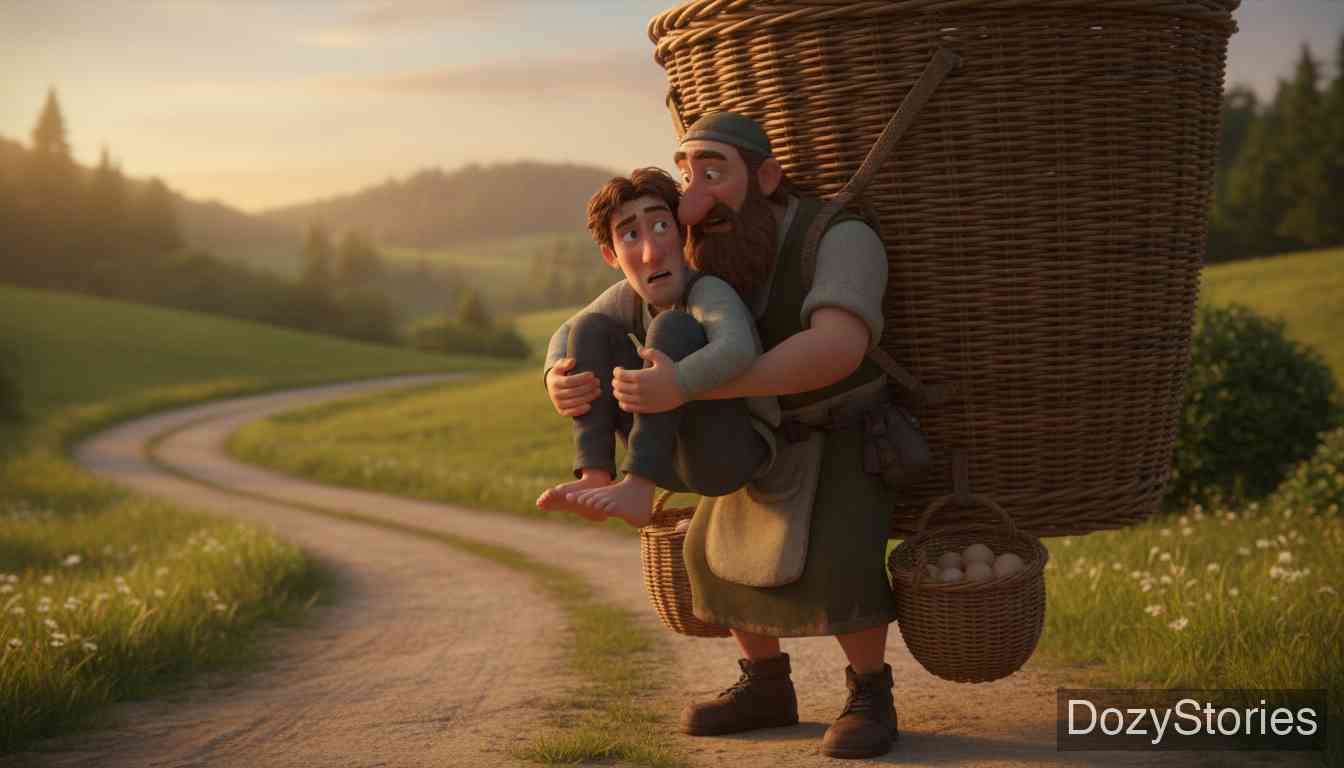
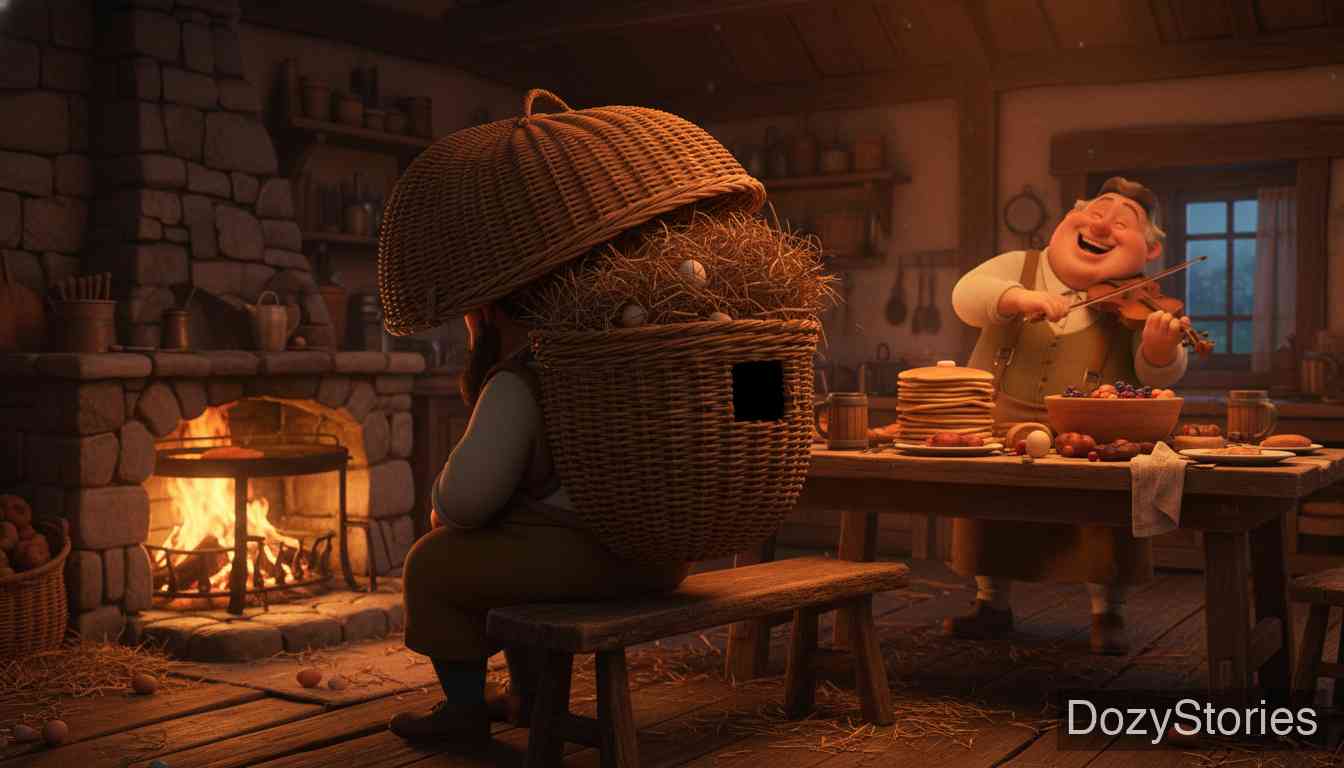
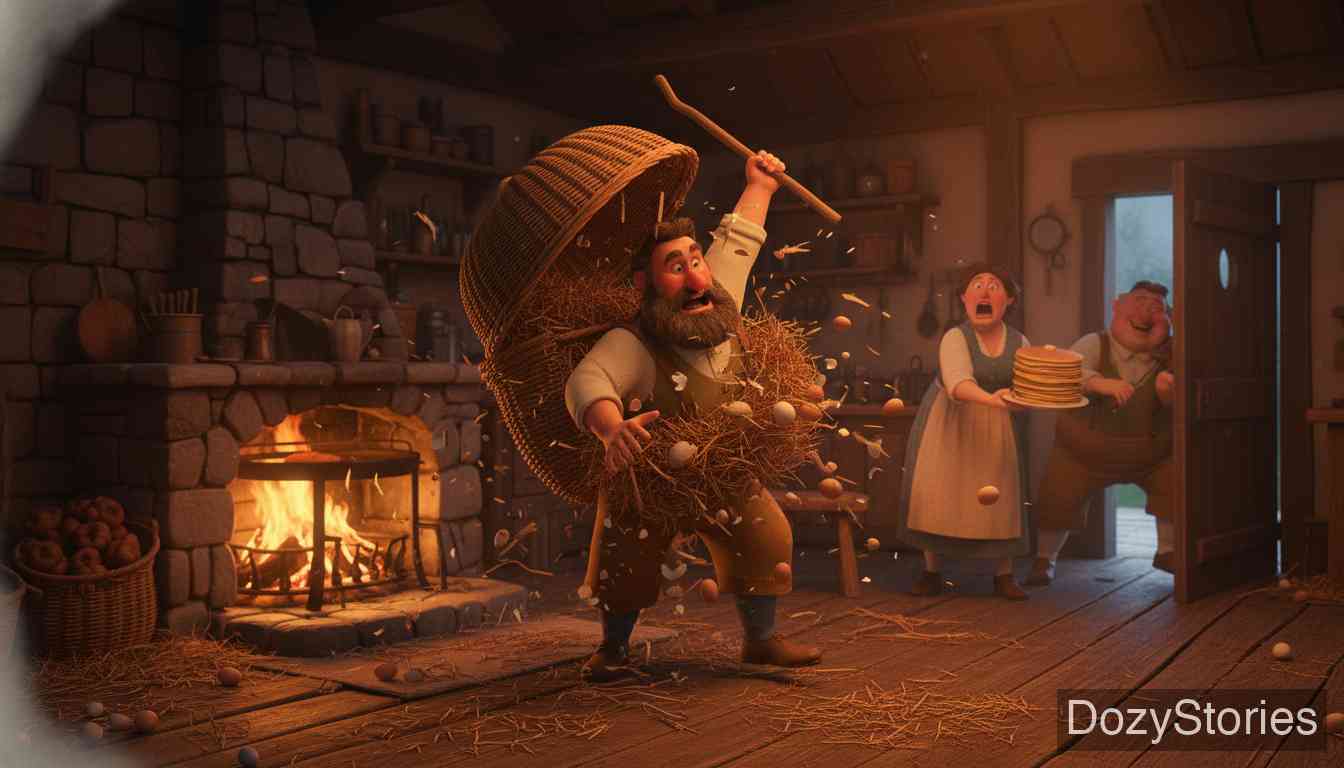
With that, he burst out of the basket, took a stick, and drove the parson out of the house.
唱罢,他猛地从筐里翻出来,抄起一根棍子,把牧师一路赶出了家门。
Clever in a sly way, often for a bad purpose.
狡猾的;诡计多端的。
So he made a cunning plan and said to her, "Listen, my friend."
这一日,牧师想出一条计策,悄悄对她说:“听我说,好朋友。”
To believe a lie without questioning it.
轻信;不假思索地全盘接受(谎言)。
"Can you really swallow such a tale?" said the merchant.
卖蛋人听了,忍不住摇头:“你也听听自己说的是什么!”
Reading Together & Learning More
The Moral
Cunning tricks may hide the truth for a time, but a lie can never stay hidden forever.
Educational Value
Children learn that lies and tricks are always found out, that honesty and trust matter more than cleverness, and that a true friend will tell you the truth, even when it is hard to hear.
Tips for Parents
Before you read, ask your child to guess how the egg merchant will help the farmer see the truth. During the singing match, take turns reading the little songs aloud and enjoy how the lie falls apart in verse. After the story, talk about trust: whom should Hildebrand have trusted, and how do we build trust again after it has been broken?
Talk About It
- The parson and the wife invent a tale that a trip to Italy cures all illness. If you were Hildebrand, would you believe such good news at once, or would you stop and think first?
- The egg merchant sees through the trick at once and hides the farmer in his basket. Why do you think he did this? If you were him, would you tell your friend the truth?
- At the end, everyone sings out what is really in their heart, and the lie falls apart in the song. Why do you think singing is a cleverer way to expose a lie than arguing?
- The farmer believes his wife and the parson happily until he sees the truth with his own eyes. Is his real problem that he is foolish, or that he trusts people too easily? Are "being gullible" and "being kind" the same thing?
- The Chinese saying "paper cannot wrap fire" means that lies always come out. Do you think it fits this story? What other sayings could you use to describe it?